American Samoa is about an 8 hr flight from Honolulu.
But before diving into the trip itself, it helps to appreciate how uniquely American Samoa operates.
As an unincorporated U.S. territory, its residents are U.S. nationals rather than automatic citizens by birth—a distinct status that helps preserve their traditional communal land system, where property cannot be sold to anyone with less than 50% Samoan ancestry. Daily life is deeply rooted in Fa'a Sāmoa (the Samoan way), blending fierce American patriotism—boasting the highest per-capita U.S. military enlistment rate in the nation—with devout Christianity and respect for extended family chiefs (matai). Nowhere is this devotion to heritage clearer than at dusk, when villages clang empty oxygen tanks hanging from trees to signal the Sā, a daily evening prayer curfew where traffic halts and the entire community pauses inside their homes. It is a quiet, profoundly traditional place—in fact, we didn't see a single bar during our entire stay.
(Interested in how American Samoa's government, leased national park, and evening curfews actually work? Scroll to the end of the post for a closer look at the territory's unique political and cultural system.)
Now . . . . On with the Blog
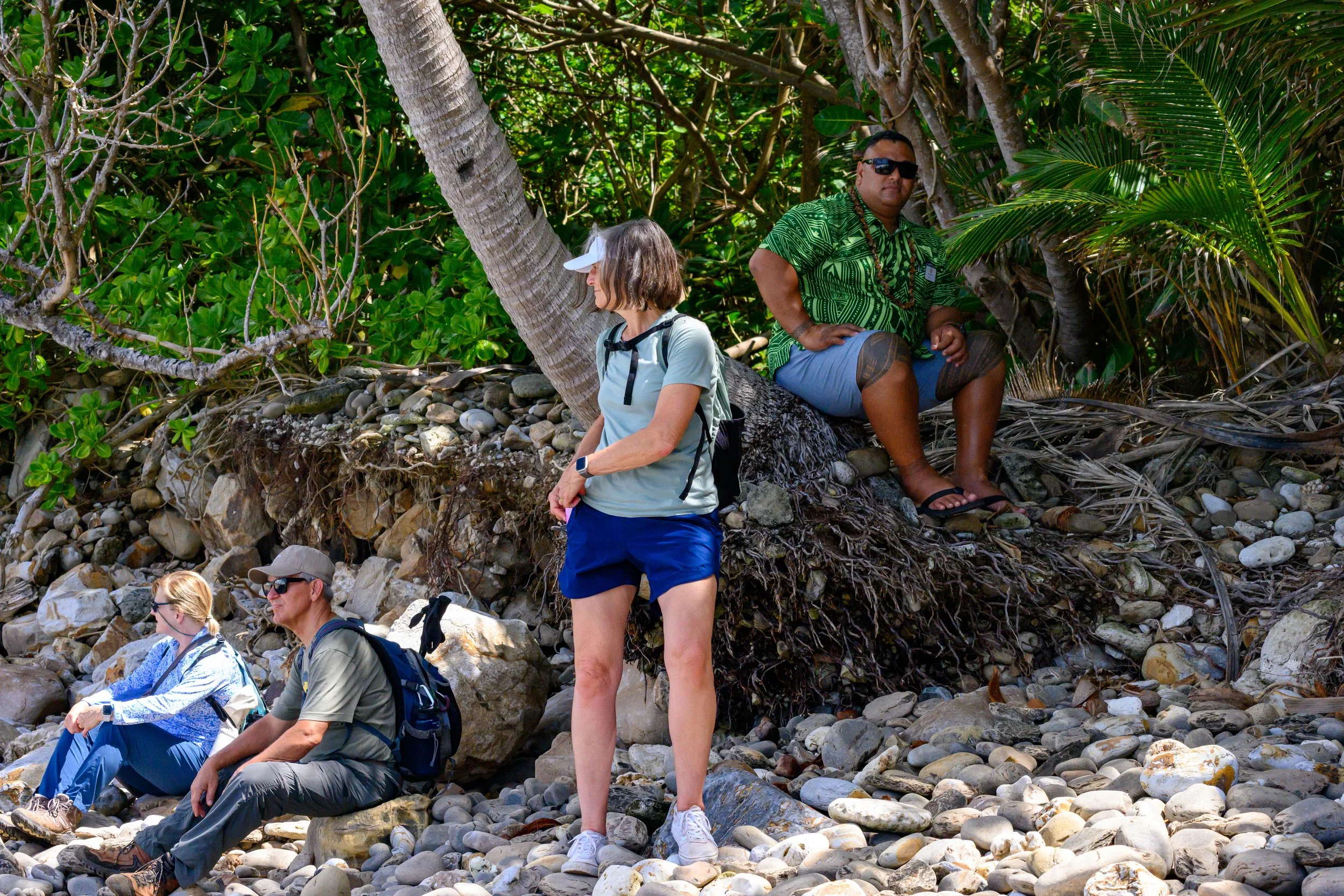
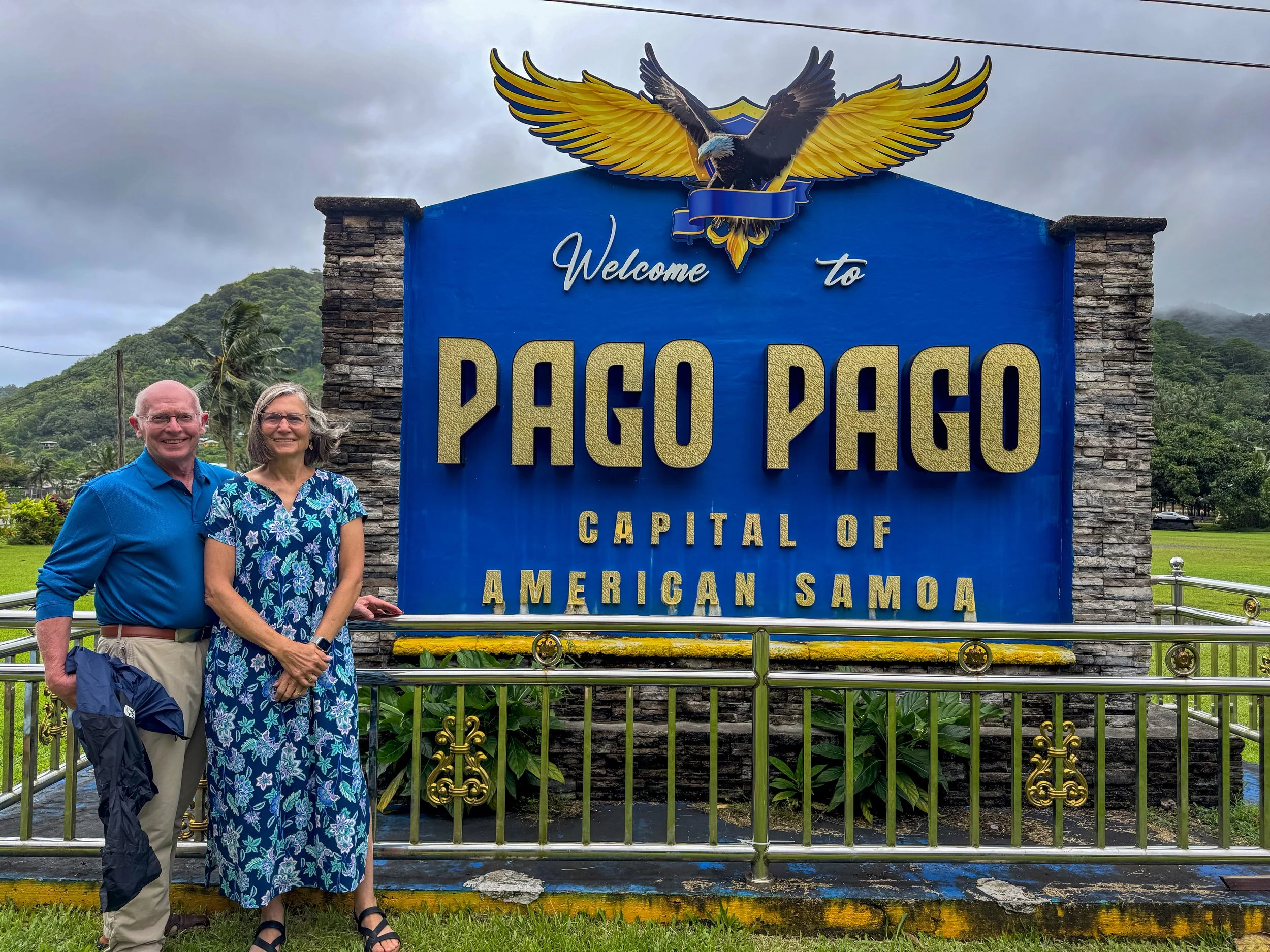
To get to American Samoa we had to leave from Kono on the Big Island of Hawaii in the morning rather than the planned late afternoon flight to be sure we made our flight connection in Honolulu, Hawaii. There was a hurricane approaching and we did not want to risk missing the one flight a week from Honolulu to American Samoa. After the long flight we met up with our local guide “Pika” at the airport in Pago Pago and he remained with us throughout the week in American Samoa. Pika, Peter in English, is a chief of his large family unit. Chiefs protect and help their family thrive, teach the Samoan ways to the young, and settle disputes that law enforcement often settles in the USA.
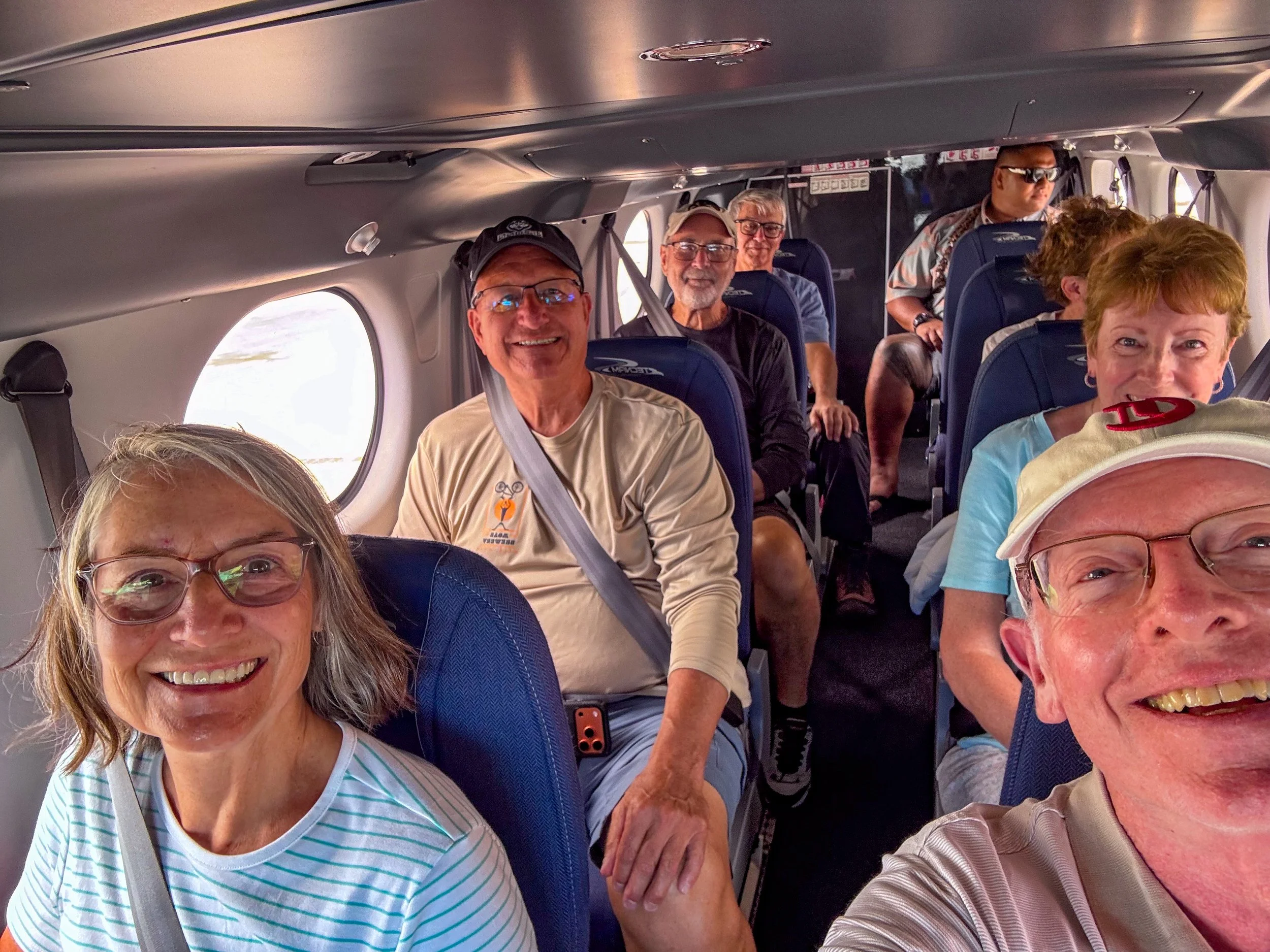
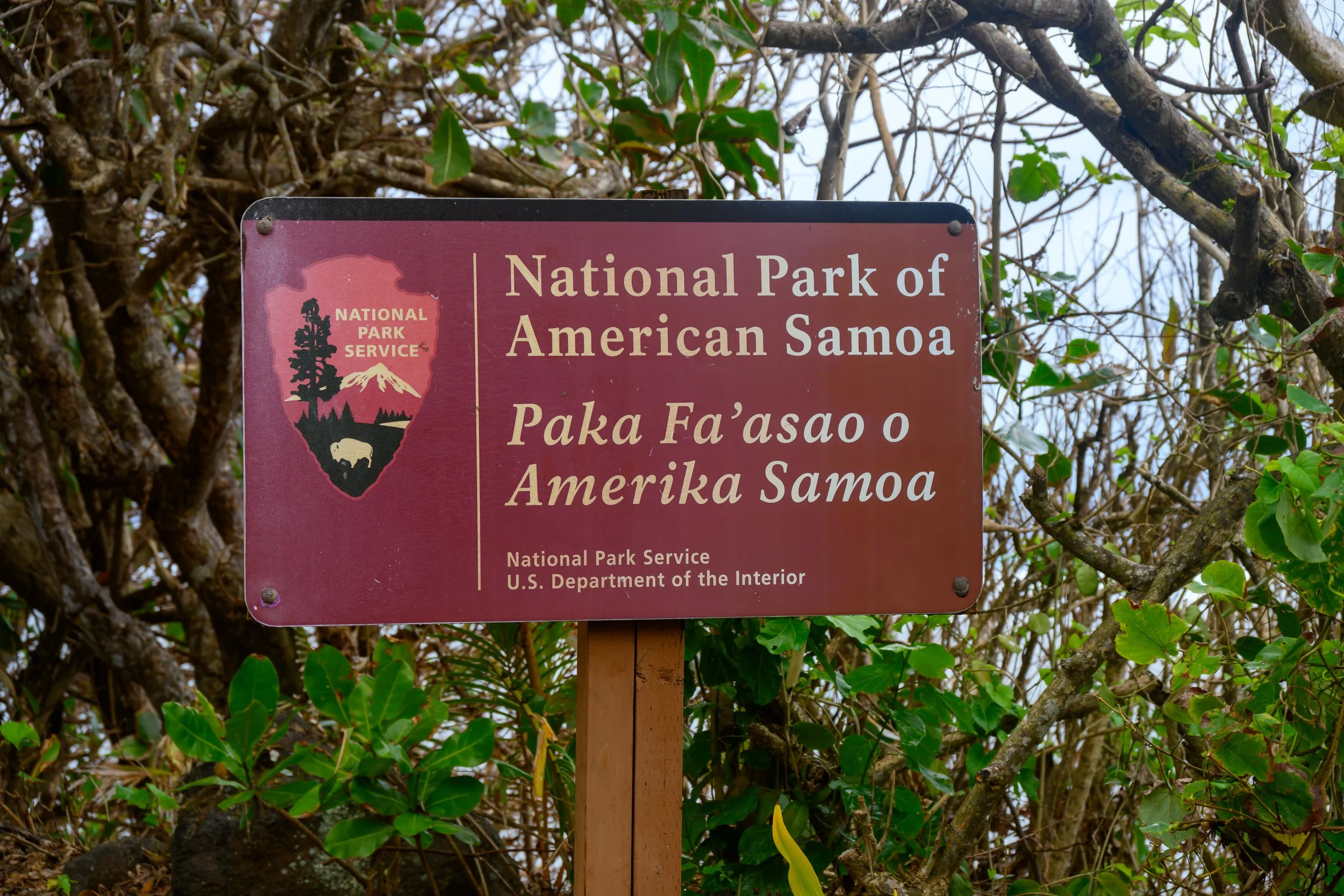
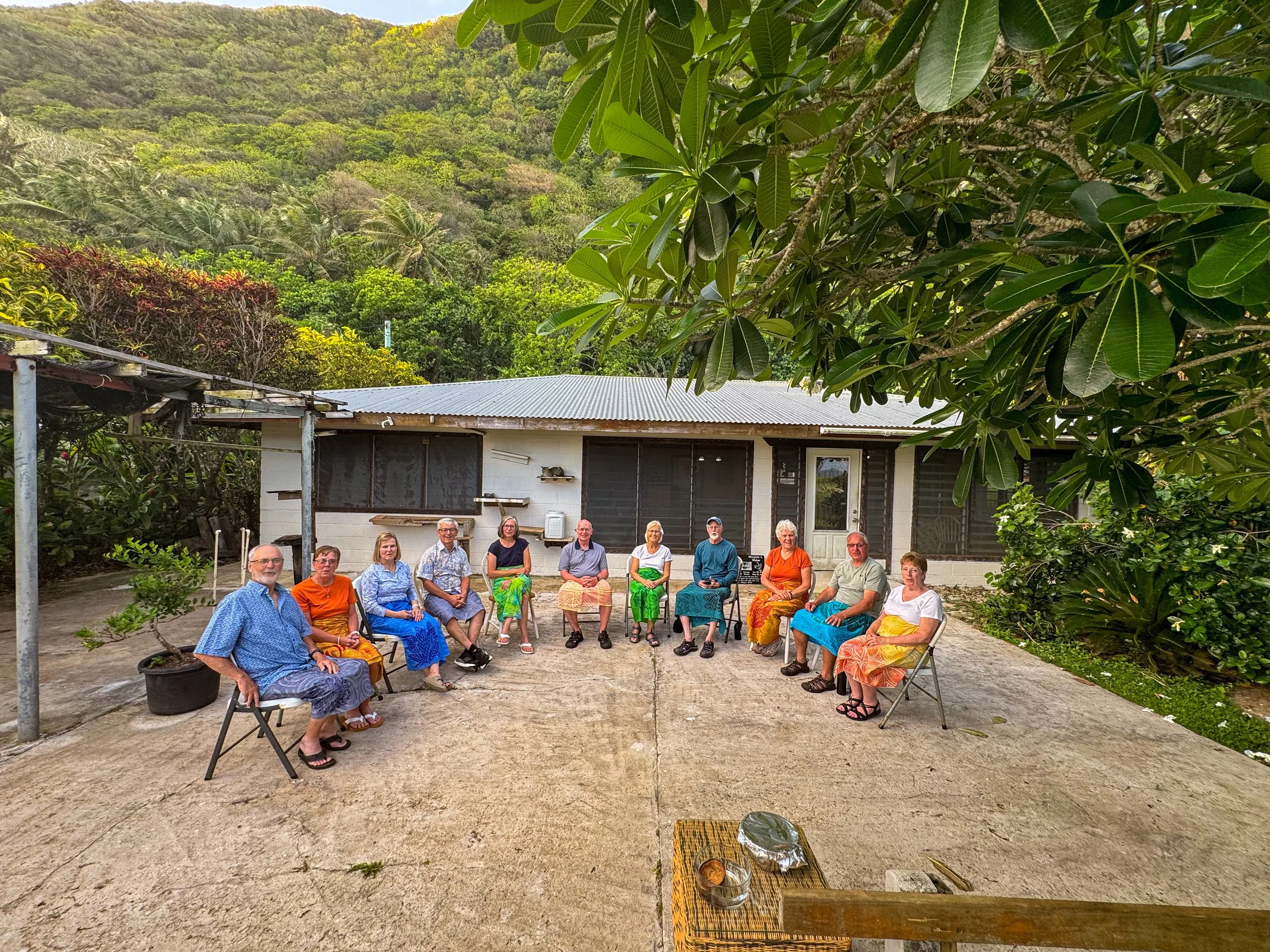
The were 11 of us in the group and all were on journeys to complete all 63 parks. For six of us this was the final park. American Samoa National Park stretches across parts of four islands, as well as a large area of ocean, with American Samoa’s major island being Tutuila, where the capital of Pago Pago is located.
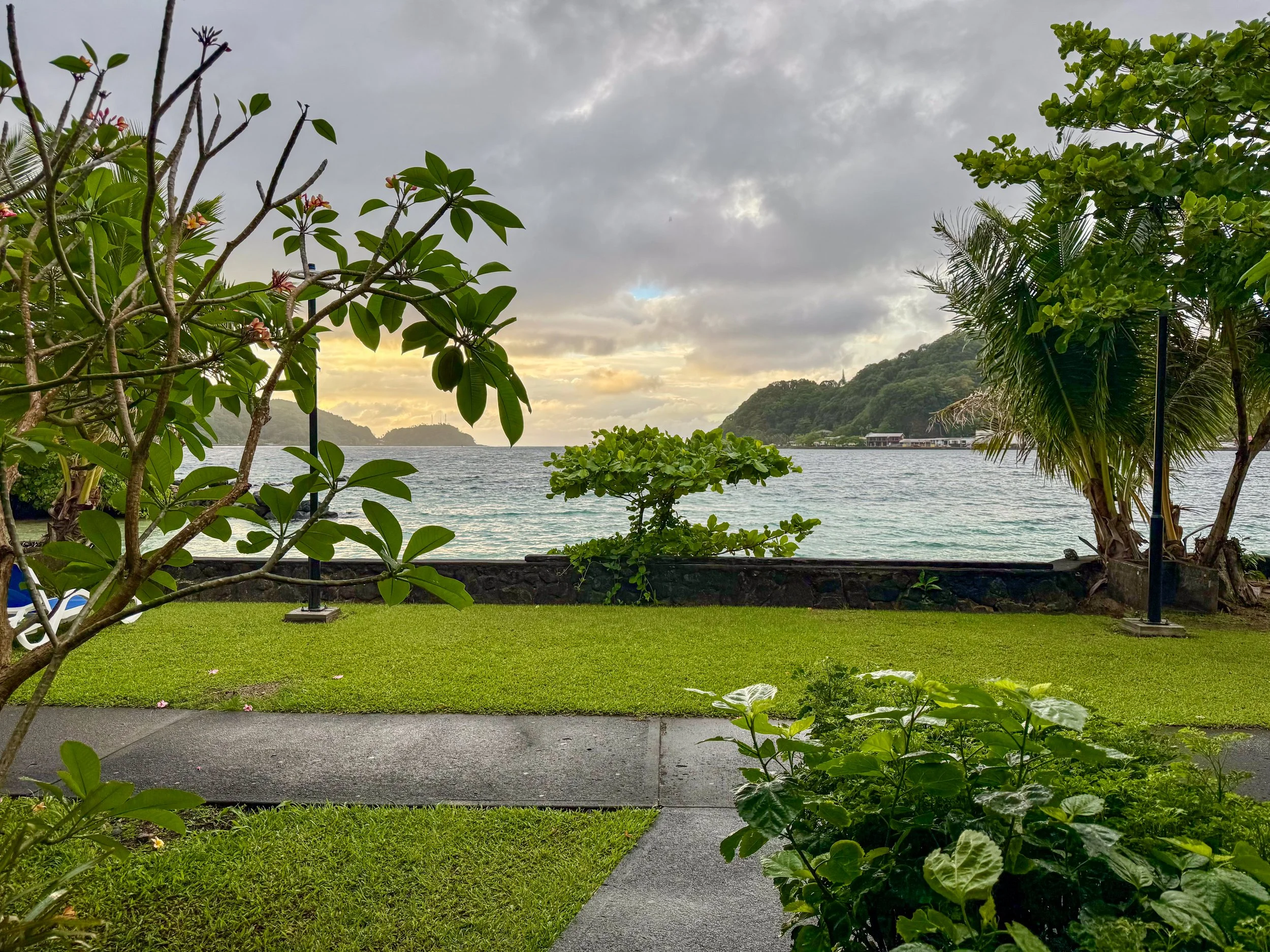
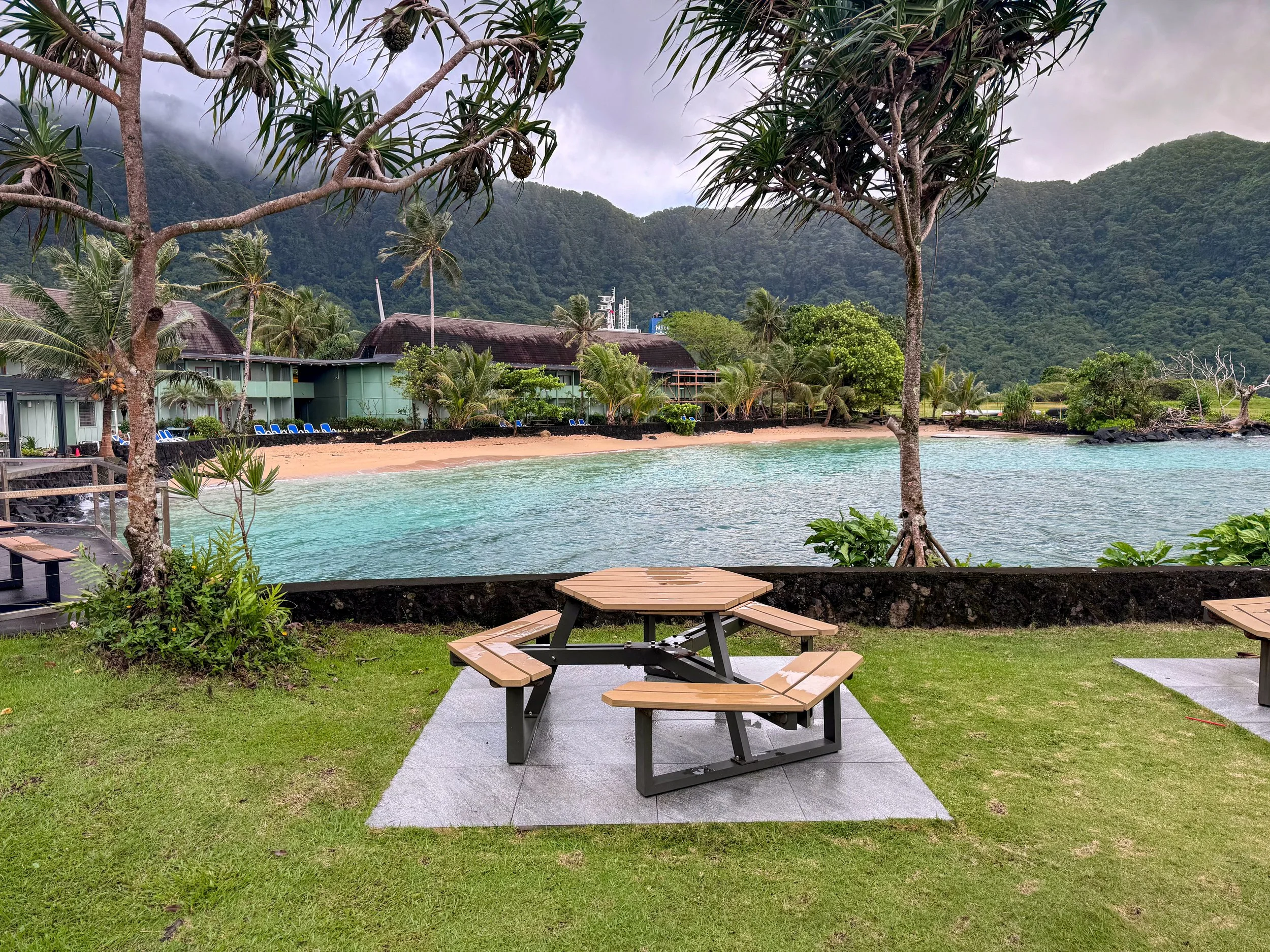
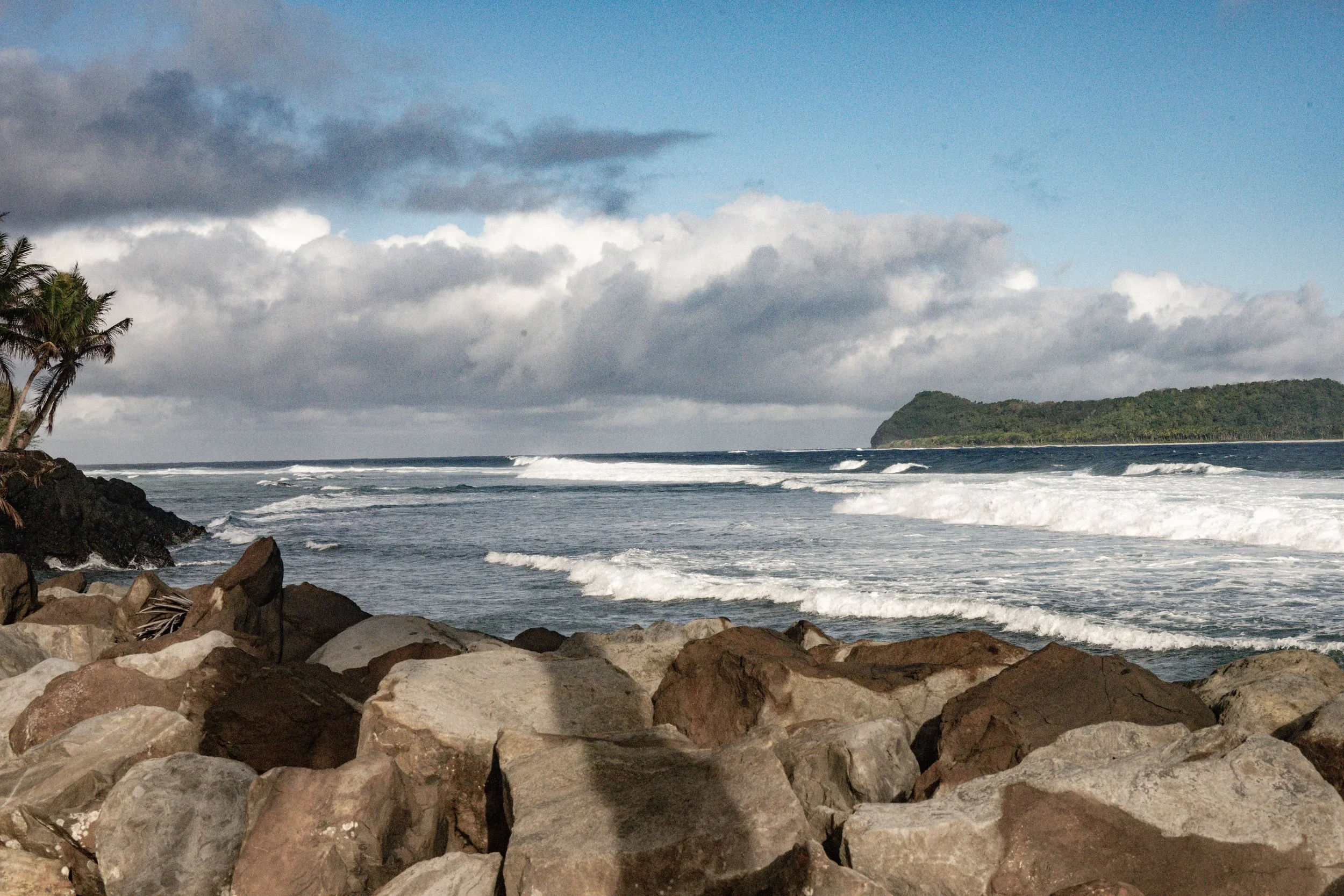
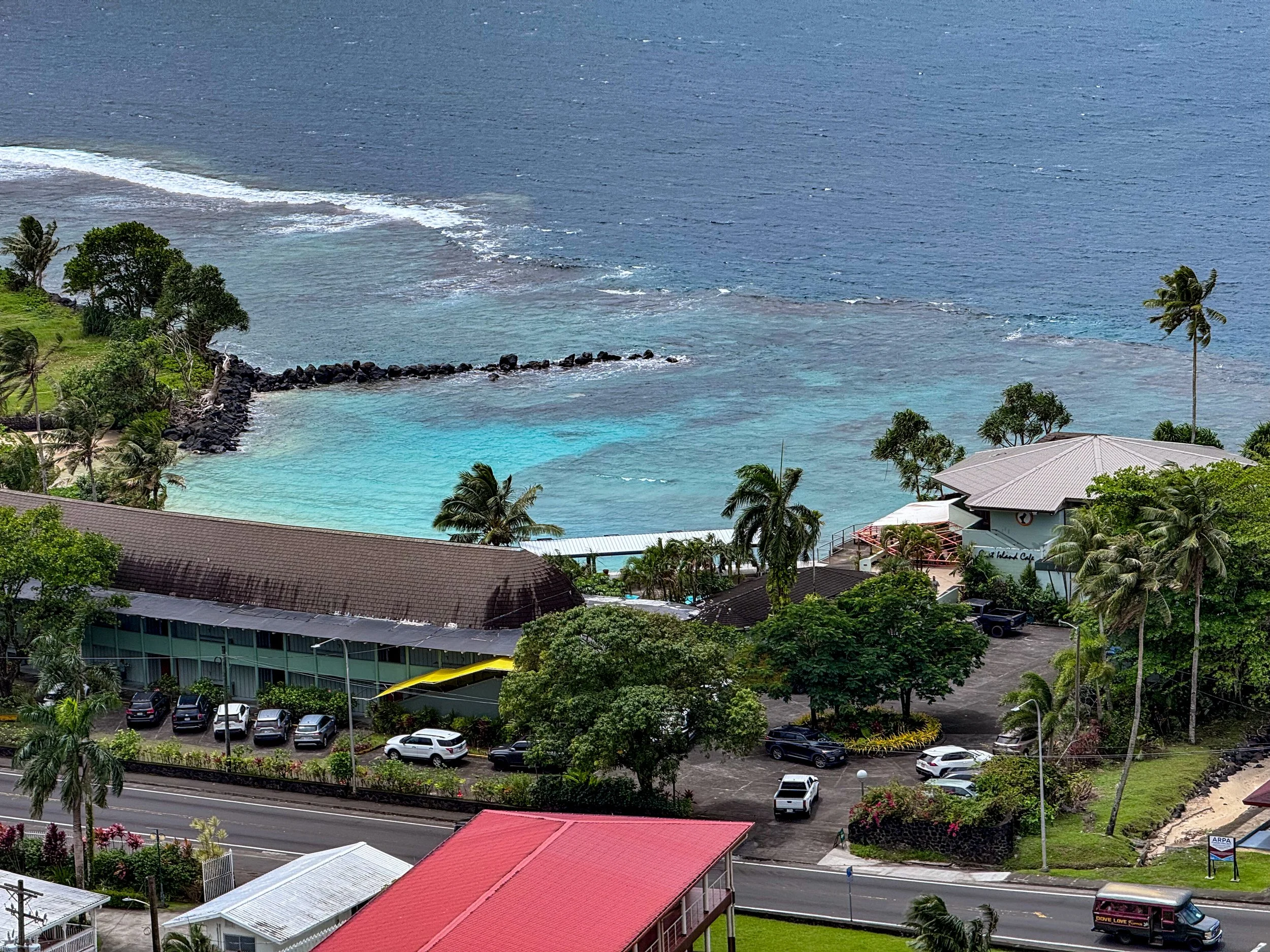
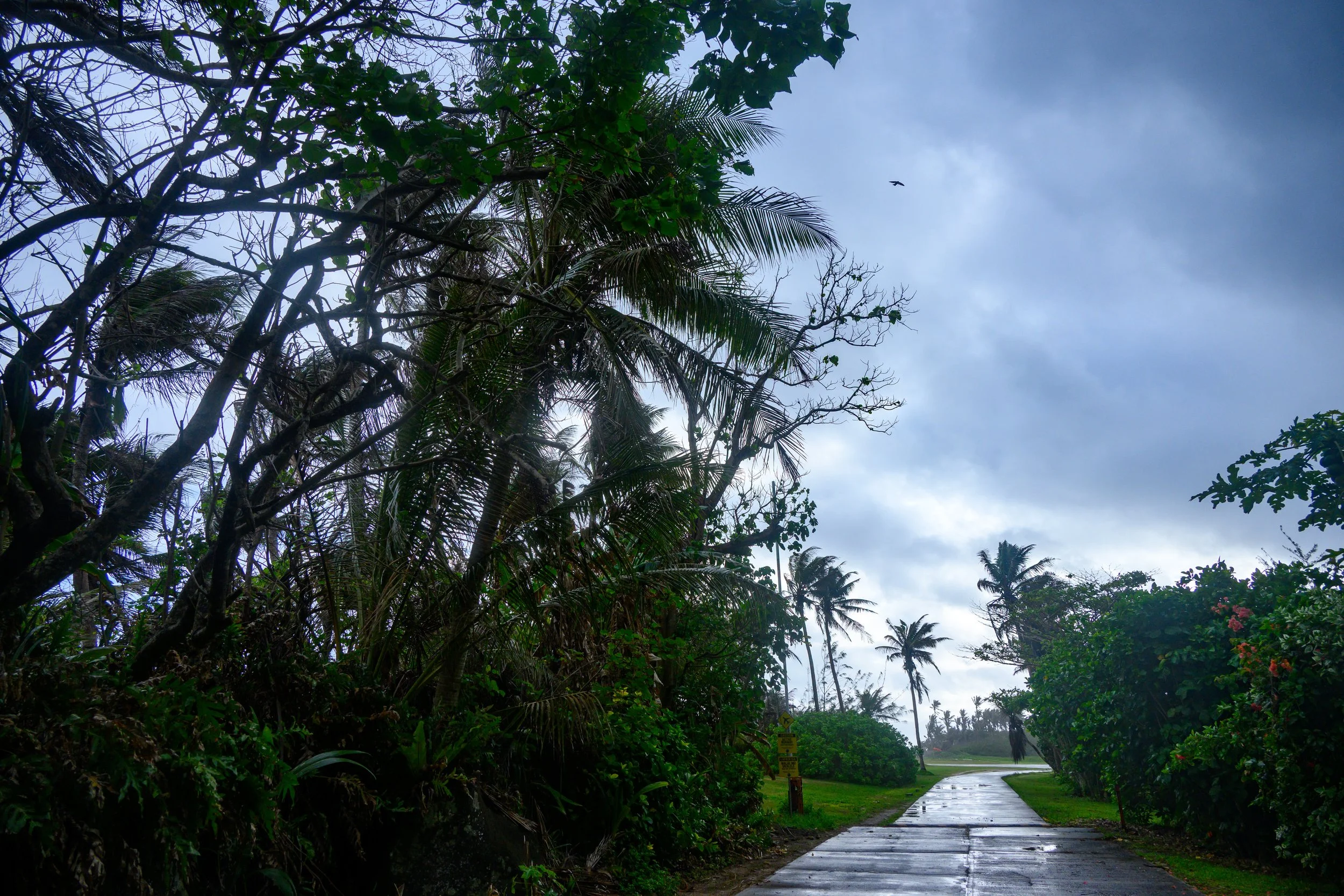
The first 3 days were spend exploring Tutuila with our nightly accommodations at a hotel called “Sadie’s by the Sea”. Certainly, it was by the sea as when we stepped outside our rooms on the patio this is what we saw. It is a comfortable, basic hotel with a nice restaurant where the group had breakfast and discussed the plans for the day with “Pika” every morning in a nice shelter overlooking the water. This shelter had 3 glass walls that proved quite handy in protecting us from the frequent rain showers and the very strong winds that blew from a nearby cyclone the whole week of our visit.
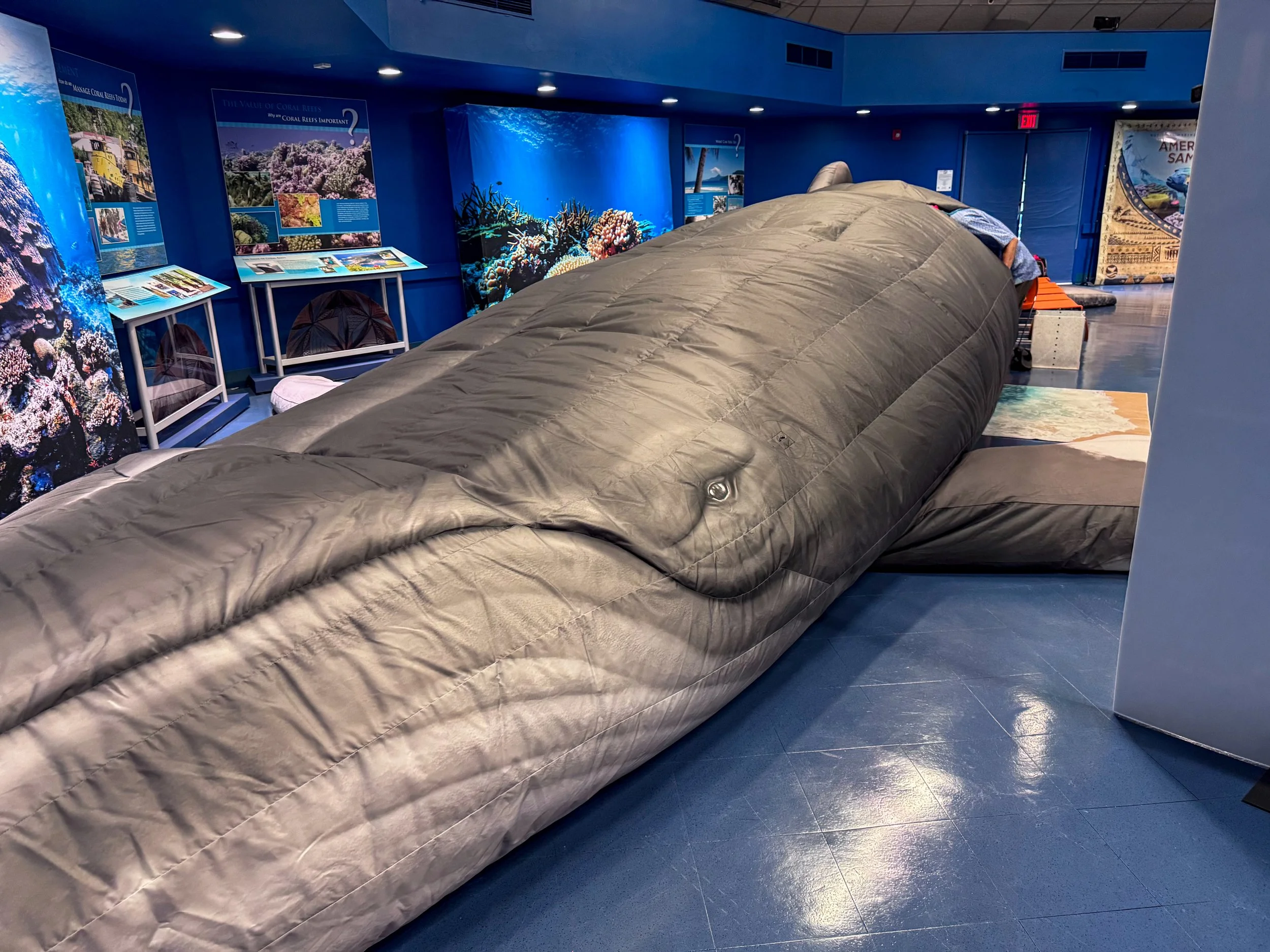
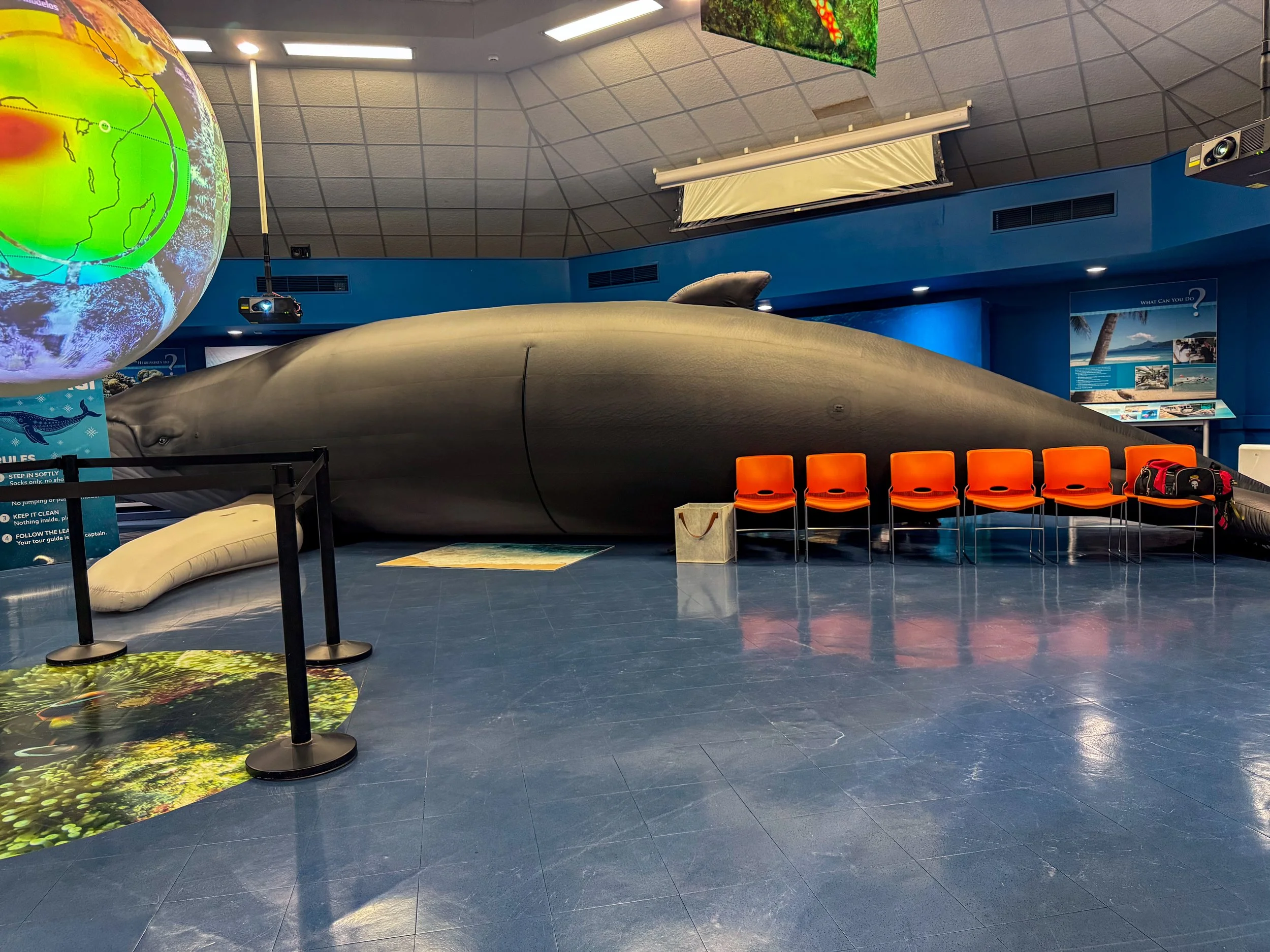
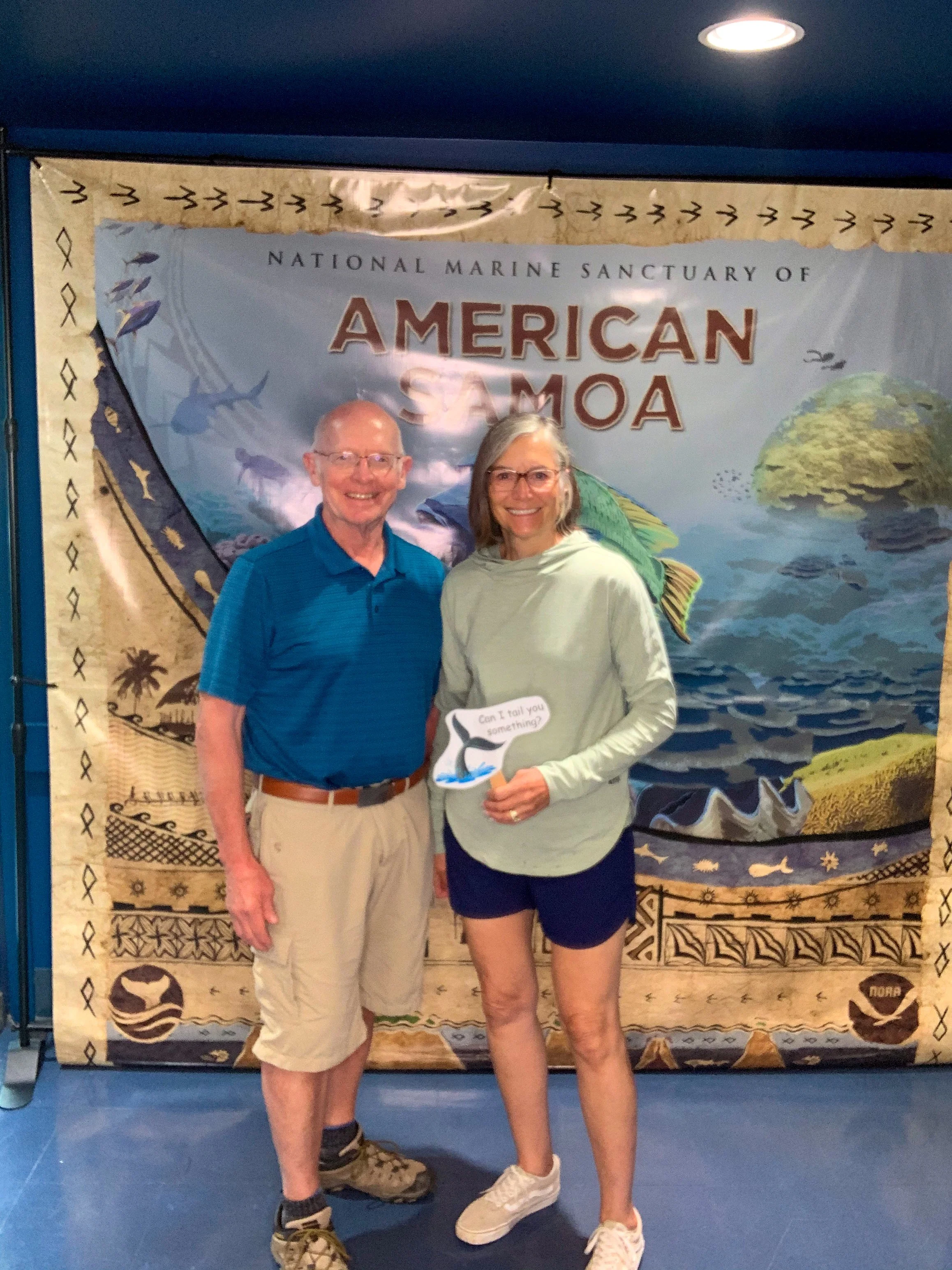
Our first stop was a museum for the American Samoa National Marine Sanctuary. This included a full sized “blowup” whale that you can go into as well as lot of displays focusing on the marine sanctuary. I imagine they provide some wonderful programs for the school kids.
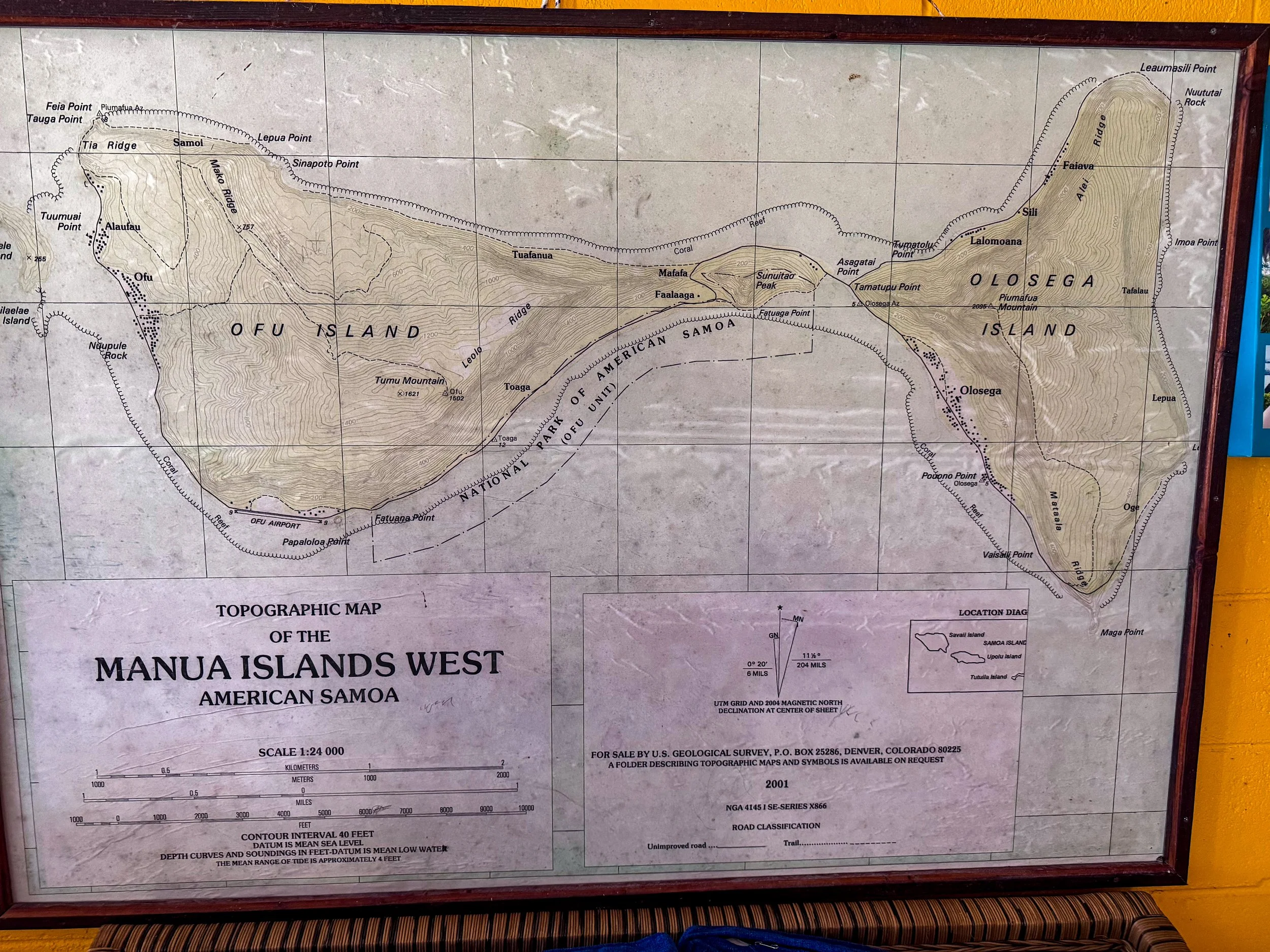
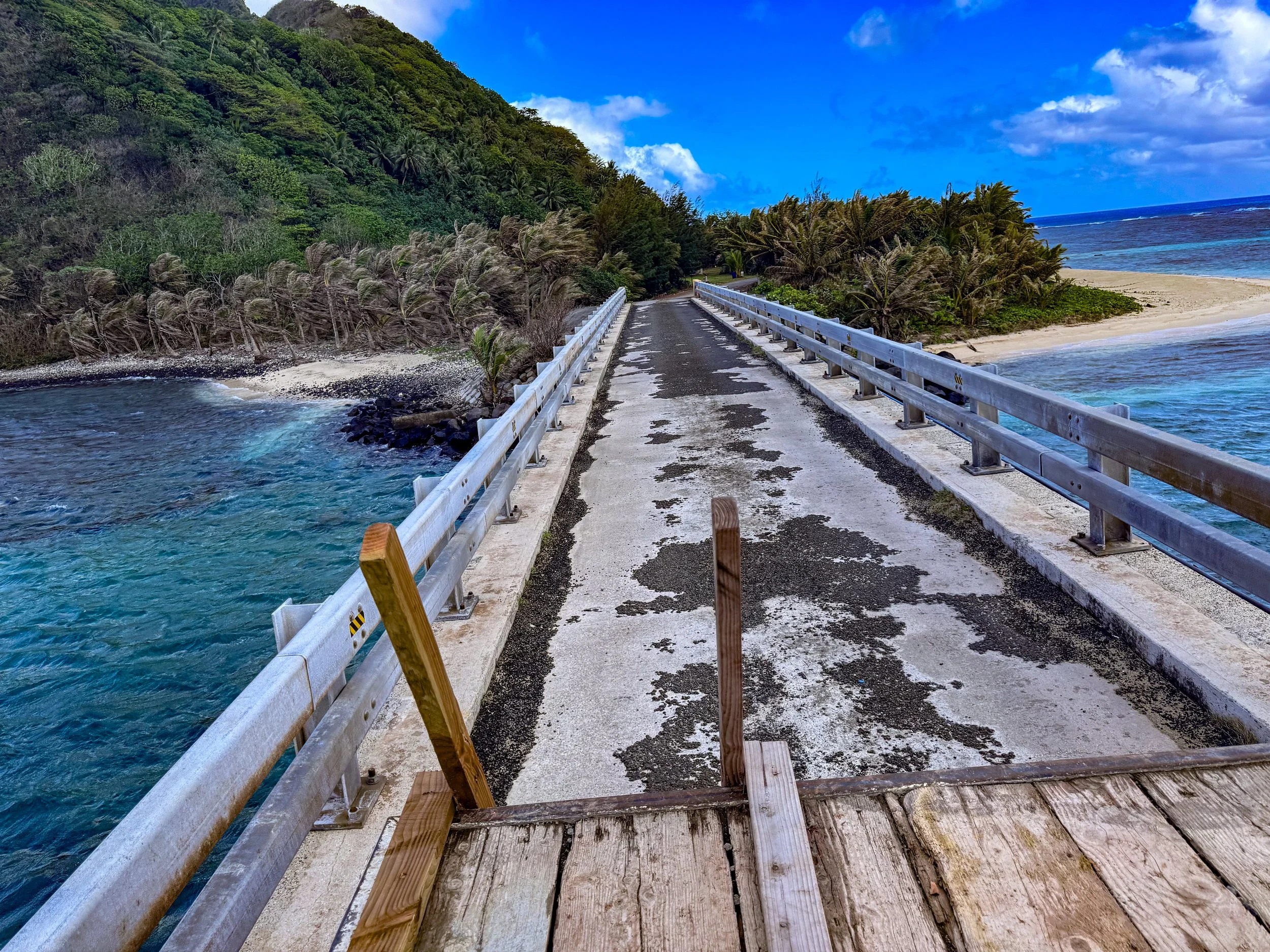
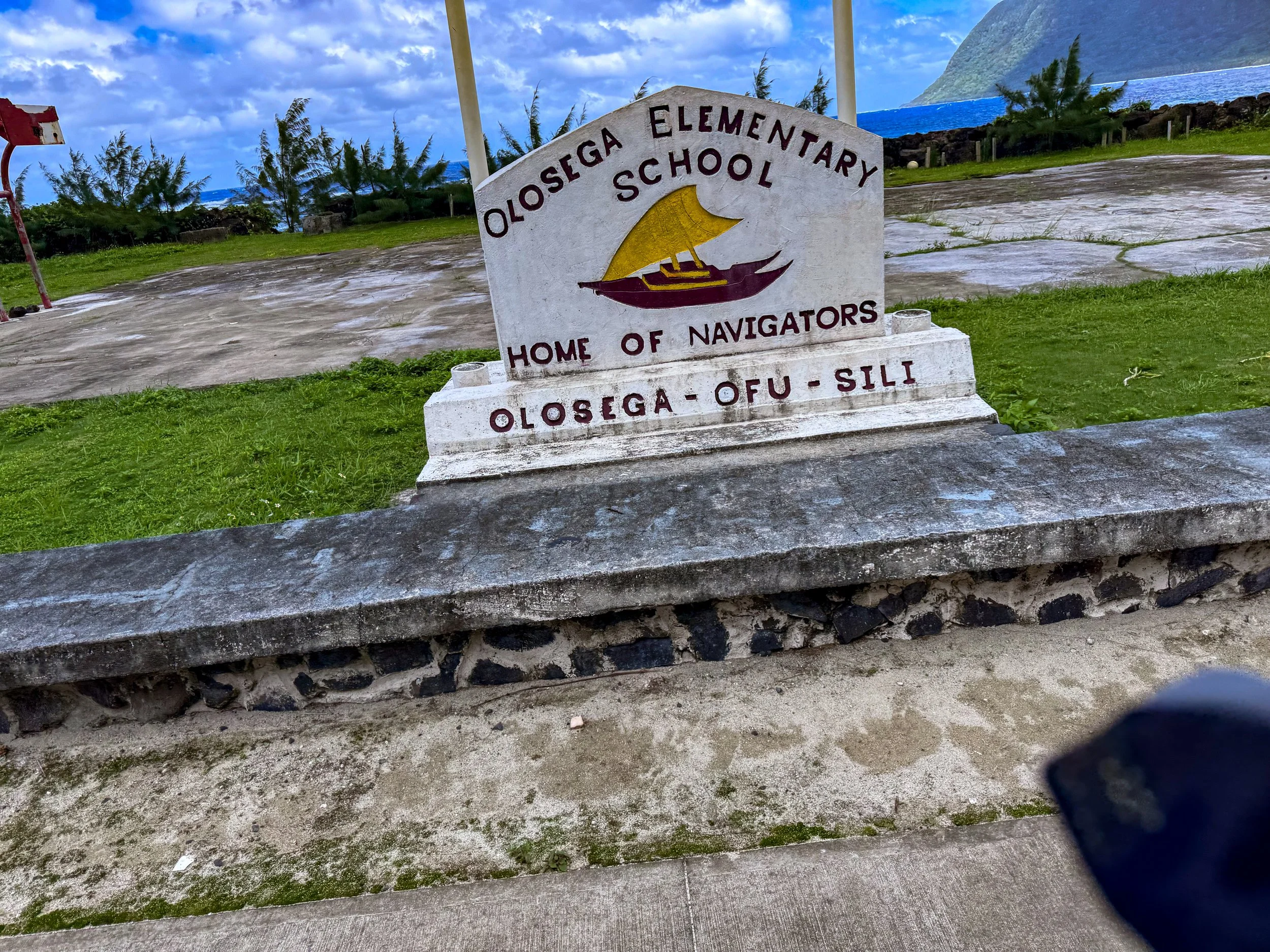
Next stop was the National Park Visitor Center. We got our usual park patch (63rd) but also was surprised with certificates from National Parks for visiting all 63 parks. Several in our group had finished all 63 and this was their last as well. The park office had some interesting 3-D models of the American Samoa Islands. Including the main island of Tutuila where the capital city and harbor of Pago Pago are located and another that showed the island group of the Manu’s Islands 60 miles away including OFU, OLOSEGA (connected by a bridge) that we will visit later in our trip and the island of TA’U.
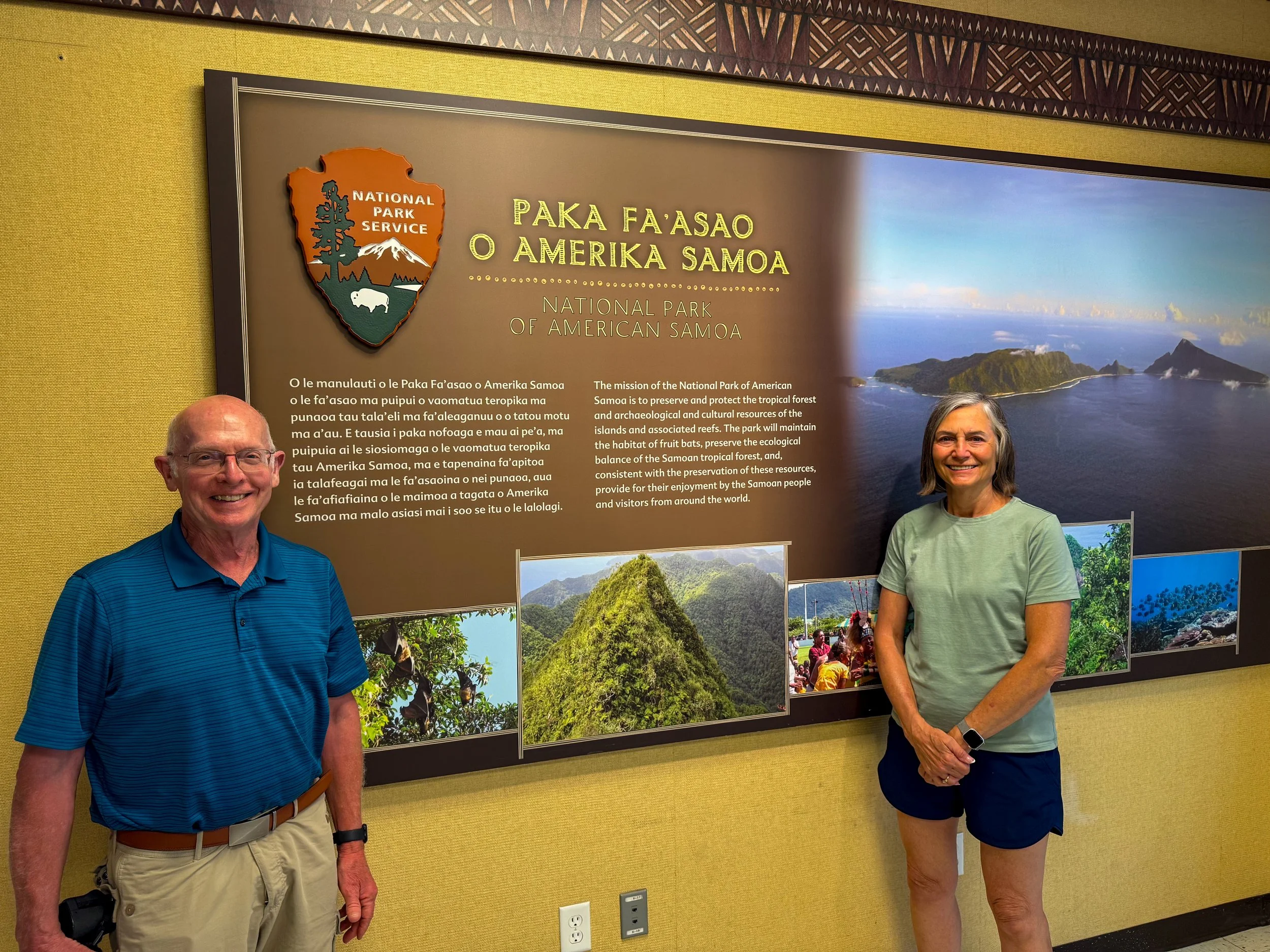
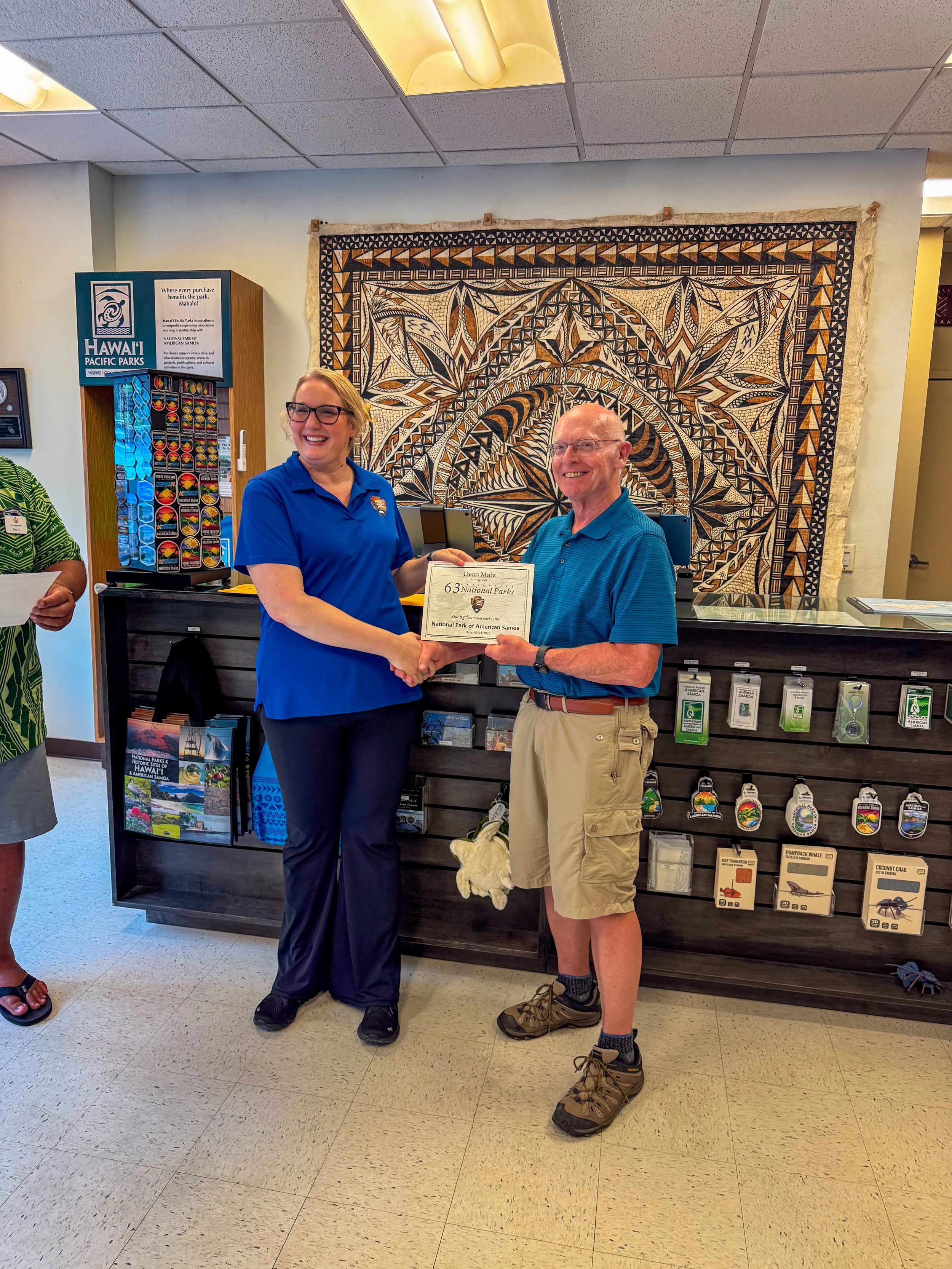
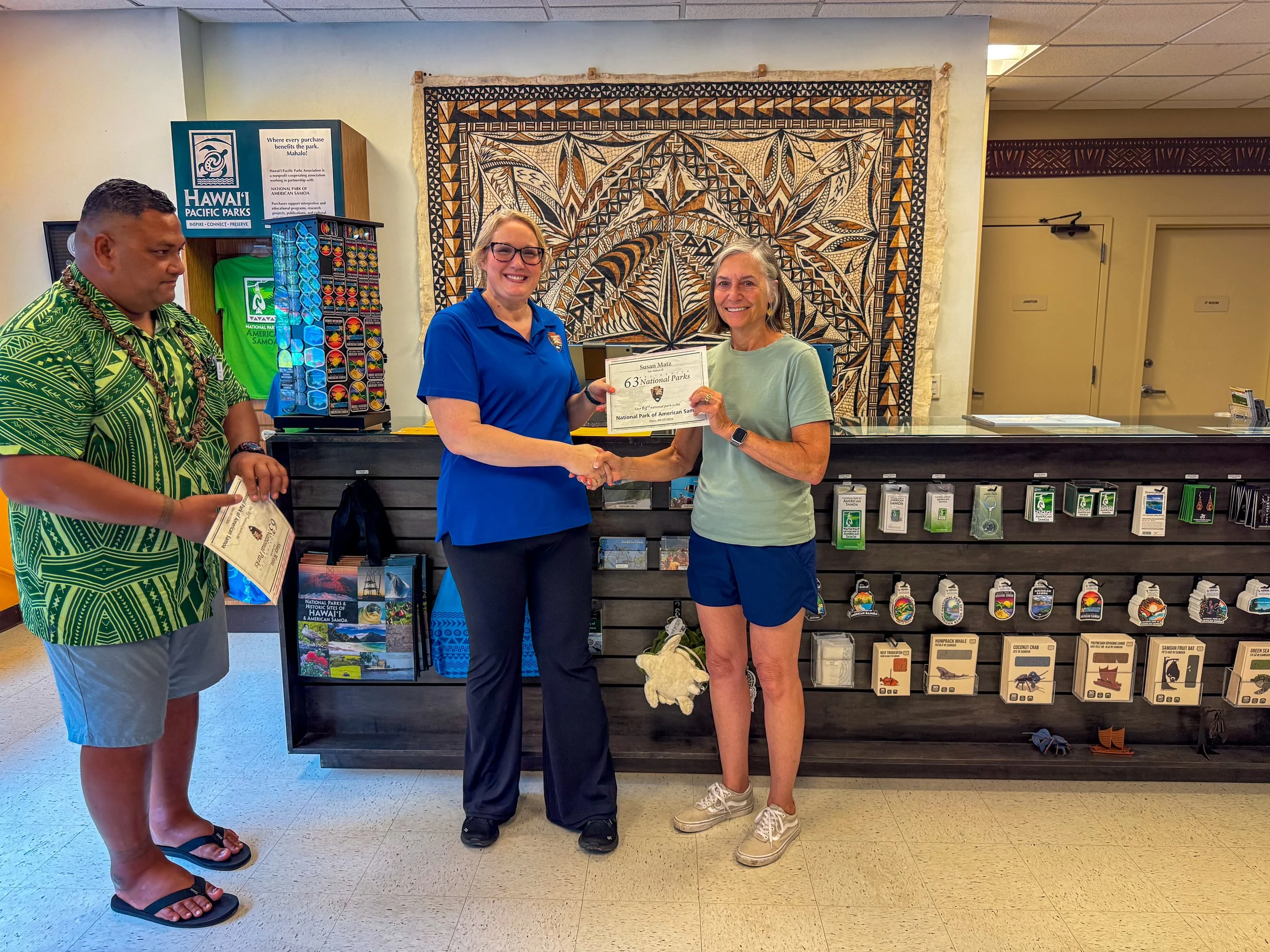
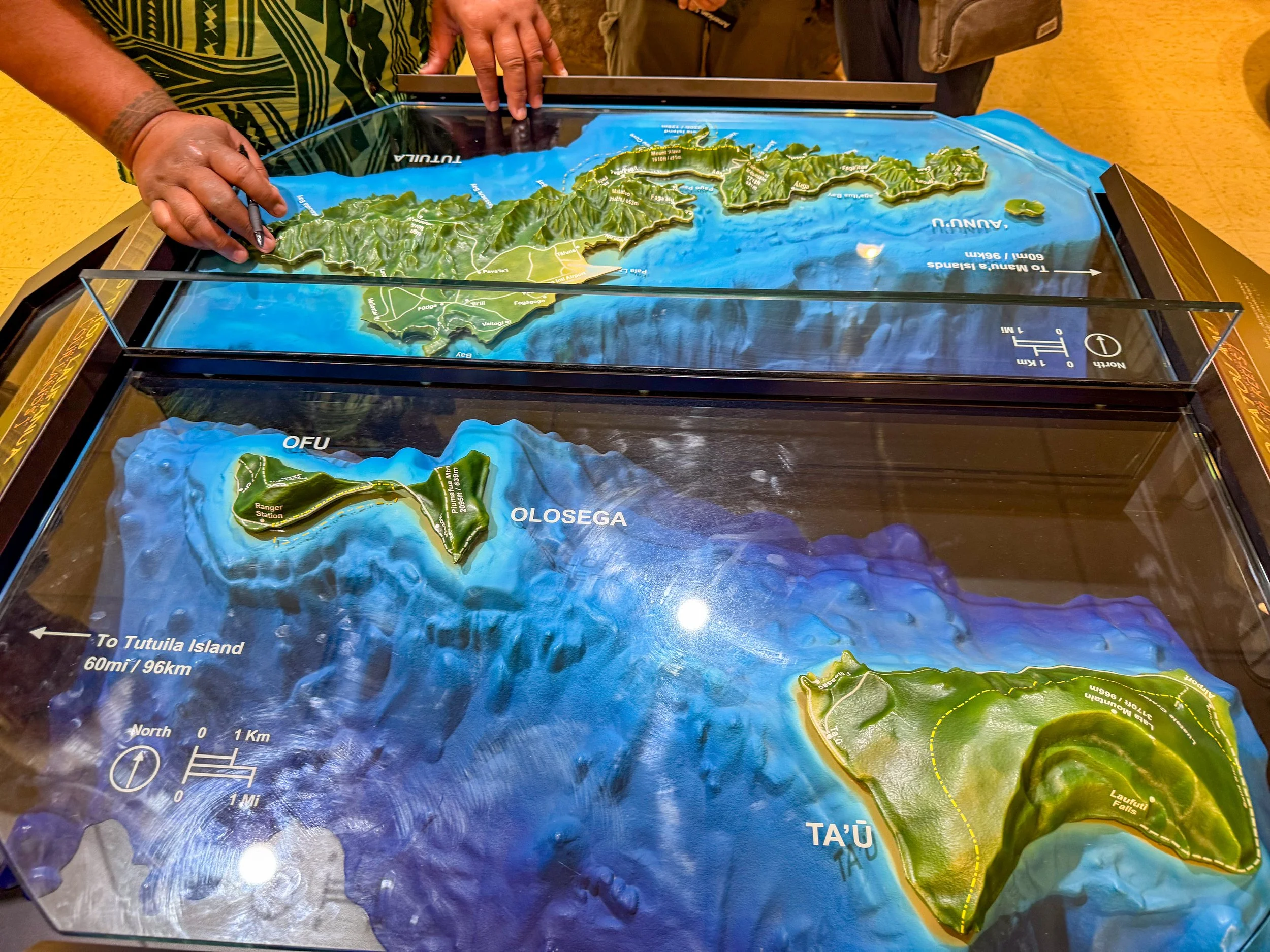
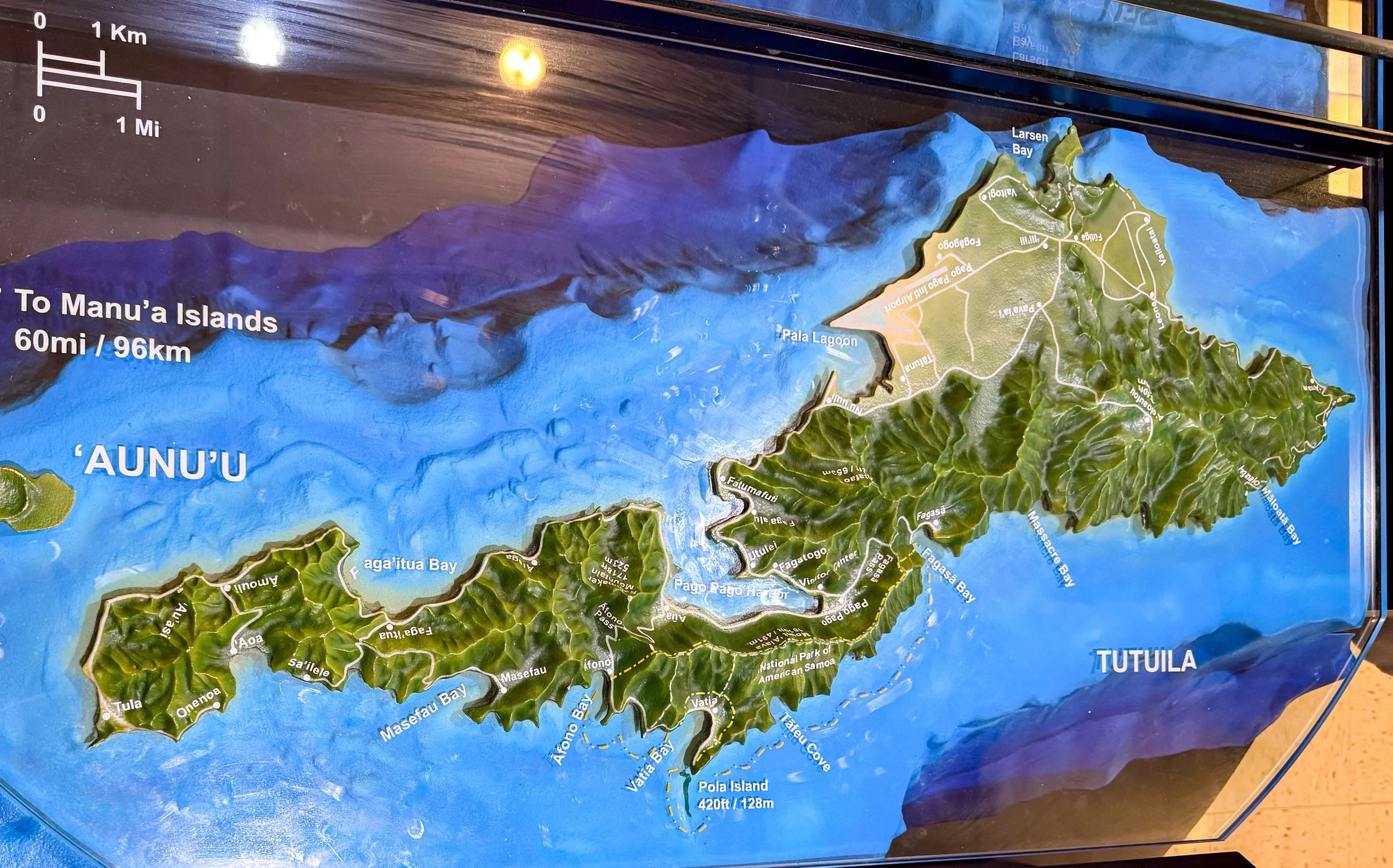
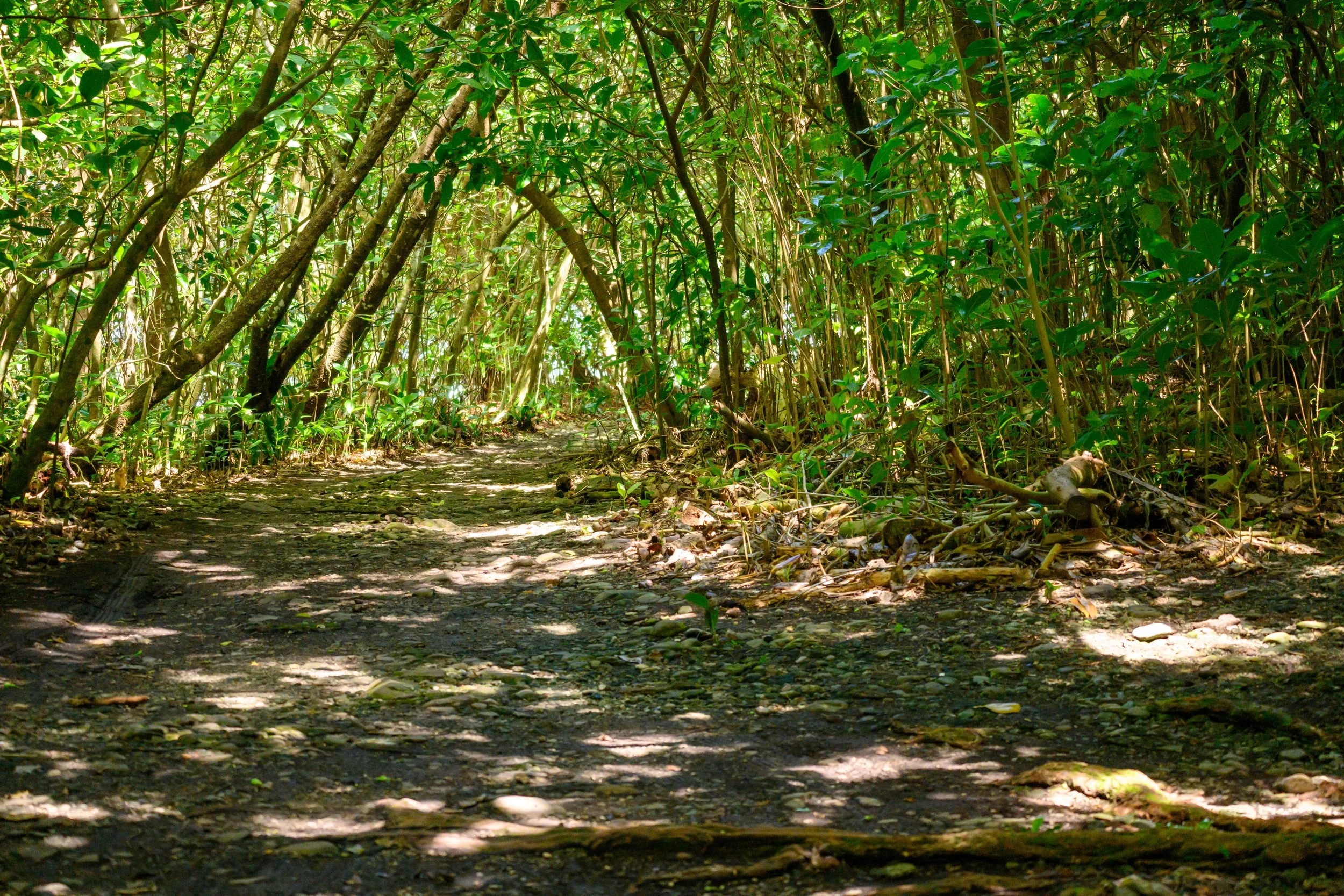
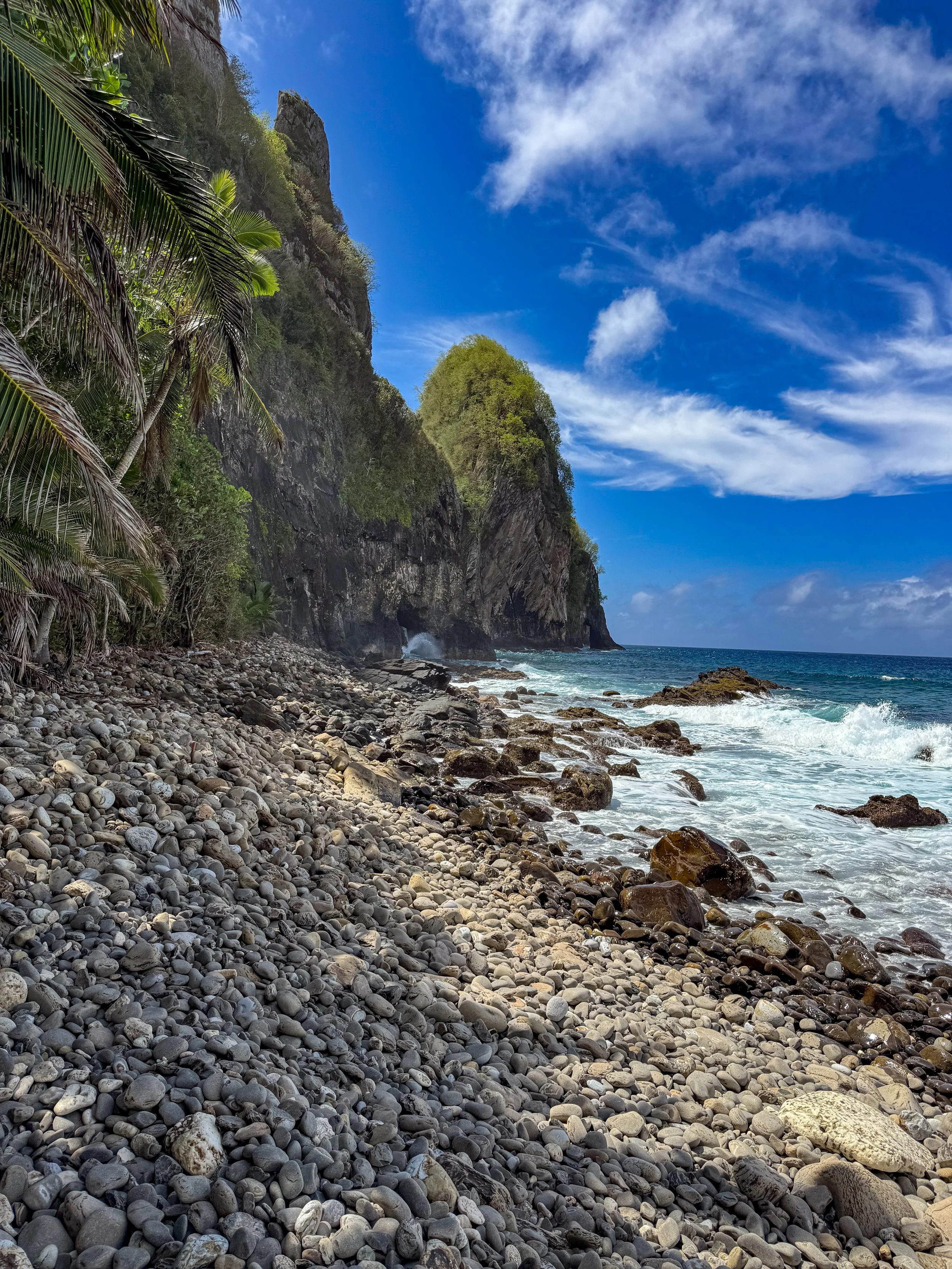
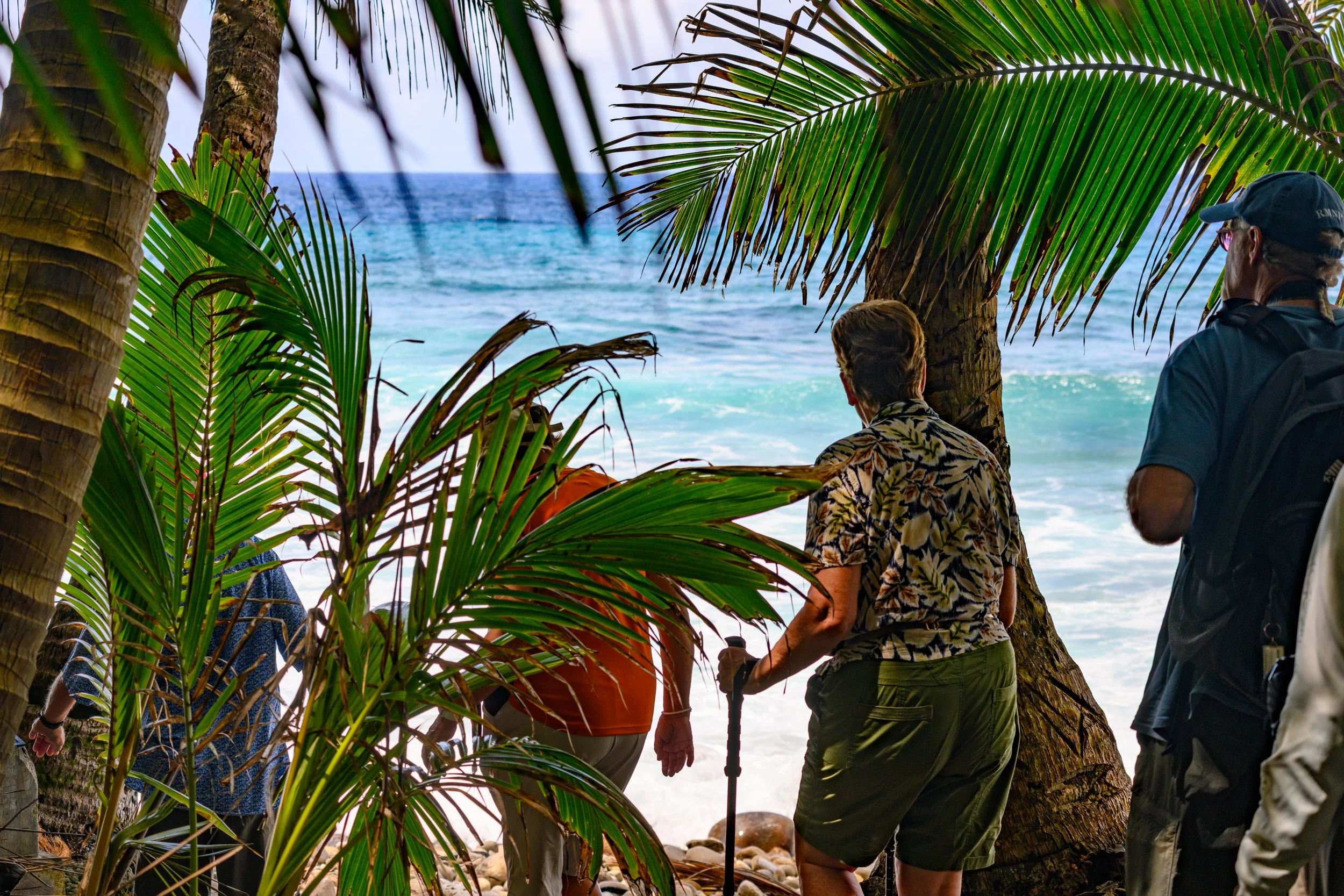
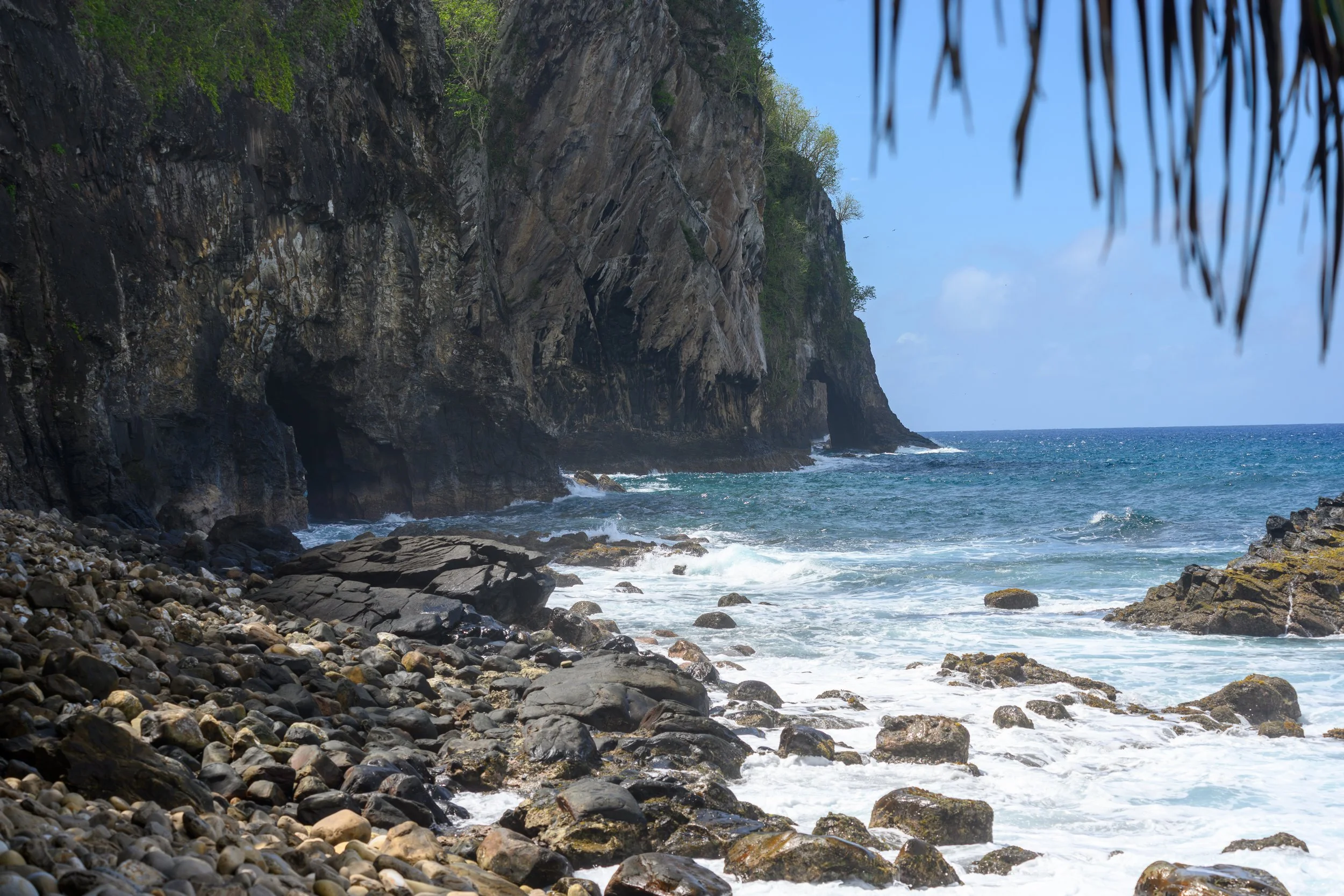
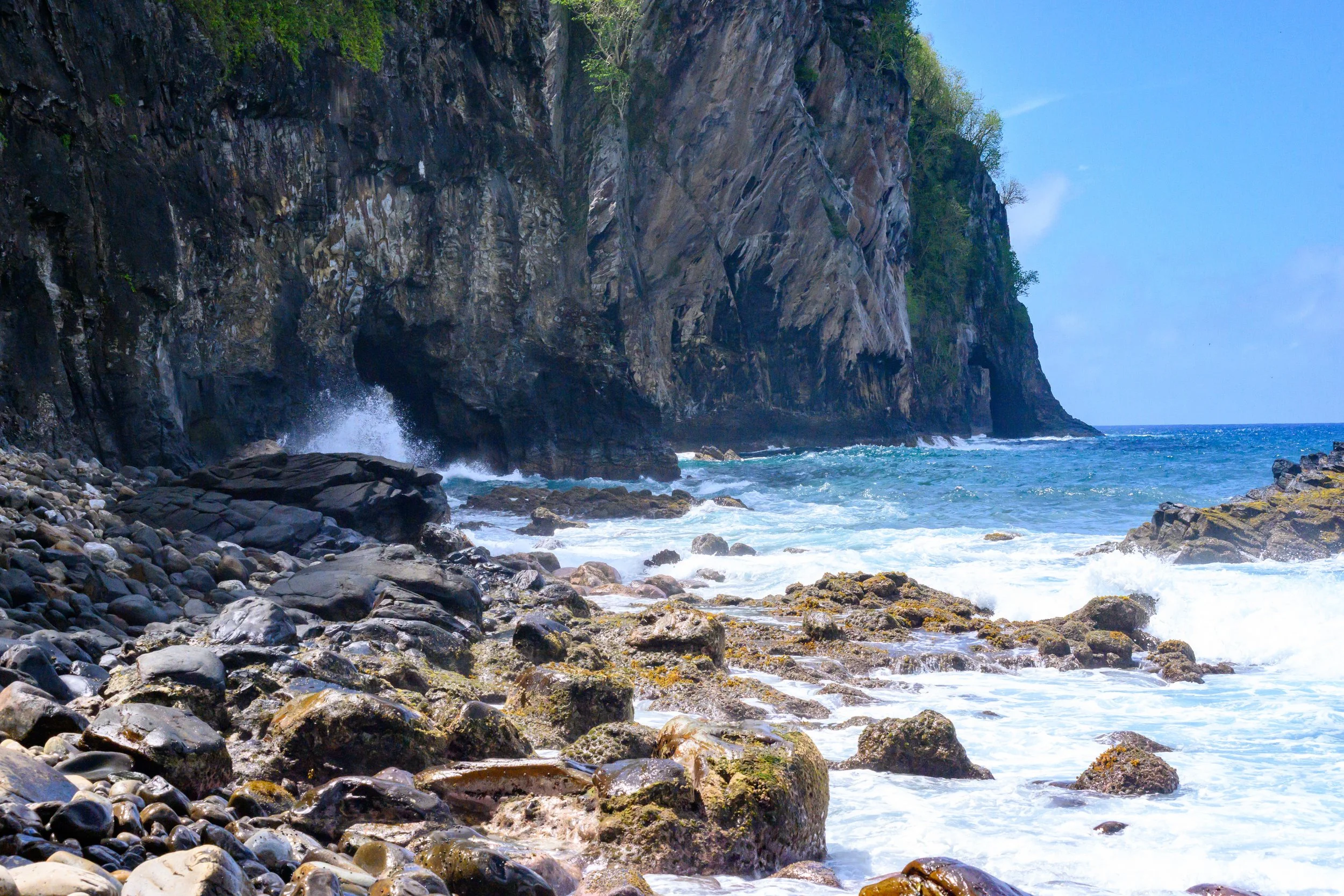
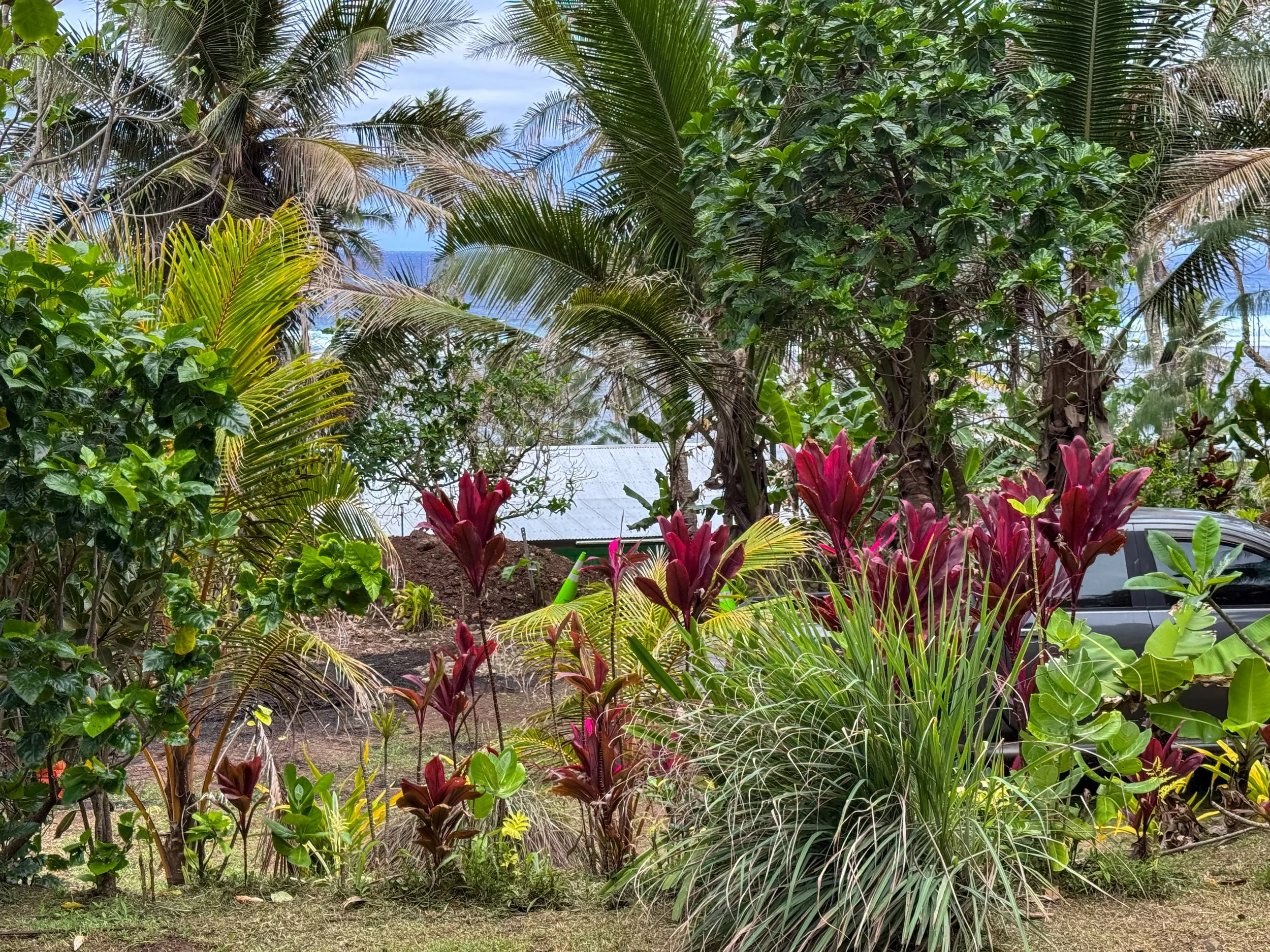
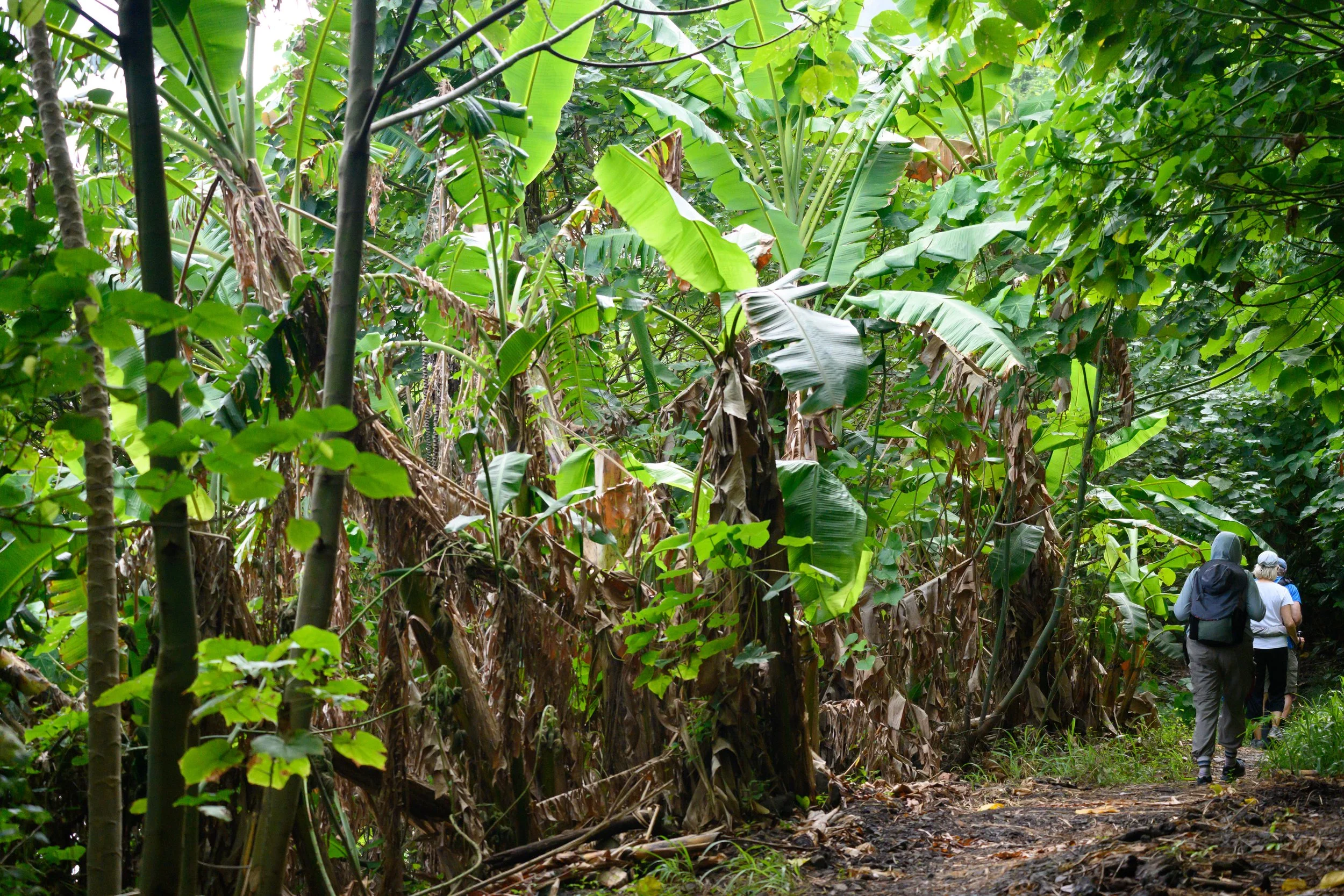
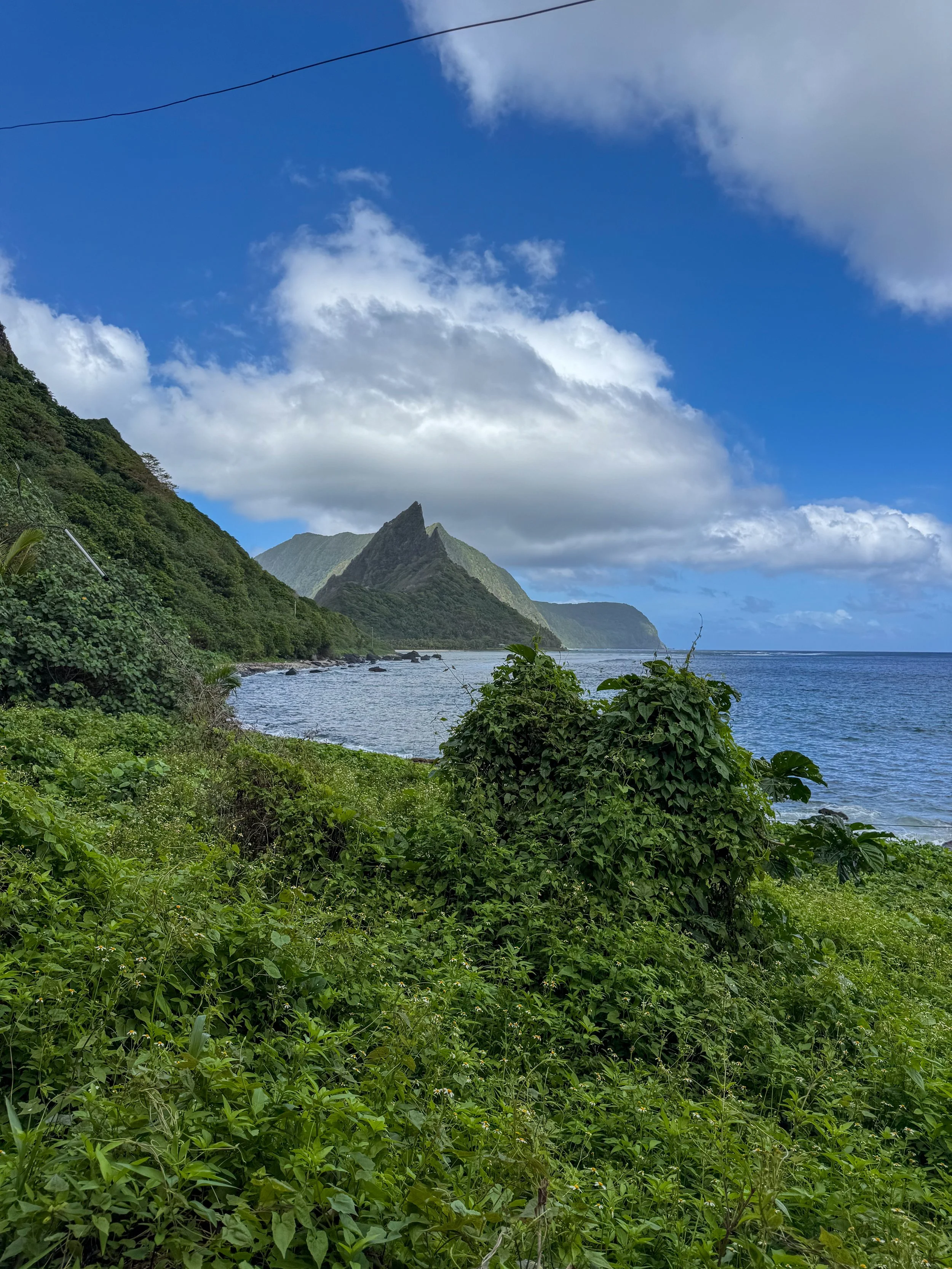
After the Visitor’s Center we were off hiking to the part of the National Park that is on Tutuila. As expected, we were hiking through rain forest, rugged coastlines and beaches. Hiking here generally means climbing up—or heading down—the sides of steep hills through beautiful rainforest. Since much of the National Park is in the sea, at just about any beach, you can snorkel the coral reefs, which are filled with colorful fish.
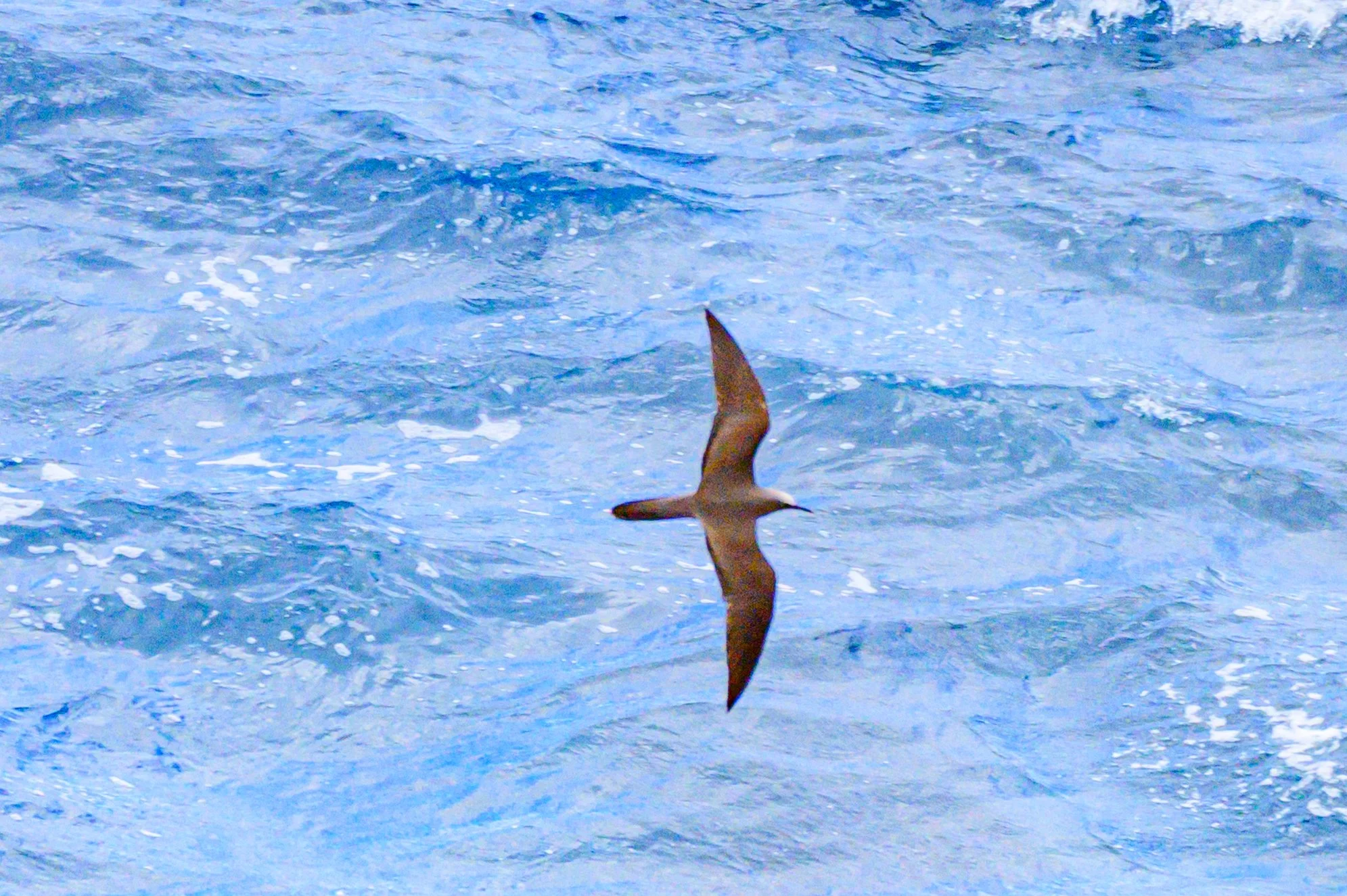
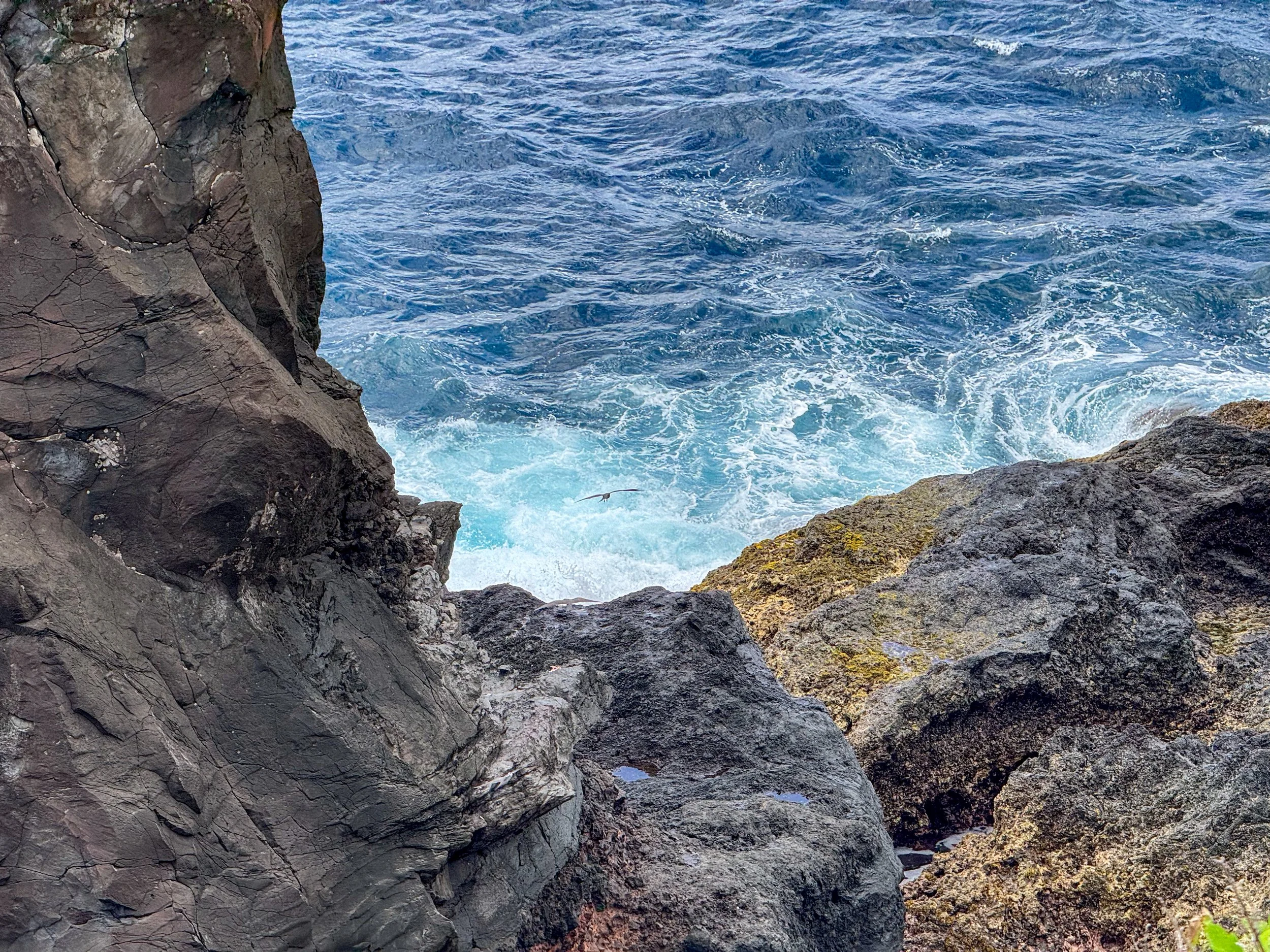
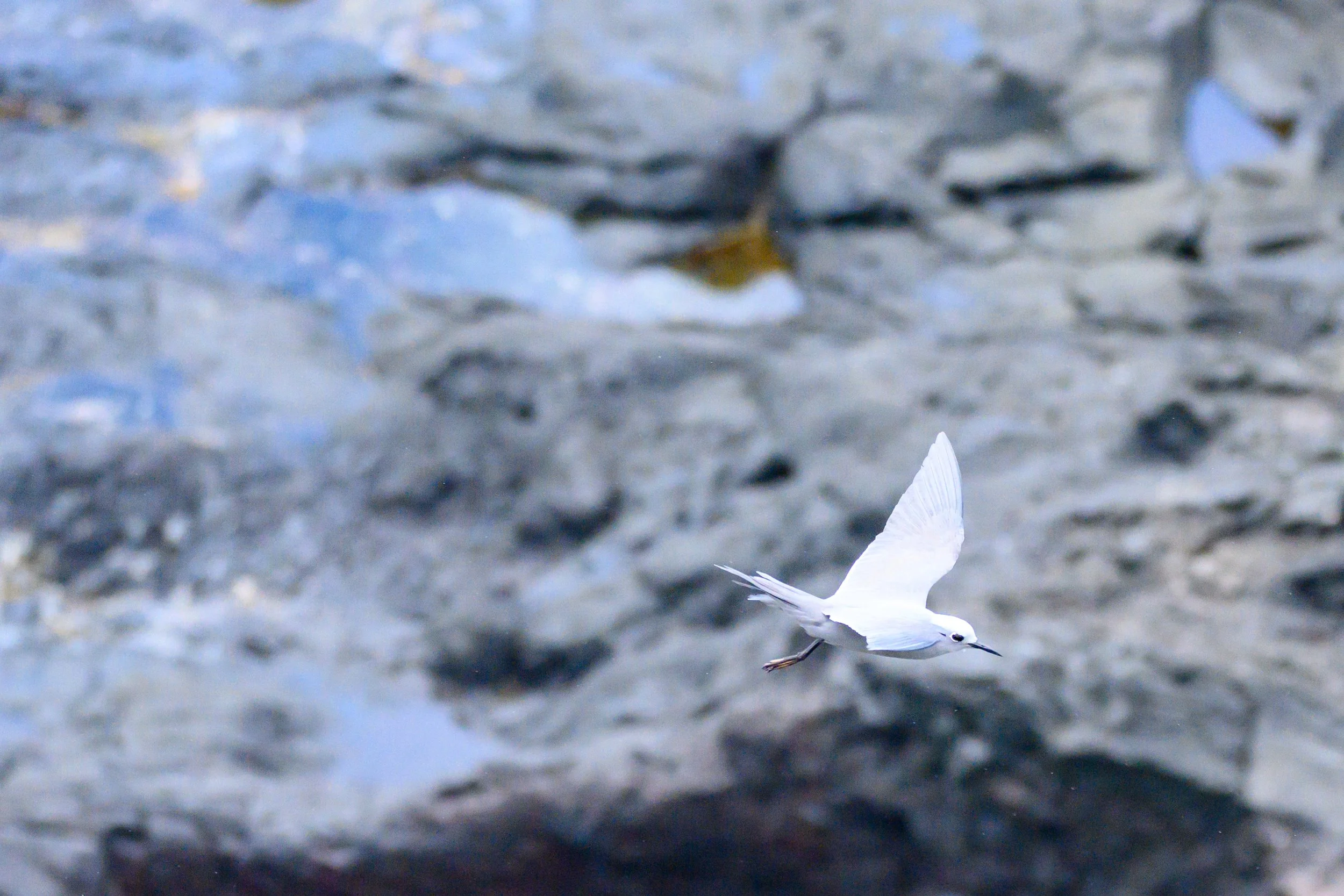
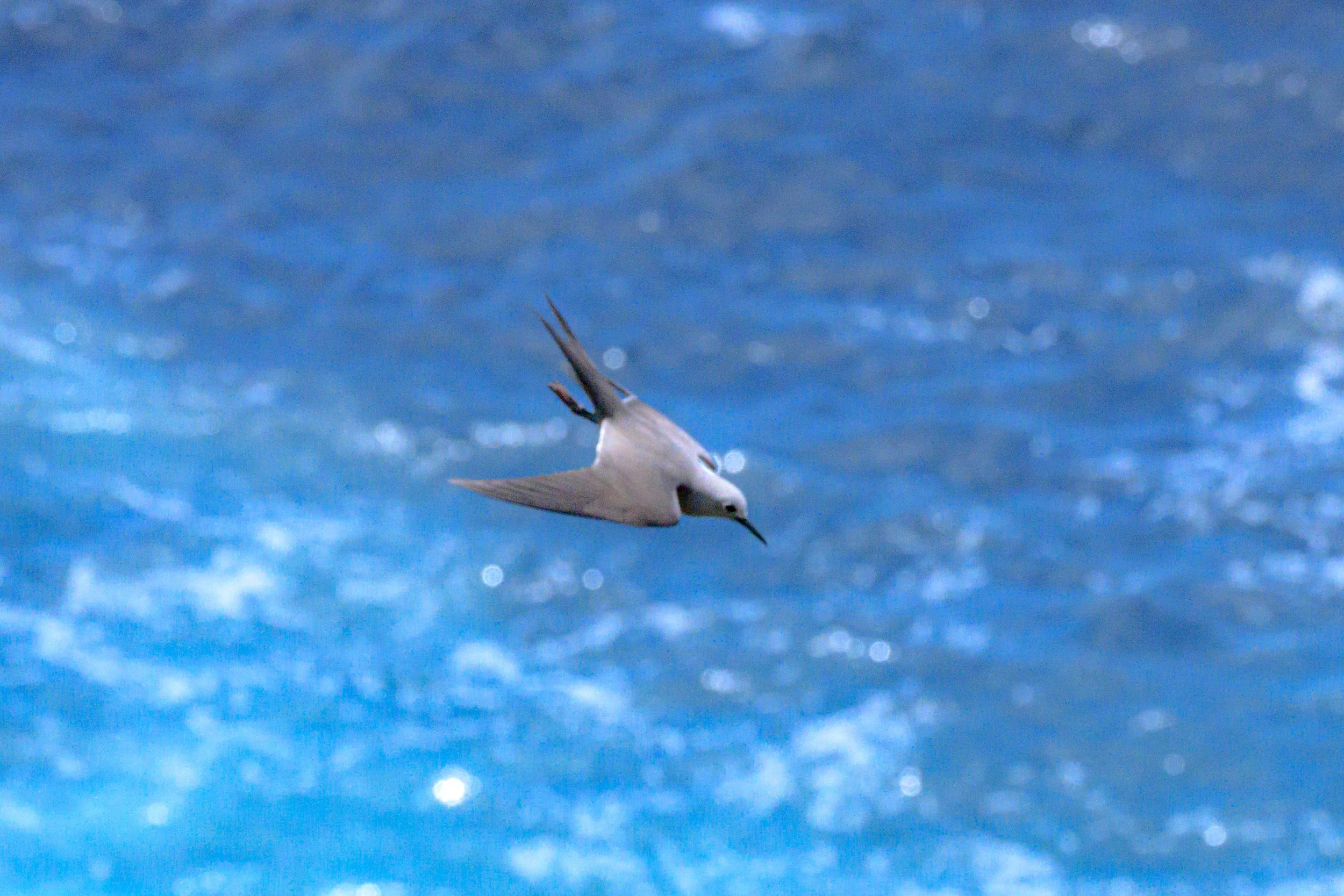
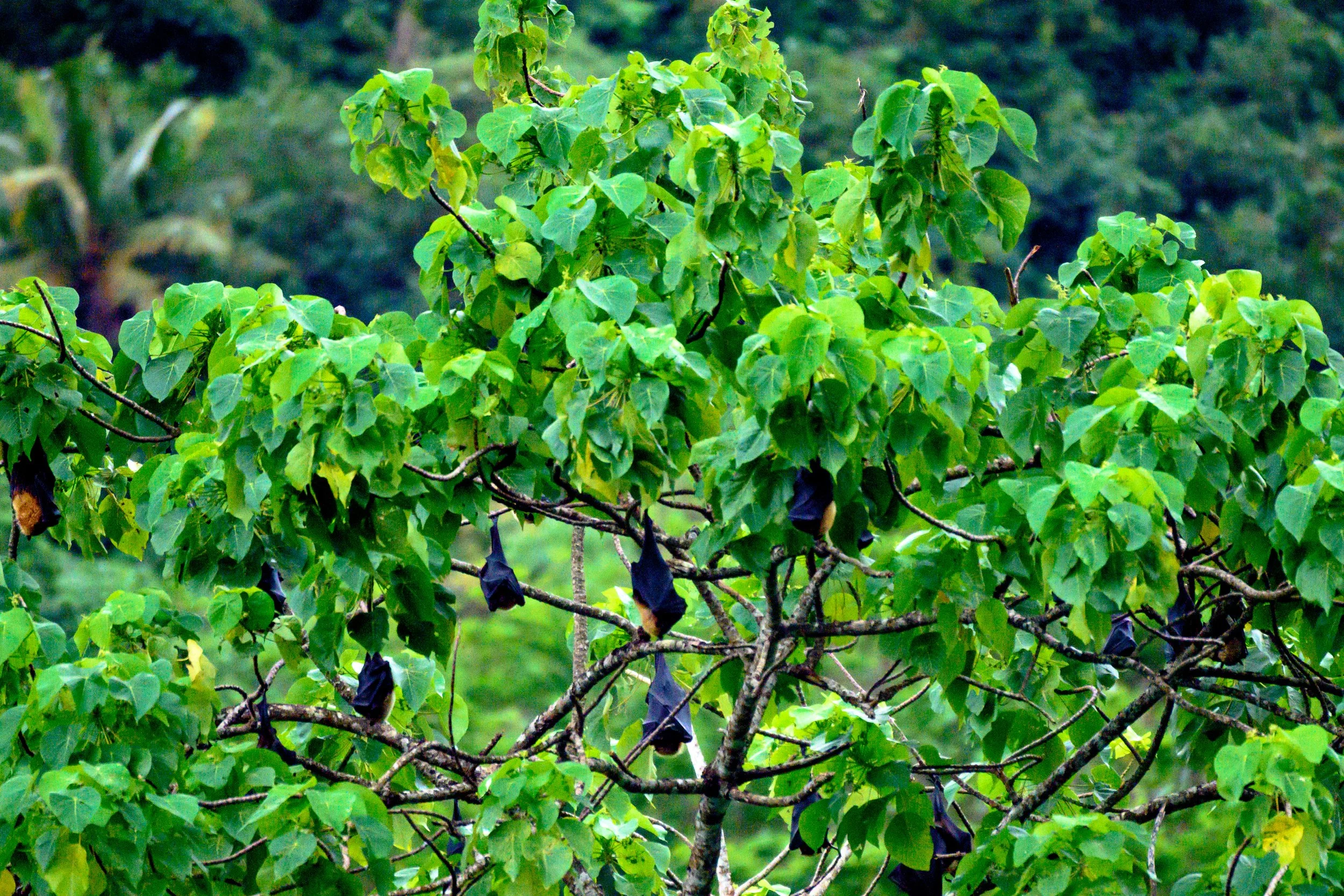
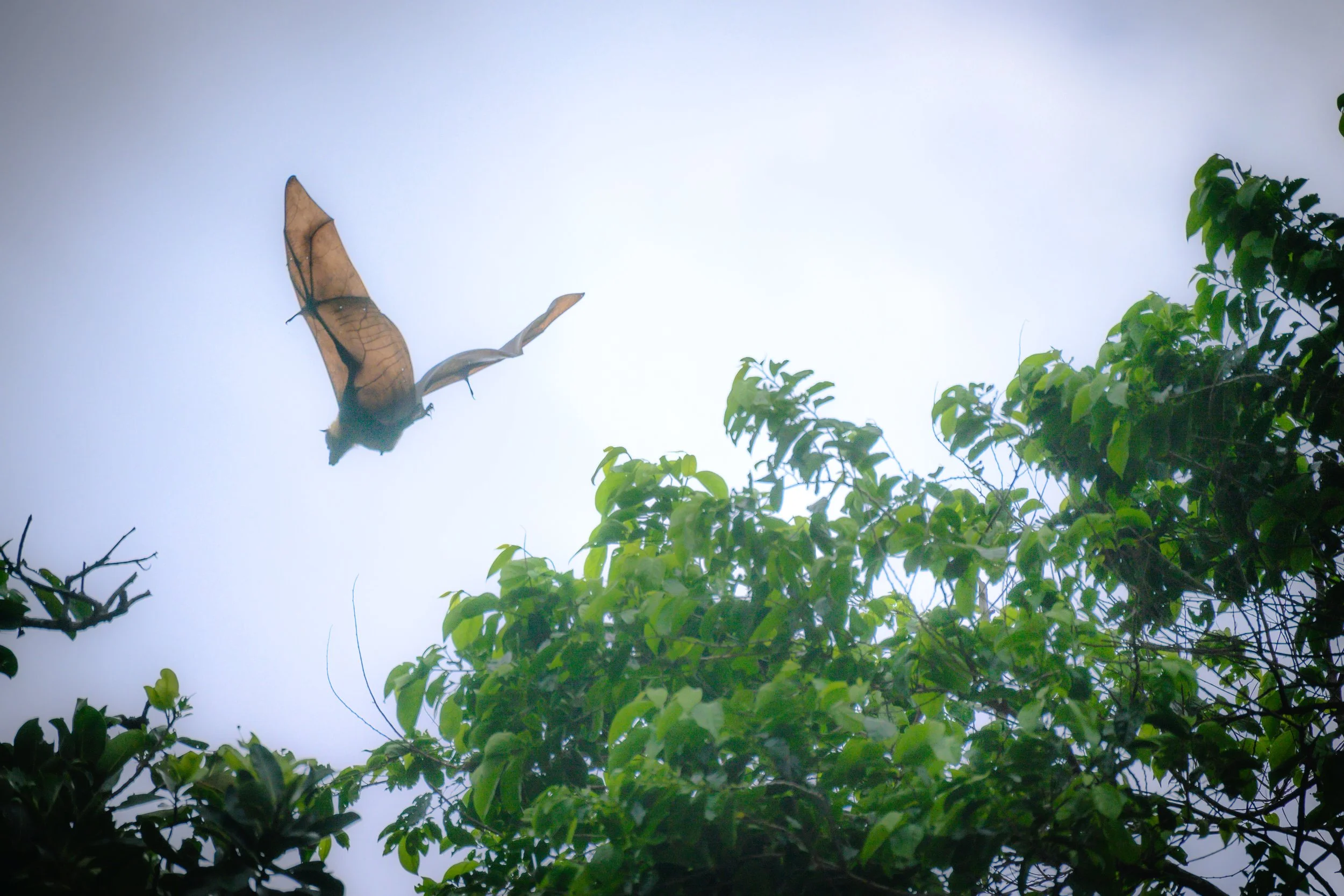
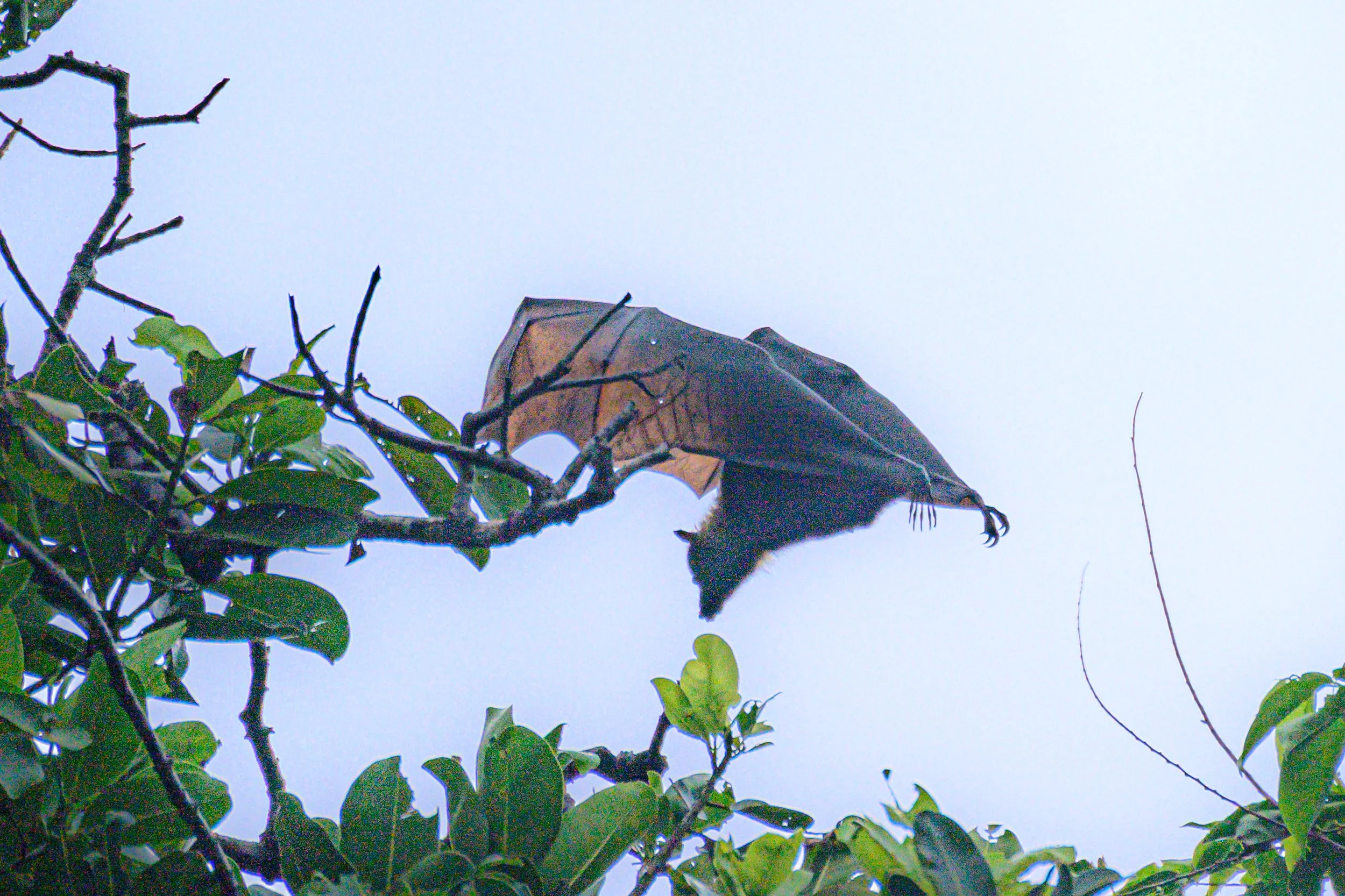
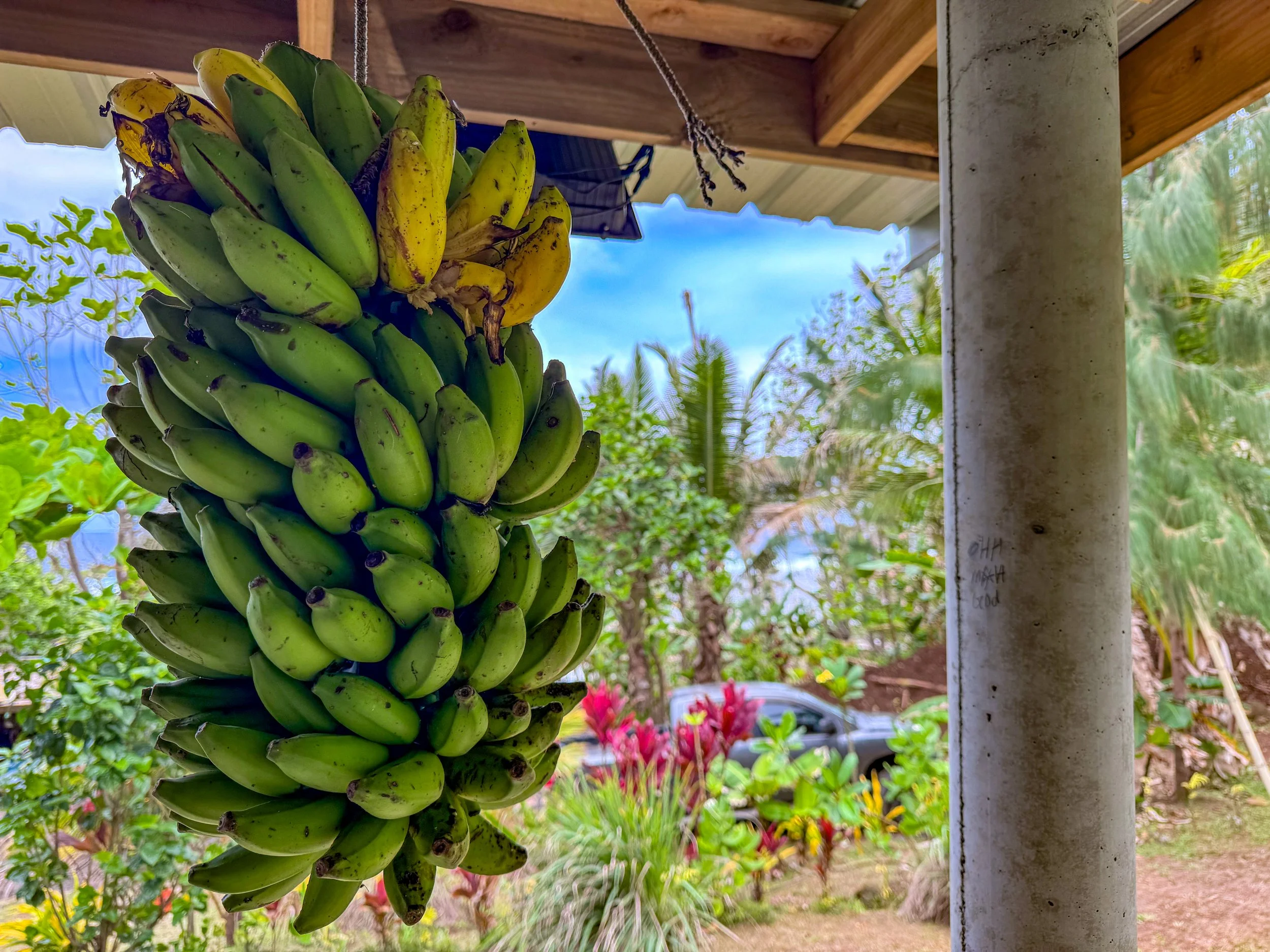
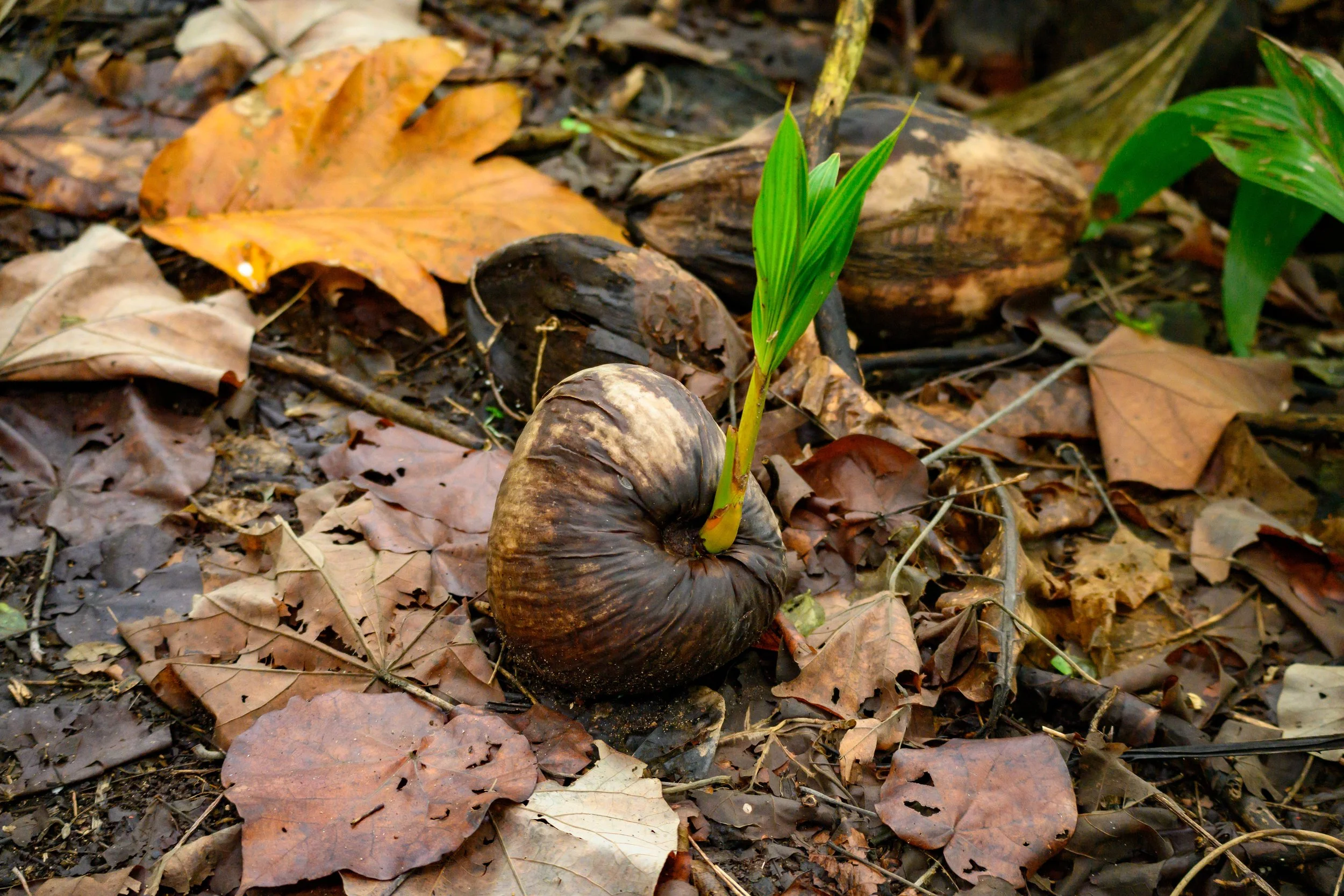
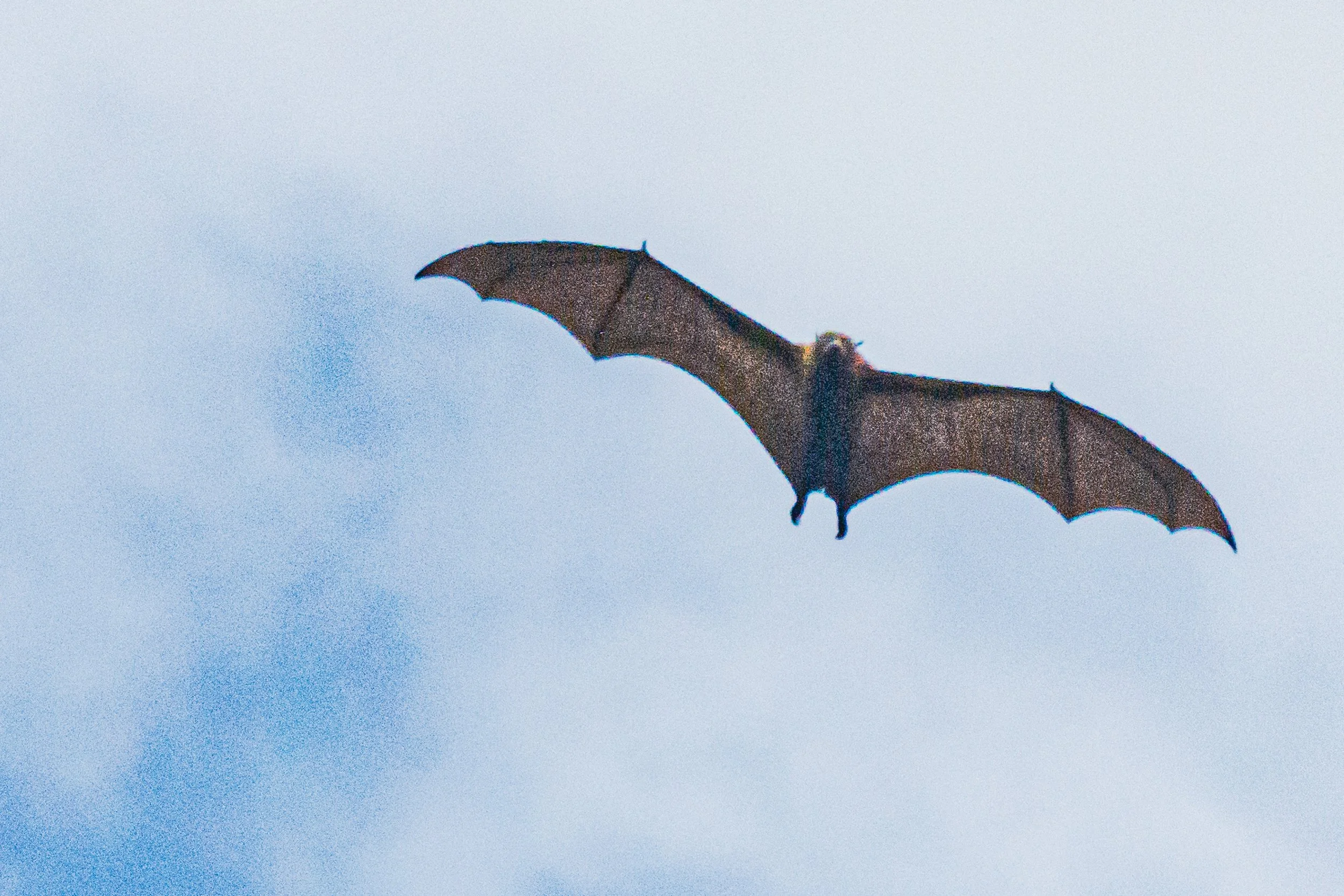
Birds, cocoanuts, and bats: The only native land mammals here are bats, with Samoan flying foxes being the most prevalent. They are quite large and feed on the abundant fruit. They hang in the trees during the day sometimes taking flight in the daytime but mostly become active about dusk. They help propagate the bananas and misc. fruit trees on the islands. and are particularly good at their job. Samoa has many migratory bird, typical sea birds like boobies, frigates and curlew, and rain forest birds like honey eaters and tropical doves. No snakes but may lizards. The most frightening wildlife were some of the dogs that took their guard dog job very seriously.
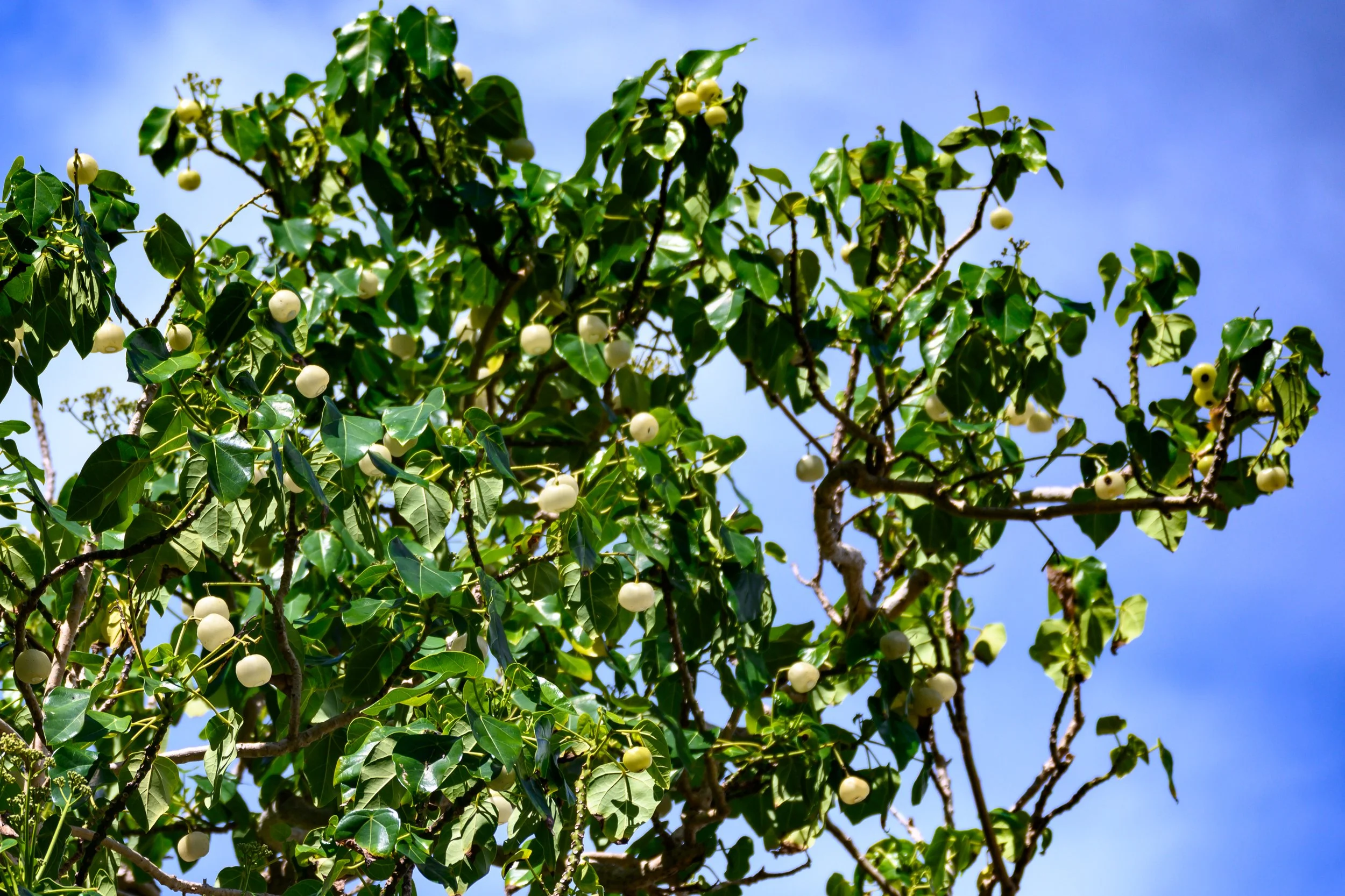
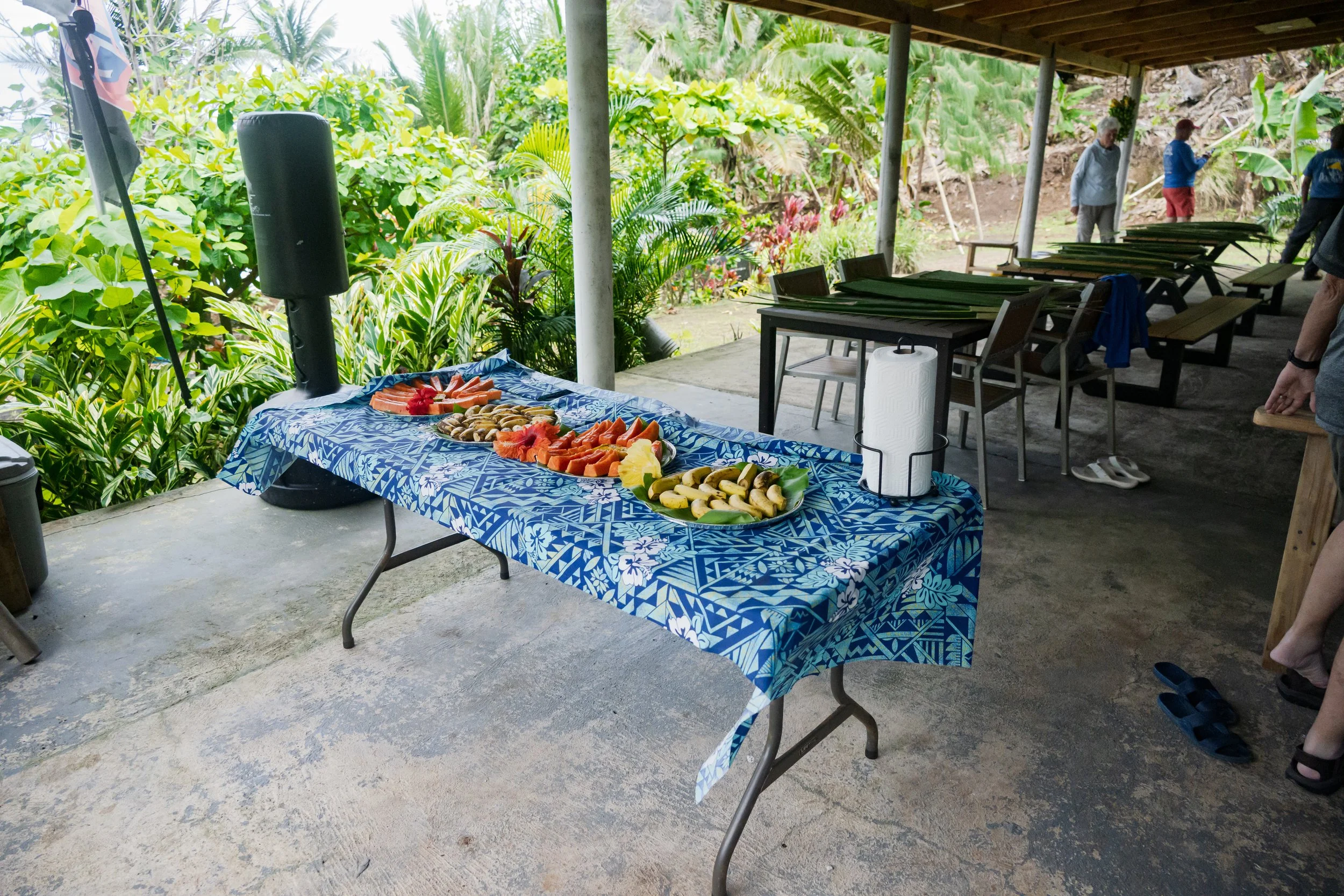
People don’t need to cultivate many of the trees that provide their food; instead, they go into the rainforest and harvest bananas, breadfruit, papaya, mangoes, coconuts, key limes, and pineapples, which seem to grow everywhere. All you really need to know is how to harvest and prepare them.
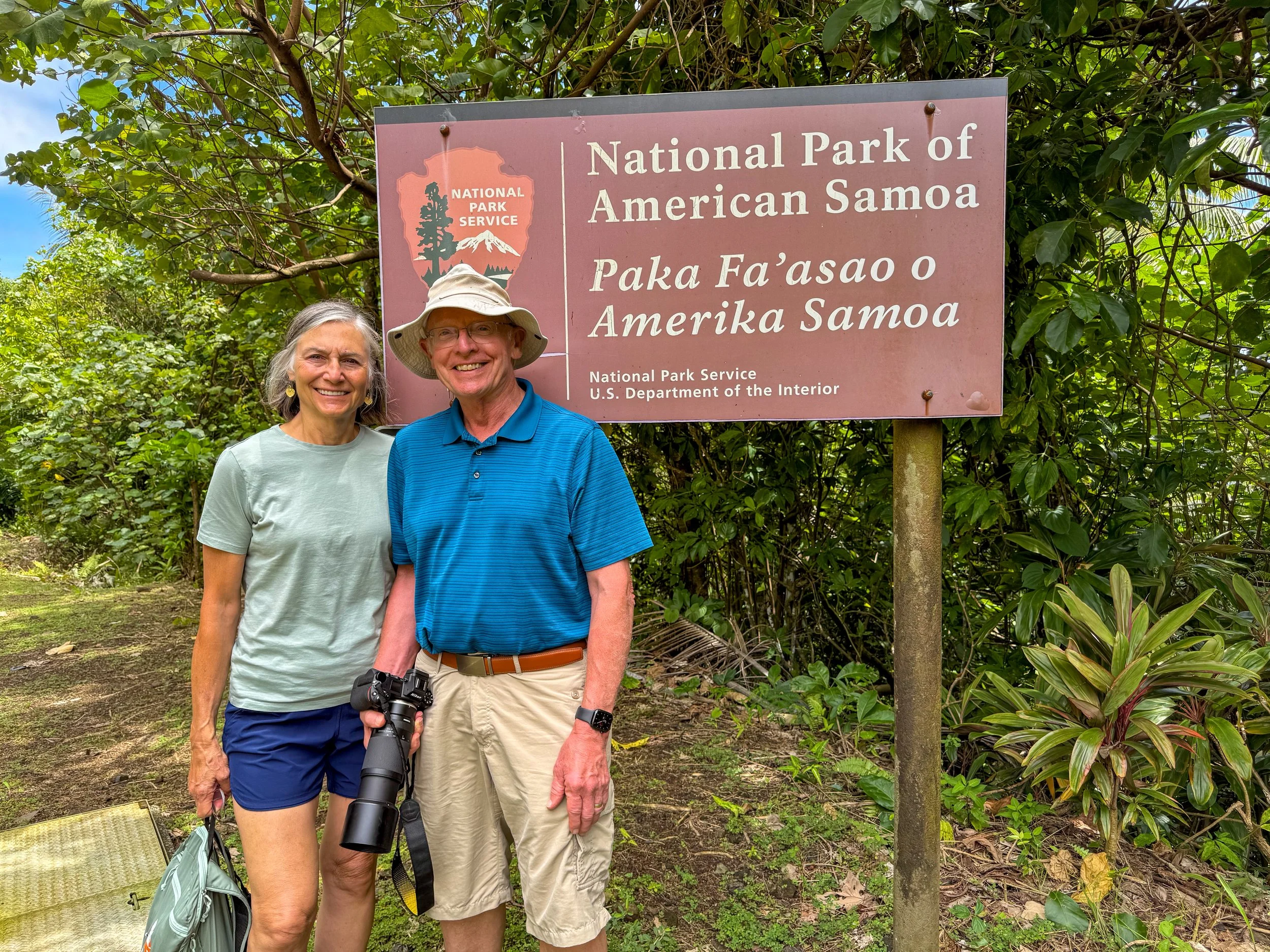
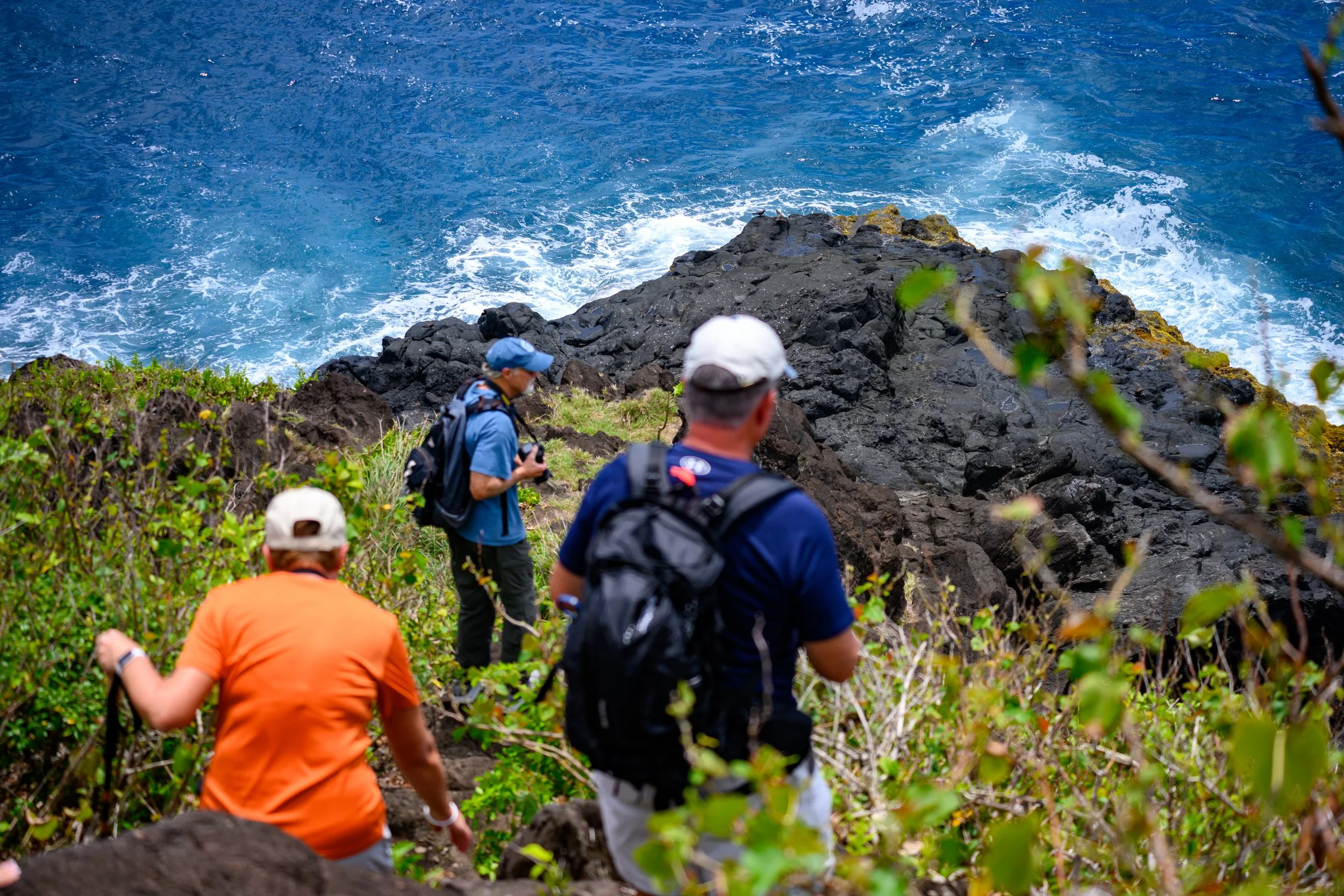
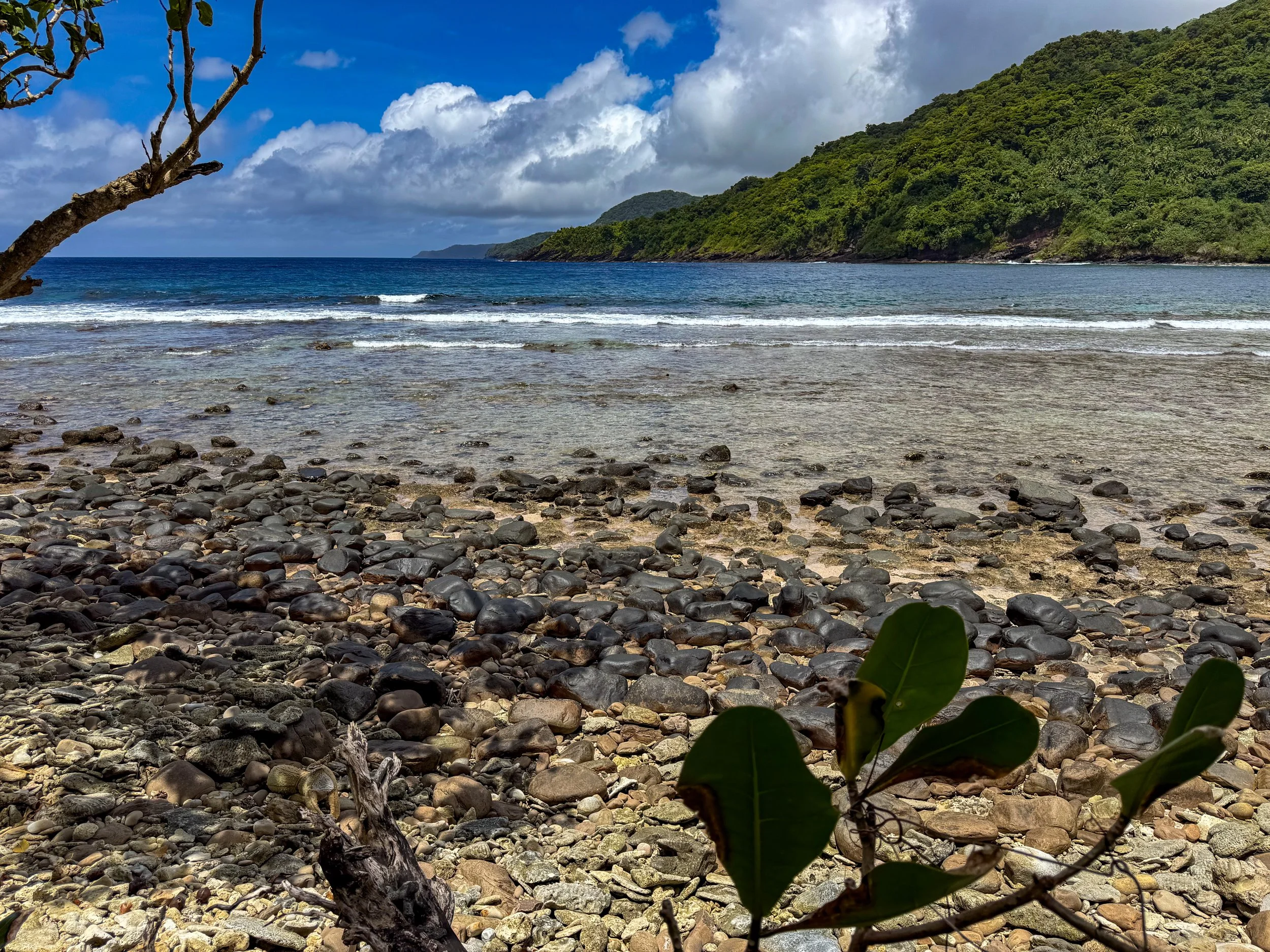
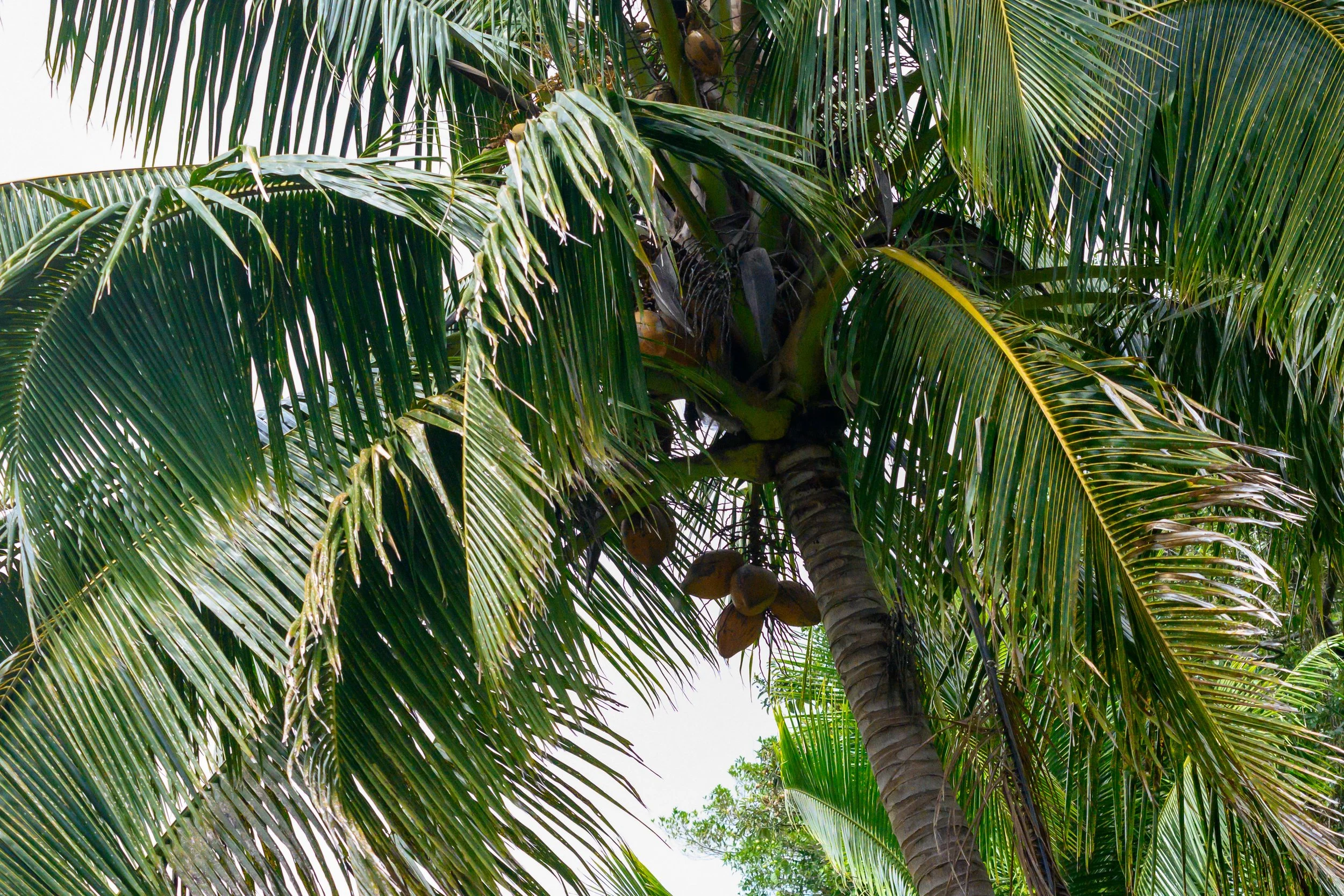
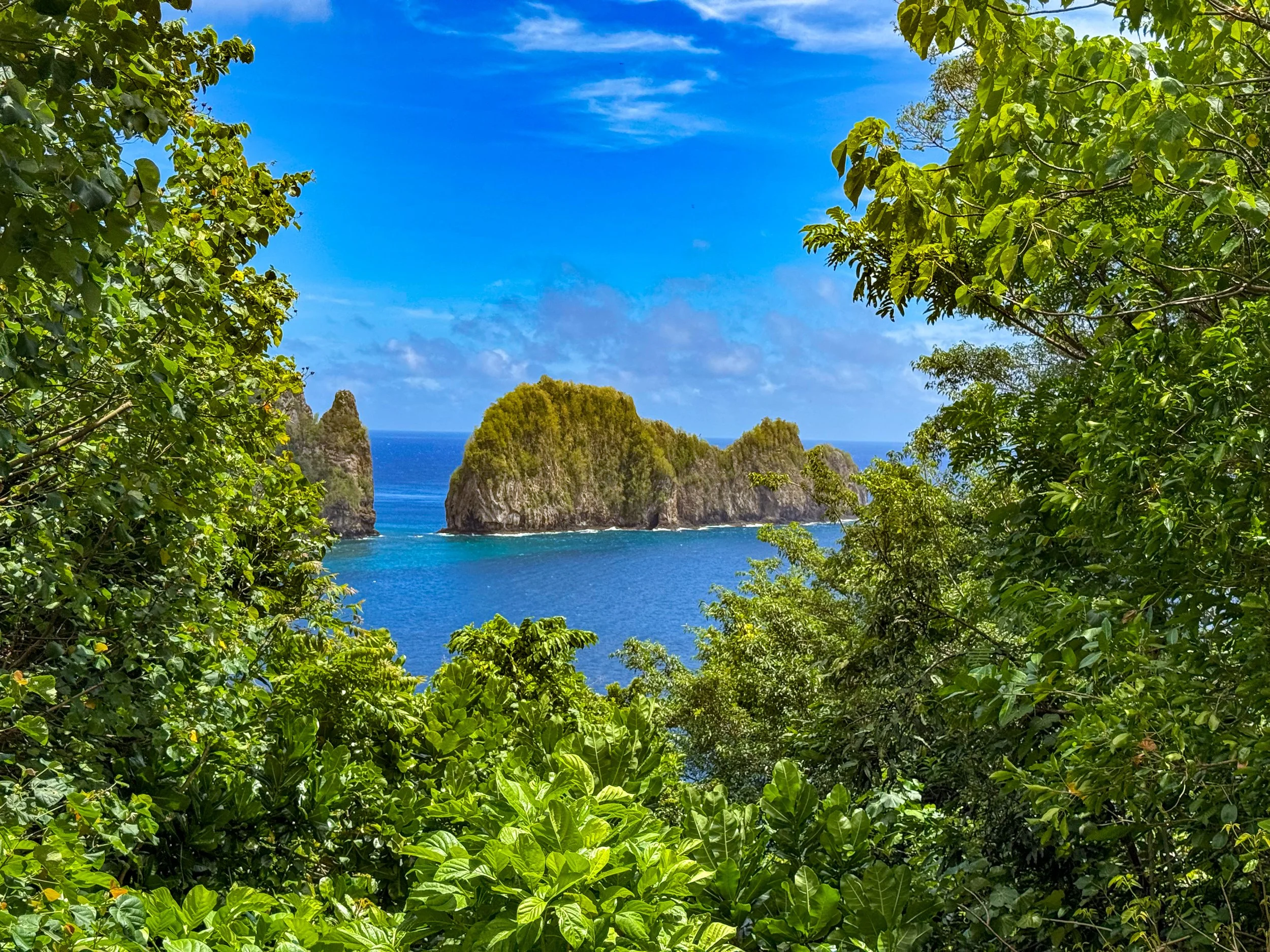
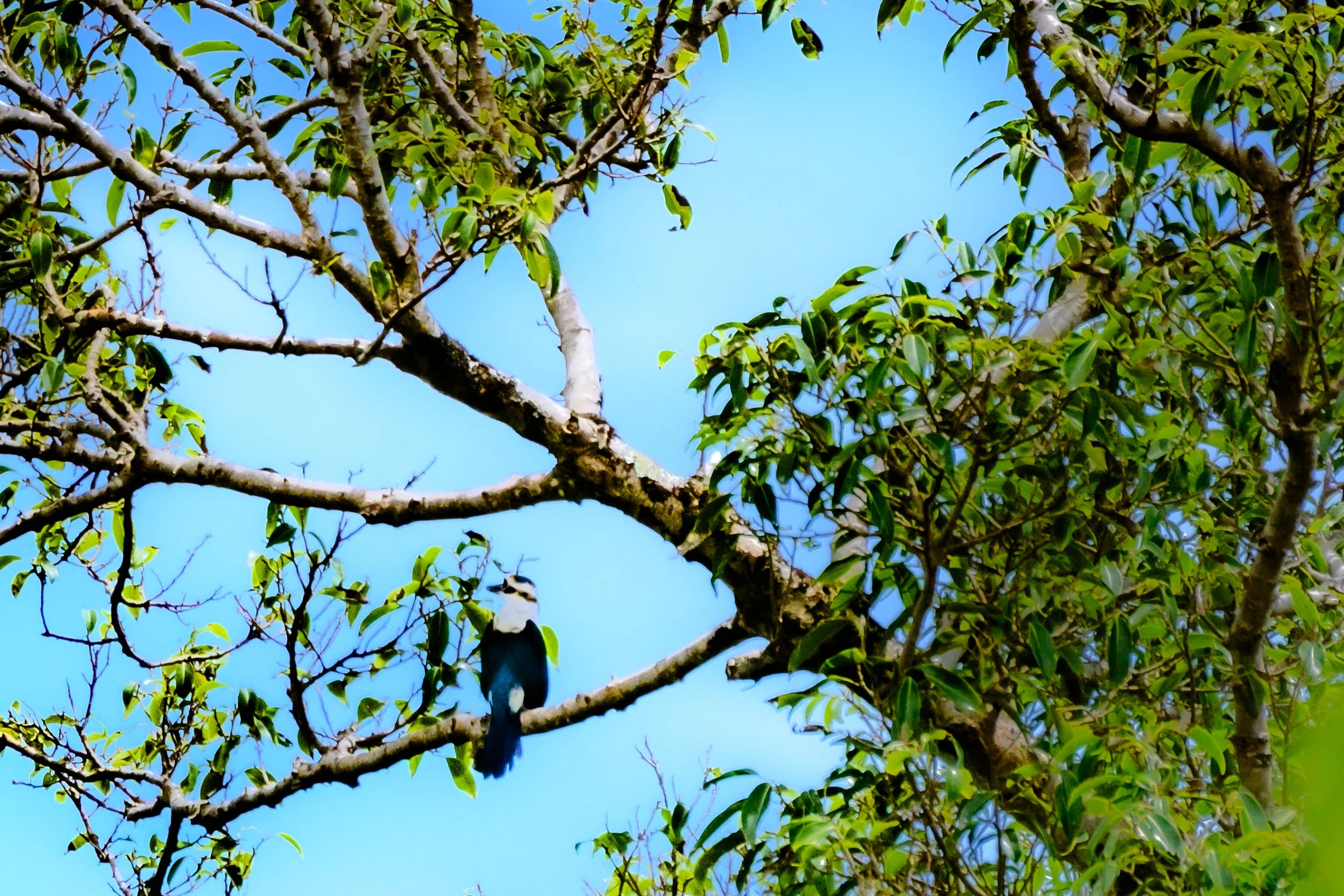
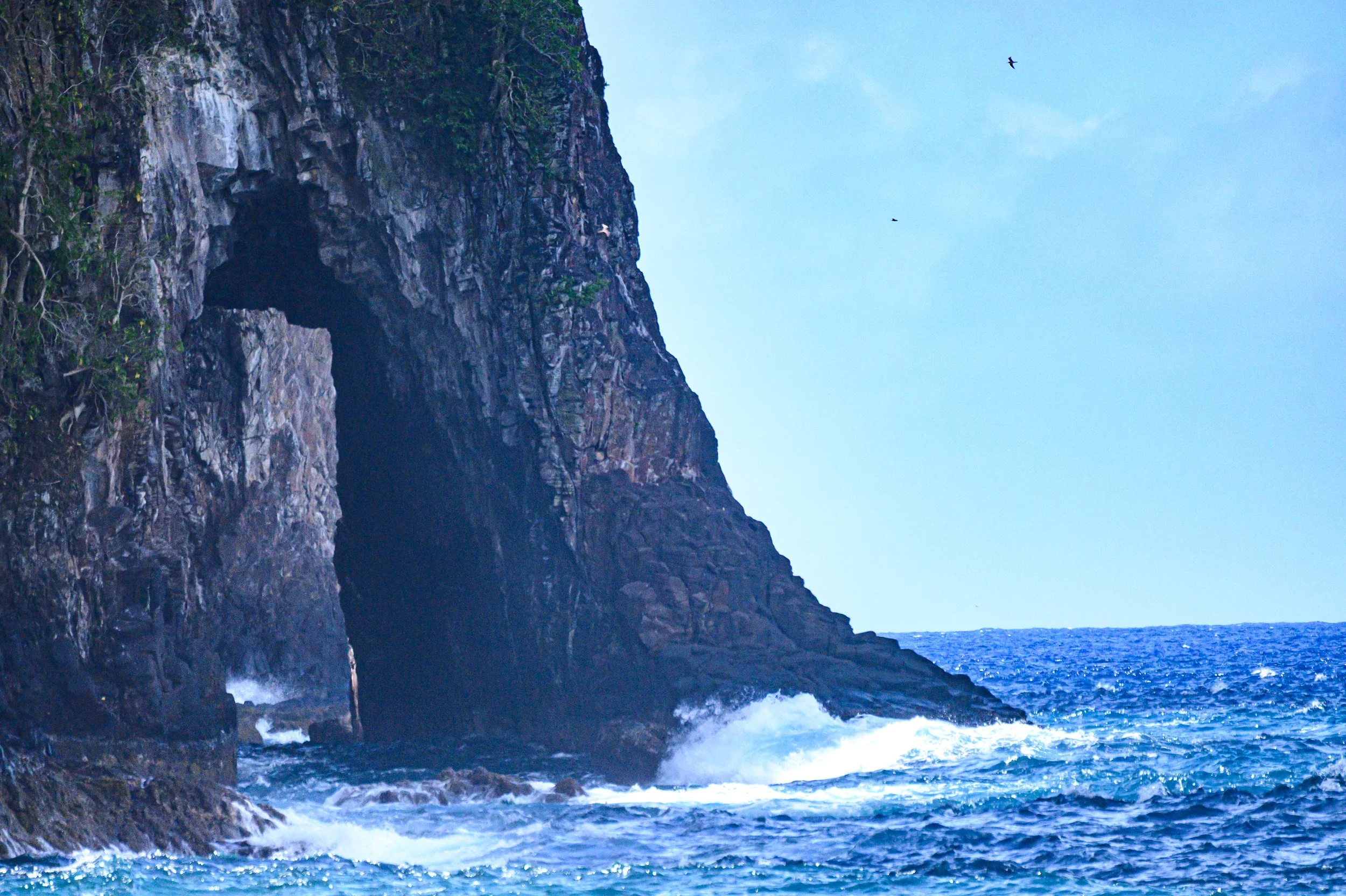
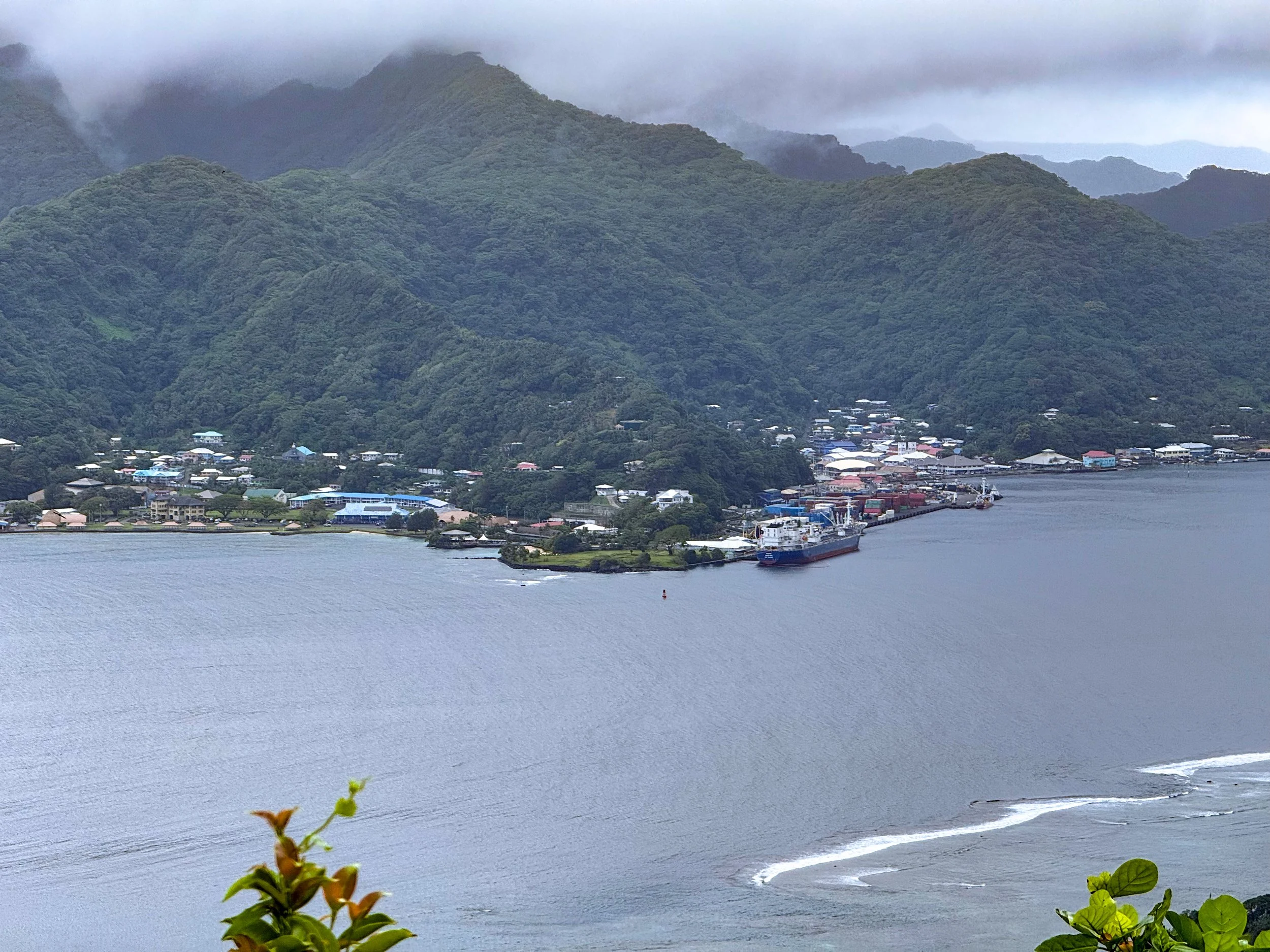
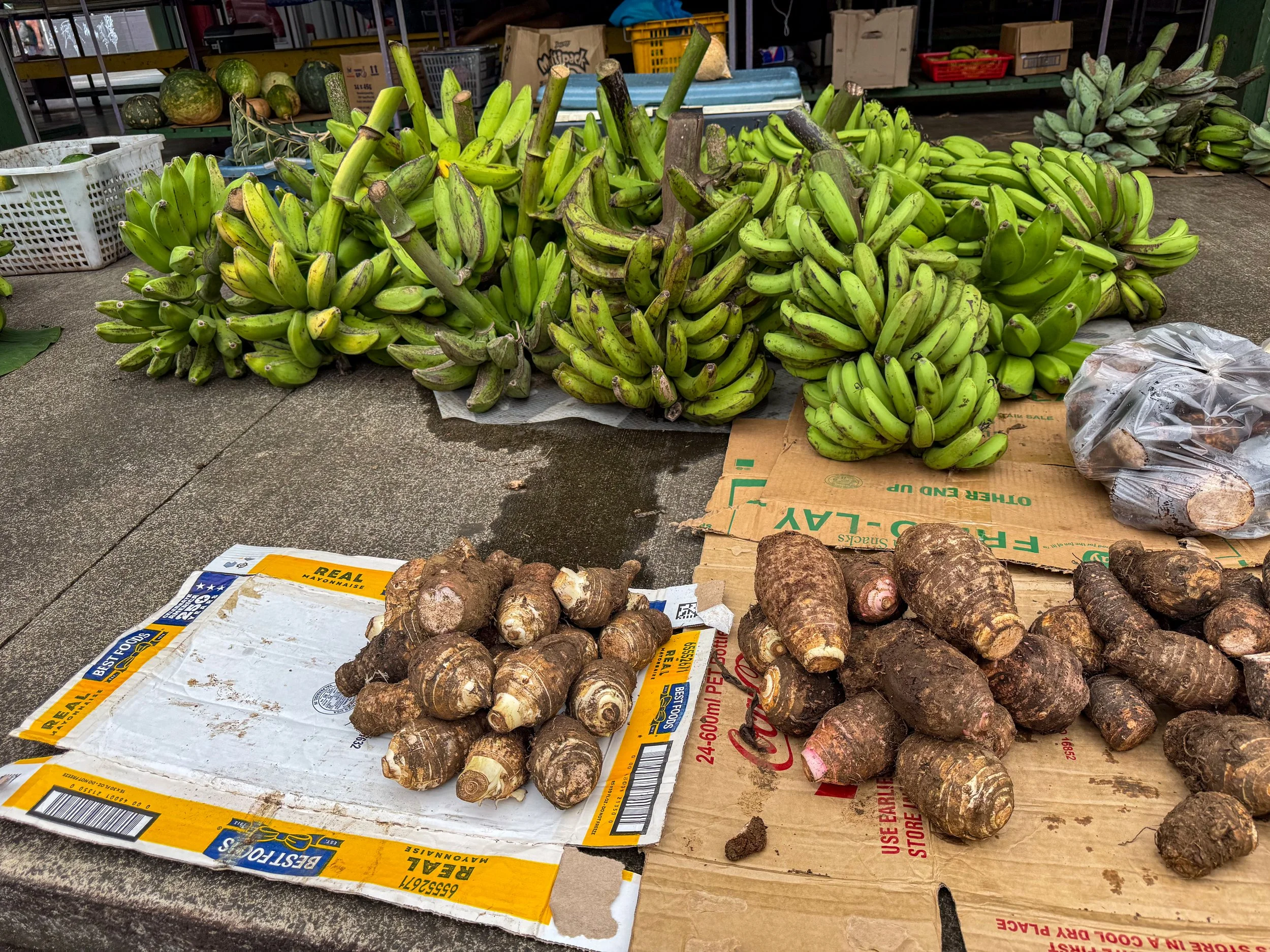
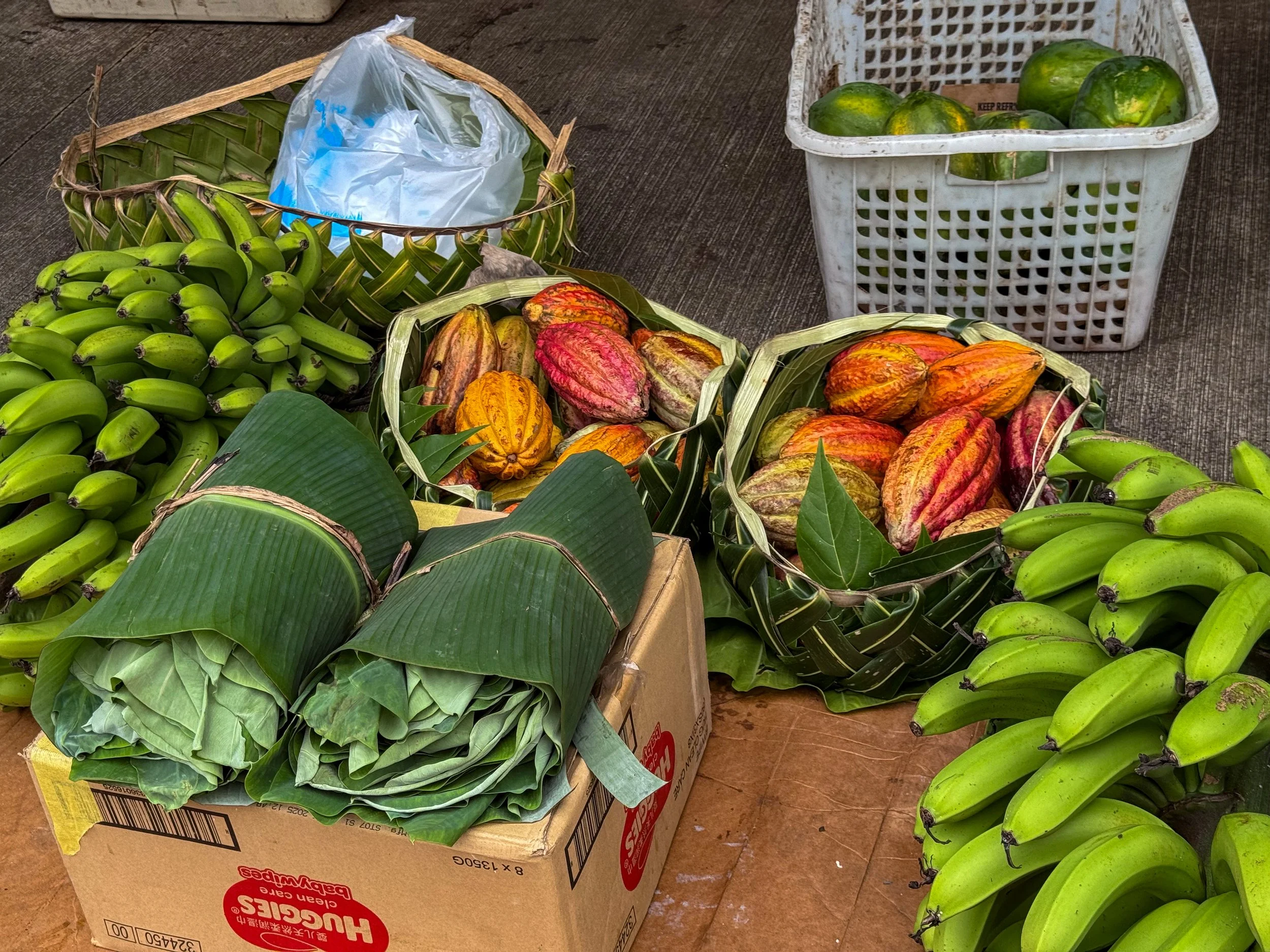
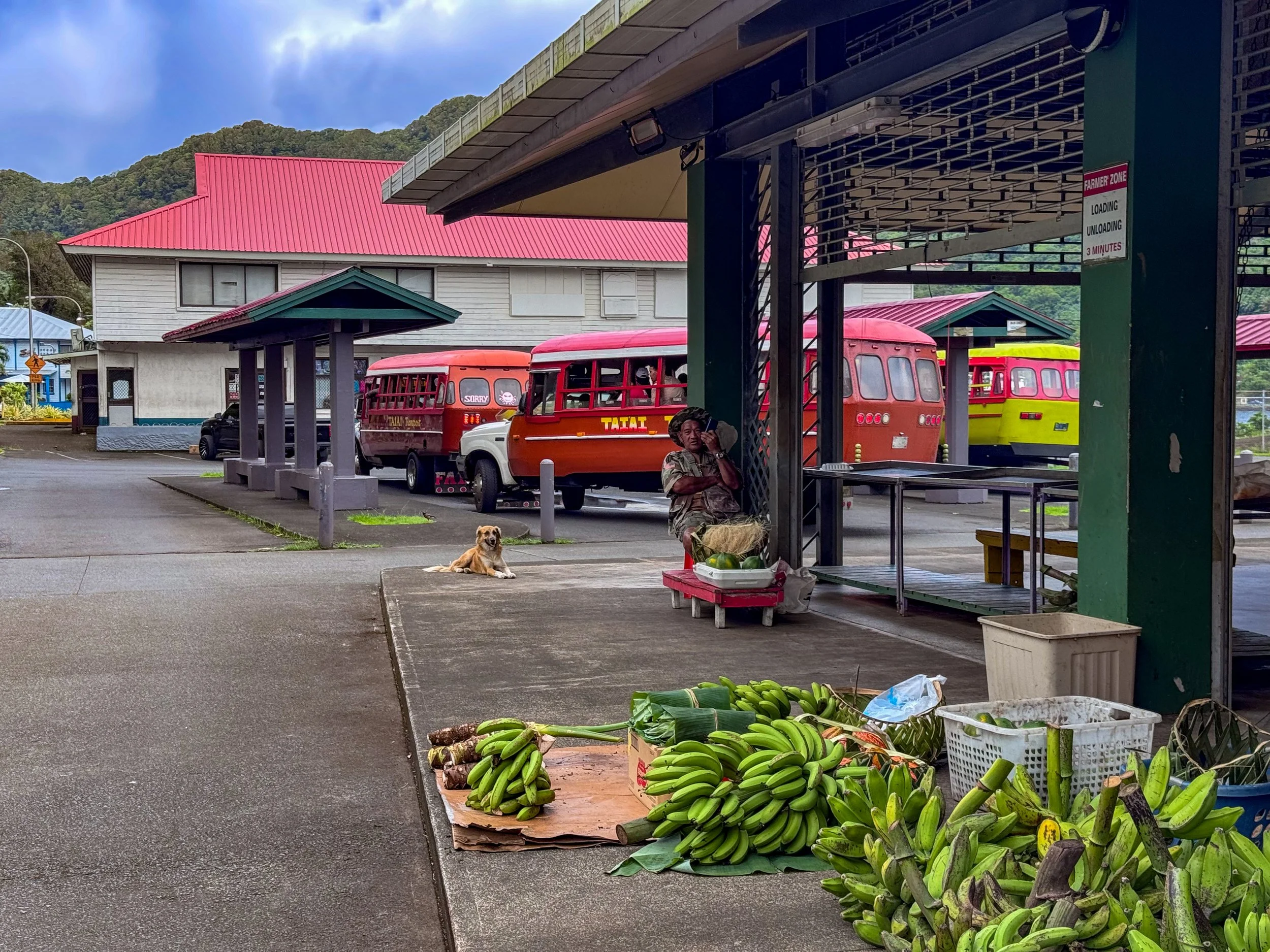
Over a couple days we had tours of Pago Pago, the harbor area, and the market during our stay. Not a big town by any means with one main road, a speed limit of 25mph and no traffic lights. We were a little late to the market as most people shop early in the day, but still saw some of the cocoanuts, bananas, bread fruit, etc. that hadn’t been purchased yet.
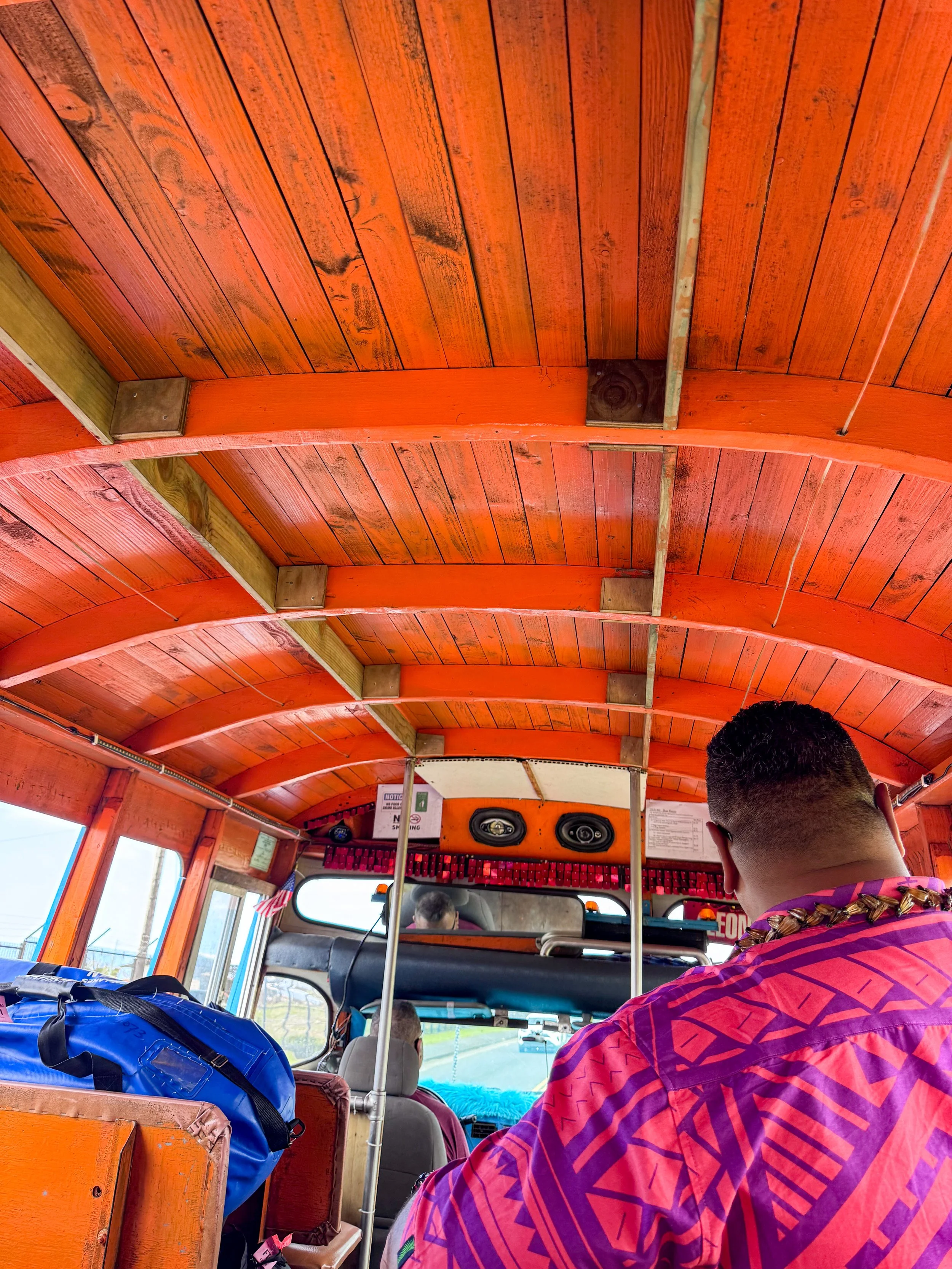
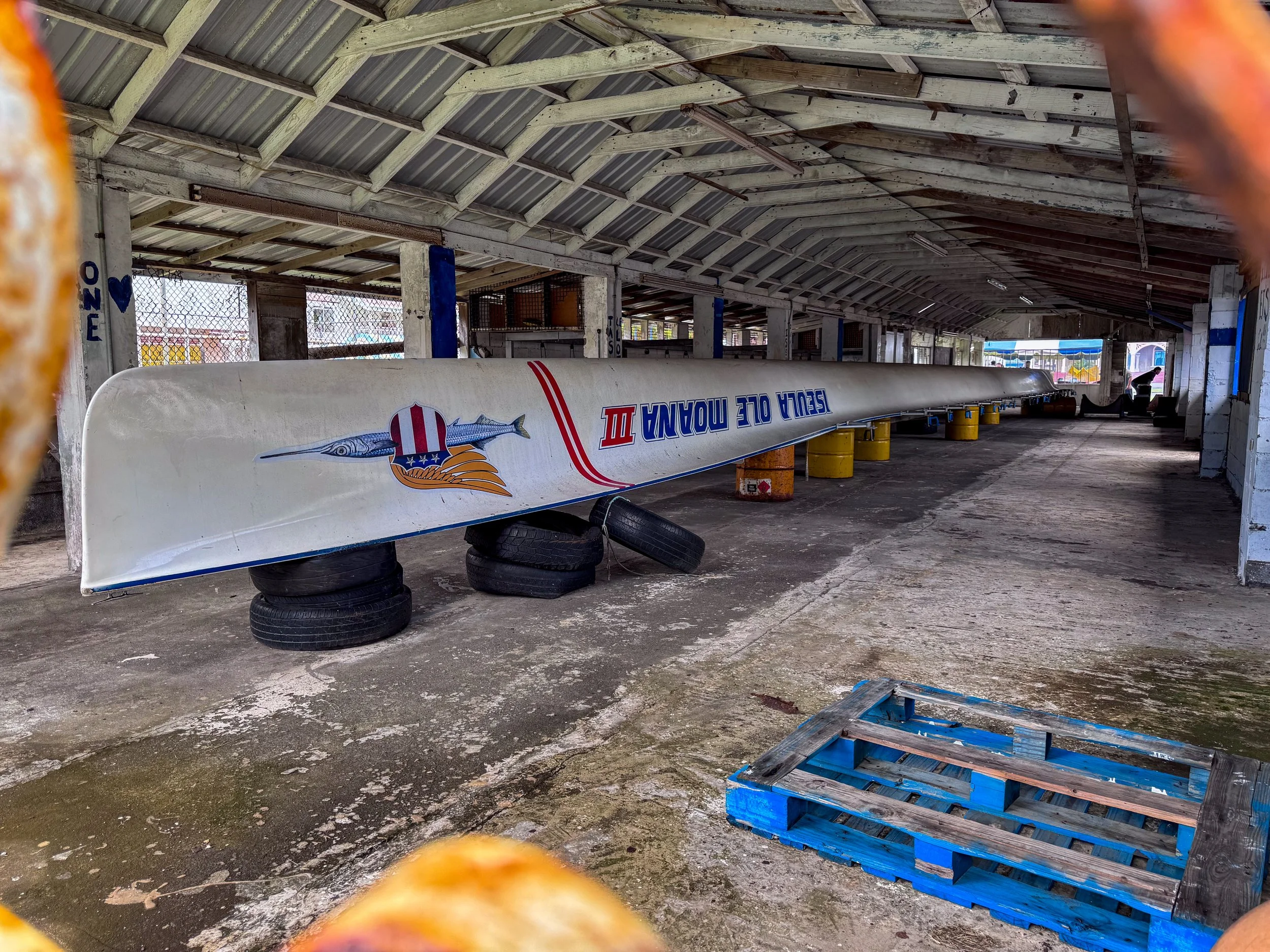
They have a bus system with interesting busses and, yes, they are open air for the most part and wood seats on the inside. We also saw a barn with Samoan long boats in storage. These are 100ft long “canoes” with 40-50 rowers and are used in a traditional competition during the annual Flag Day celebrations. There is lots of training before the races, and village pride supporting the rowers and celebrating Fa’a Samoa (the Samoan way). Although the downtown area of Pago Pago is small, American Samoa has a population of around 48,000 with a variety of villages around the islands, it does have an international airport. Like many airports in Hawaii and French Polynesia this one is mostly open air.
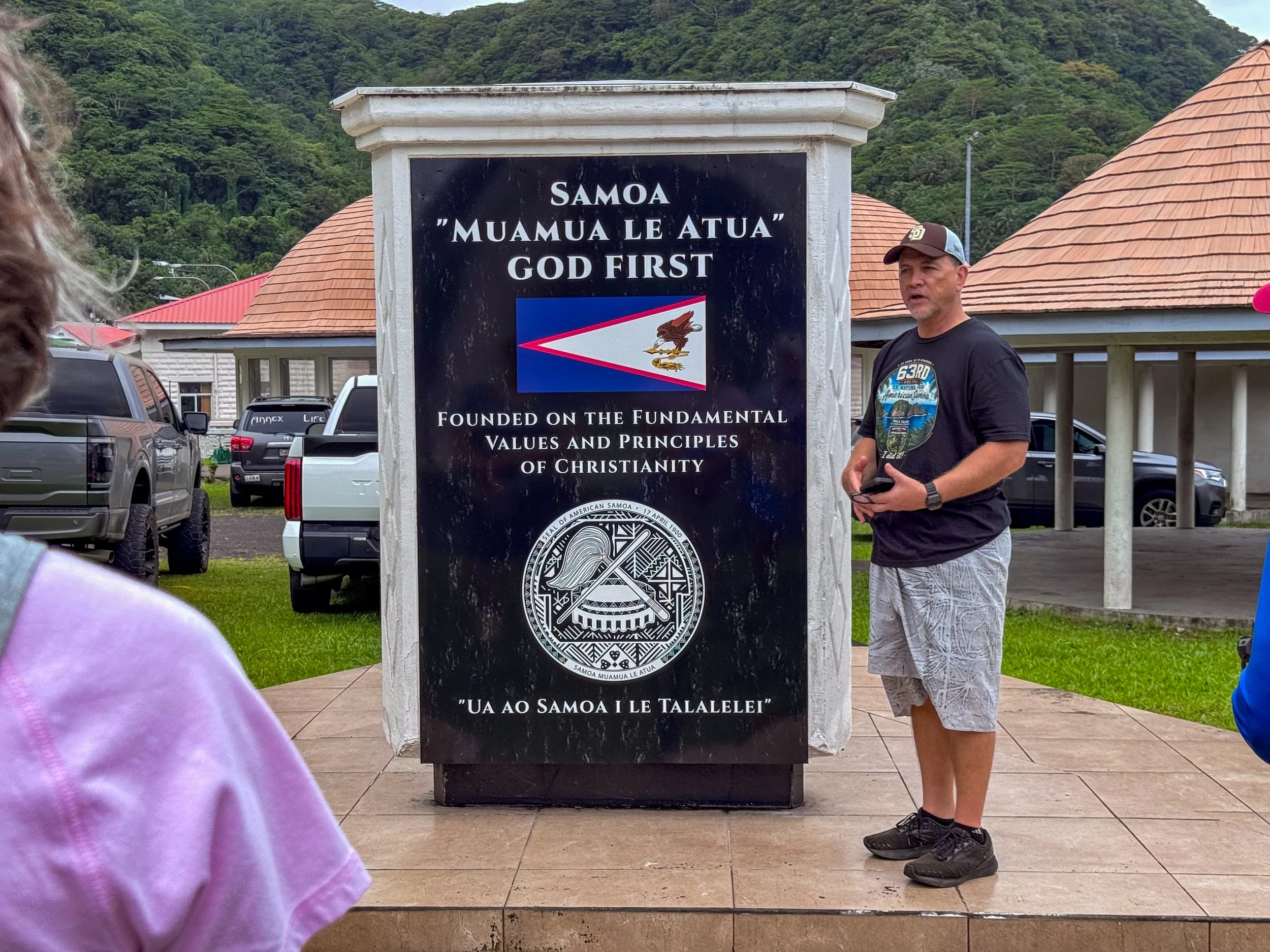
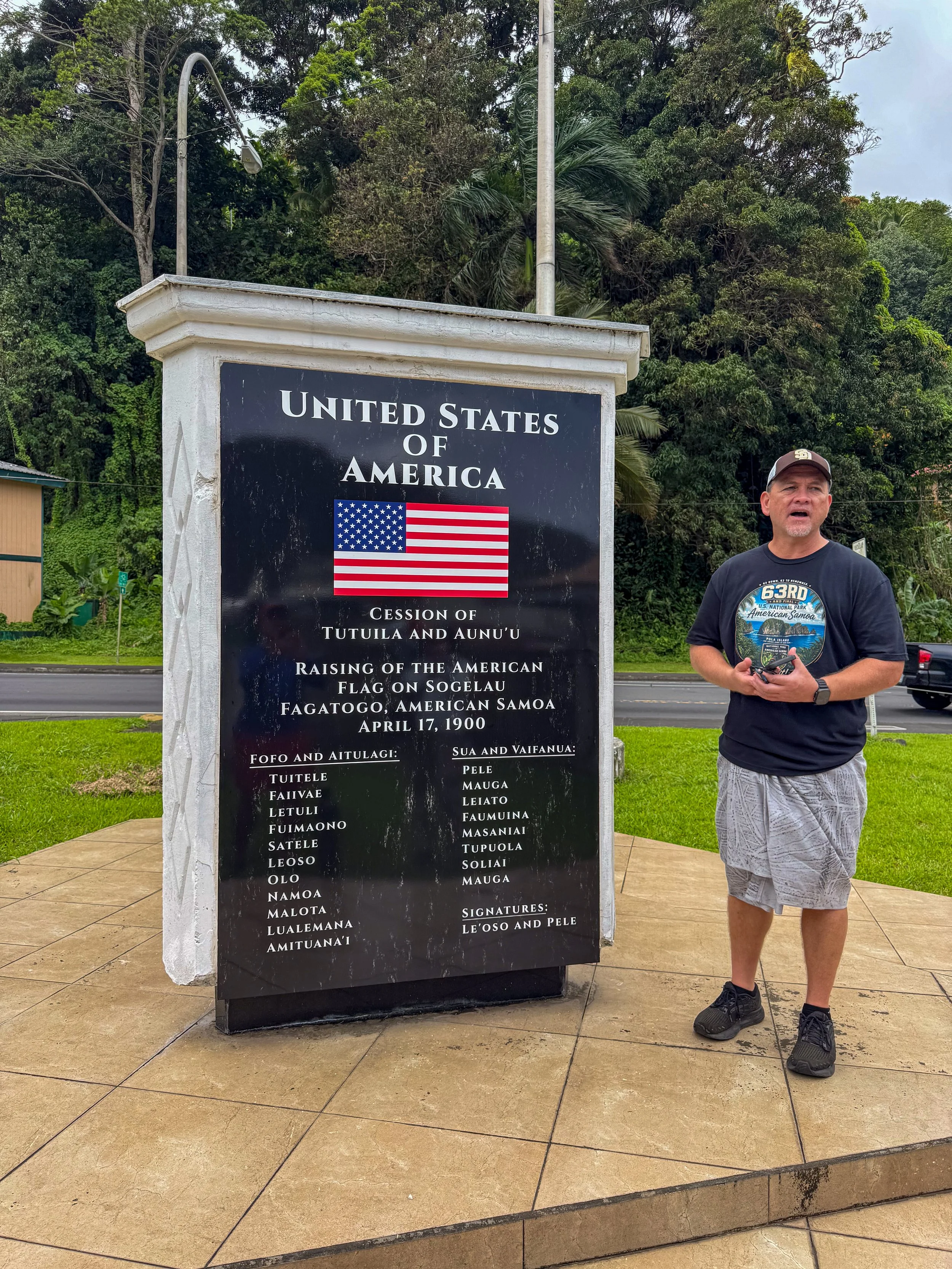
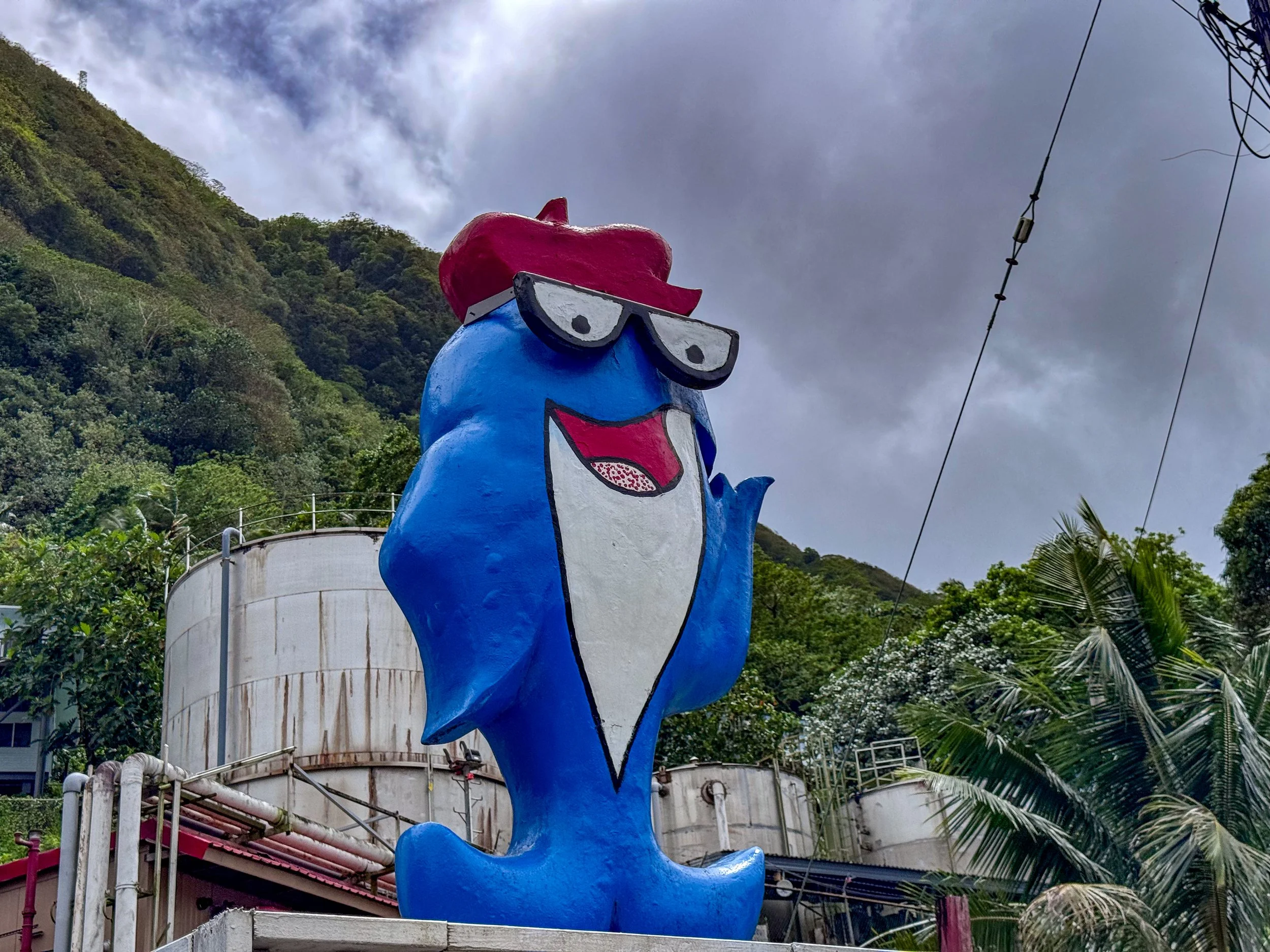
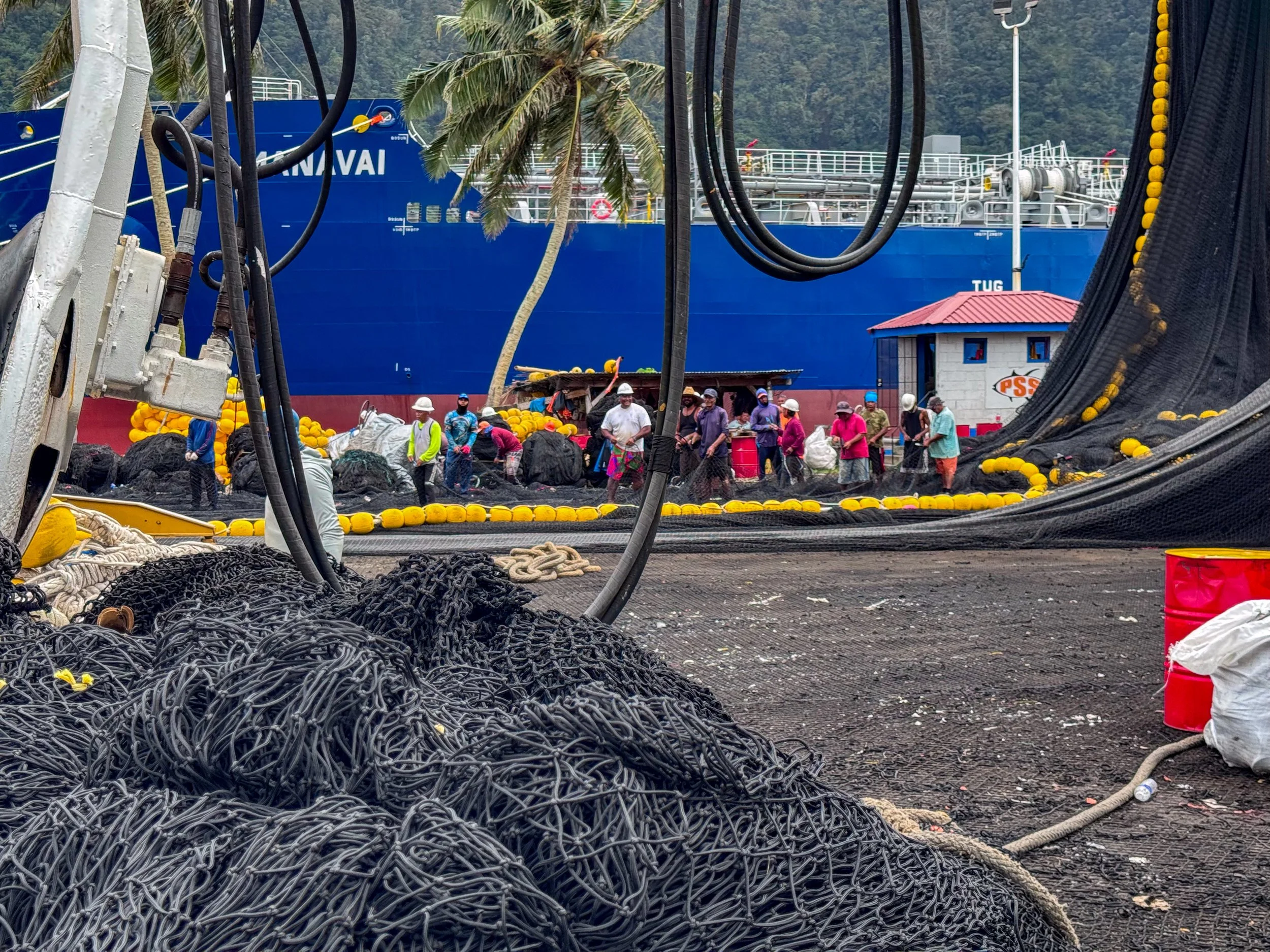
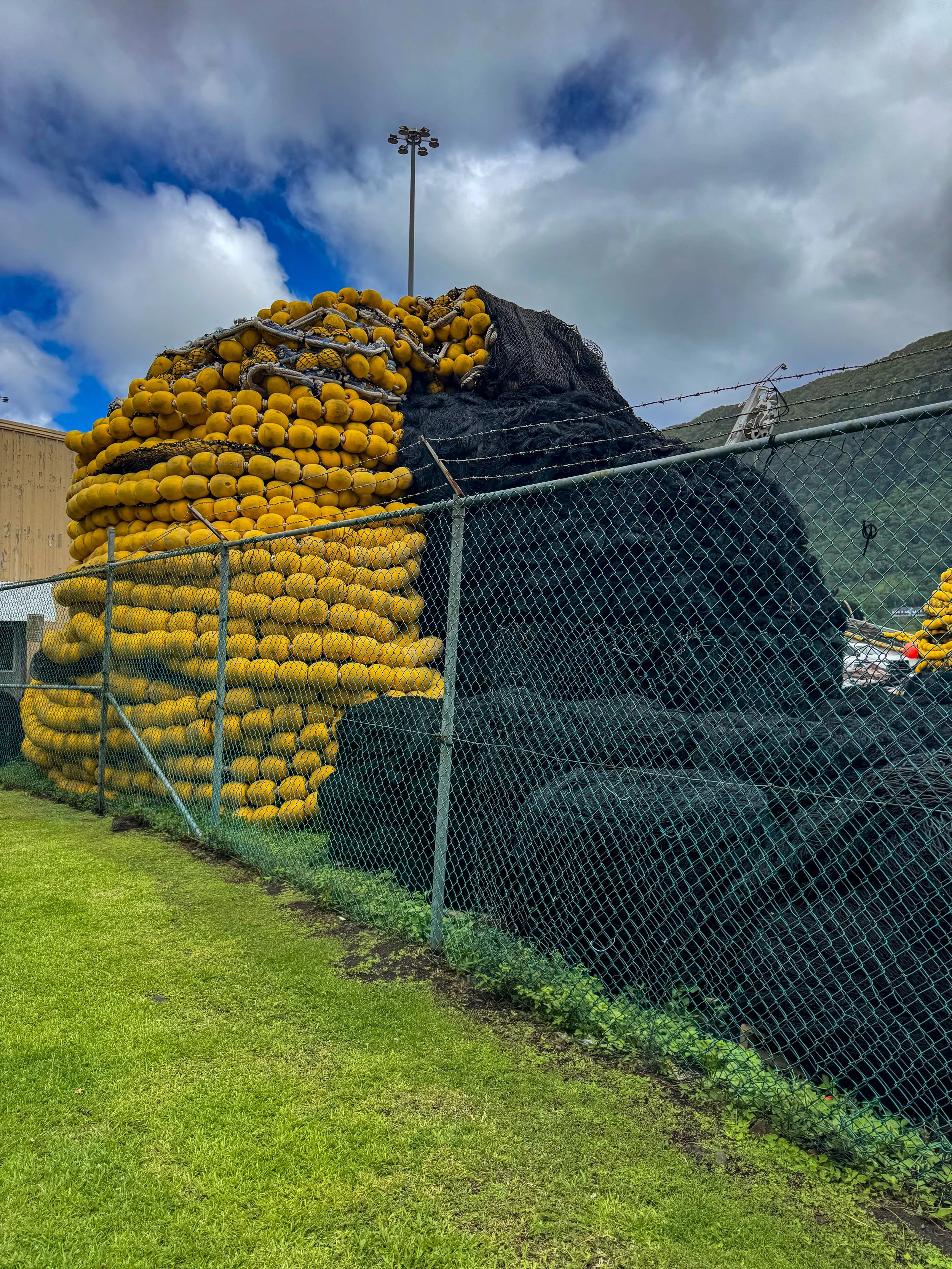
One day a local guide walked us through town and taught us about the history of the island and why American Samoa is part of the United States. American Samoa is very religious, family oriented and very patriotic. One reason American Samoa became important is its natural harbor, which provides an important port for fueling vessels. Another is the tuna industry. Starkist tuna is caught and canned here, with production reaching about 2 million cans a day! Our guide is director of commerce for American Samoa, but like most people here, has at least one extra job.
While touring the island we passed a number of schools. Children are expected to attend school through high school as education is important in this culture. When visiting Pika’s house, he proudly pointed out the trophies his daughter has received for science, reading and math excellence. They were nicely displayed in the living room. One surprising thing we saw at the schools were many football fields. In high school football is a popular sport. Samoan people are tall and strong which makes for good football players. These athletes are heavily recruited by colleges and the NFL.
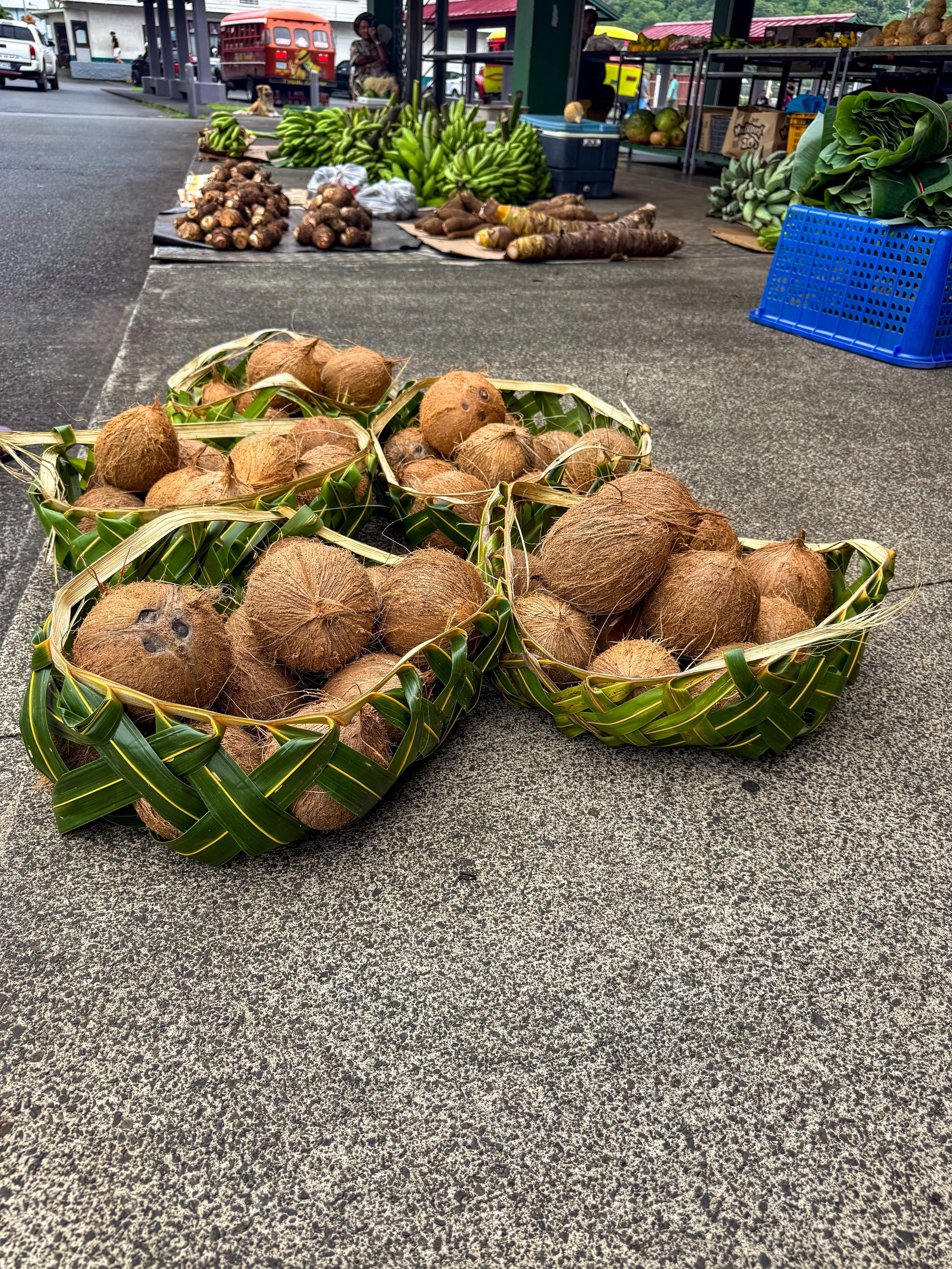
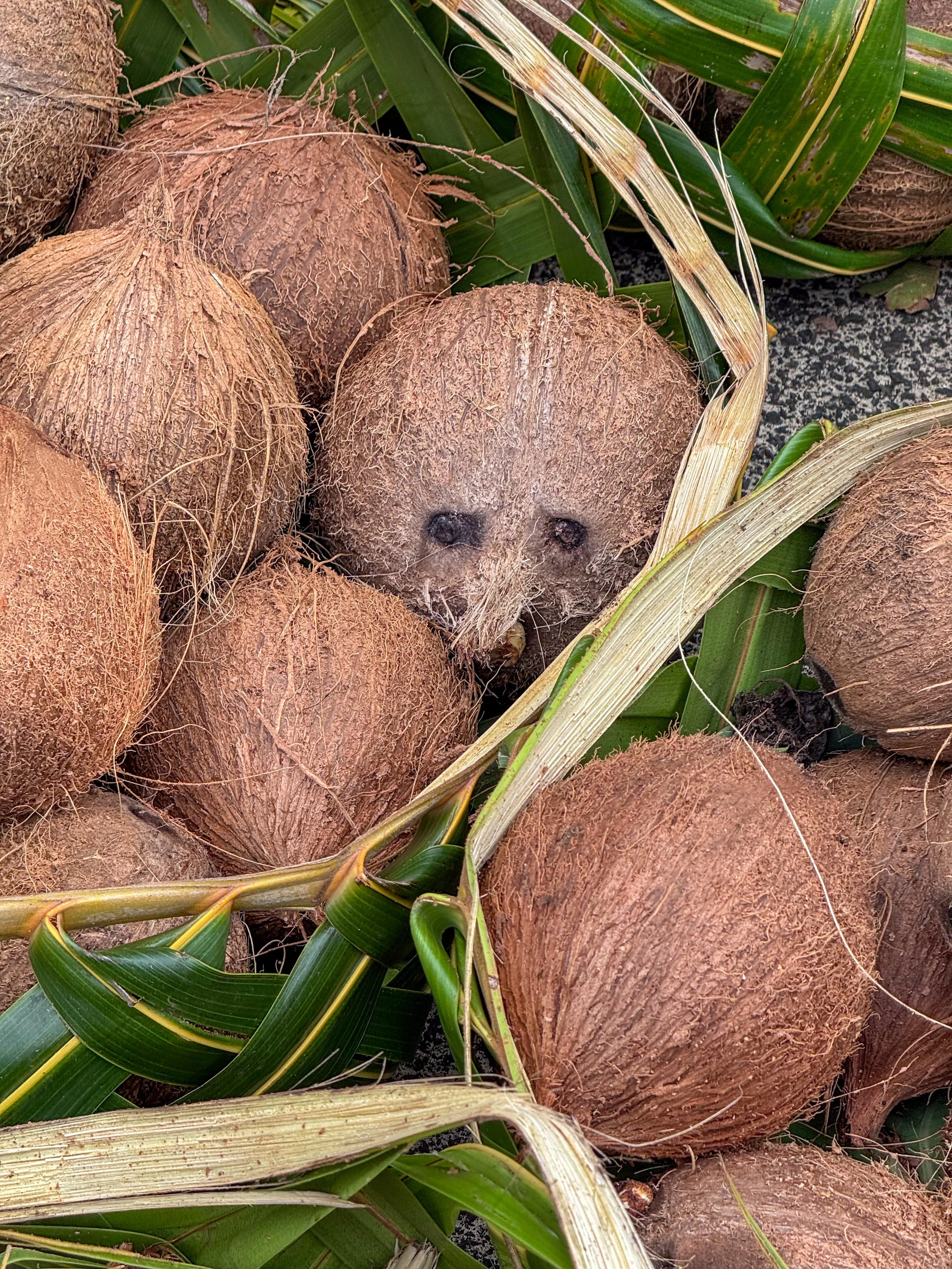
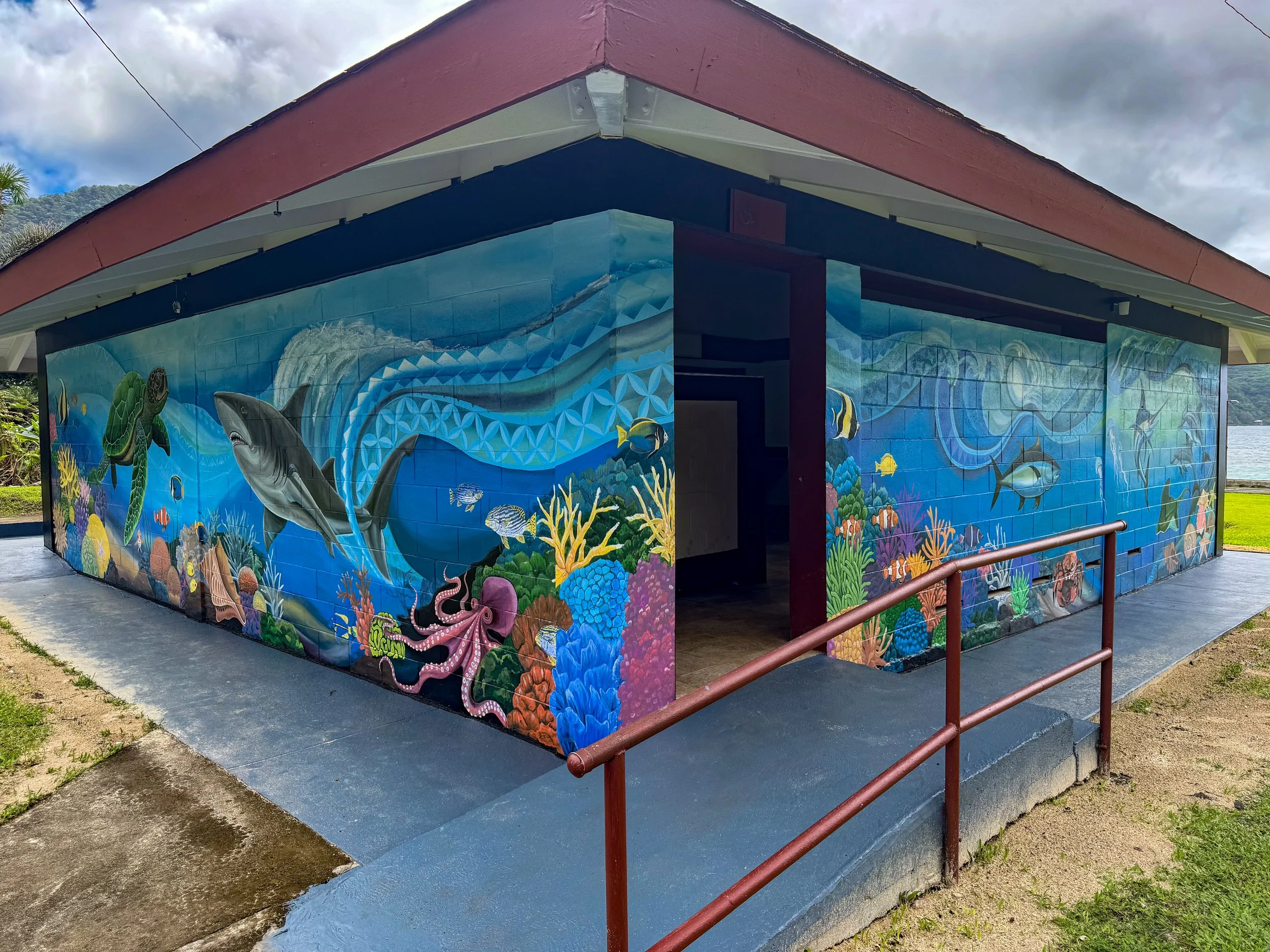
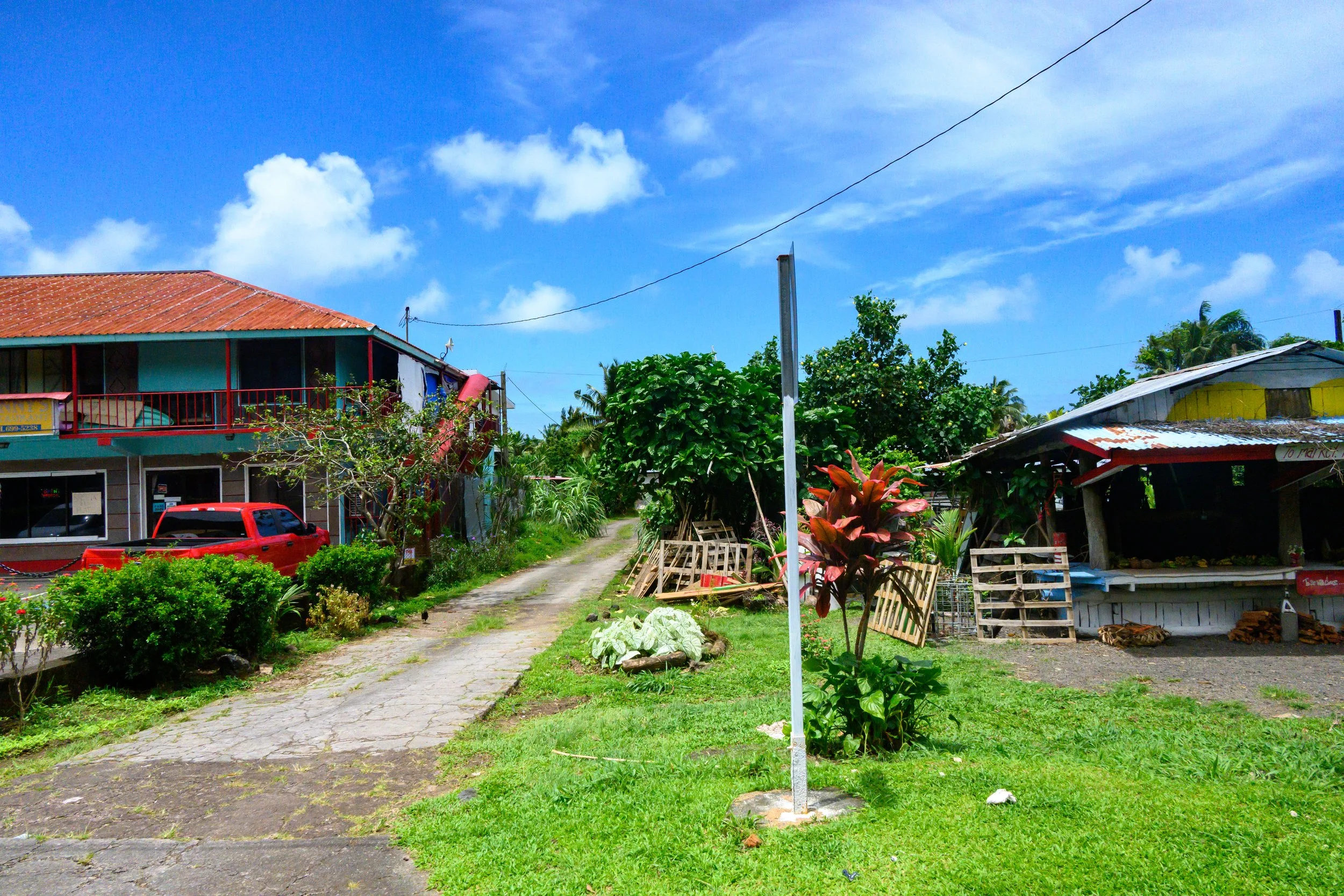
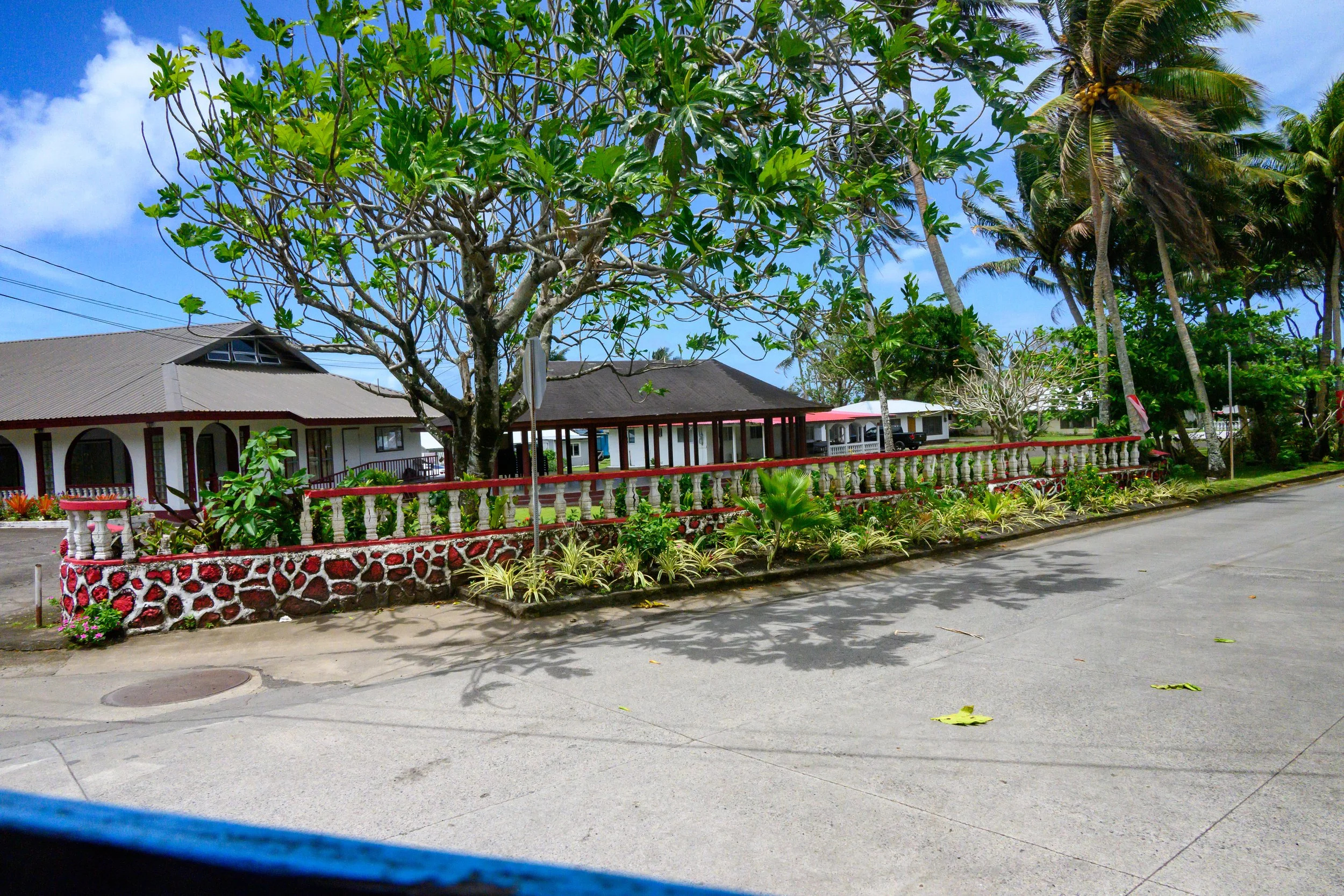
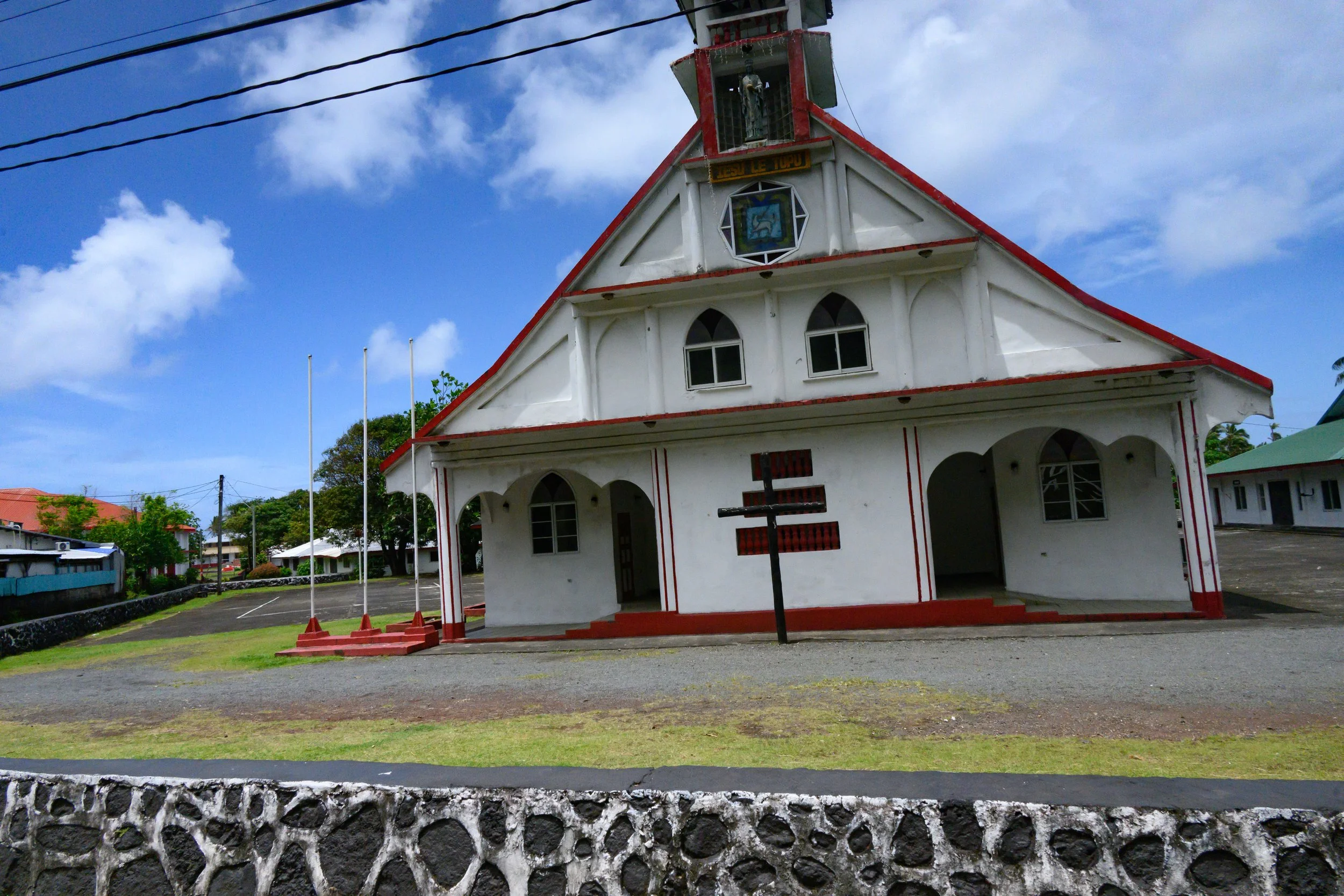
One of our favorite experiences was spending a day at our host’s home, learning about traditional Samoan ways and sharing a traditional Sunday feast. Pika and his wife and daughter currently live most of the time on a small island just off the coast of Tutuila. For work and school, they have to make the boat trip into Tutuila and then back. With seas becoming rough more often, Pika is building this house here on the main island with plans to fully move here when they are finished. The living area is done but he has decided to enlarge it already so there was a tour of the work in-progress along with just experiencing Samoan home life.
We watched the men build a fire with rocks and coconuts and then spread the hot coals and place all the food on them to cook. While we wait for the feast to cook, we had a chance to walk the beach near his house, snorkel and see a few more flying foxes.
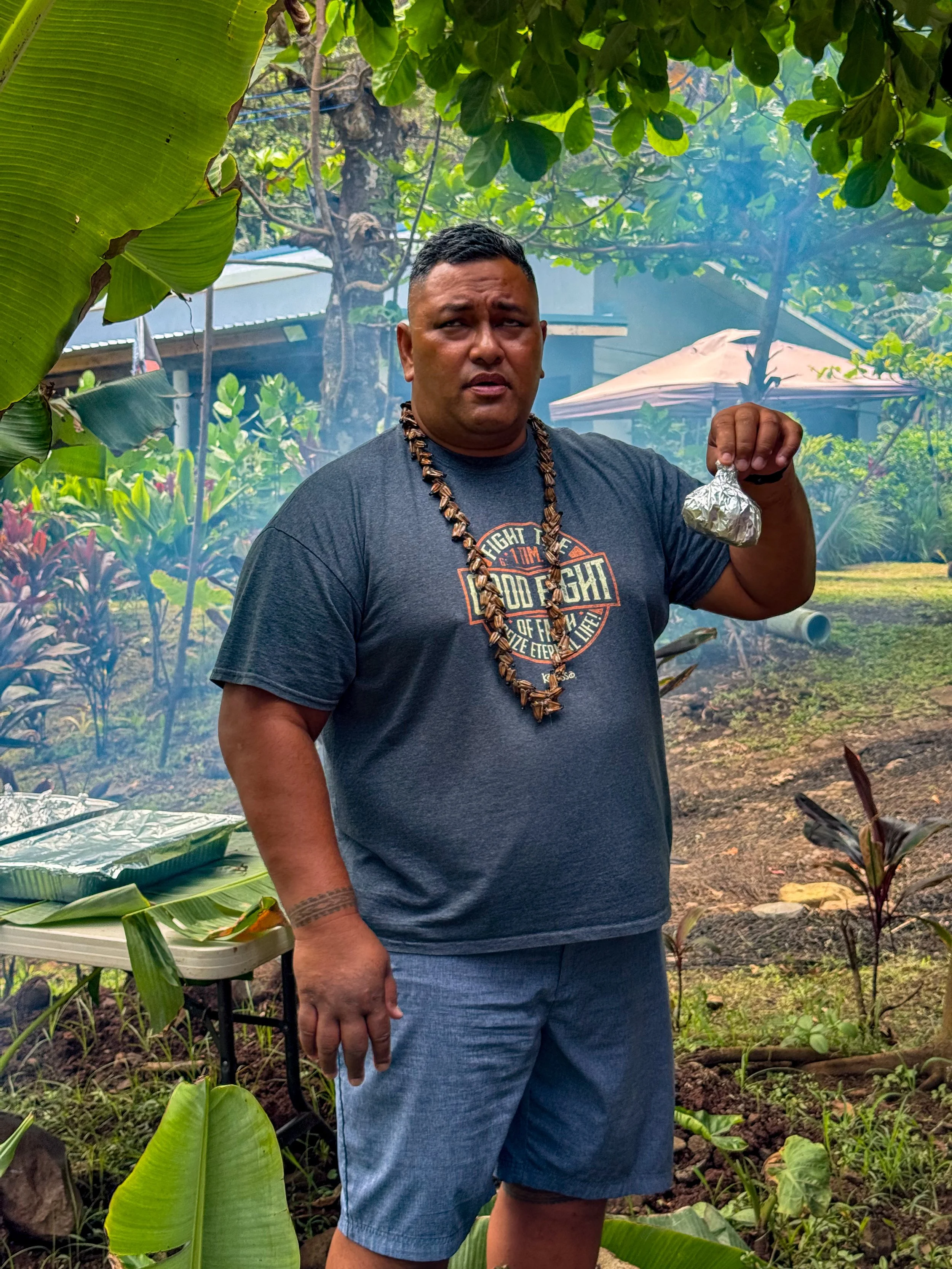
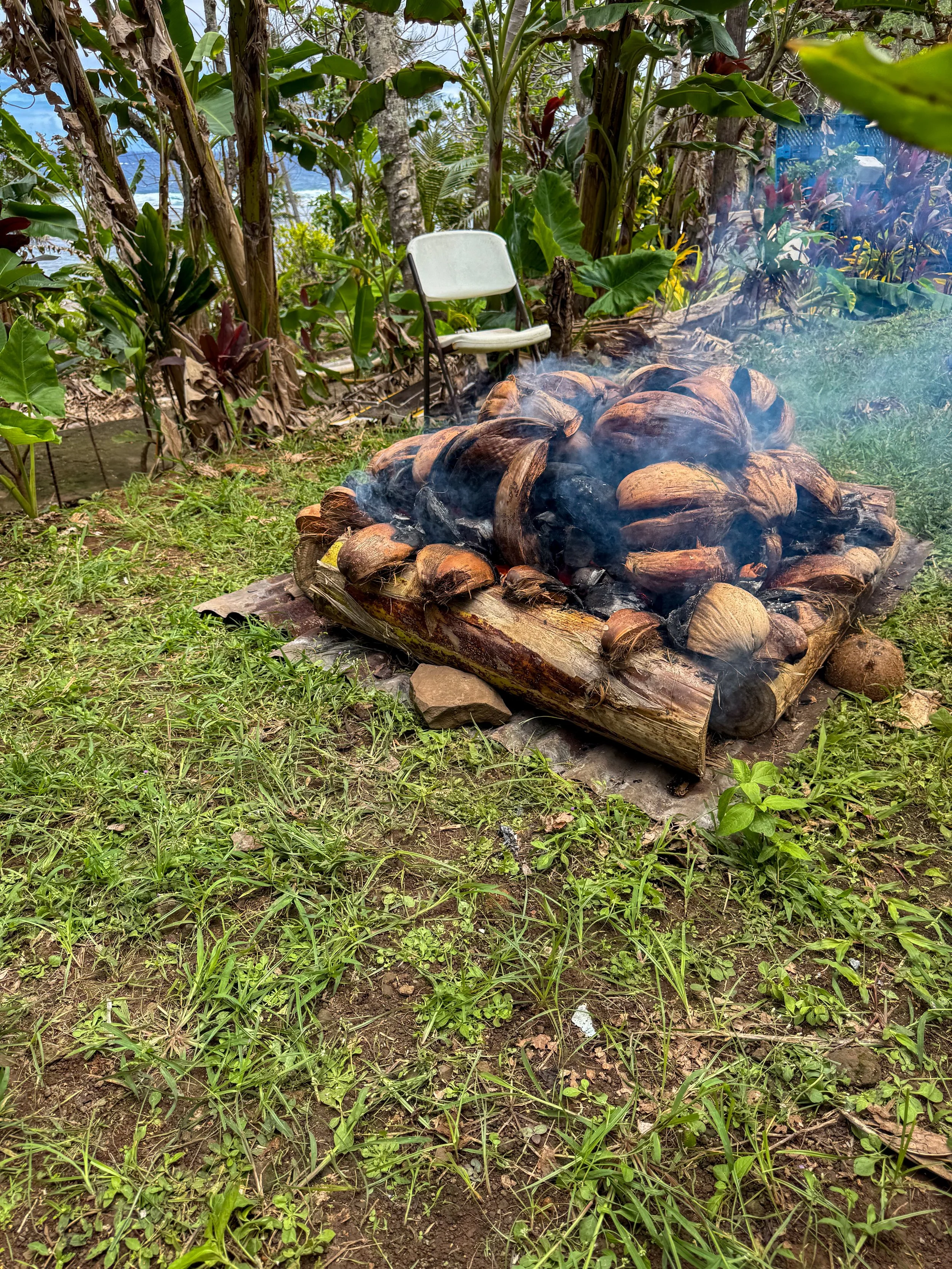
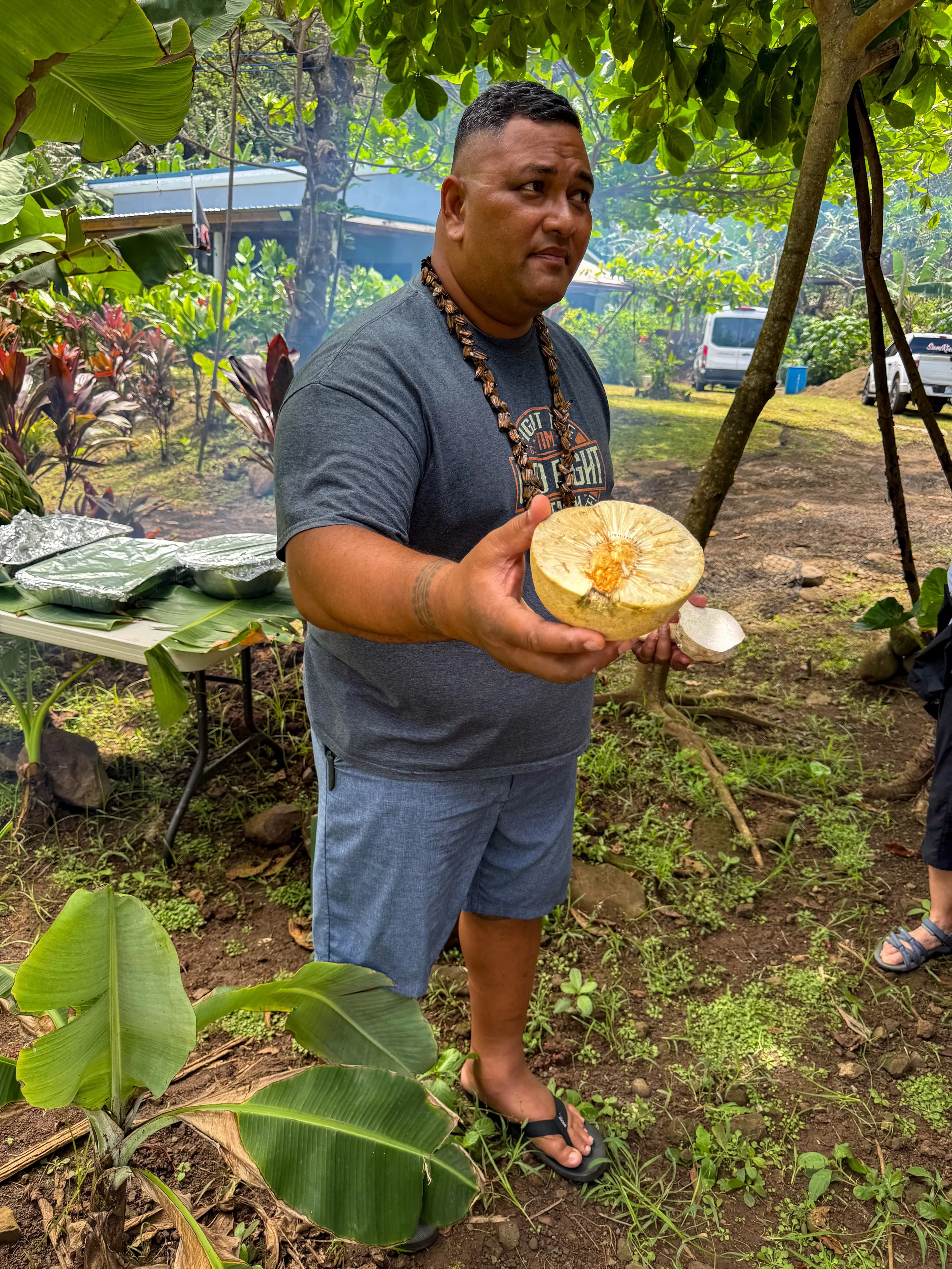
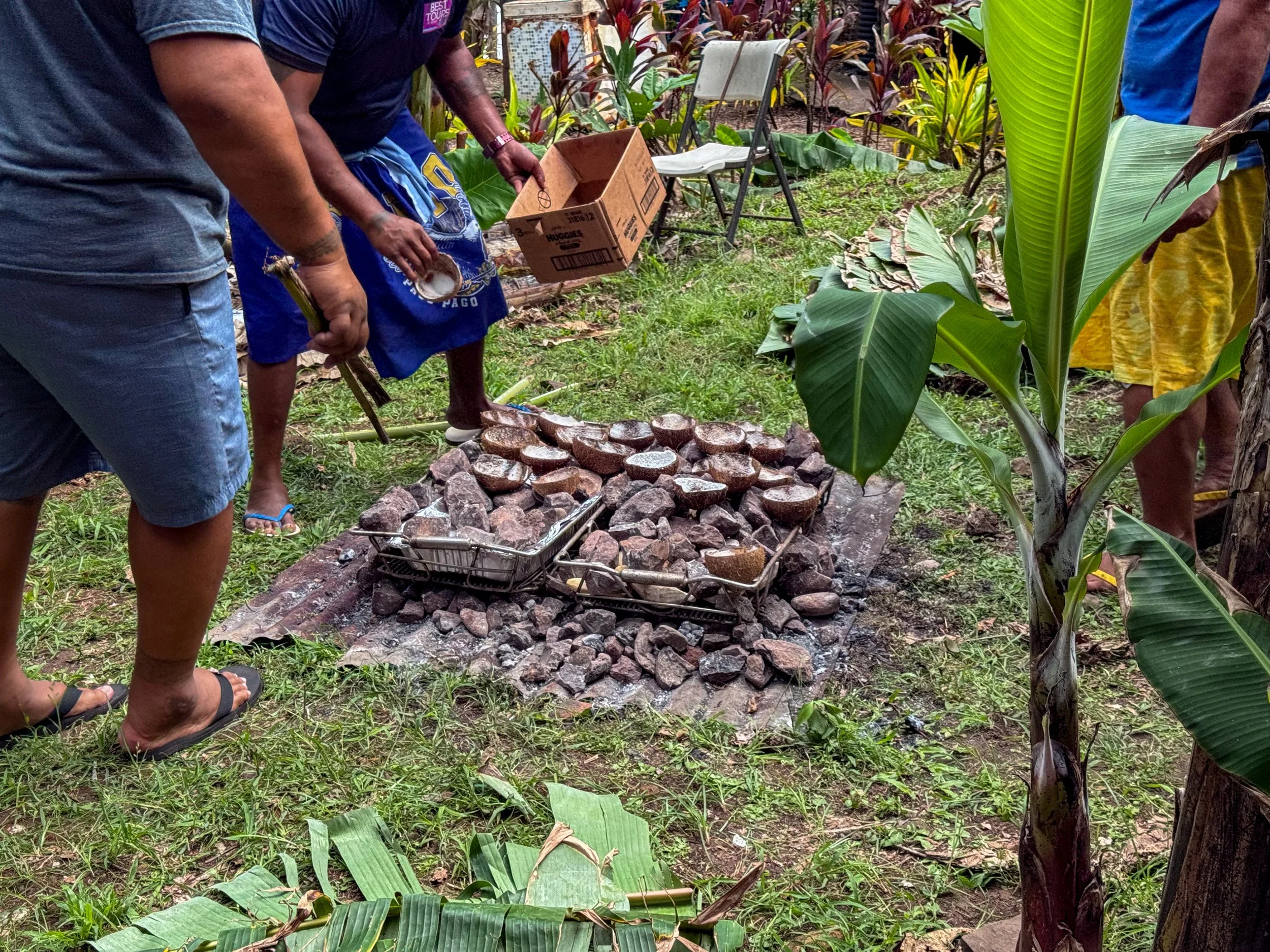
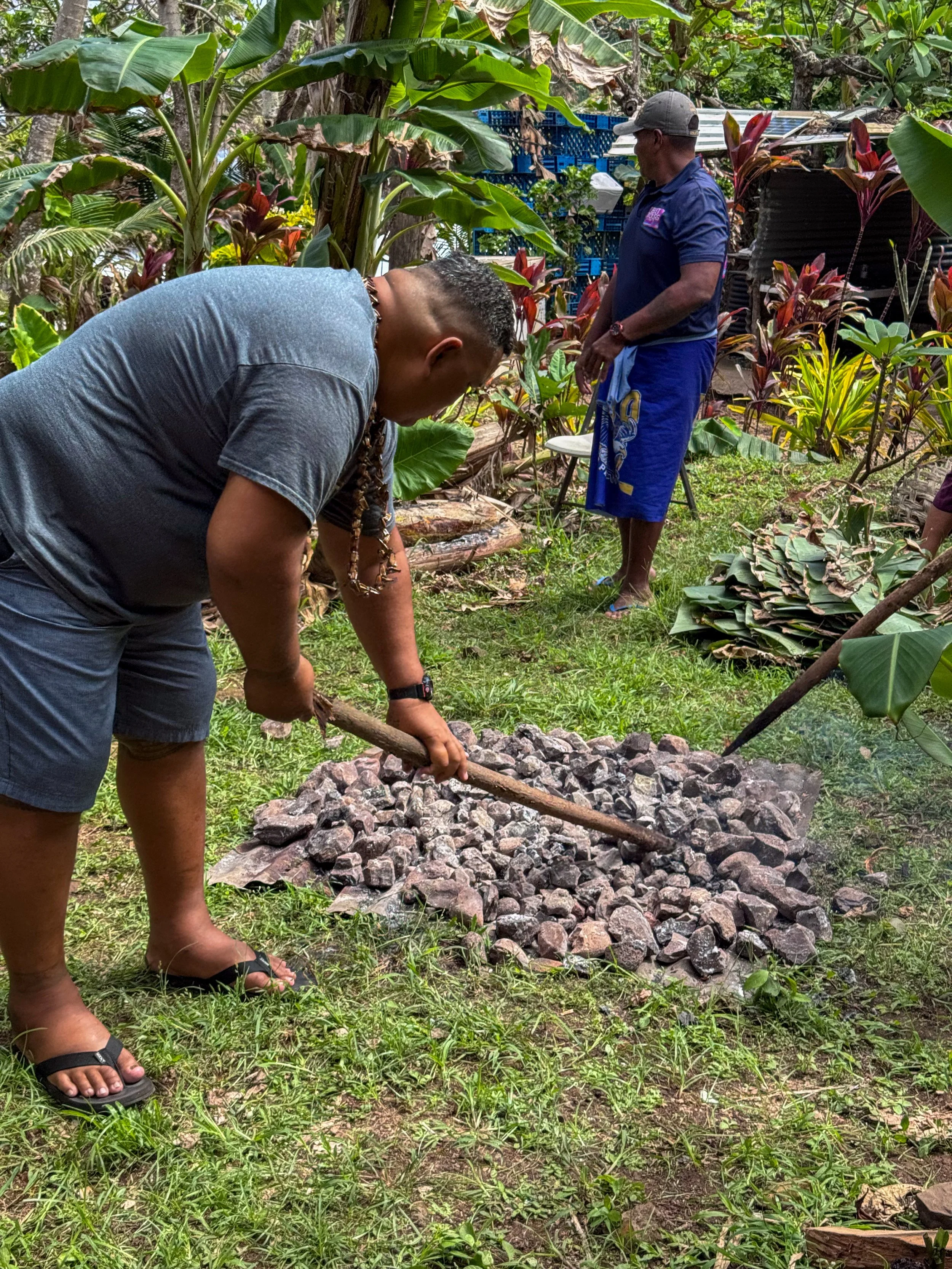
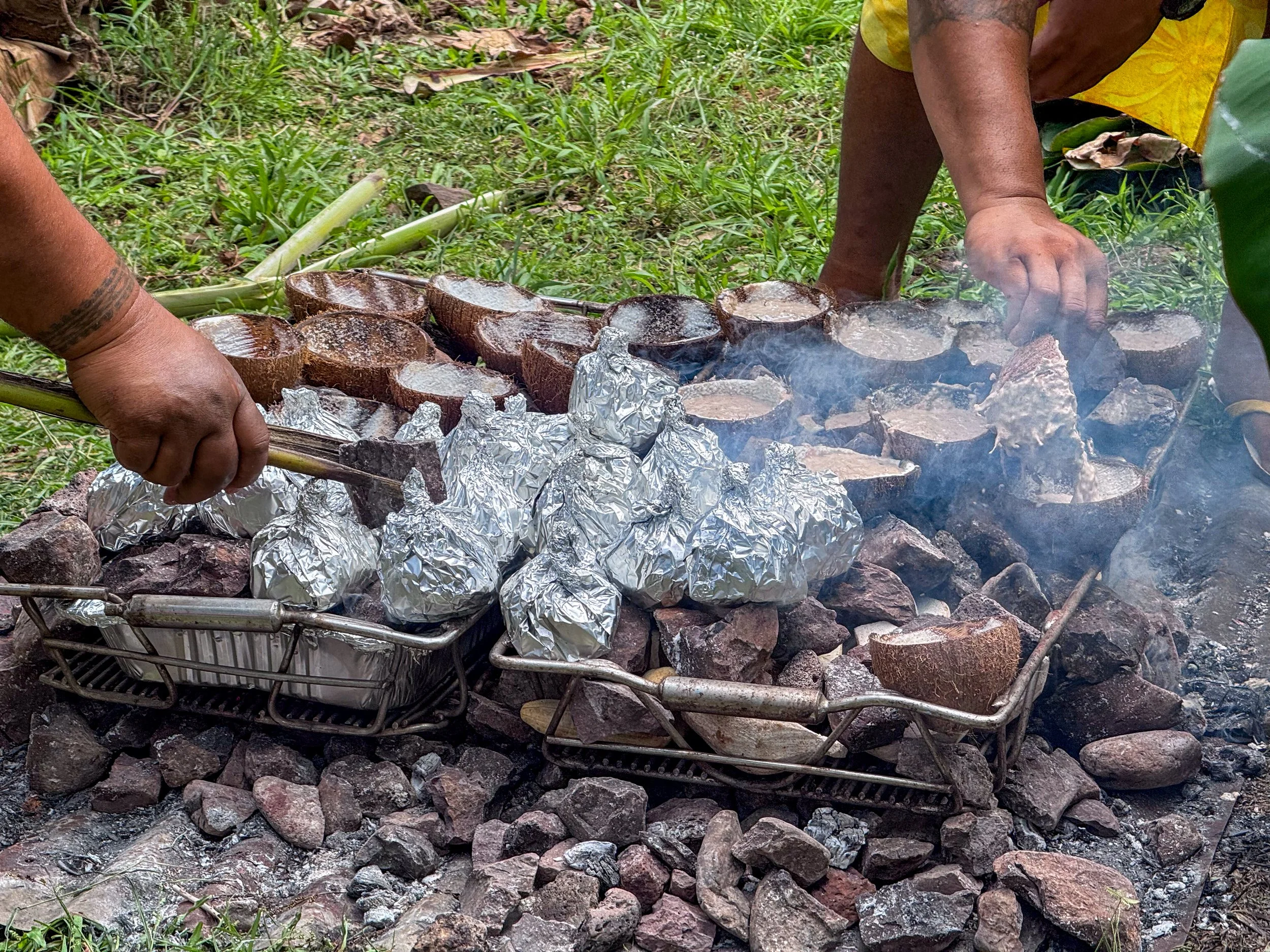
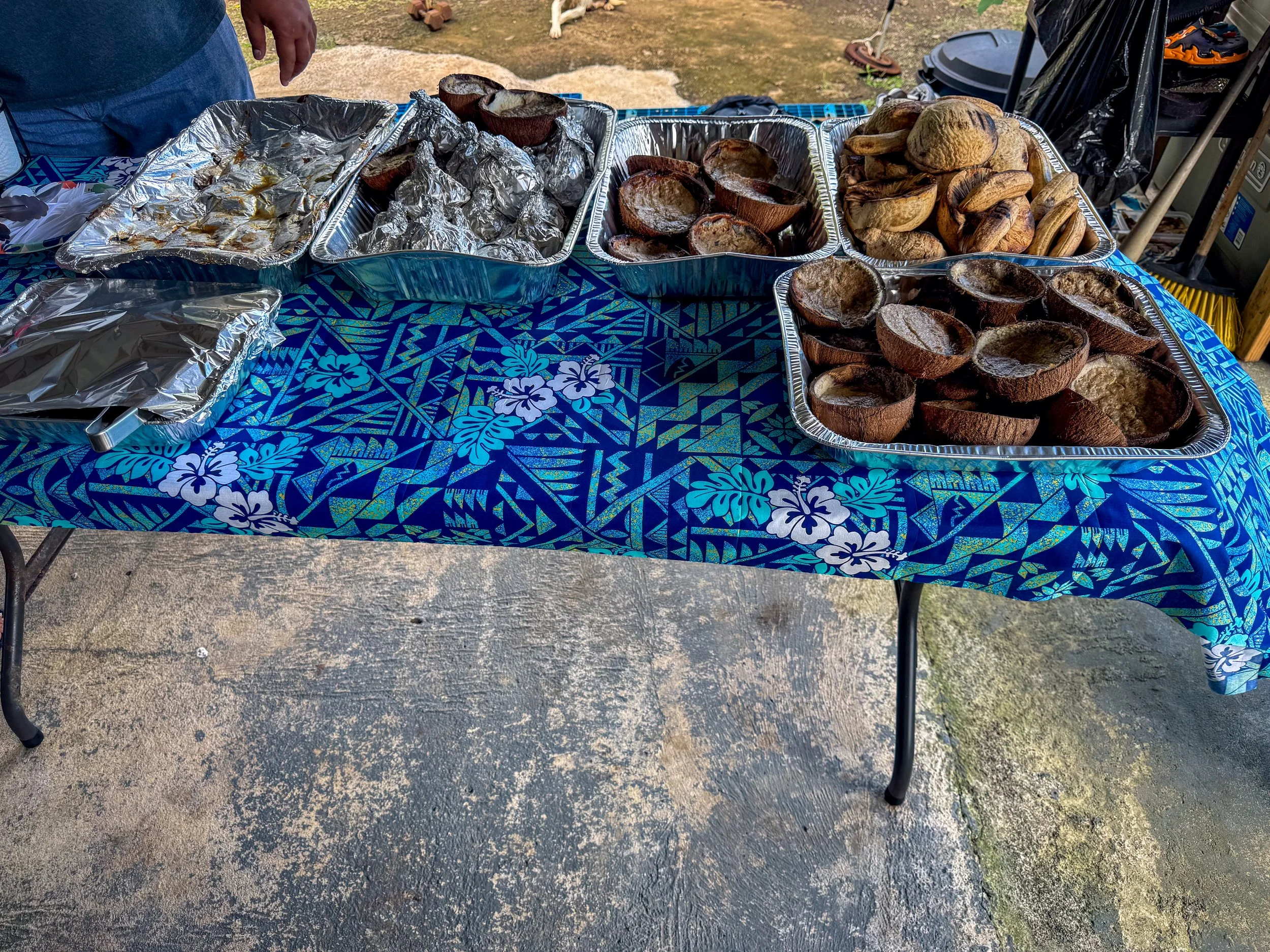
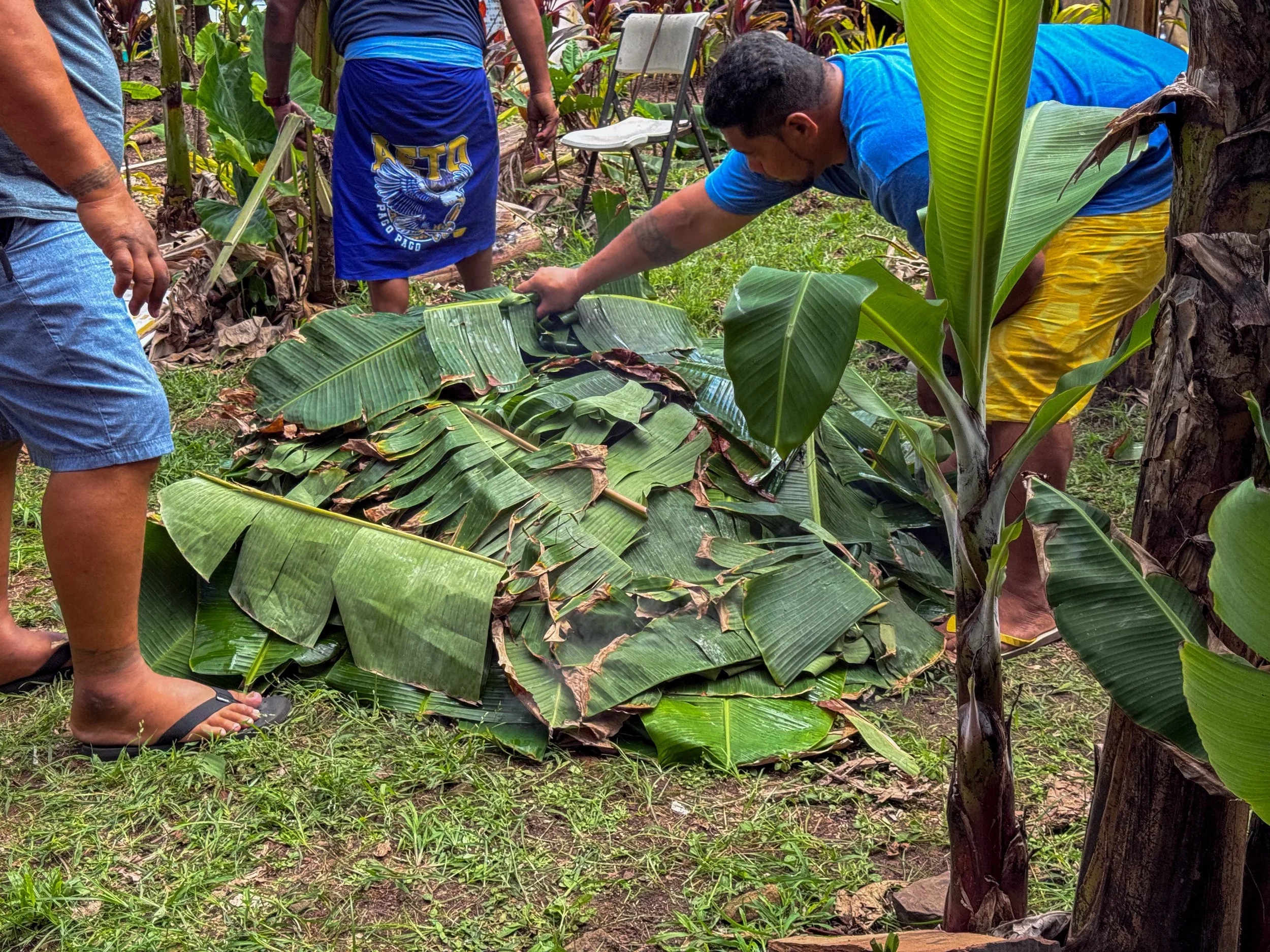
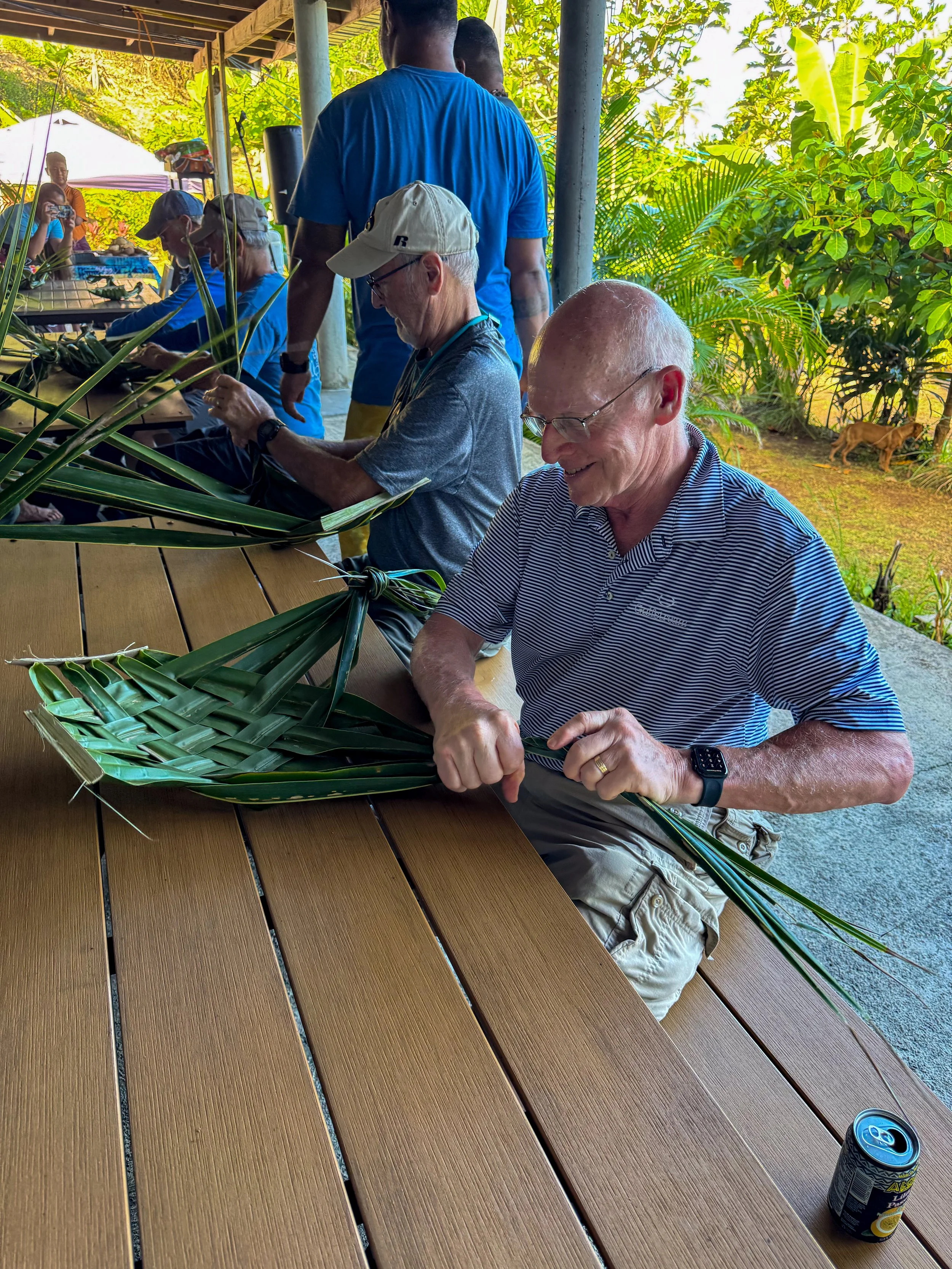
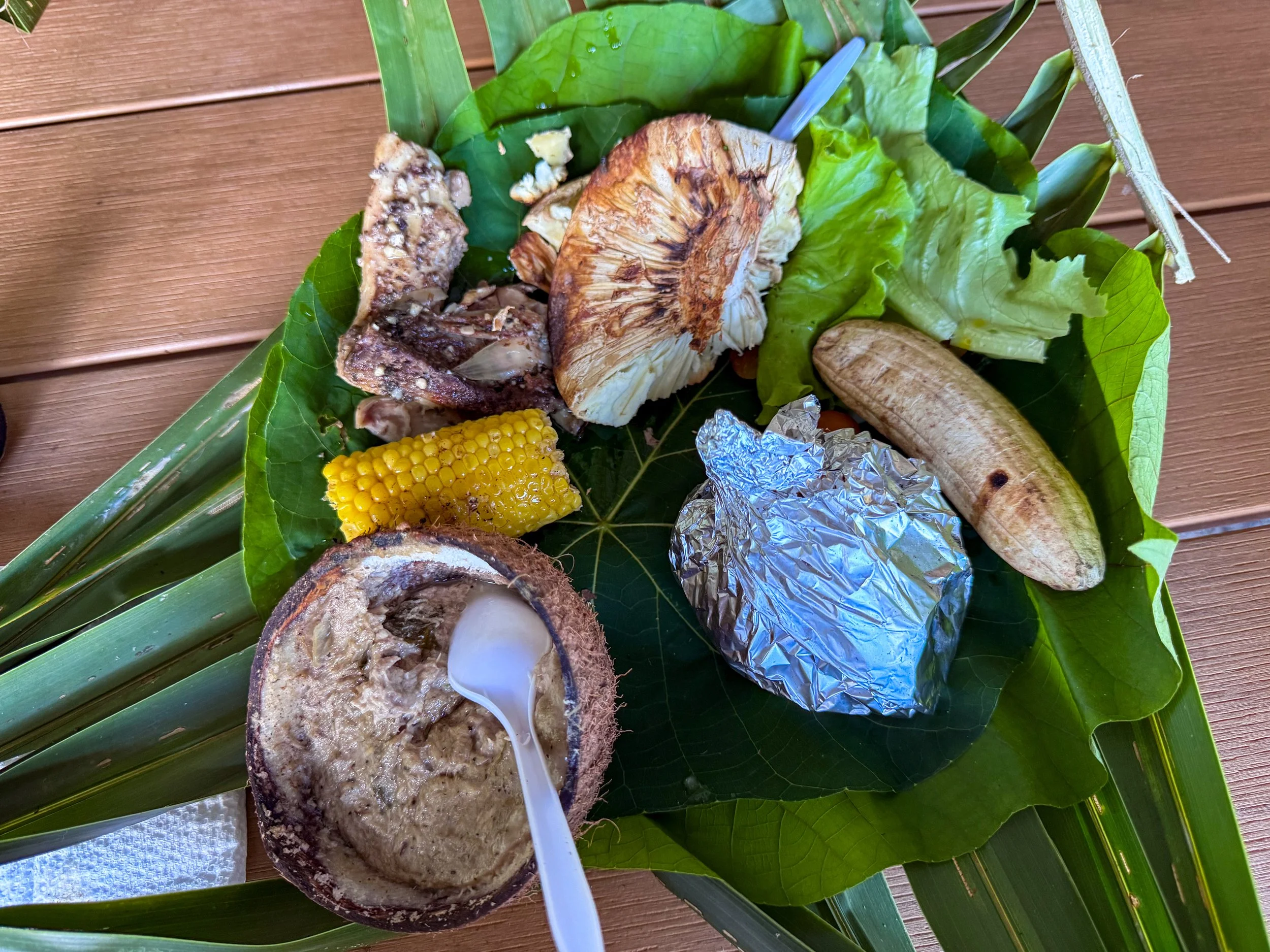
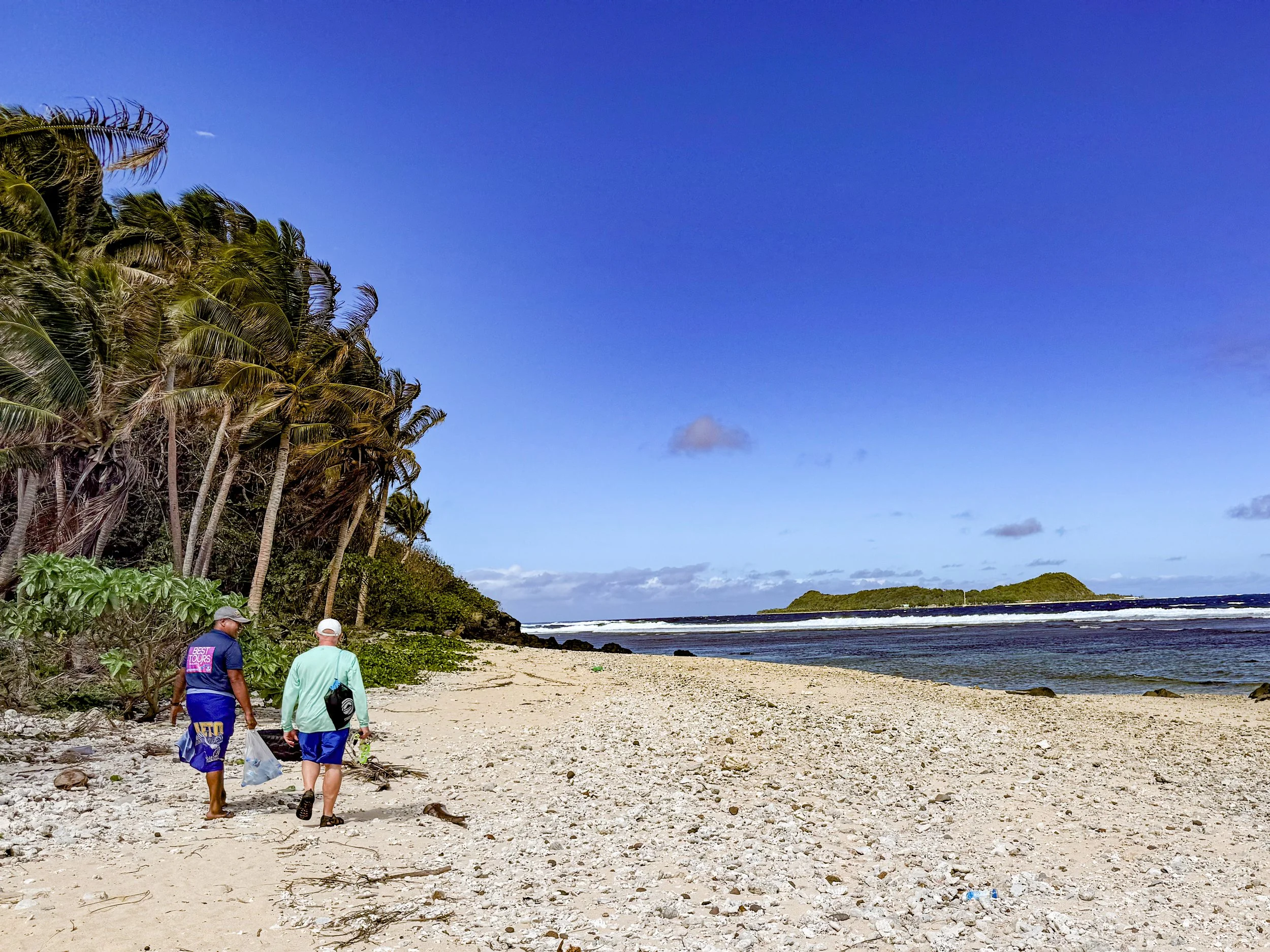
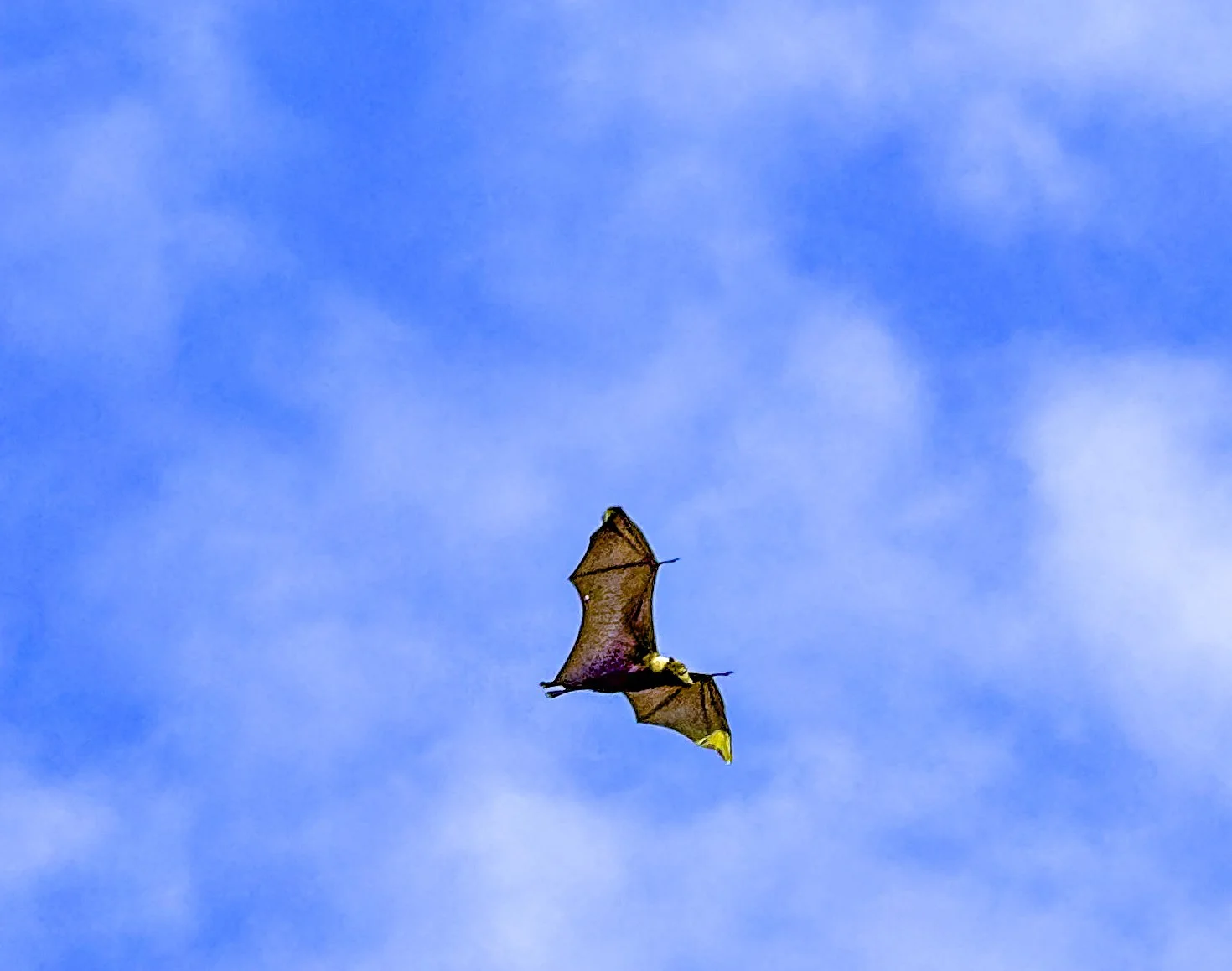
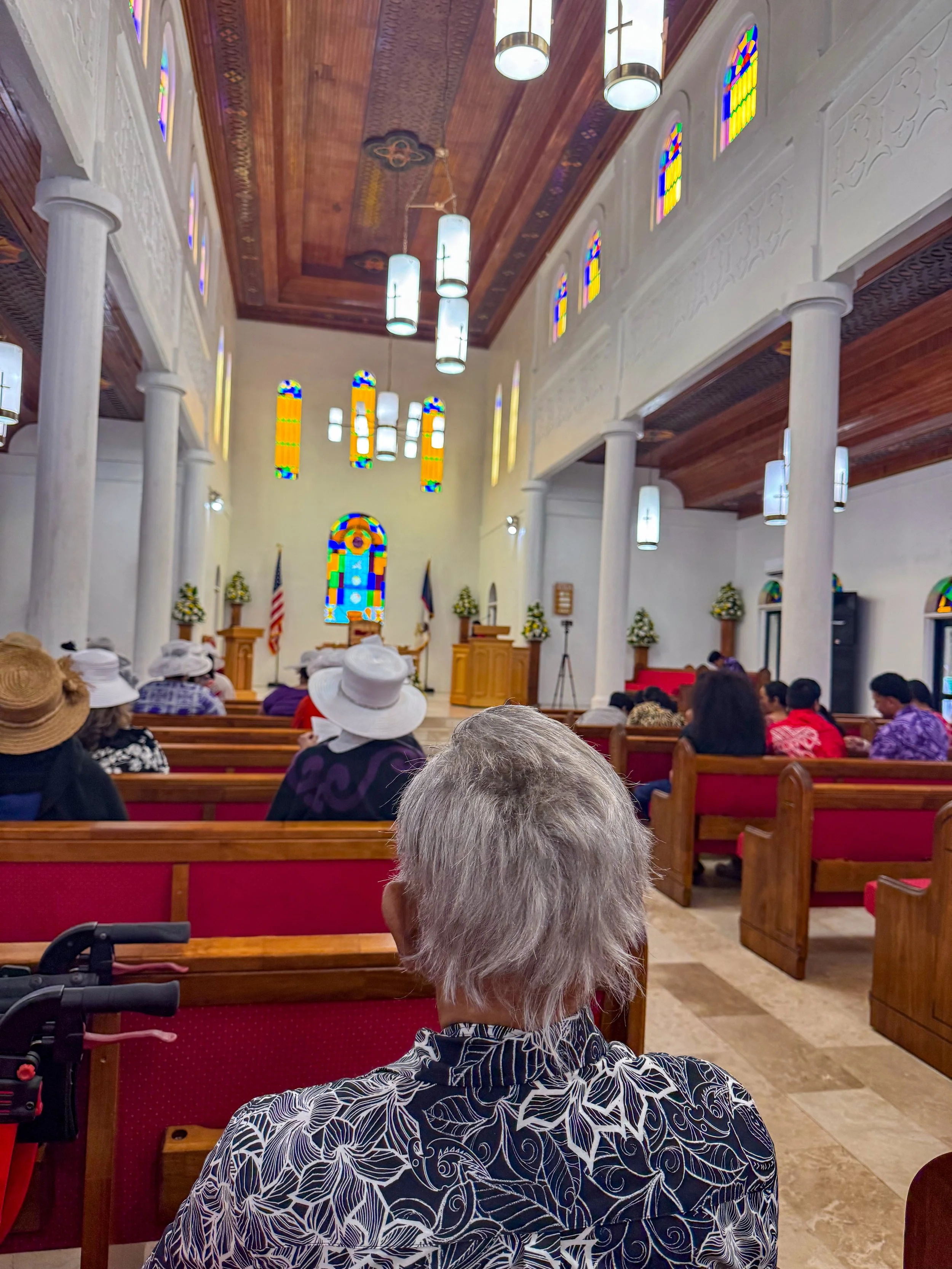
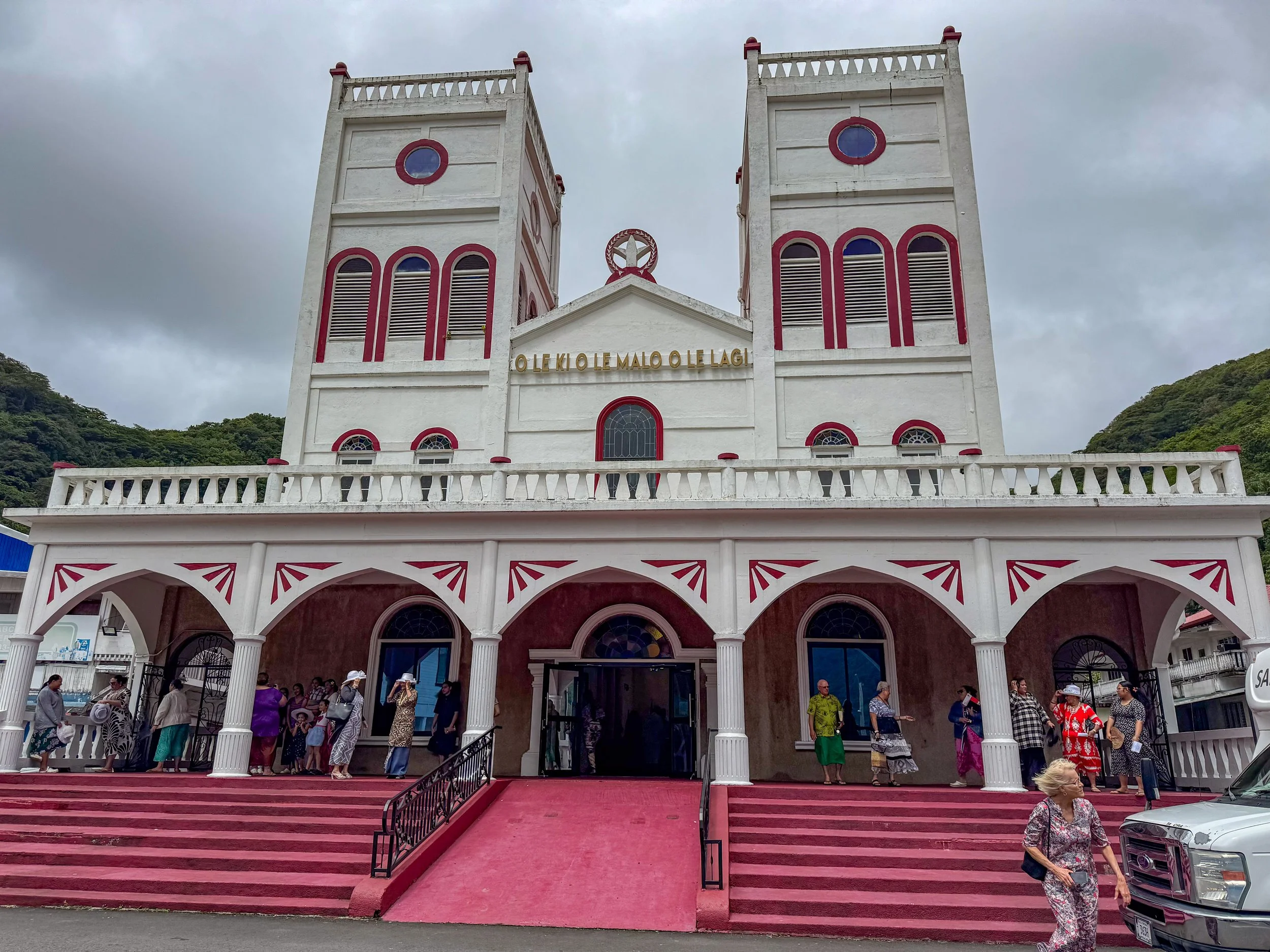
We attended a Samoan church service the next day. We didn’t understand much of what was being said, but the music was beautiful, and everyone was incredibly welcoming. The people dress up to go to church with men in suites often with the traditional lavalava in place of pants and women wore dresses. Women old enough to be referred to as “Auntie” wore beautiful hats.
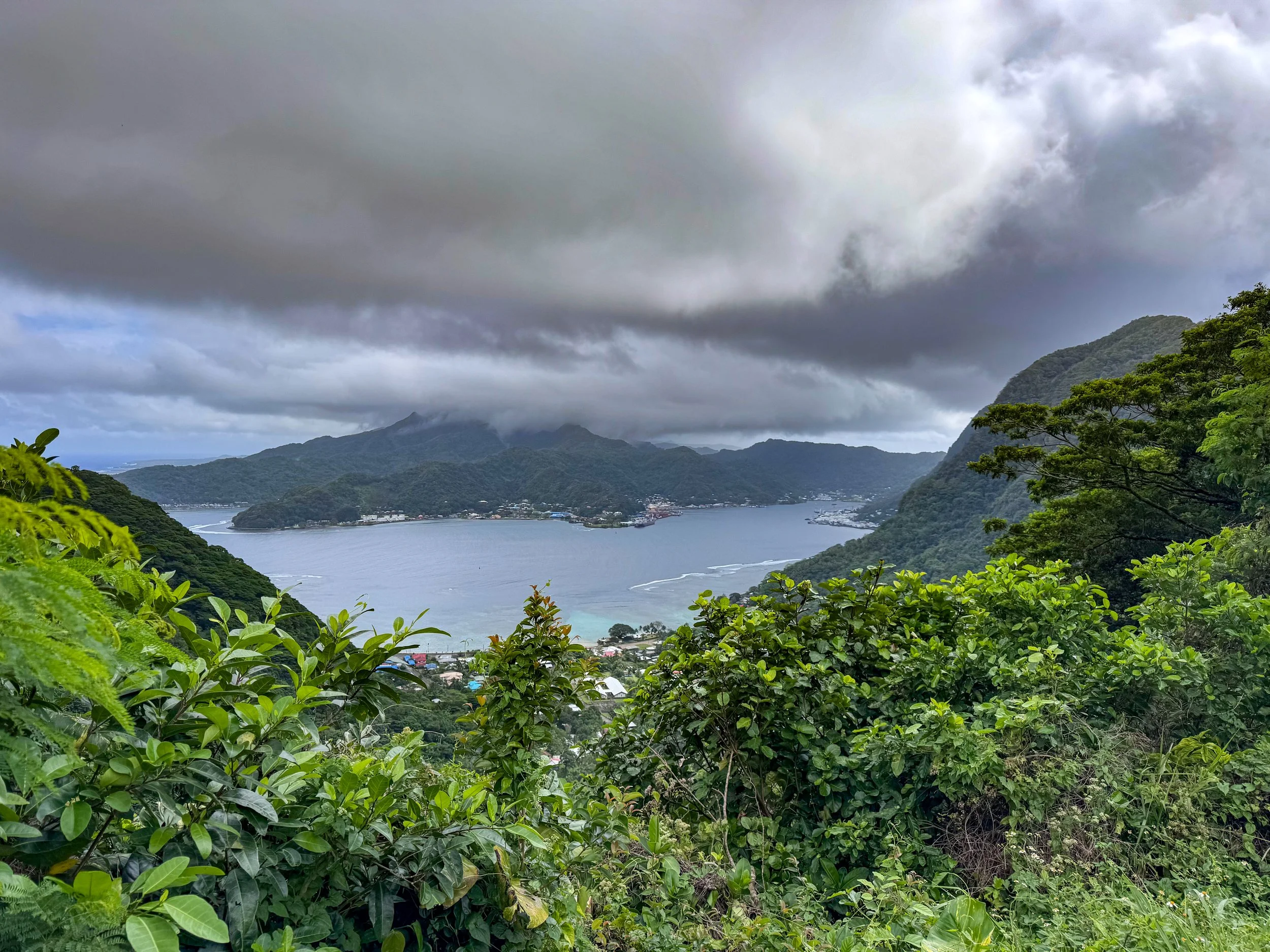
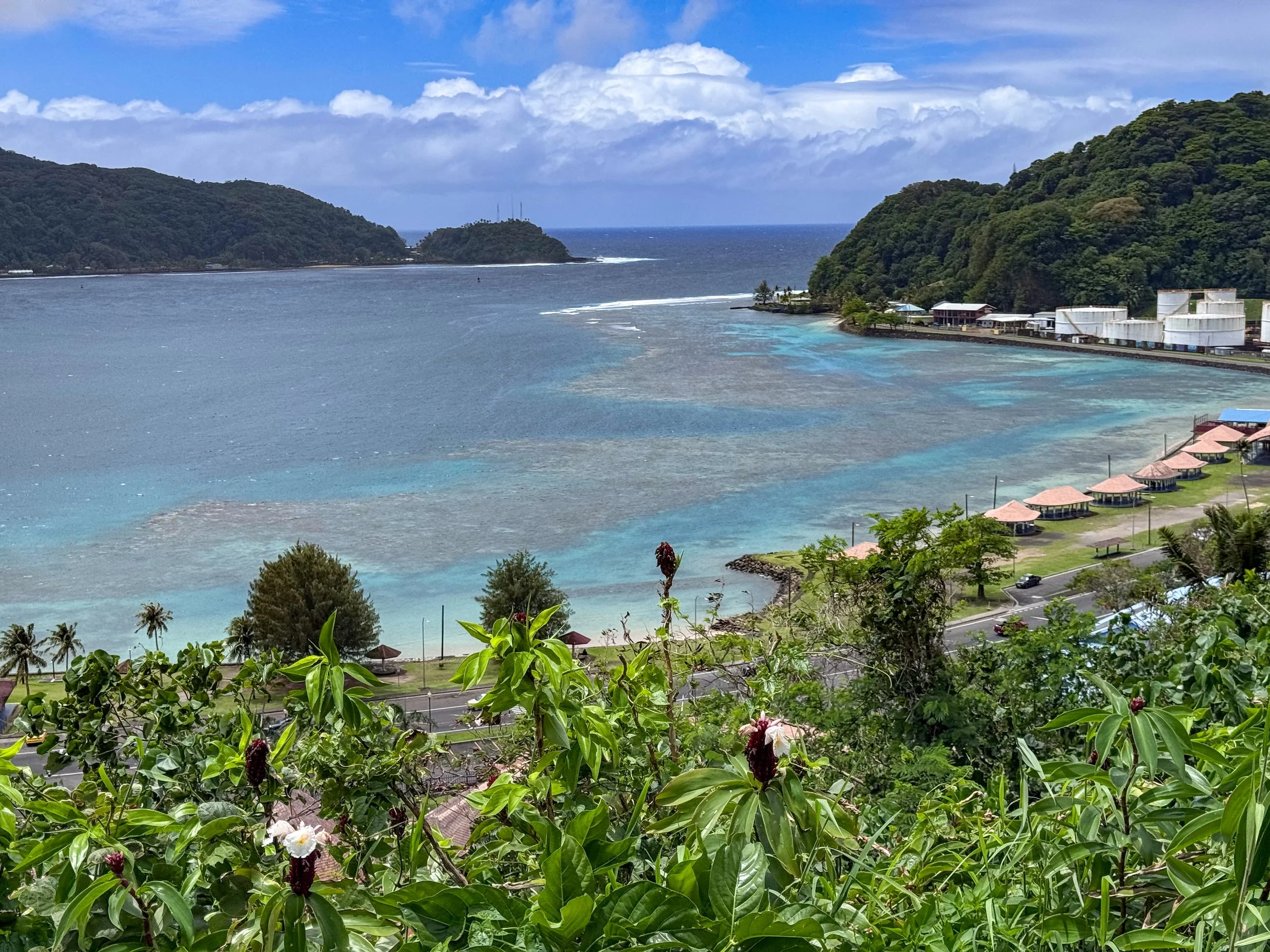
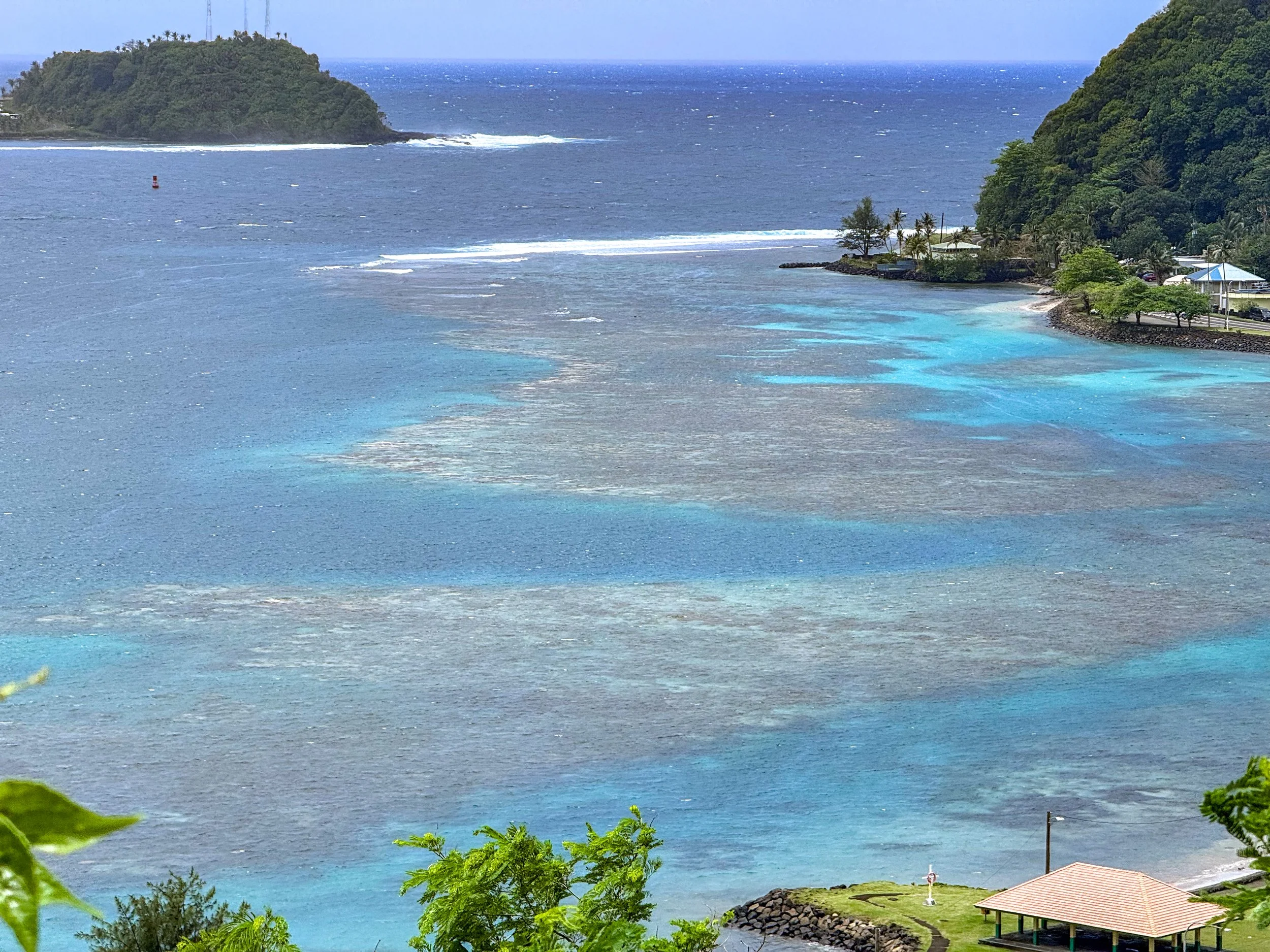
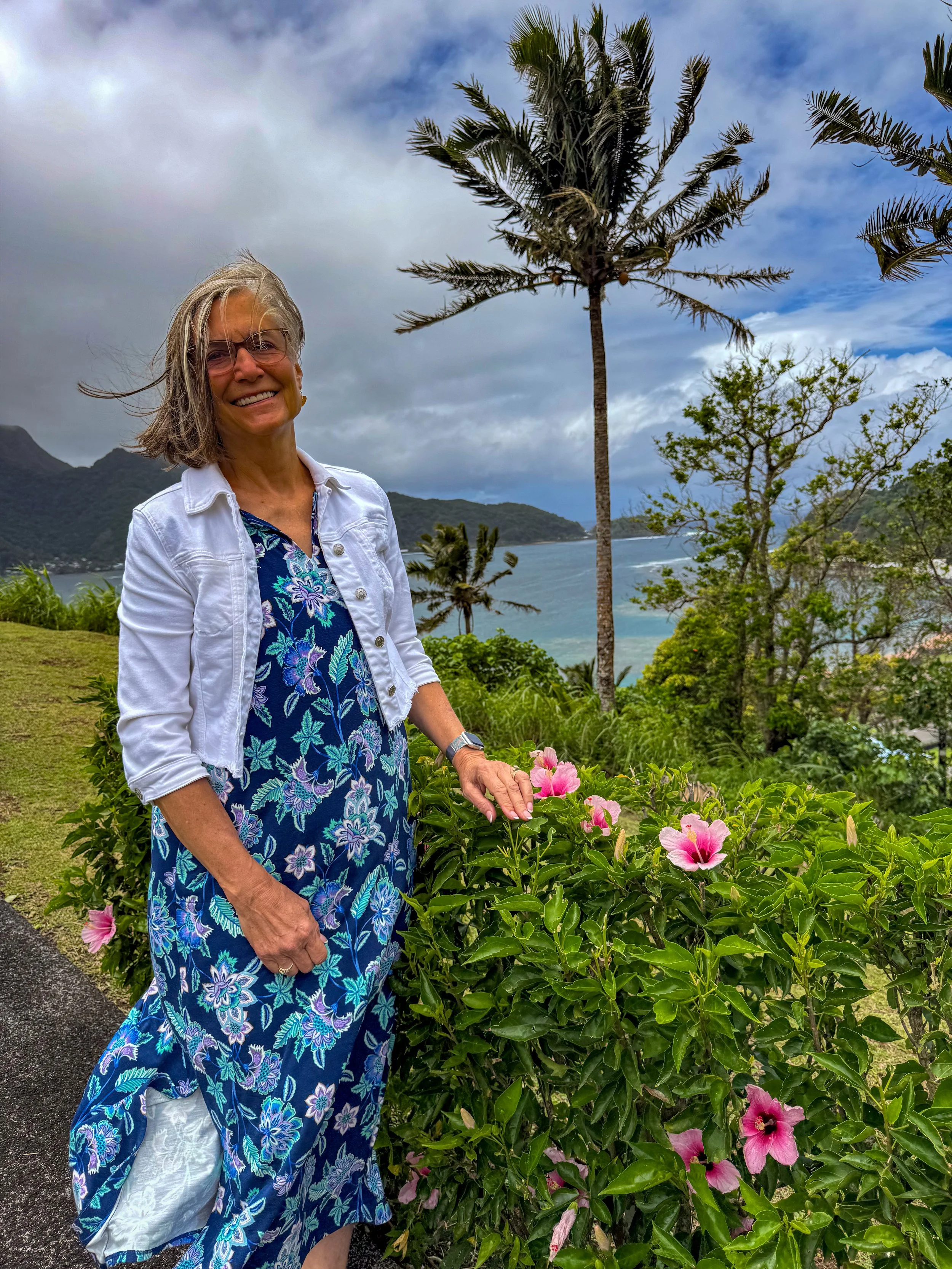
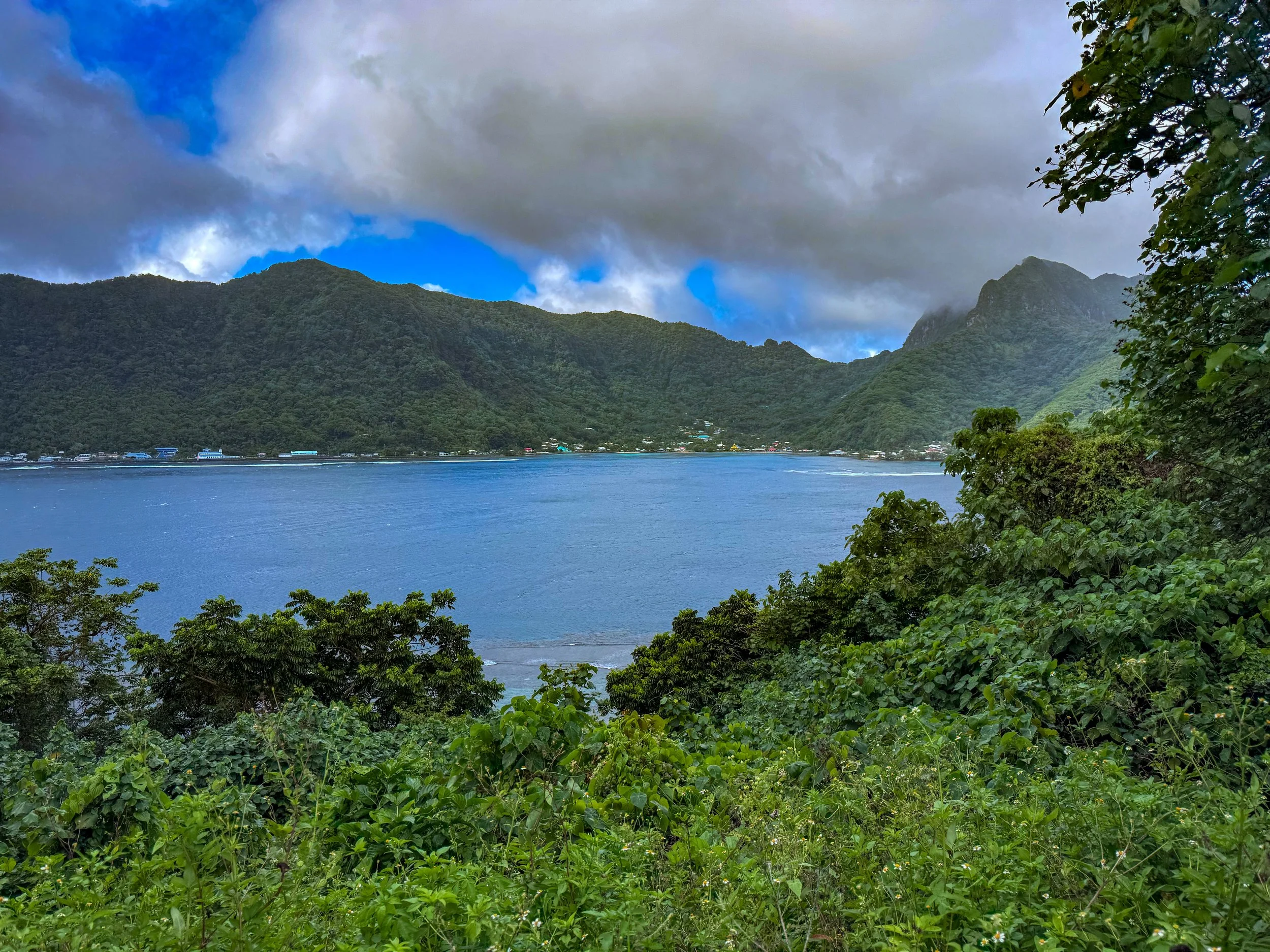
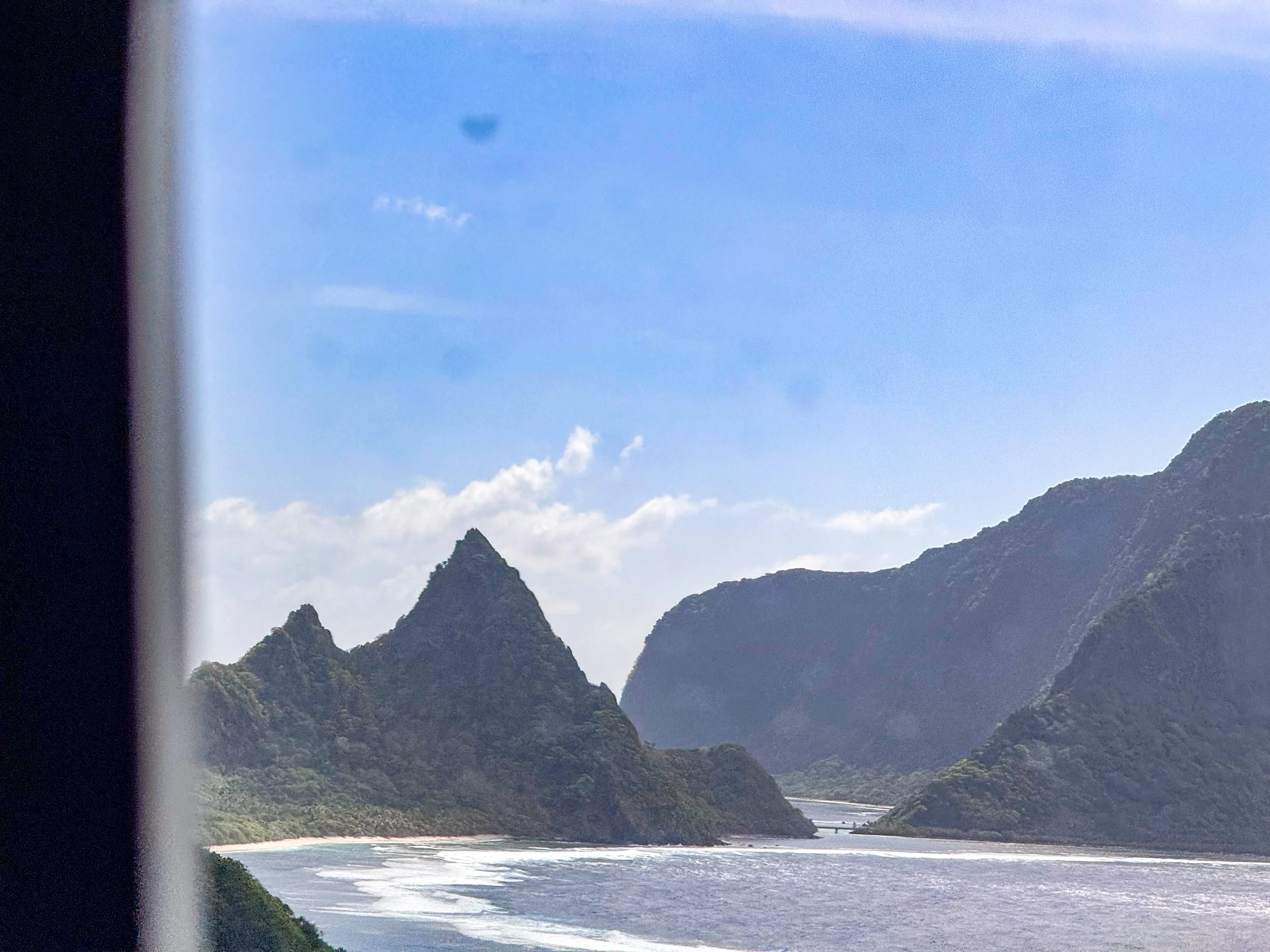
One final tour took us to the top of the hill behind the Pago Pago harbor. Windy but good views of the harbor area with our hotel, and you can see the coral reef that stretches very far into the harbor before dropping to almost 900 ft deep at the center of the harbor. Large cargo ships and cruise ships were traveling through the harbor during our visit.
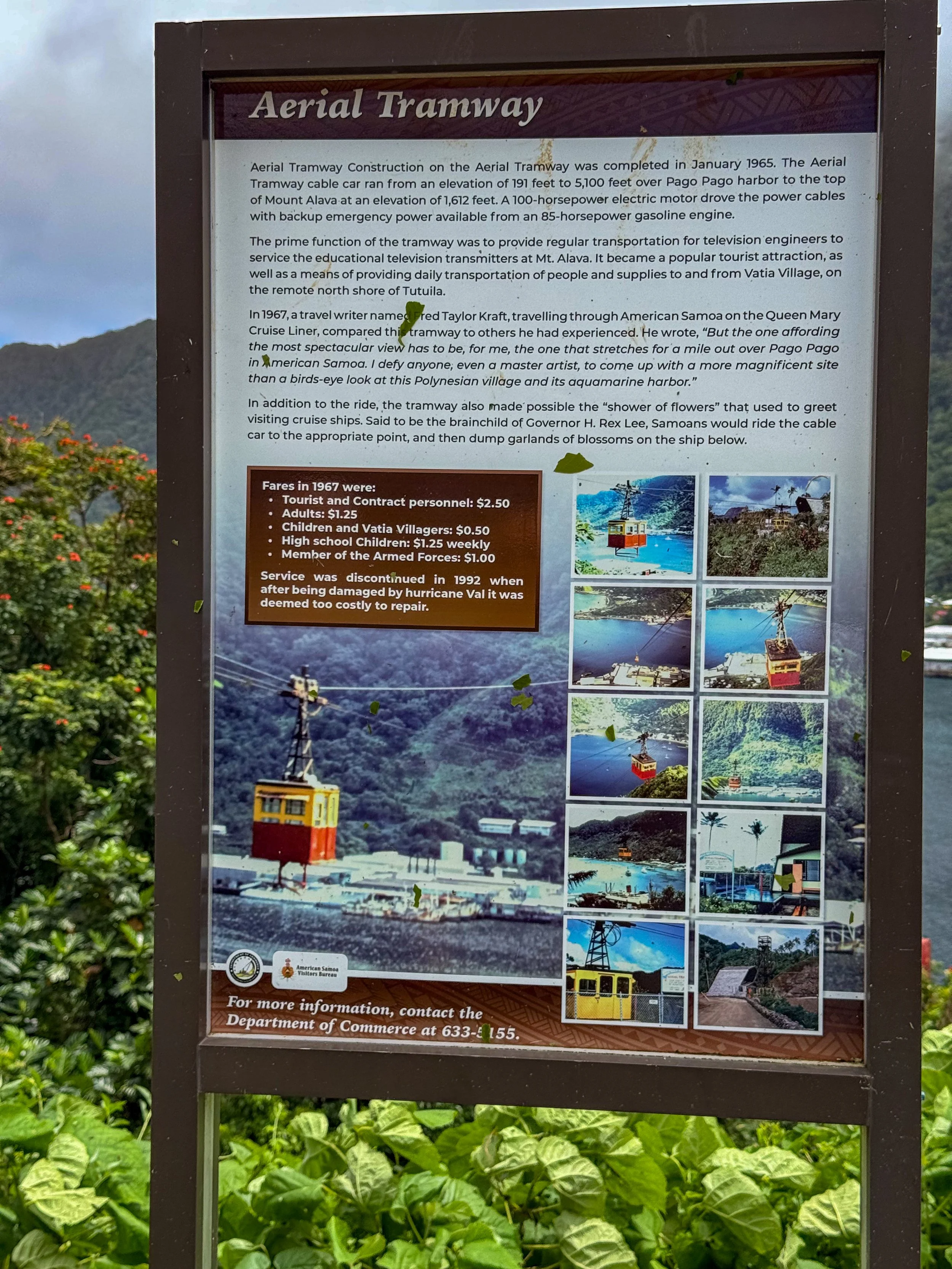
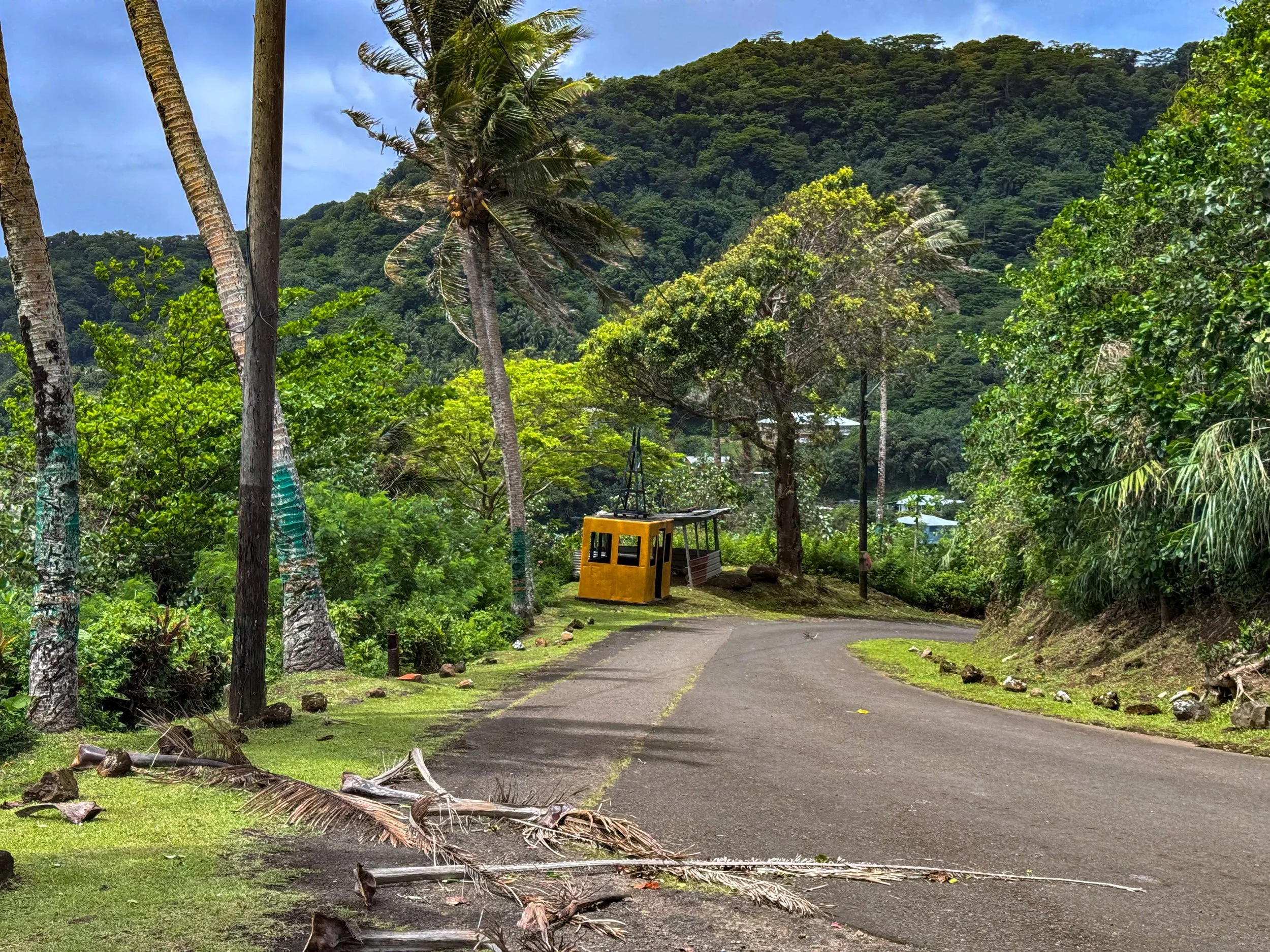
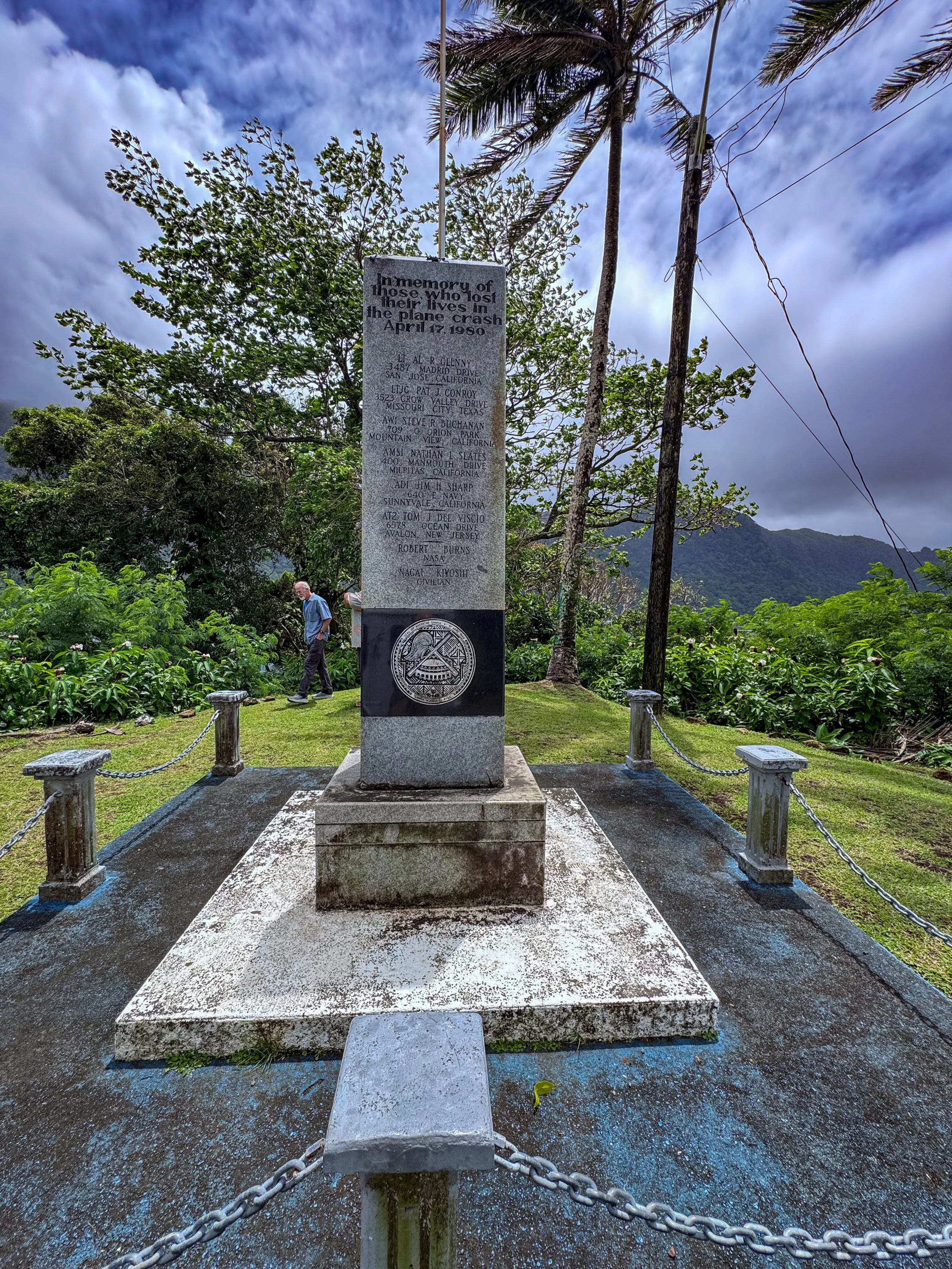
At one time this area had an Arial Tramway that was closed in 1992. We saw the remnants left behind and a memorial to those lost in a plane crash that occurred in 1980 on Flag Day calibration when a US P3 Orion ran into the tramways cable.
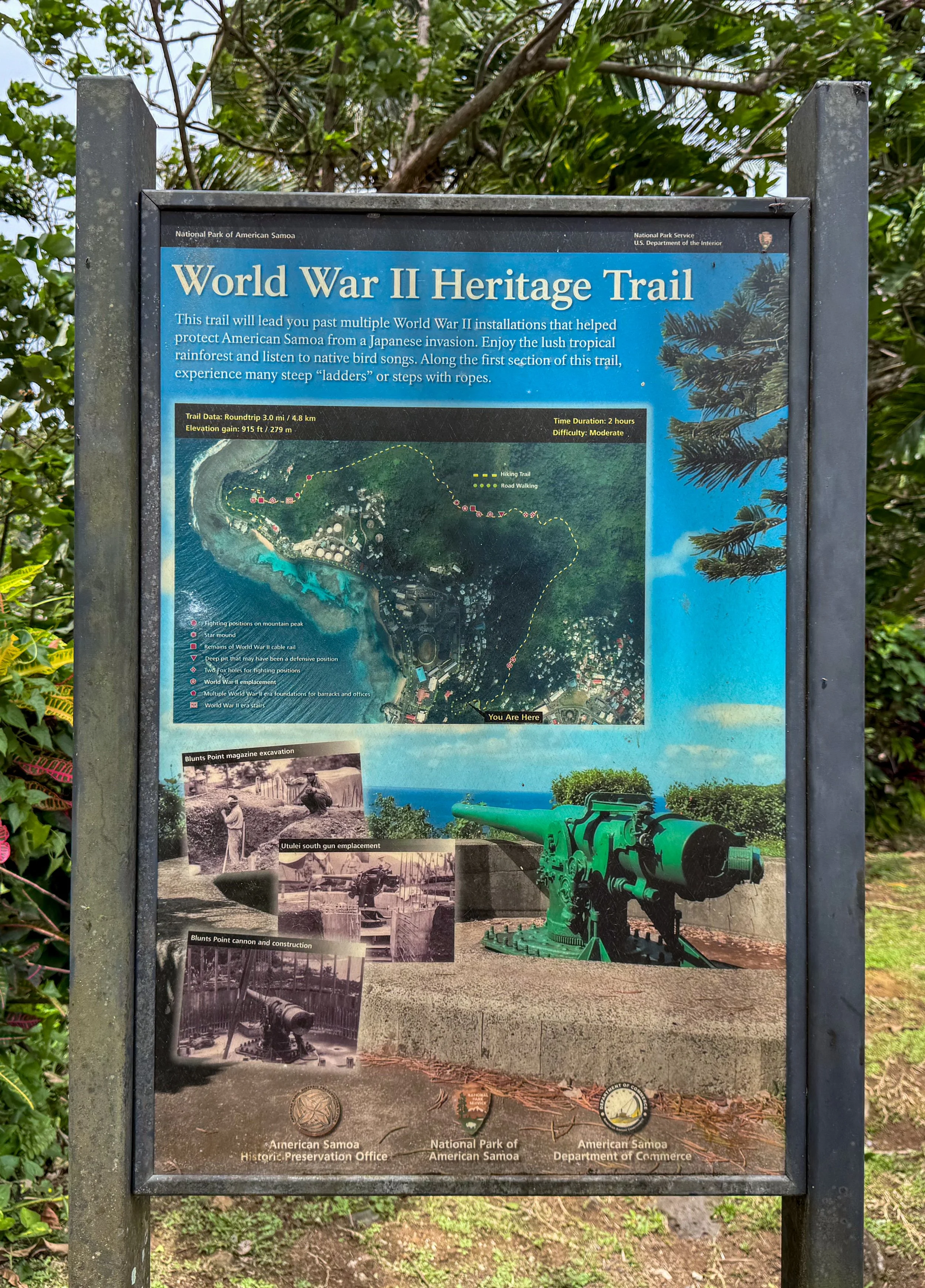
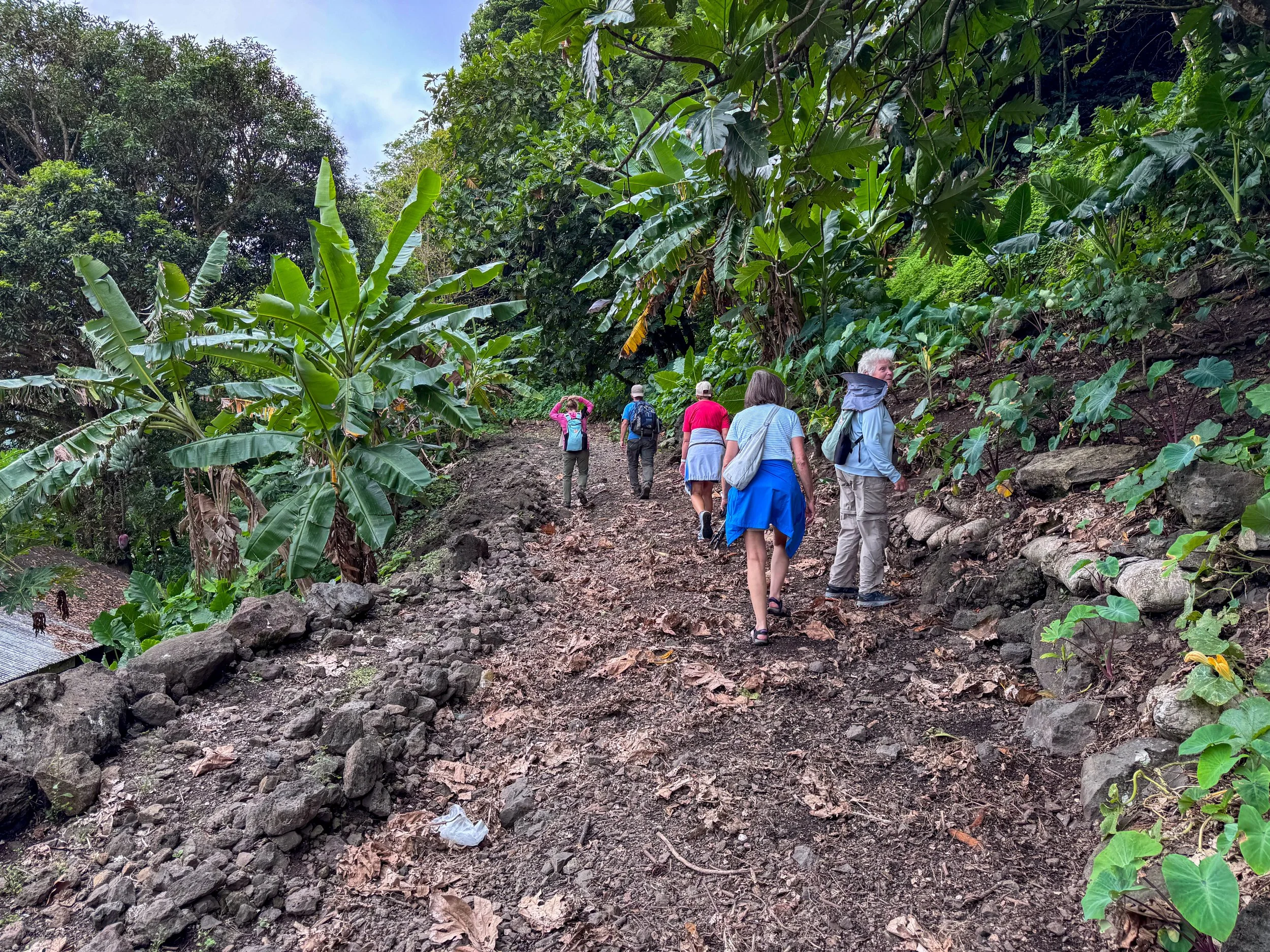
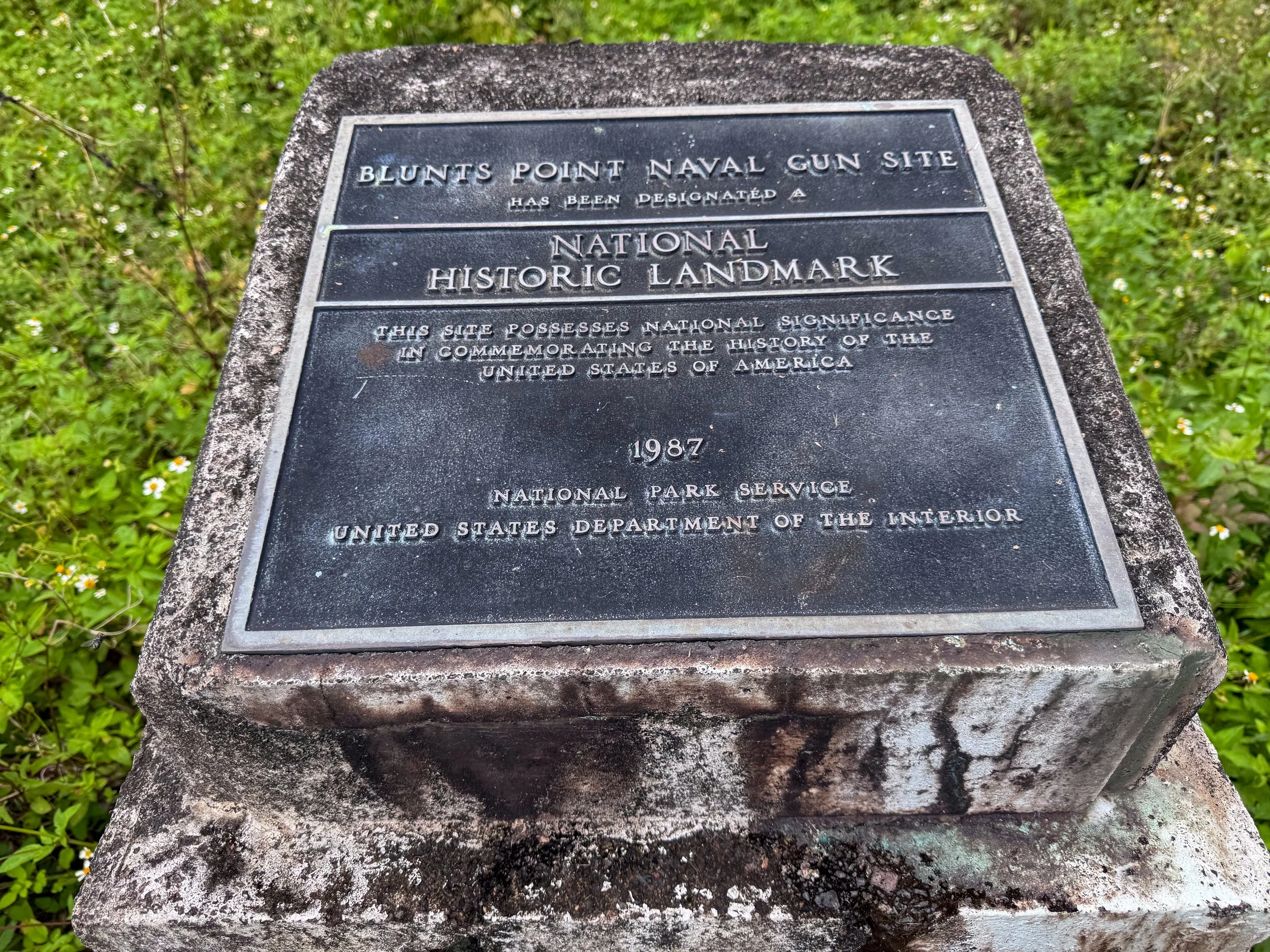
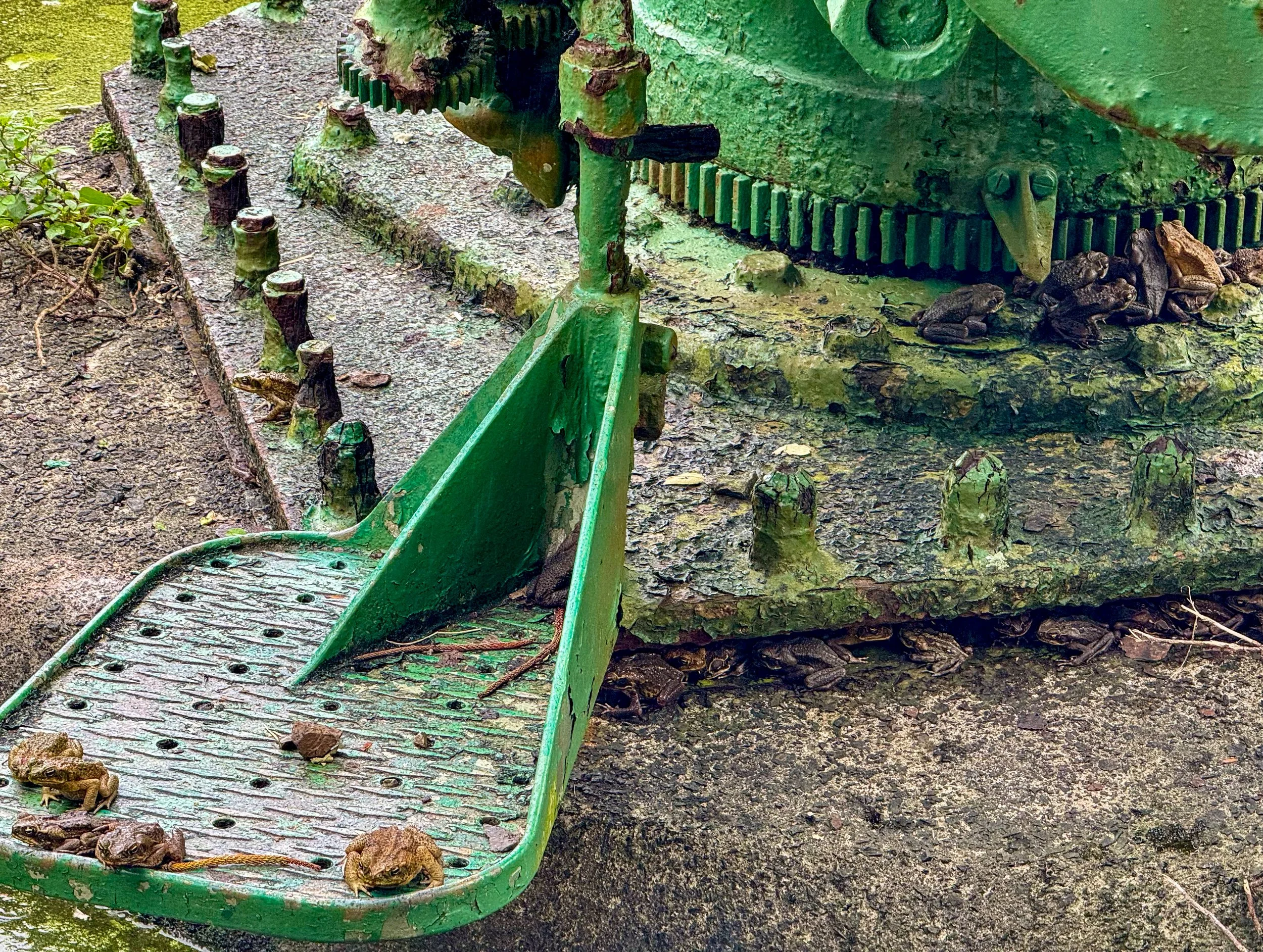
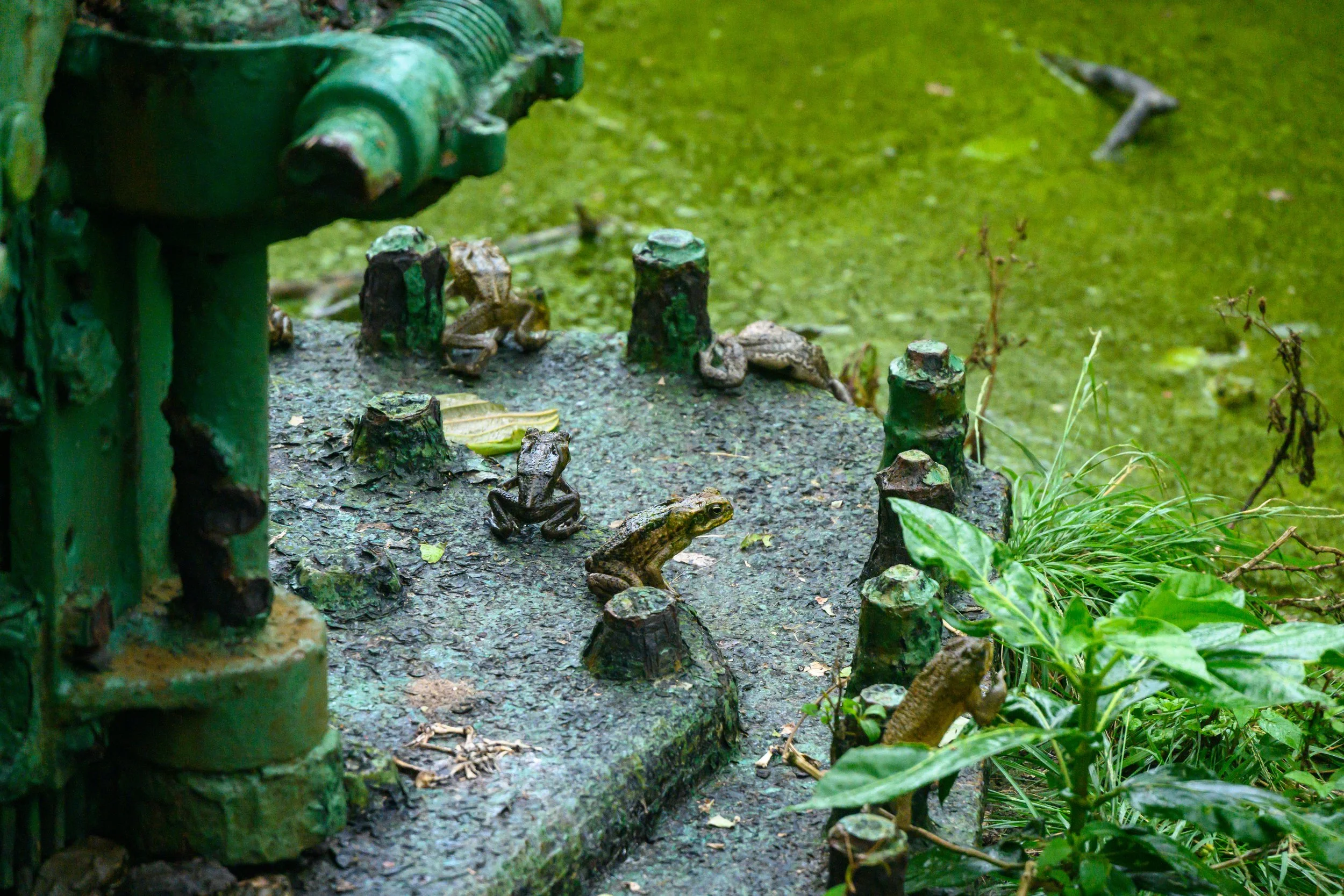
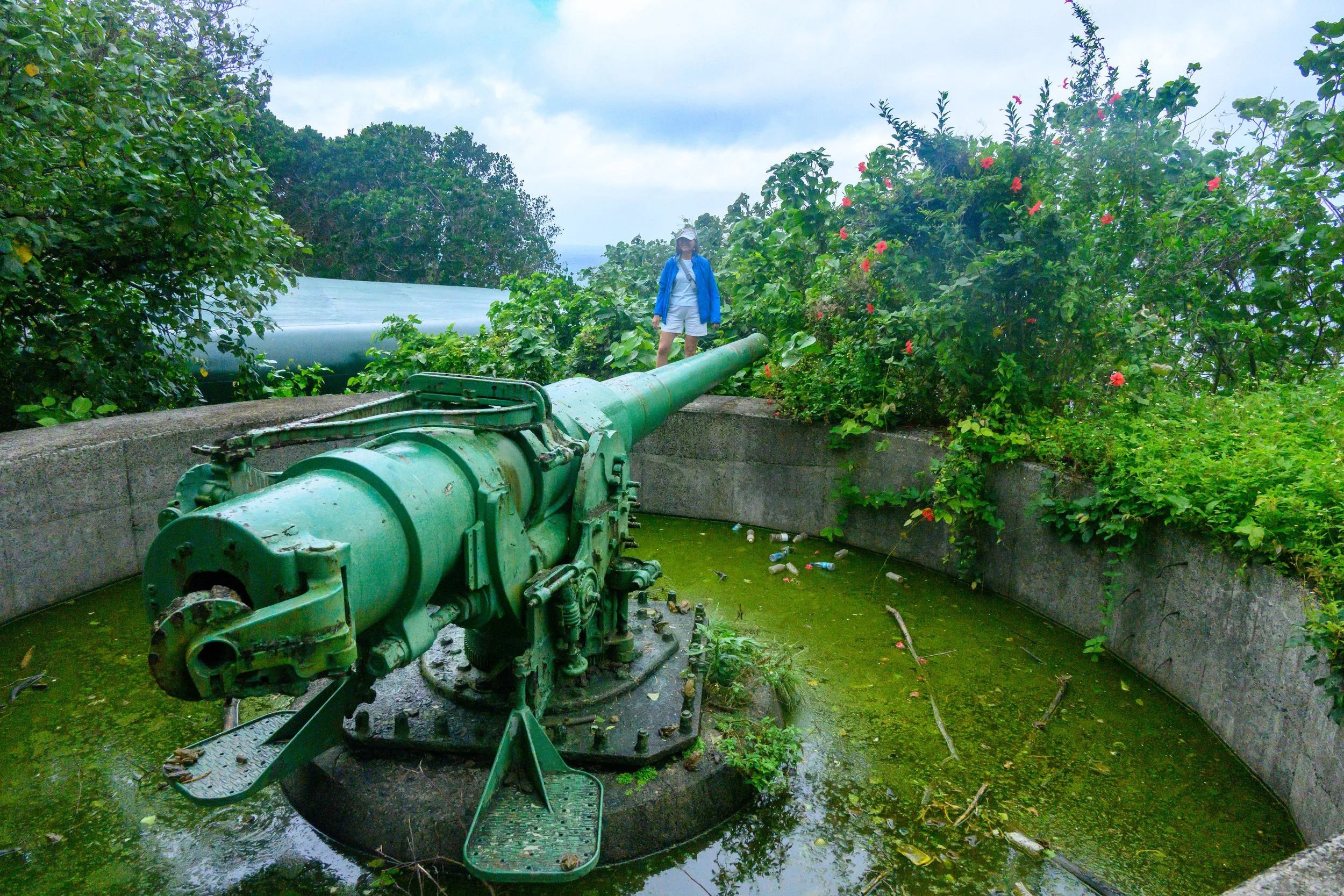
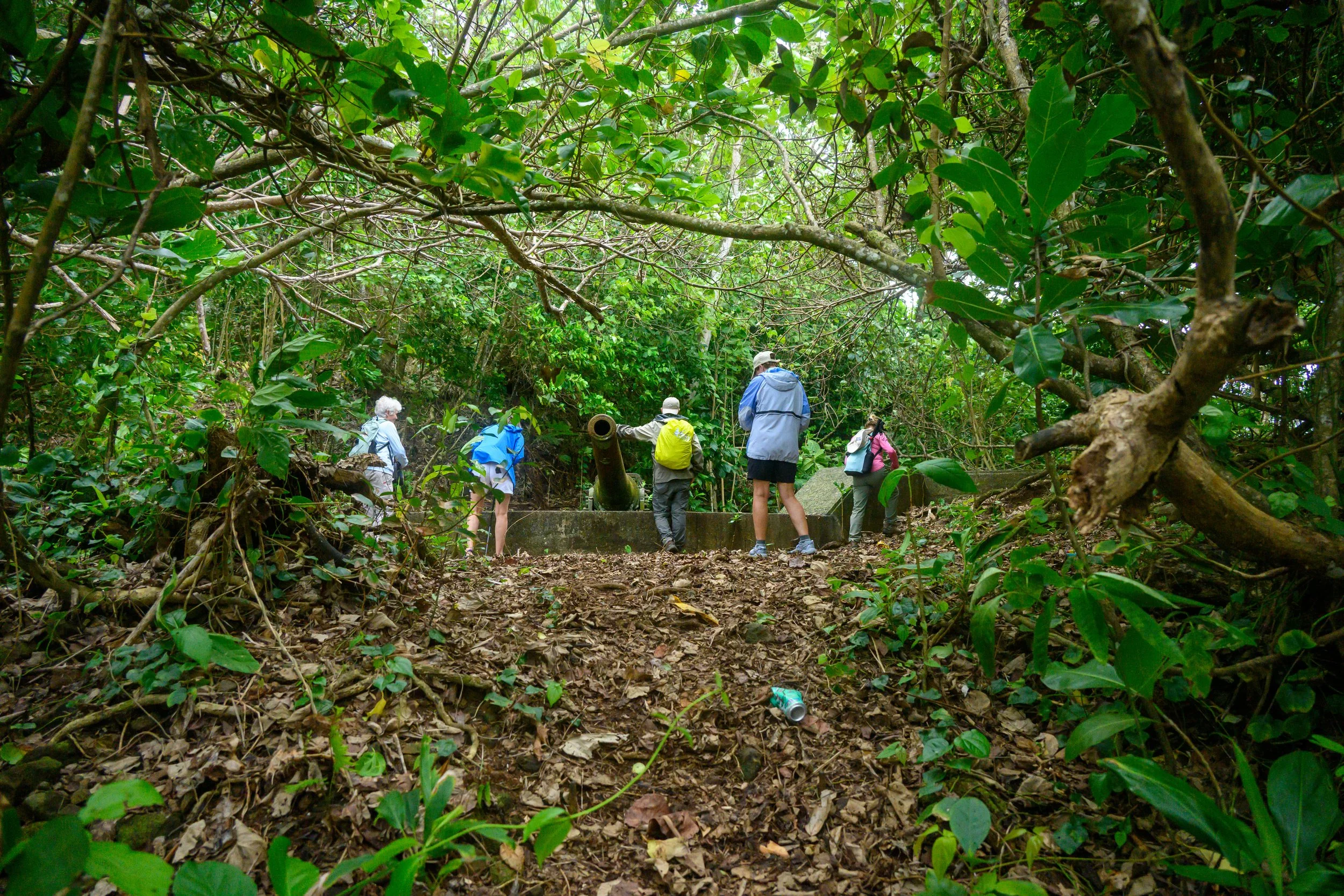
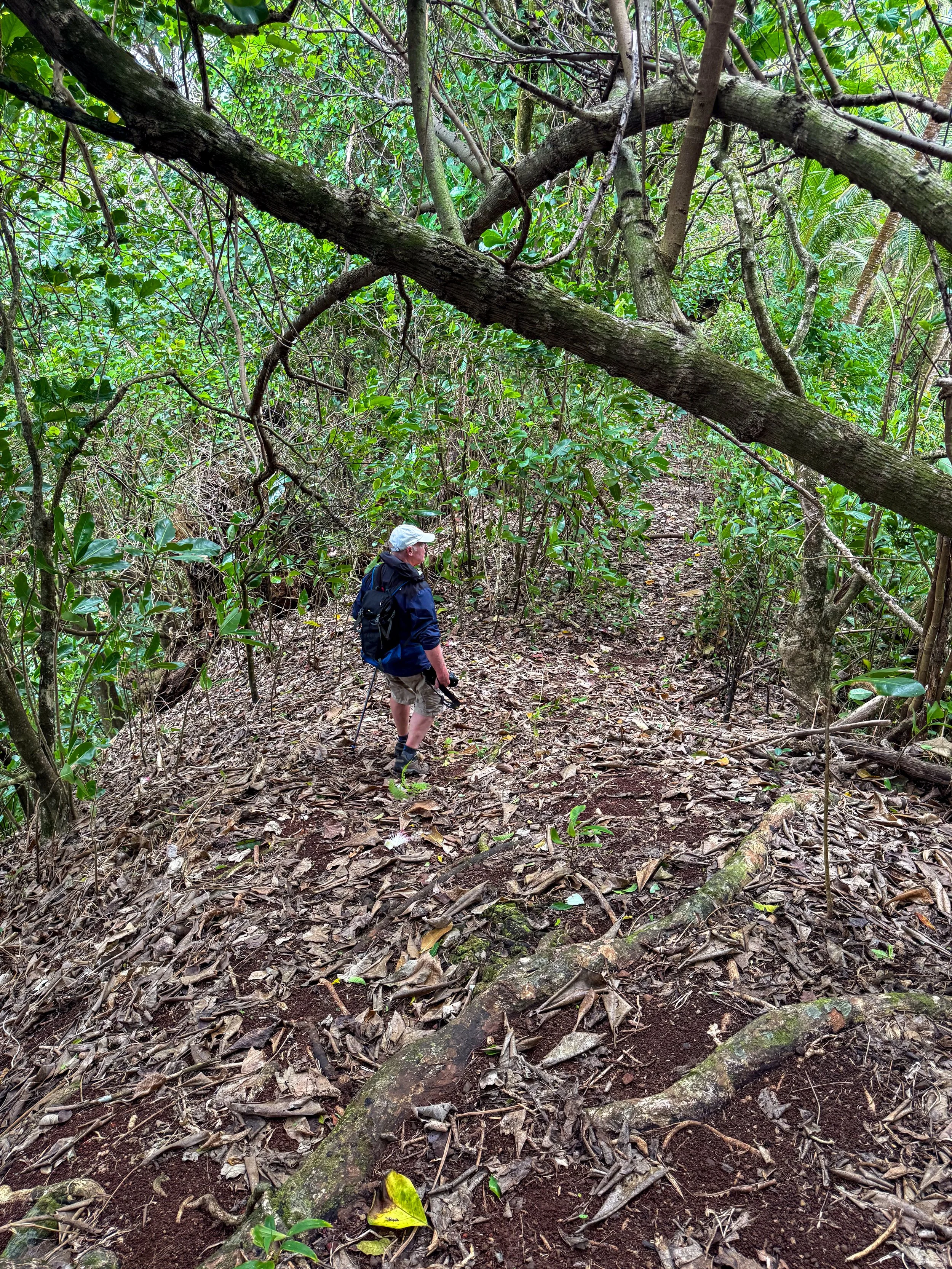
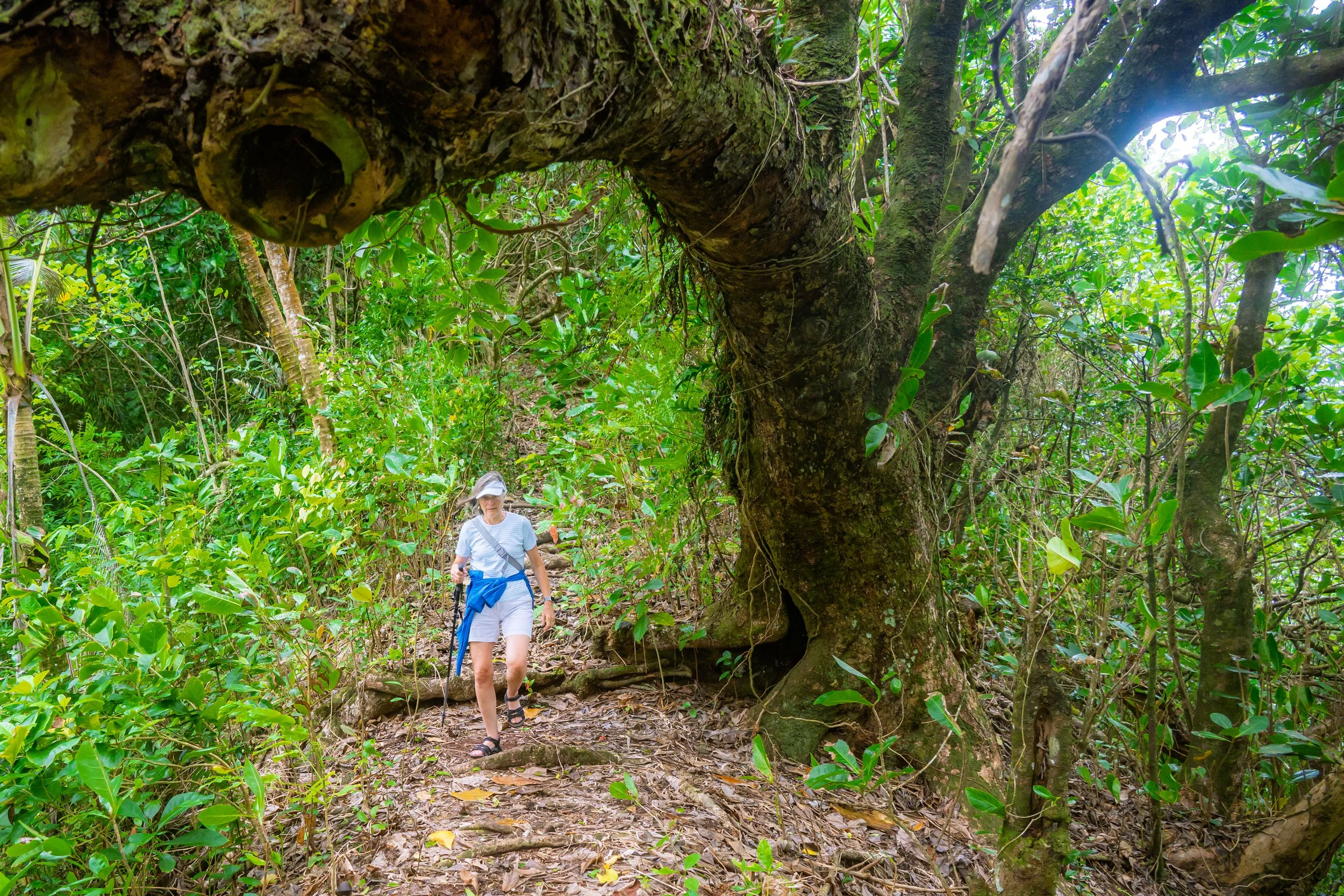
A small group of us, decided to take a last hike in this part of American Samoa. This was on part of the World War II Heritage Trail up to “Blunts Point”. At the start of WWII, gun emplacements were built to protect the island. No invasions took place and I am not sure they ever even fired the guns. The trails are somewhat marked but still steep and, as expected in a tropical rain forest, thick with vegetation. The remains of these cannons are still in place in their bunker holes and are now home to many, many frogs as the holes have filled with water become small ponds.
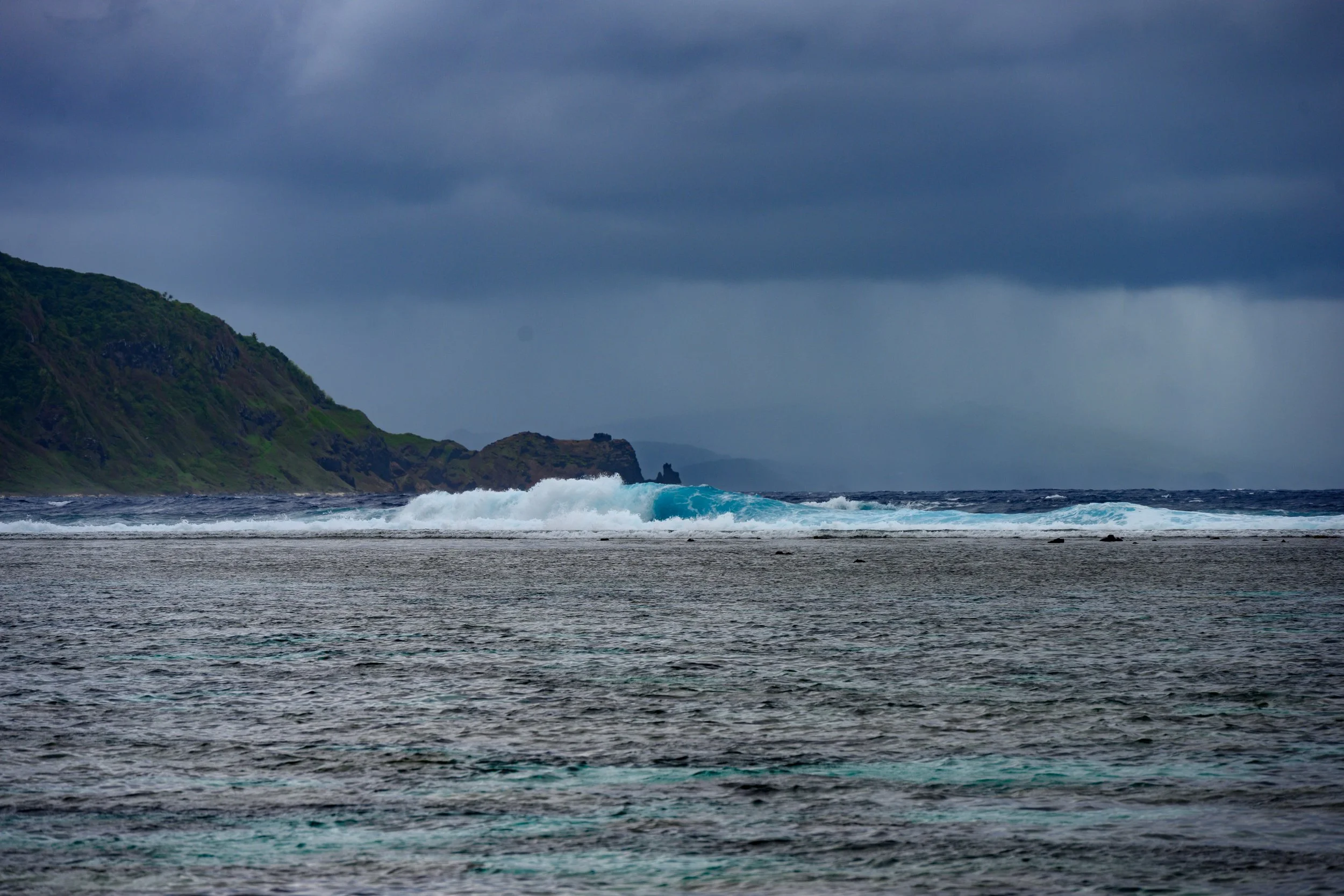
The winds have been very strong during our visit, which limited some of the offshore activities. We didn’t make it to the nearby island of Anunu’u or get to canoe, but we have still seen and experienced a lot. Pika took us to the pier where small boats carry several people at a time and from Anunu’u. The seas were so rough that the boats literally surfed the waves onto the pier and had to carefully time the return trip to exit between waves. Seeing the skill required to get folks back and forth from the island convinced us that it was a trip that we did not need to take!
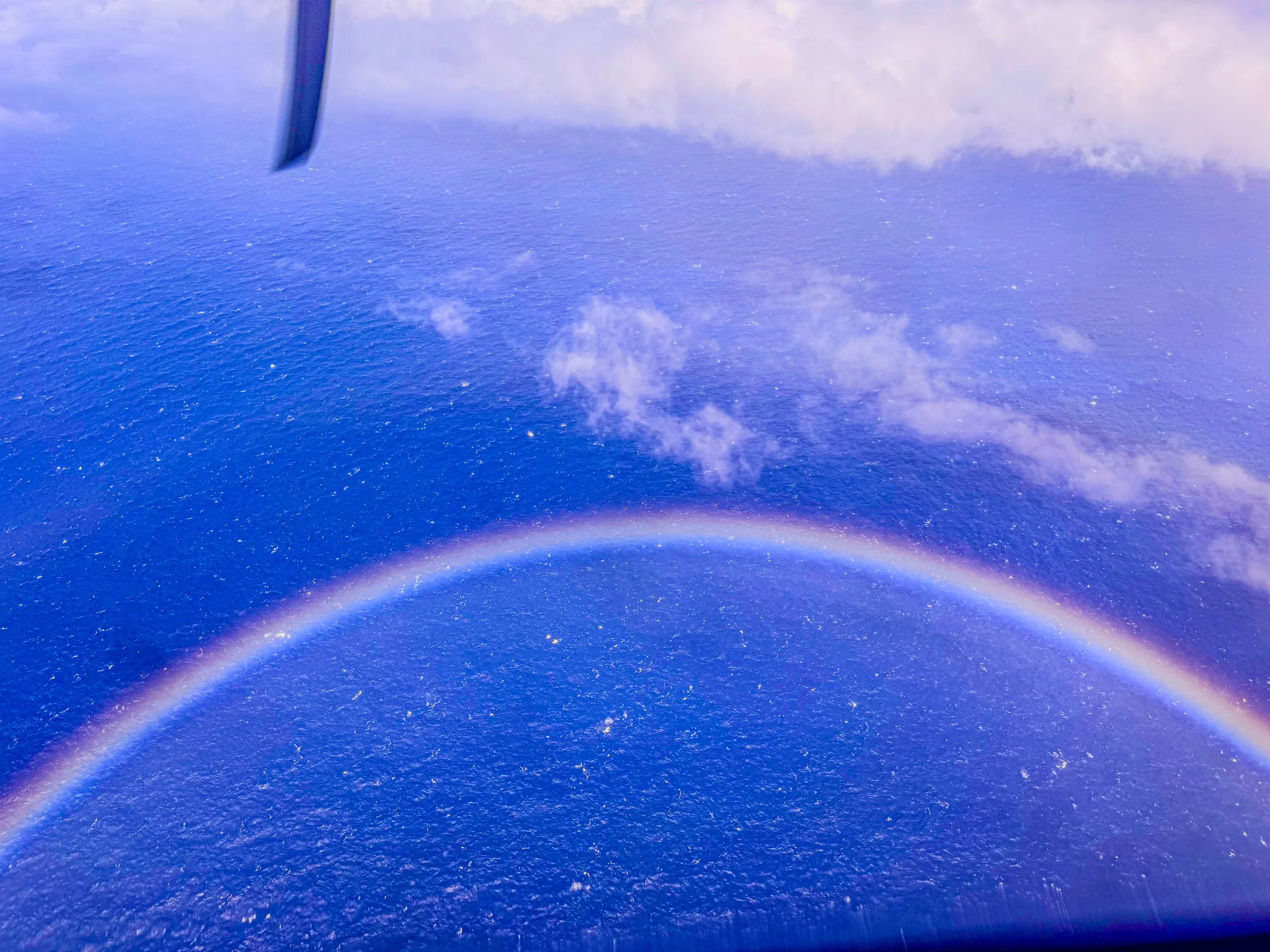
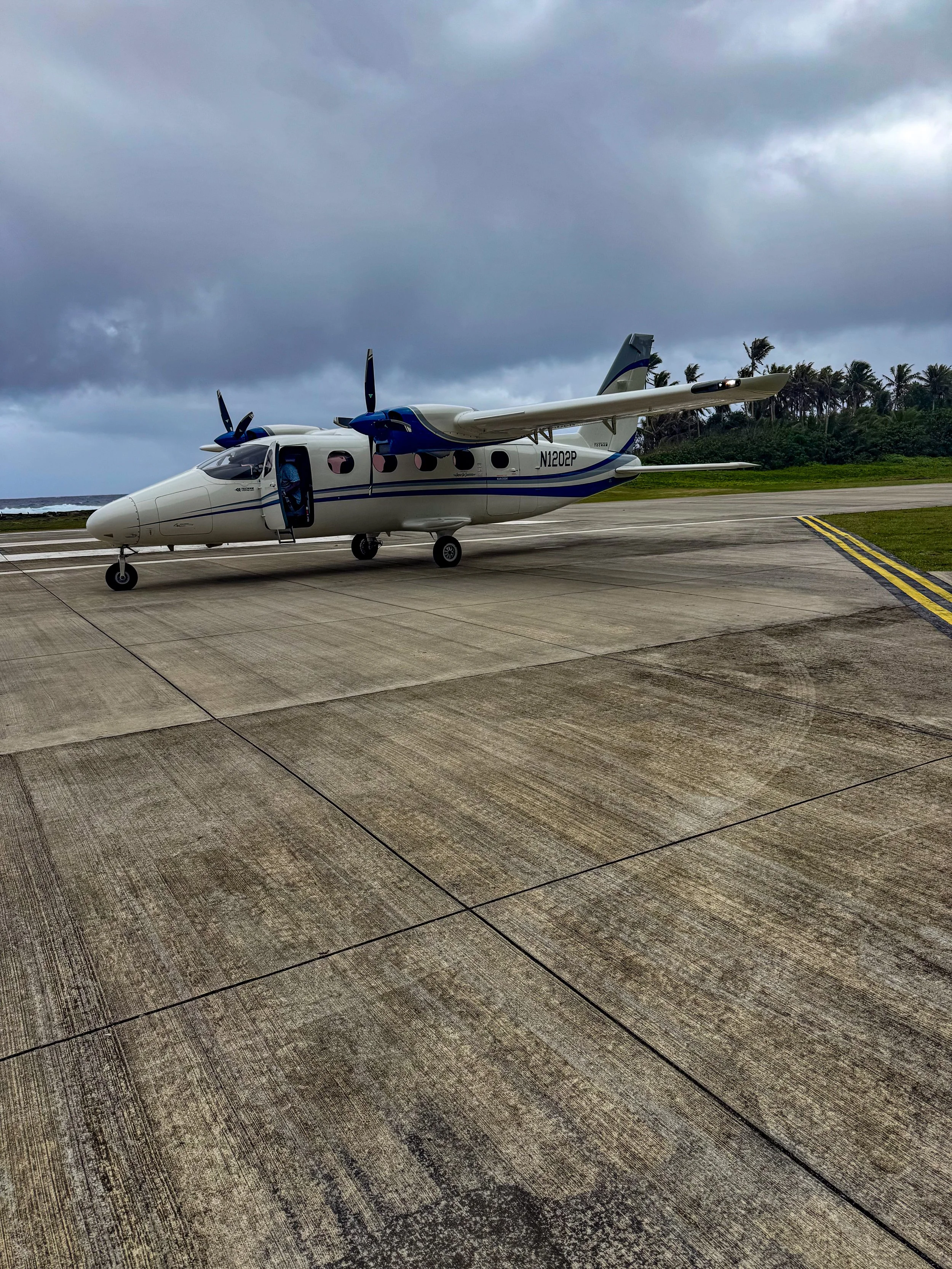
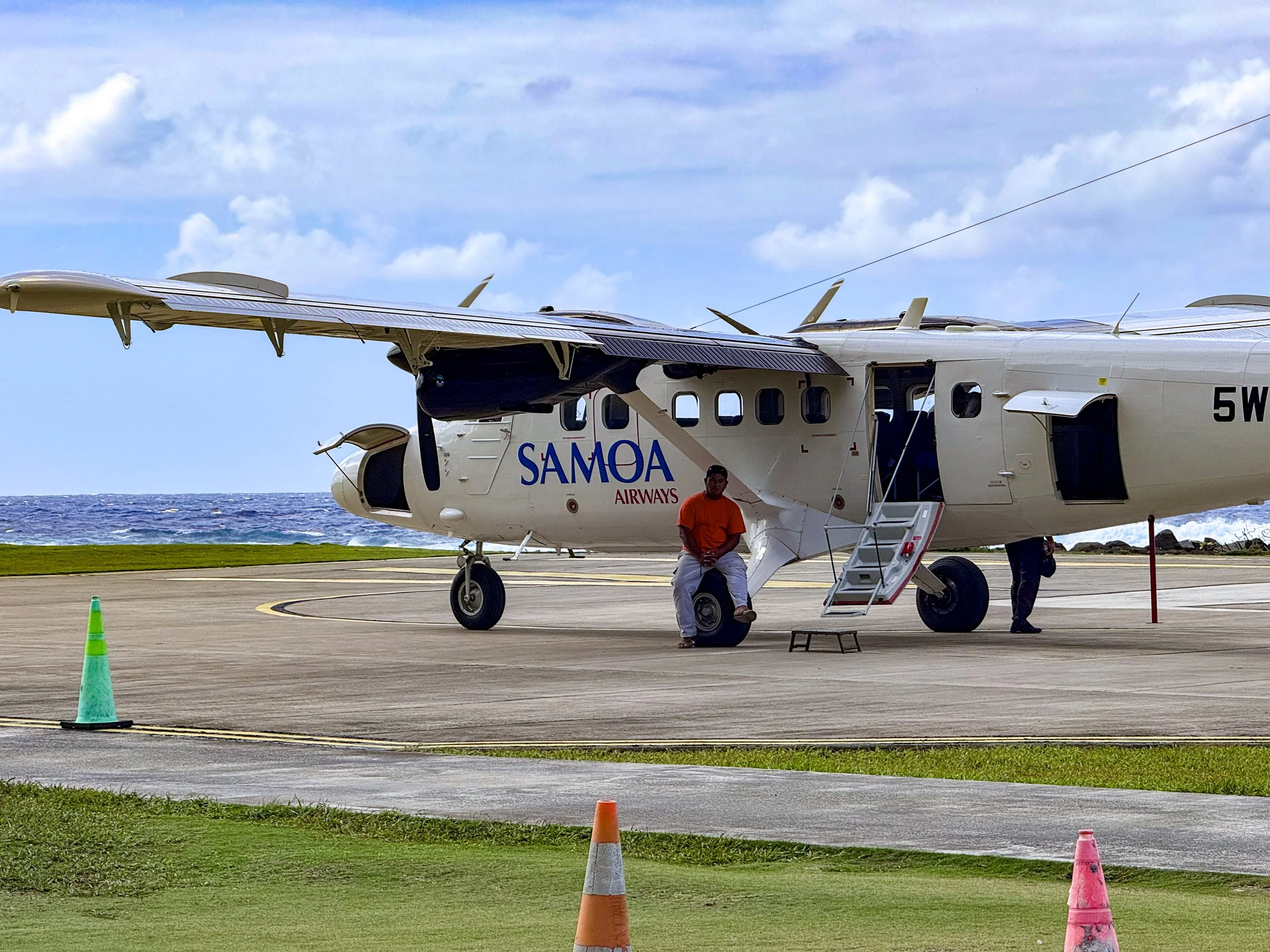
The plan originally was to fly from Pago Pago to the island of TA’U and then take a boat to OFU but rough seas made the boat trip questionable so the tour changed plans, and the flight went directly to OFU. Out the window of the plane we could see a rainbow from above the rainbow.
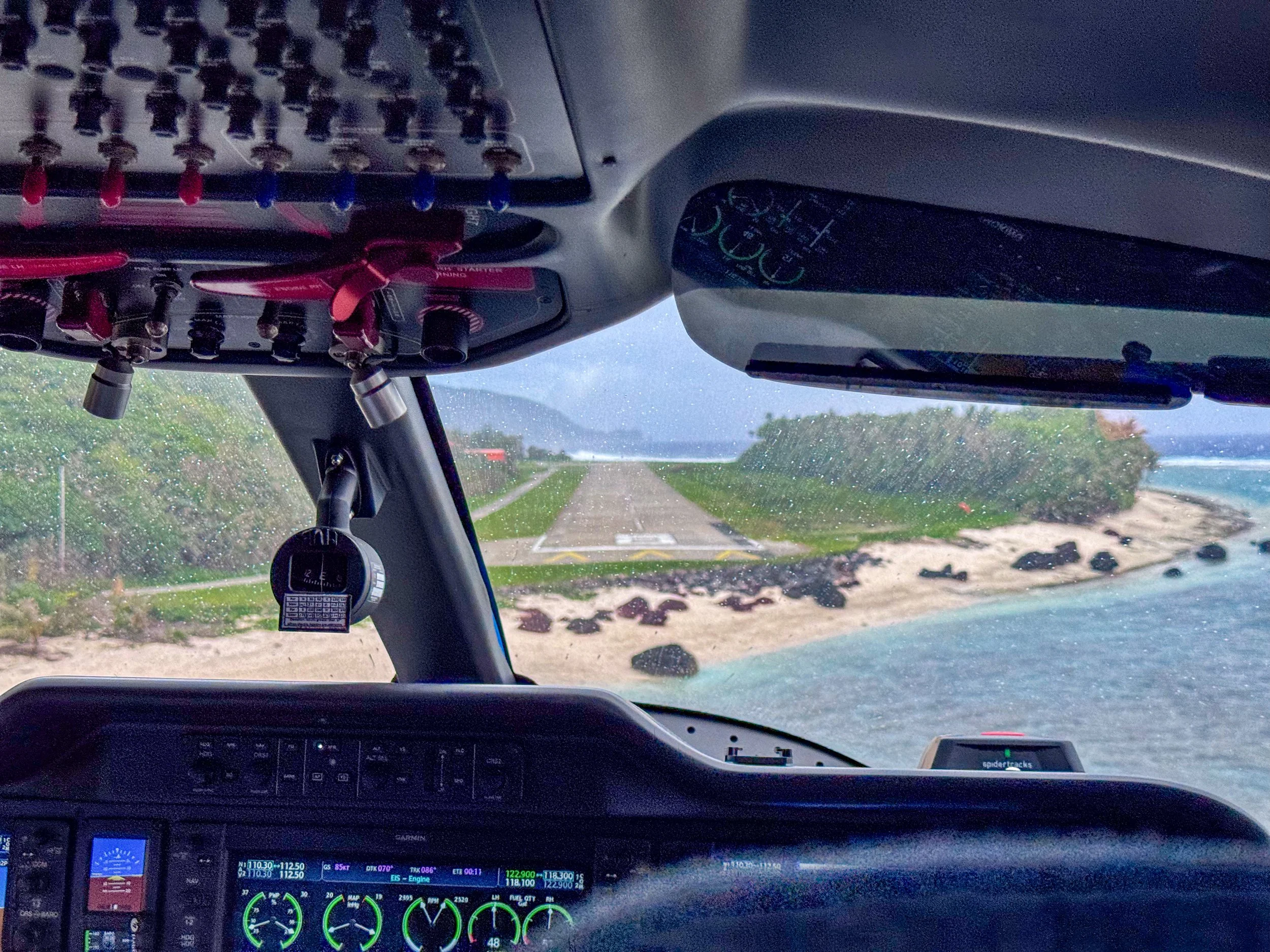
The runway on OFU is a true small island runway. Skilled pilots with good planes made for these locations get you to where you need to be.
Notice the “OFU Airport” (green roof) is a little smaller than other airport complexes. Also the First Aid/ Hospital an American Samoa Office Building are right off the runway as well.
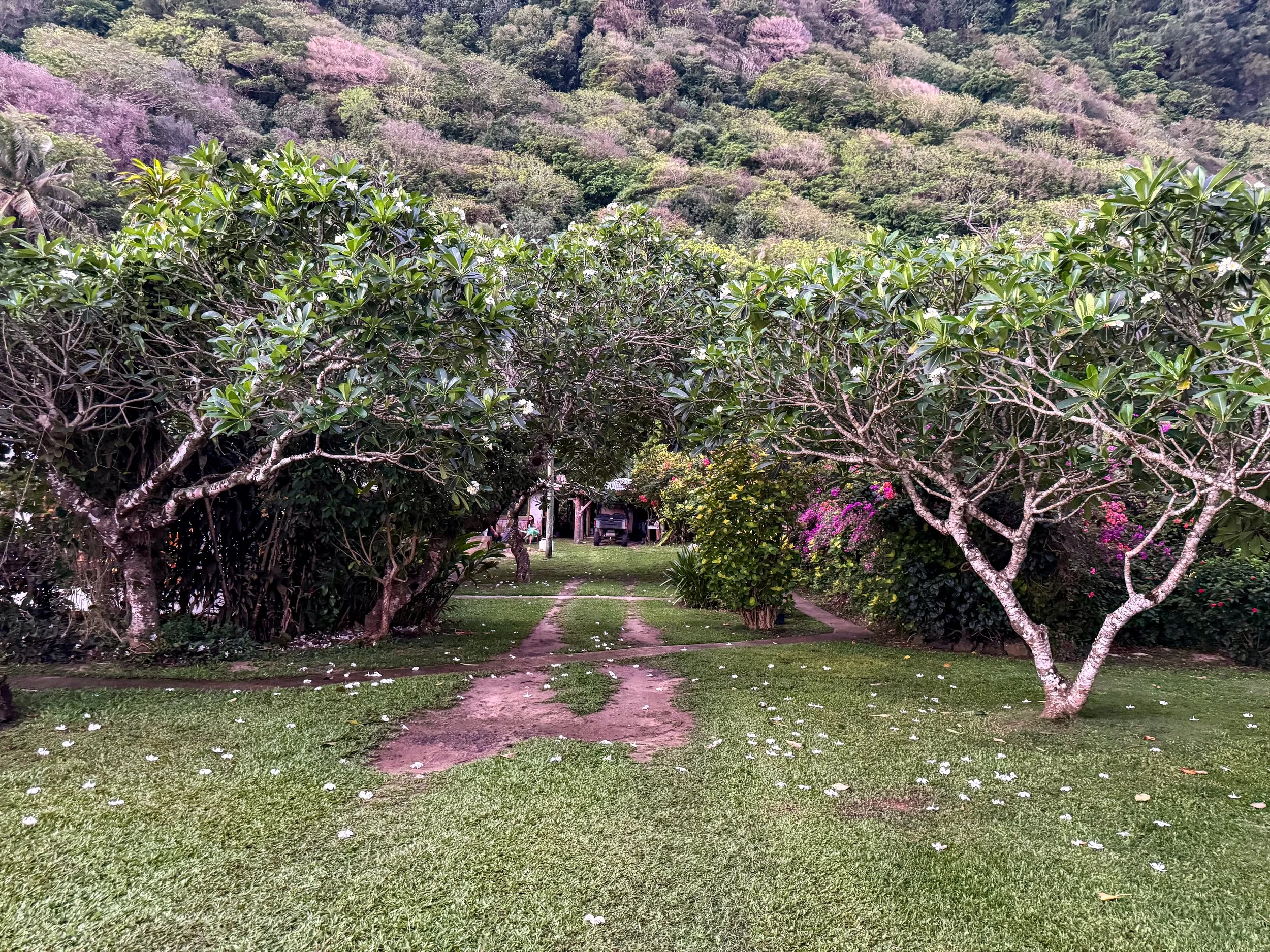
Then we got to the dining room and cabins that we would be staying in for 3 nights. Again, right off the runway. Beautiful place. Cabins had a/c, bath and shower and reminded us of Girl Scout or Boy Scout camp of our youth. The dinning room was where we had all our traditional American Samoan meals prepared by a local family.
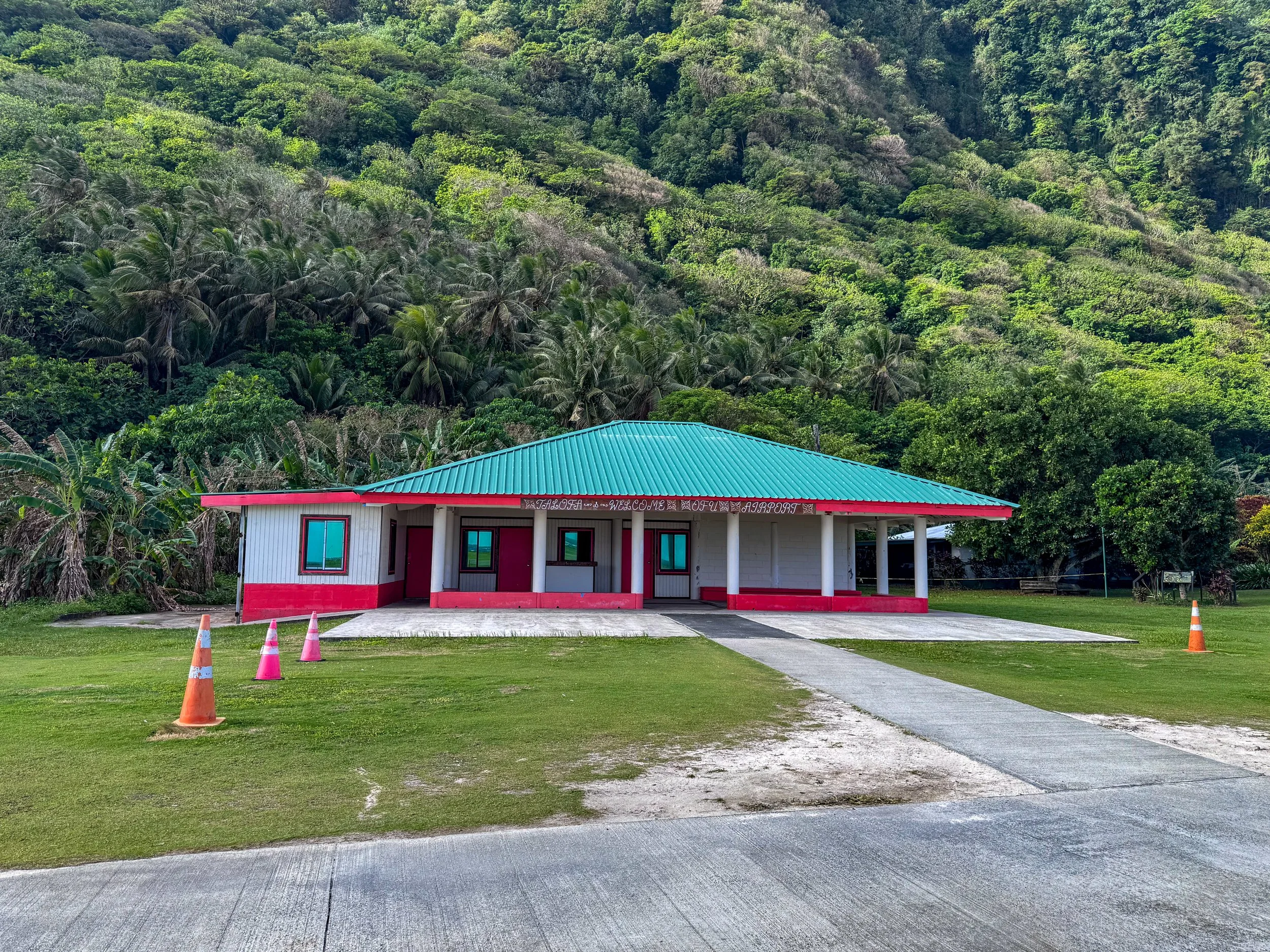
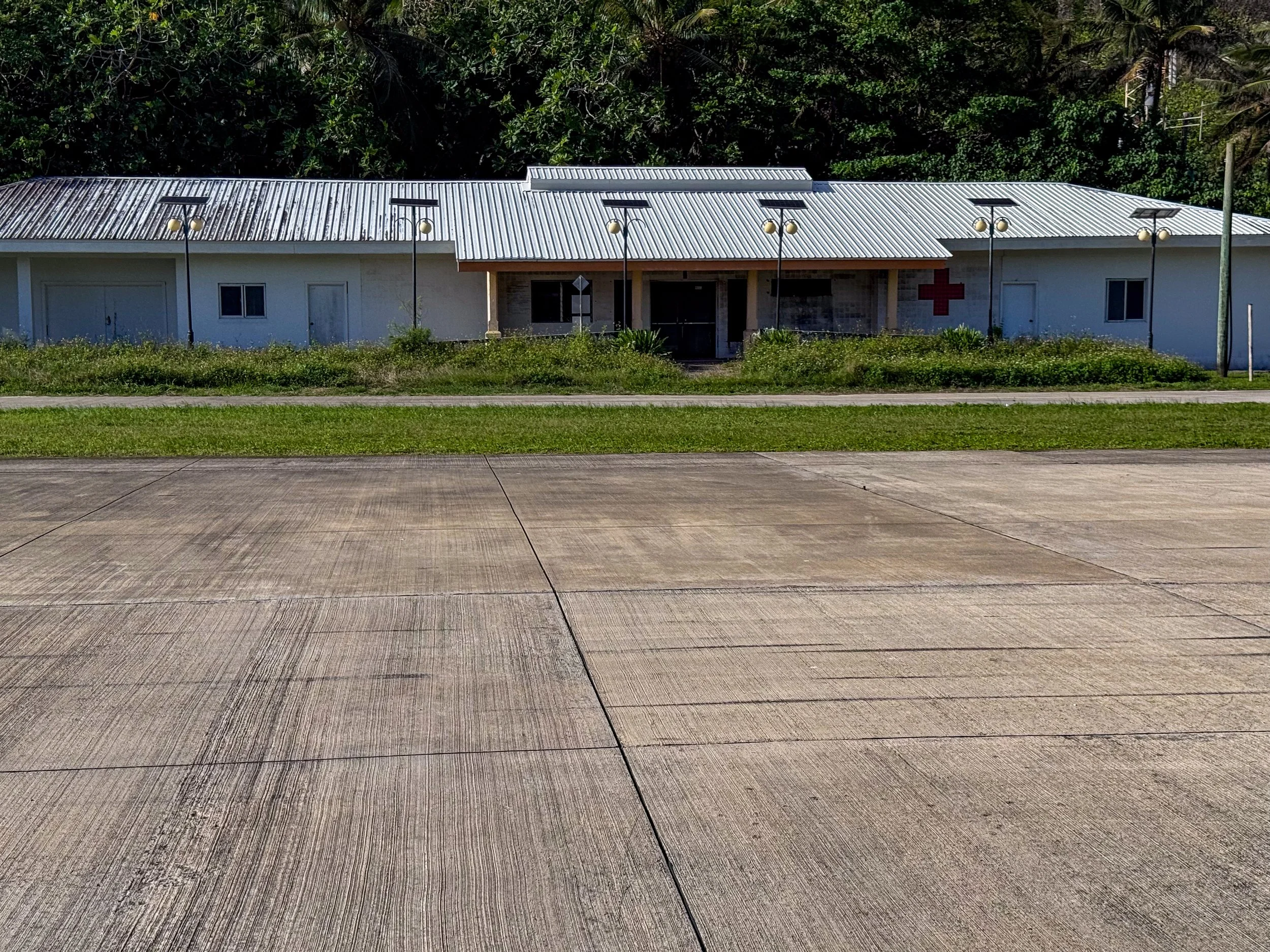
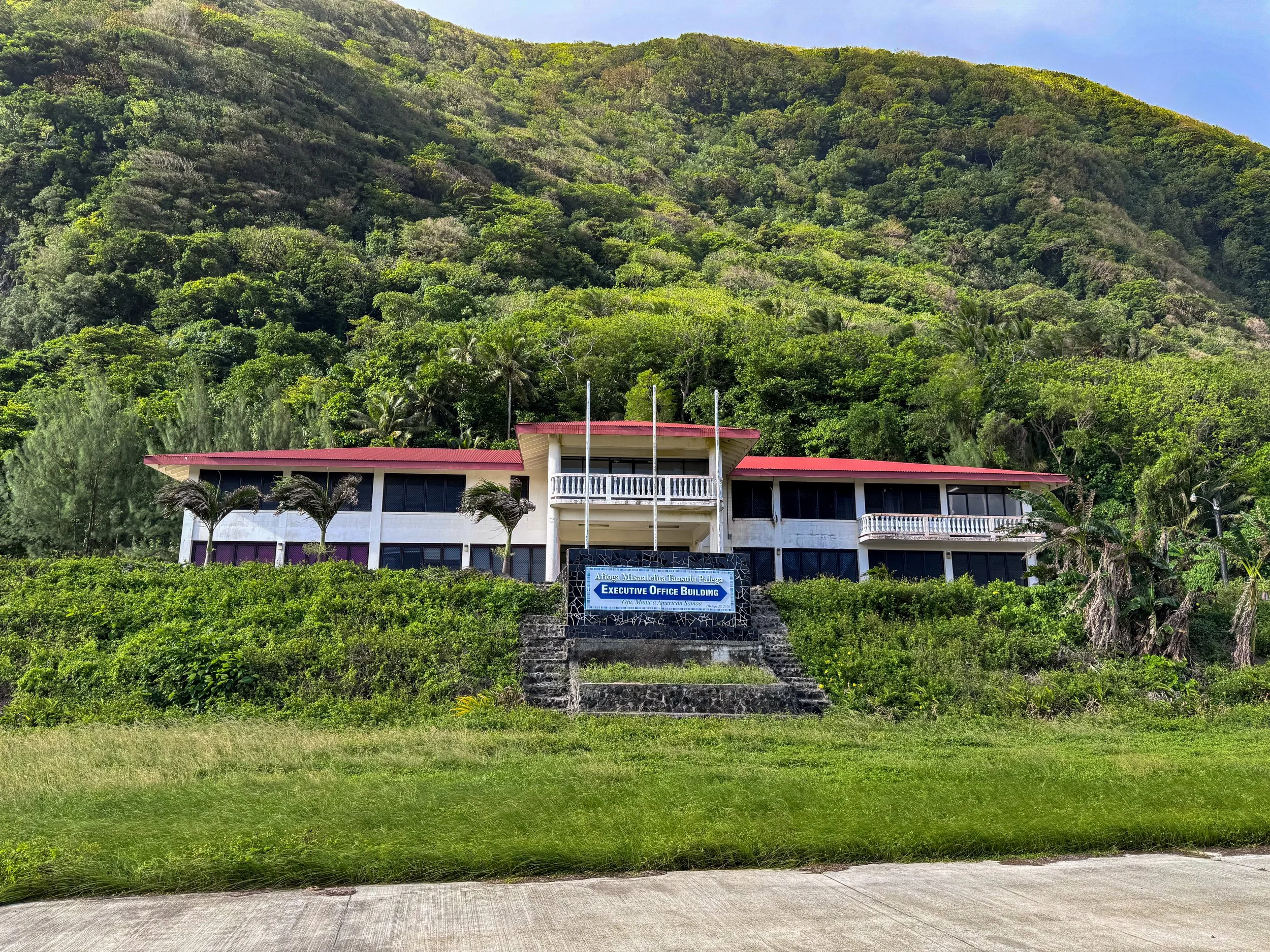
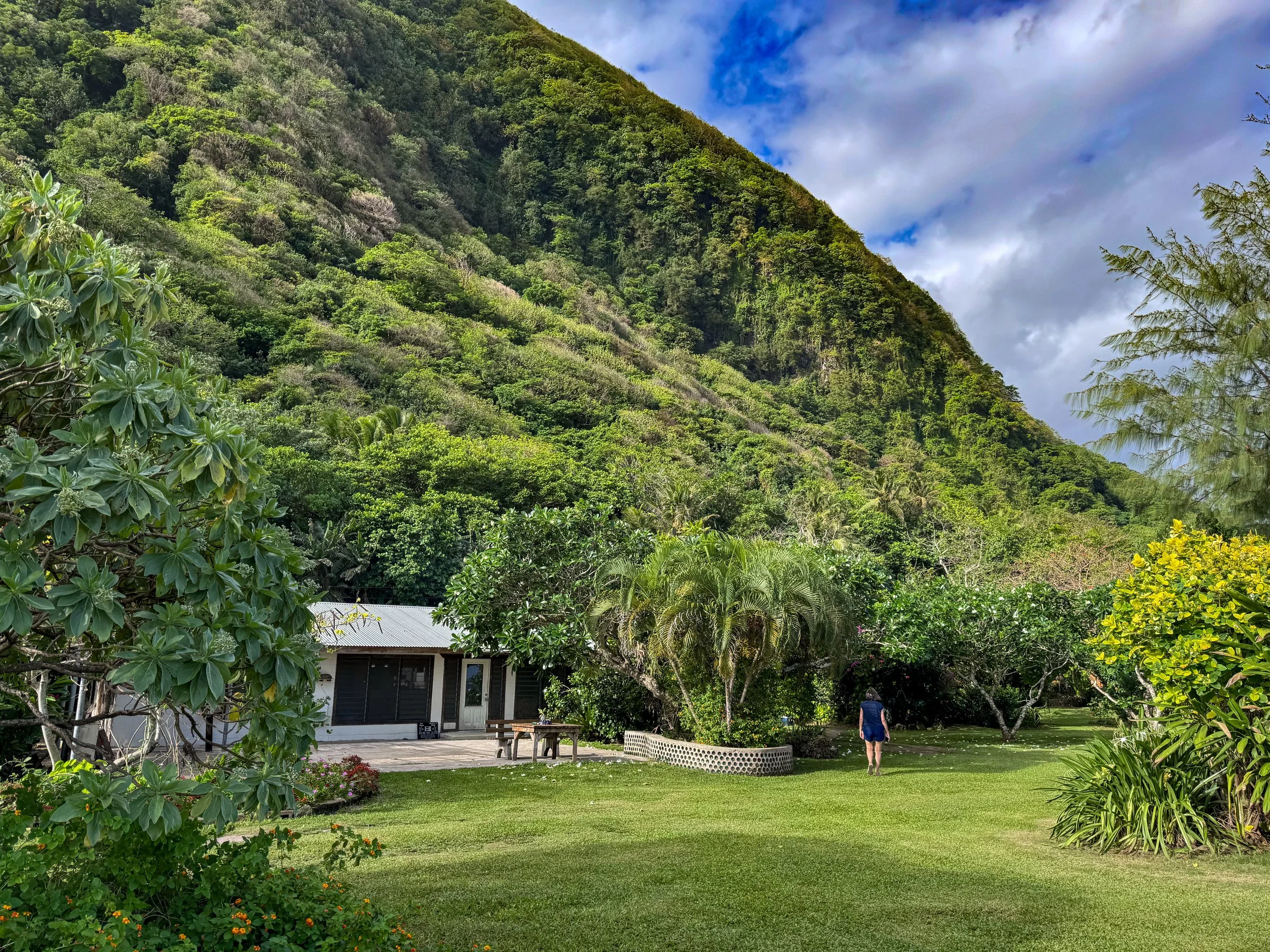
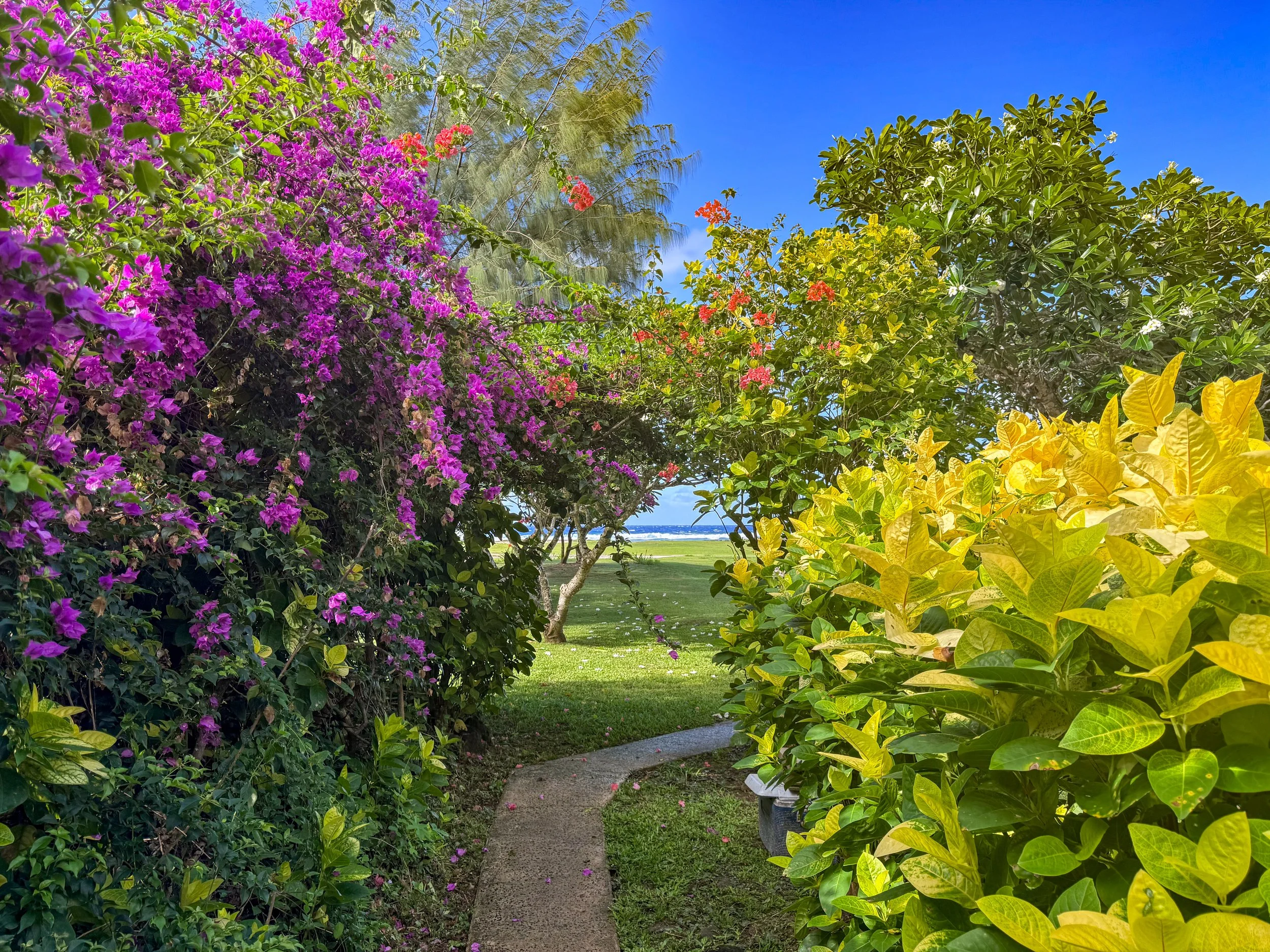
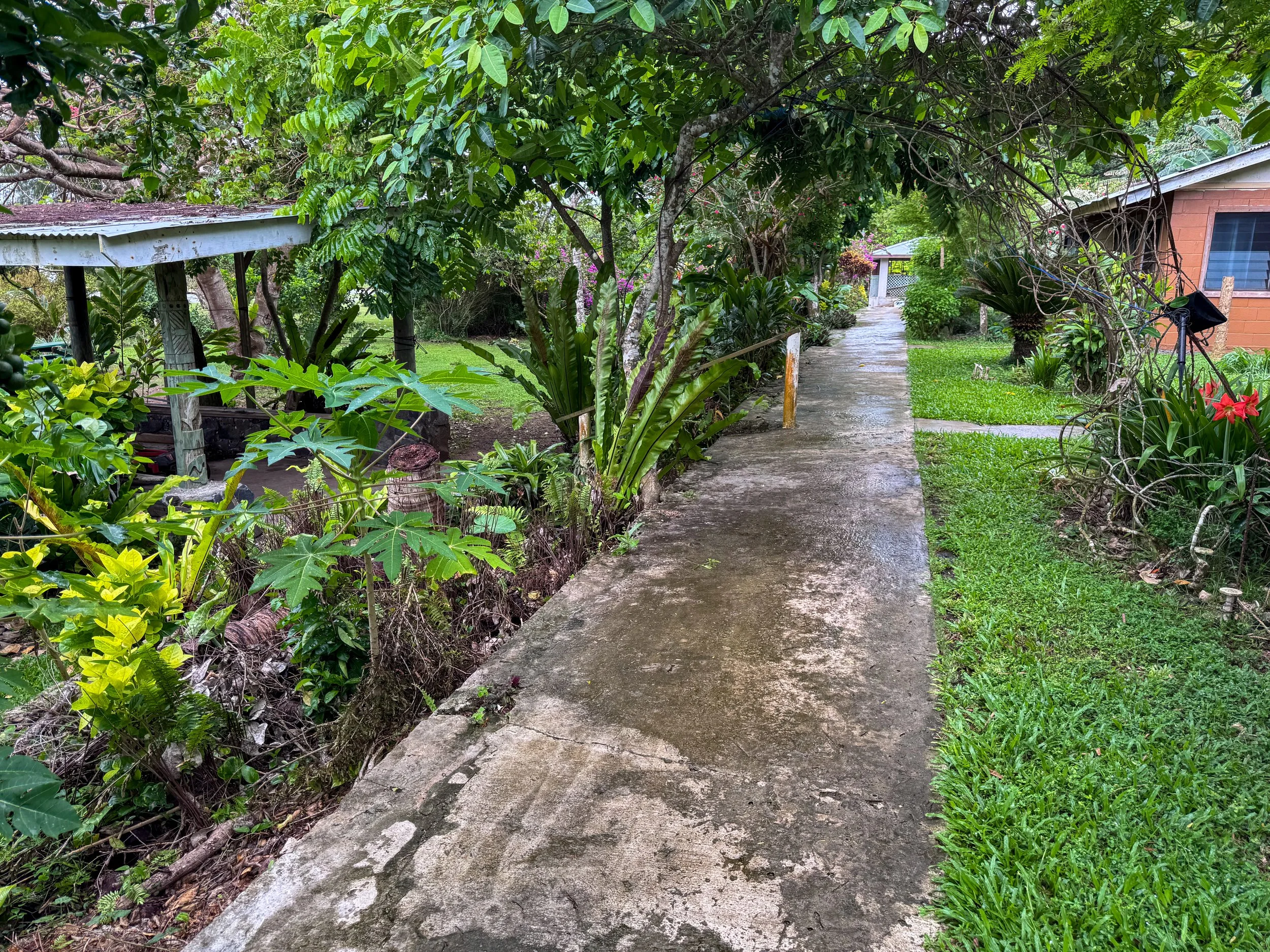
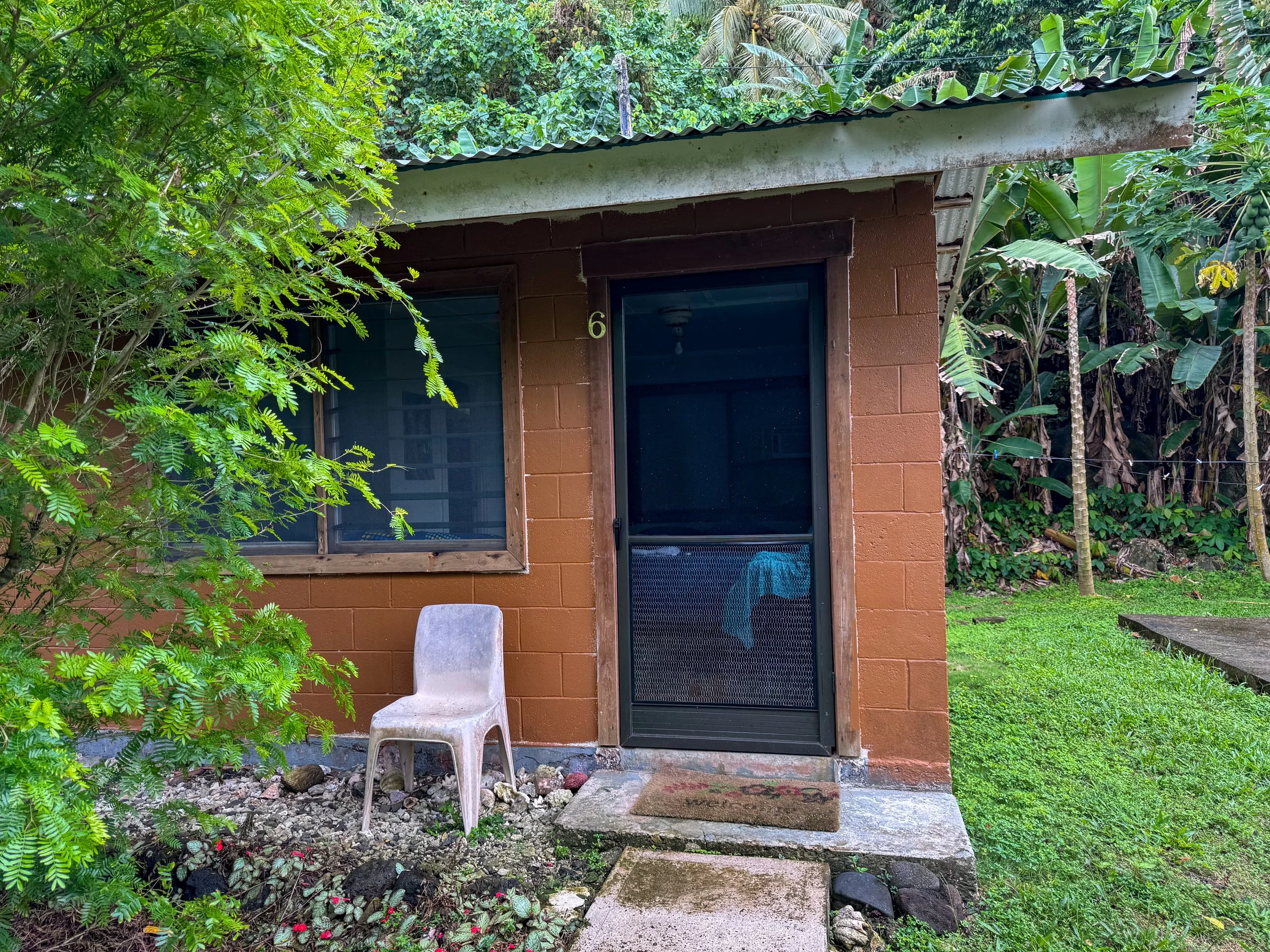
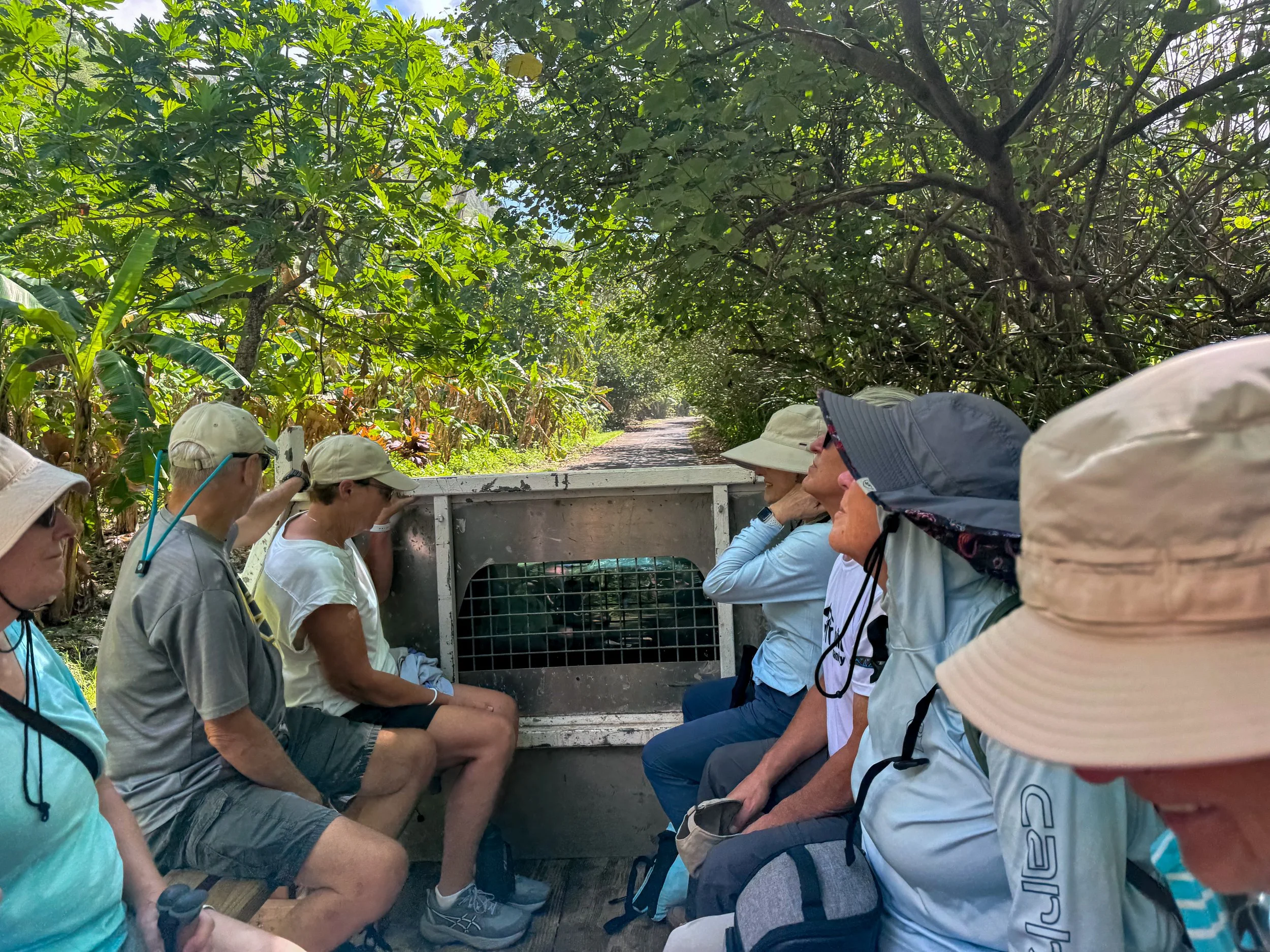
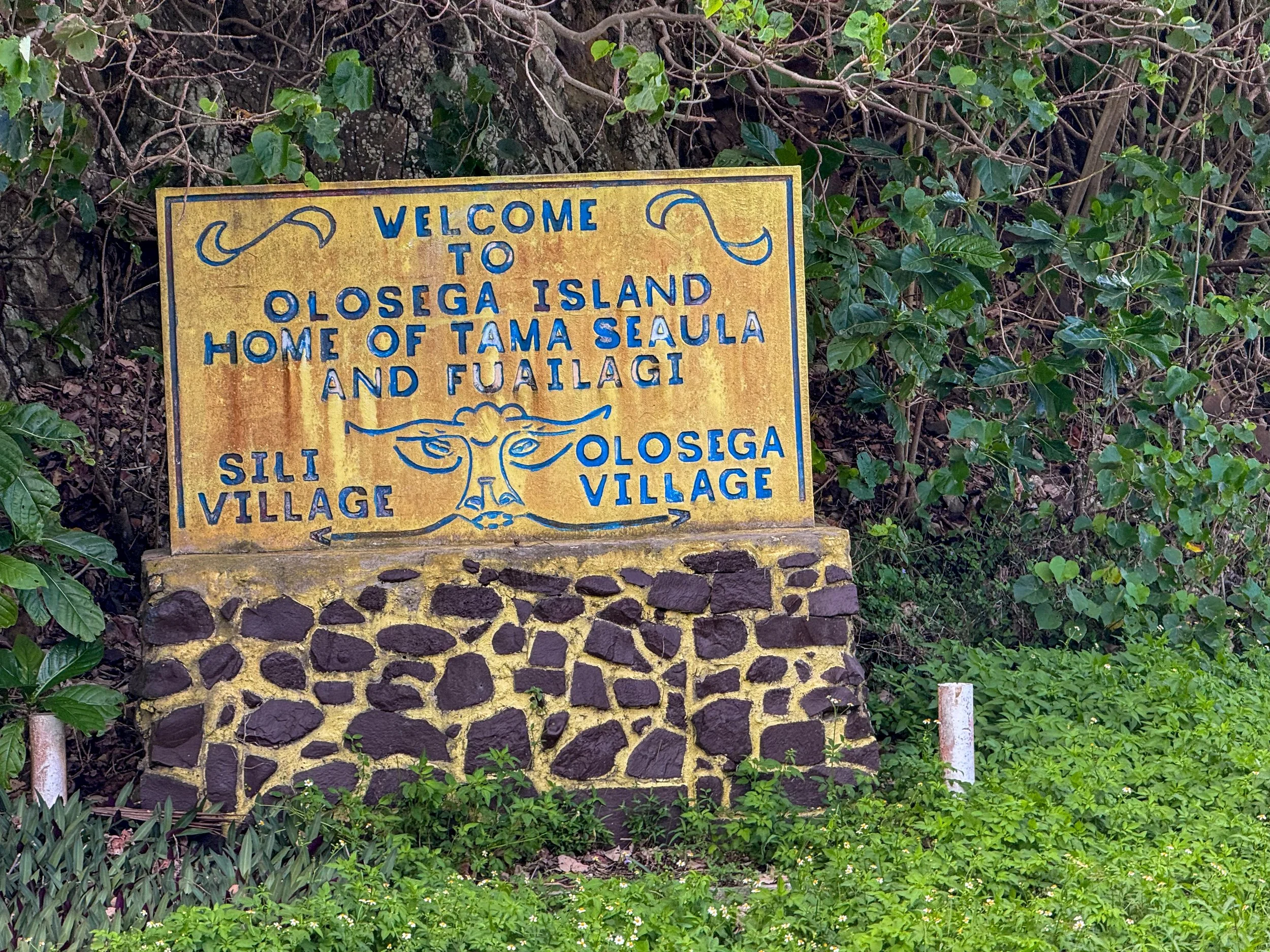
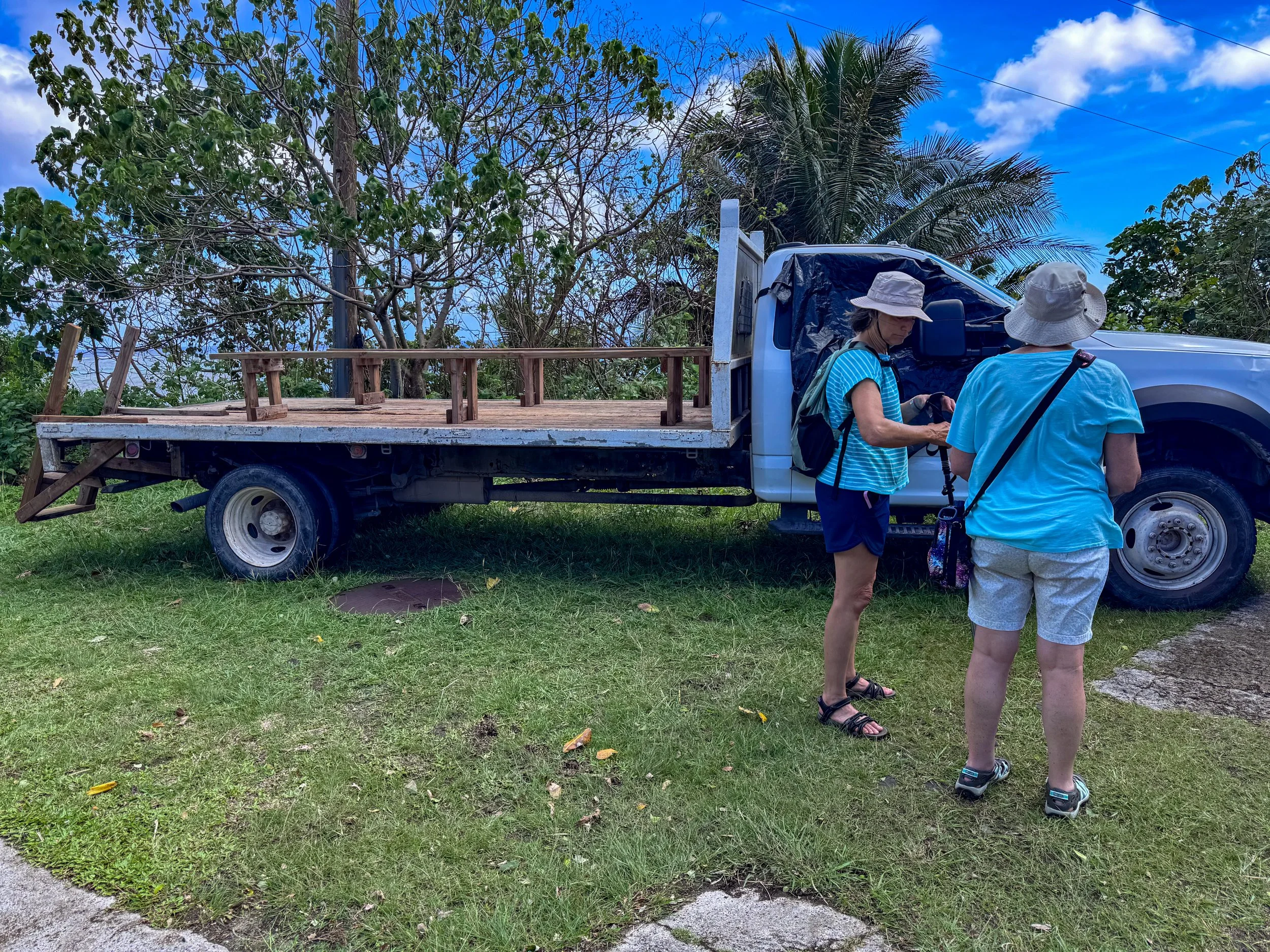
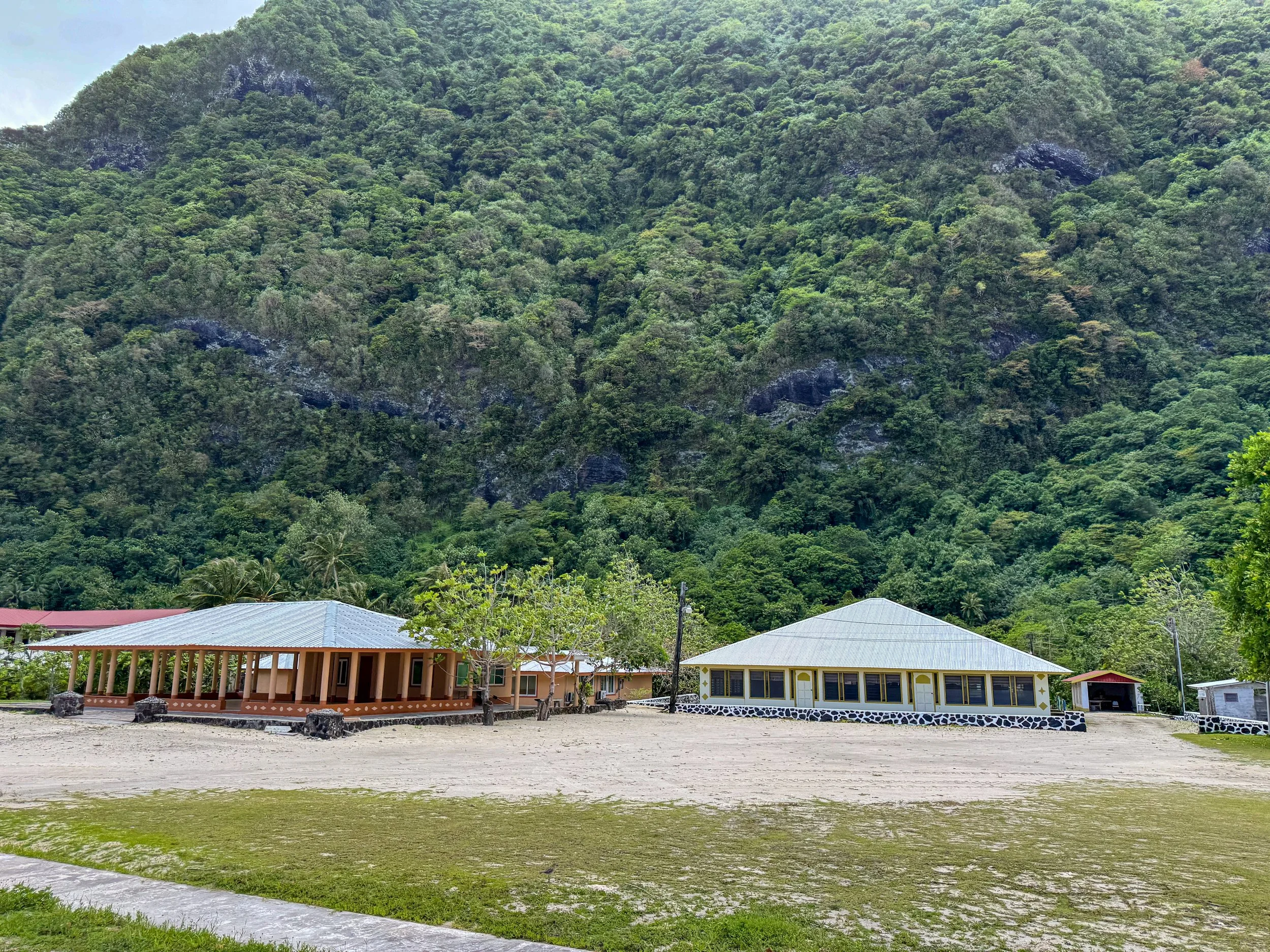
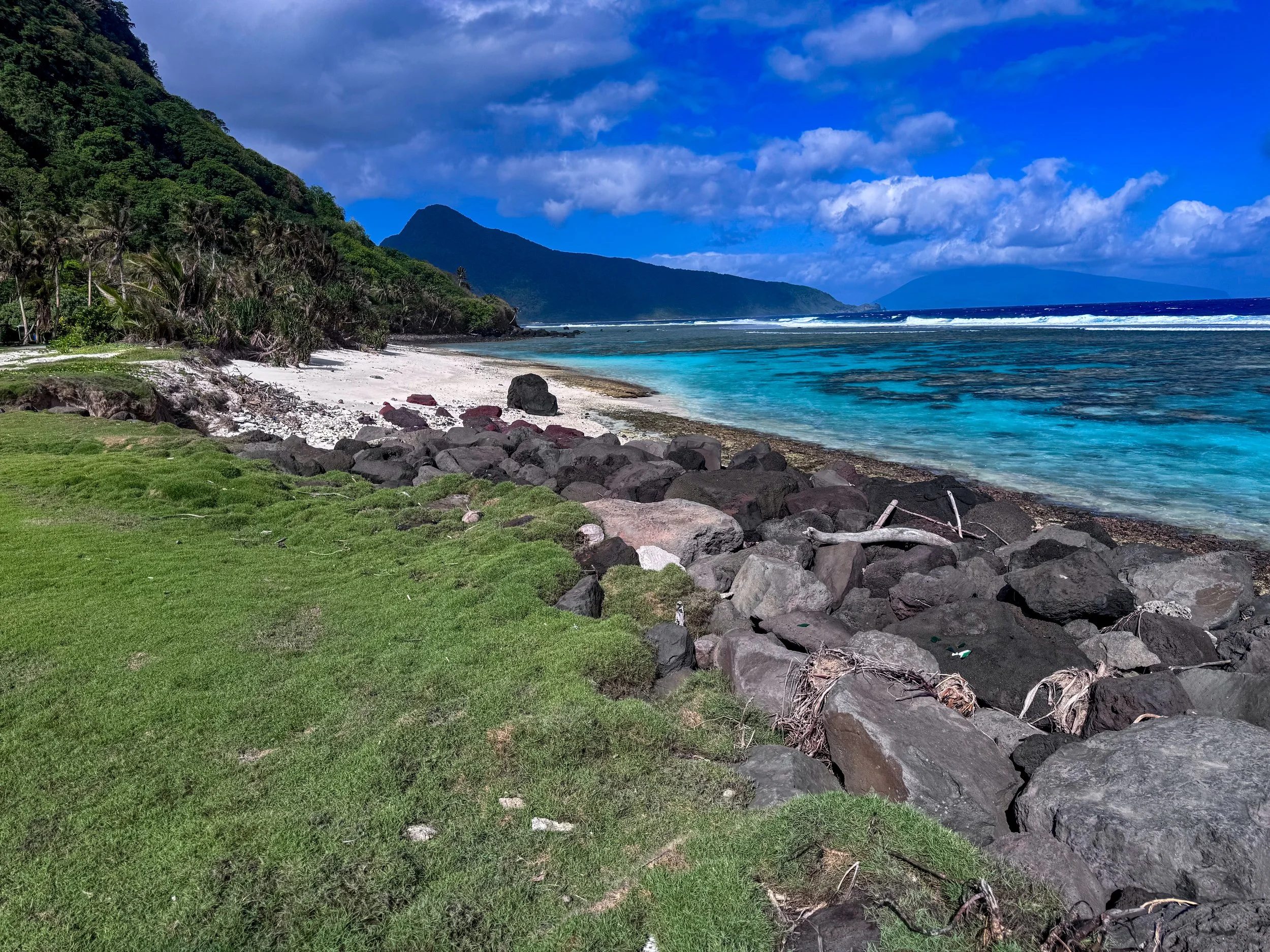
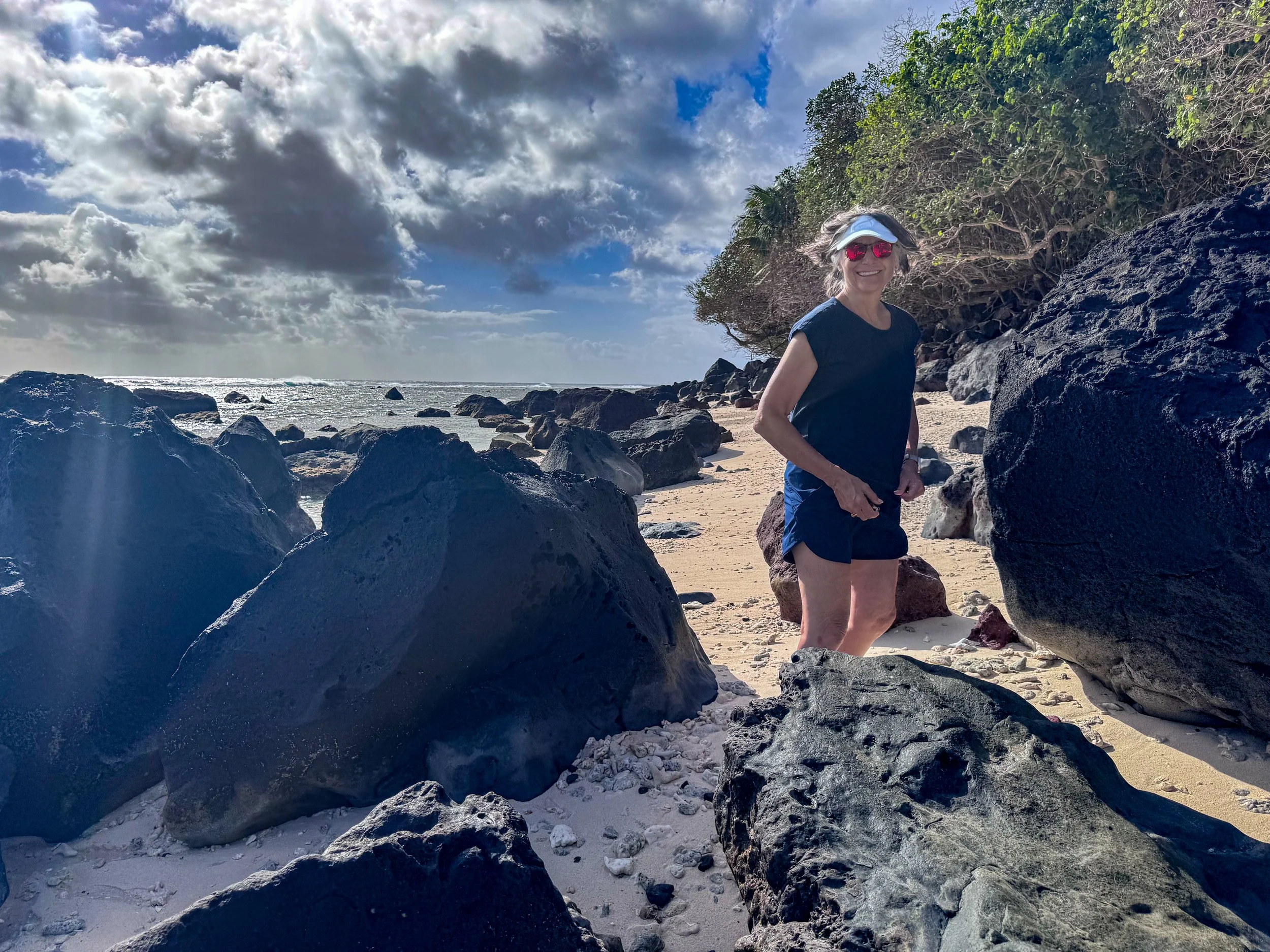
We had lot of touring around the Island (really two islands connected by a bridge), some on our own by foot walking the beach and inner roads, some in a slight rain where you could find cover under the palm trees and some touring in the back of flat bed truck with home made bench’s.
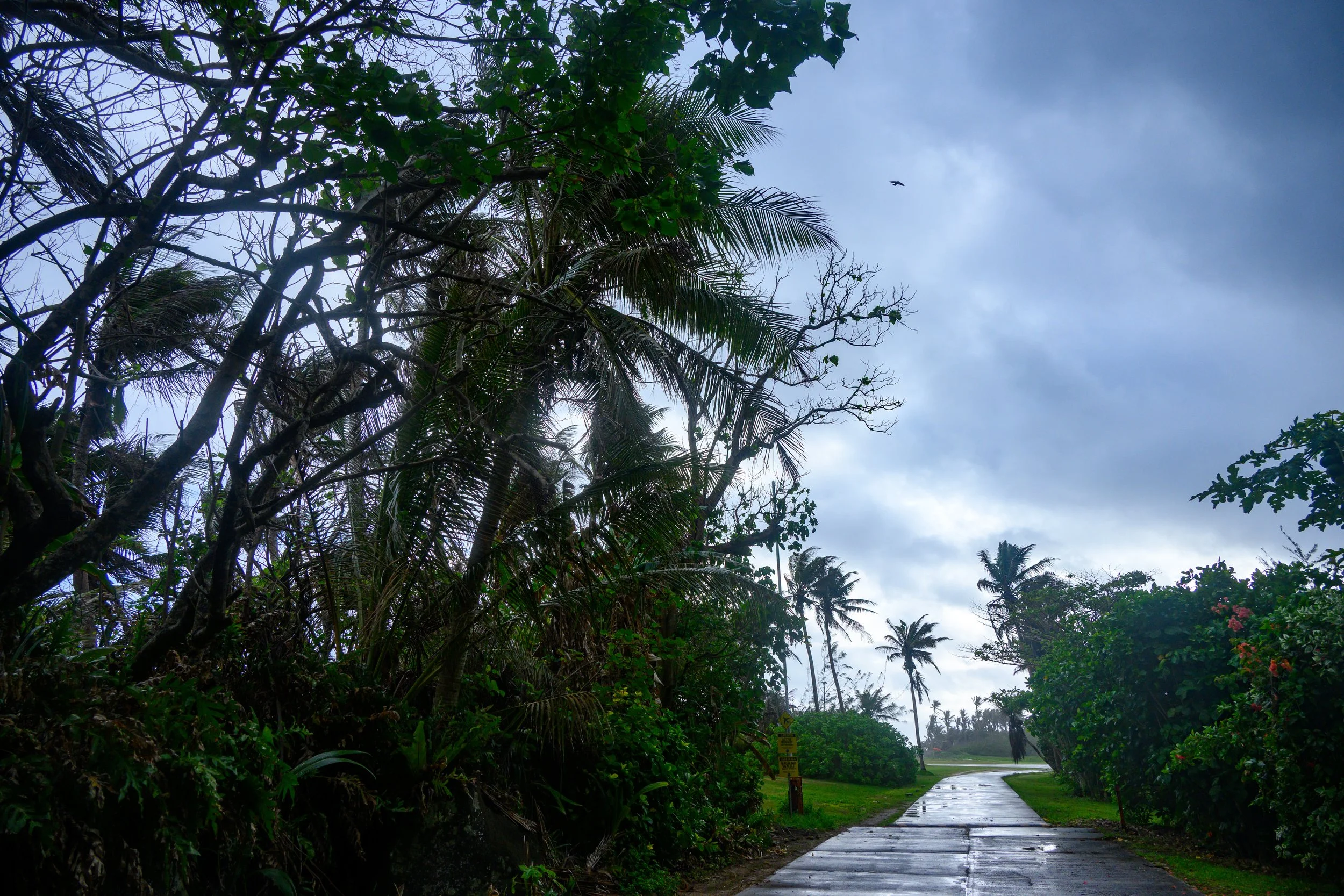
One thing we’ve learned: if you come to visit, bring your raincoat! Rain can blow in quickly, be quite heavy for 30 minutes or so, and then suddenly disappear, leaving bright sunshine behind.
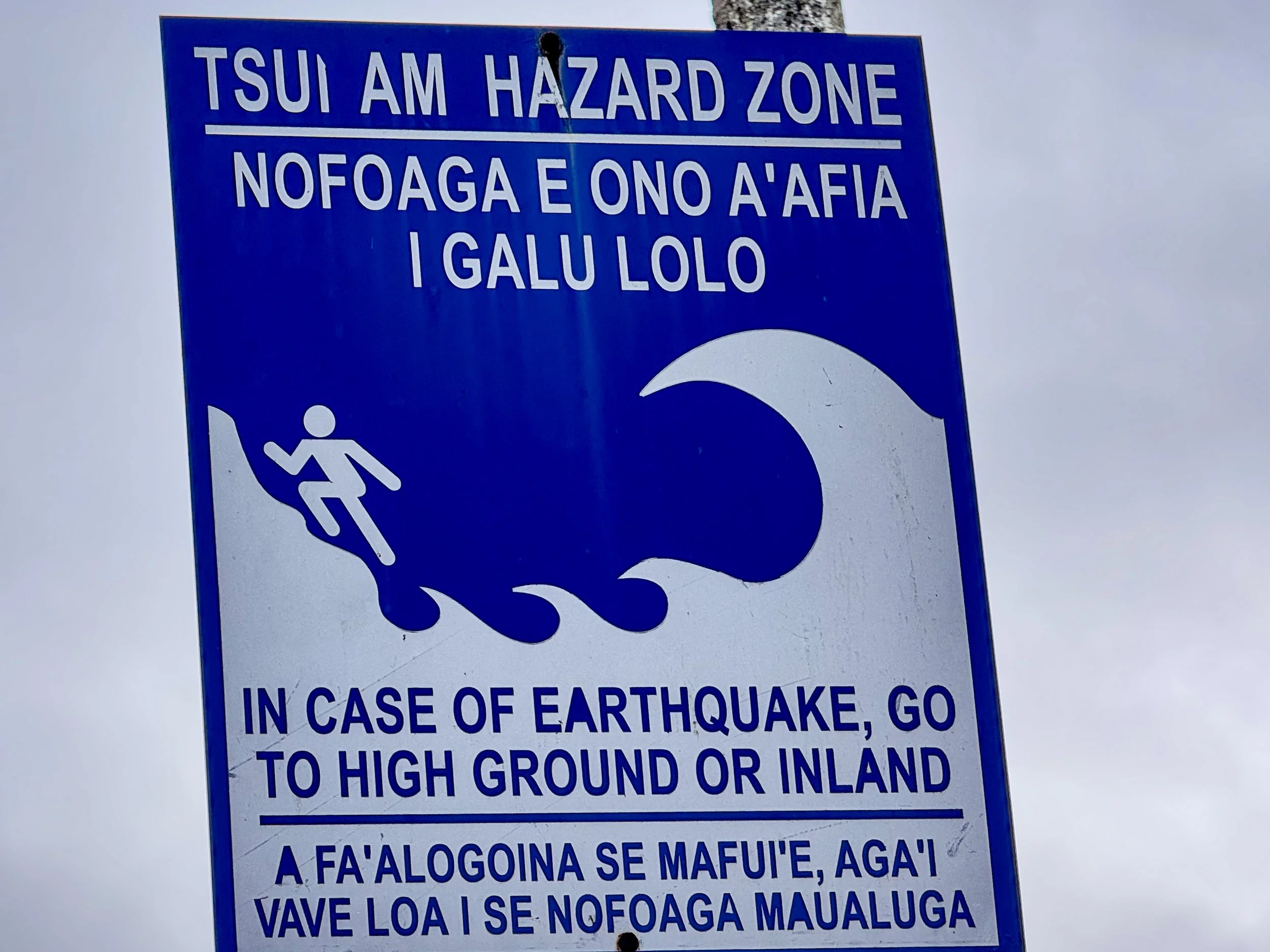
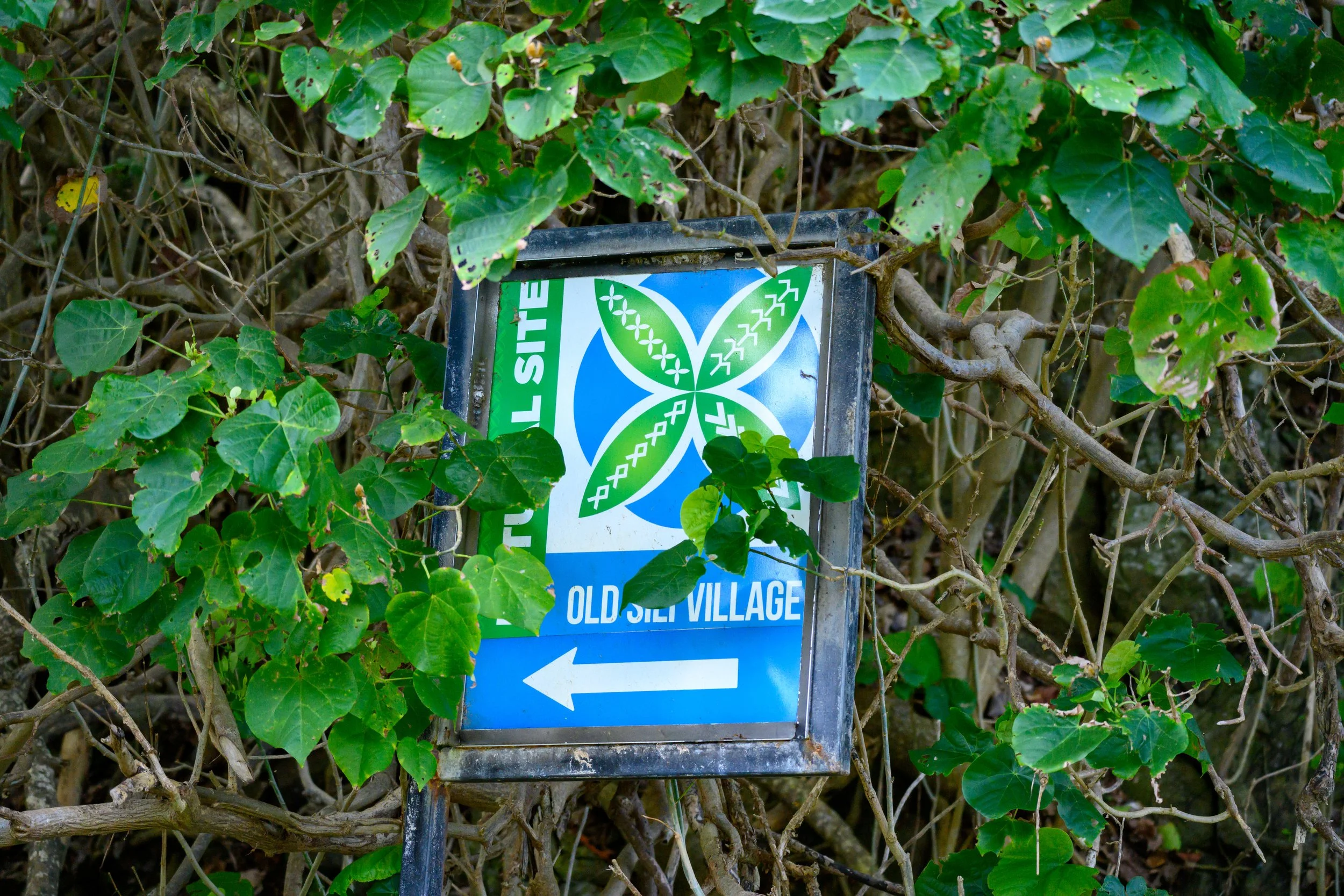
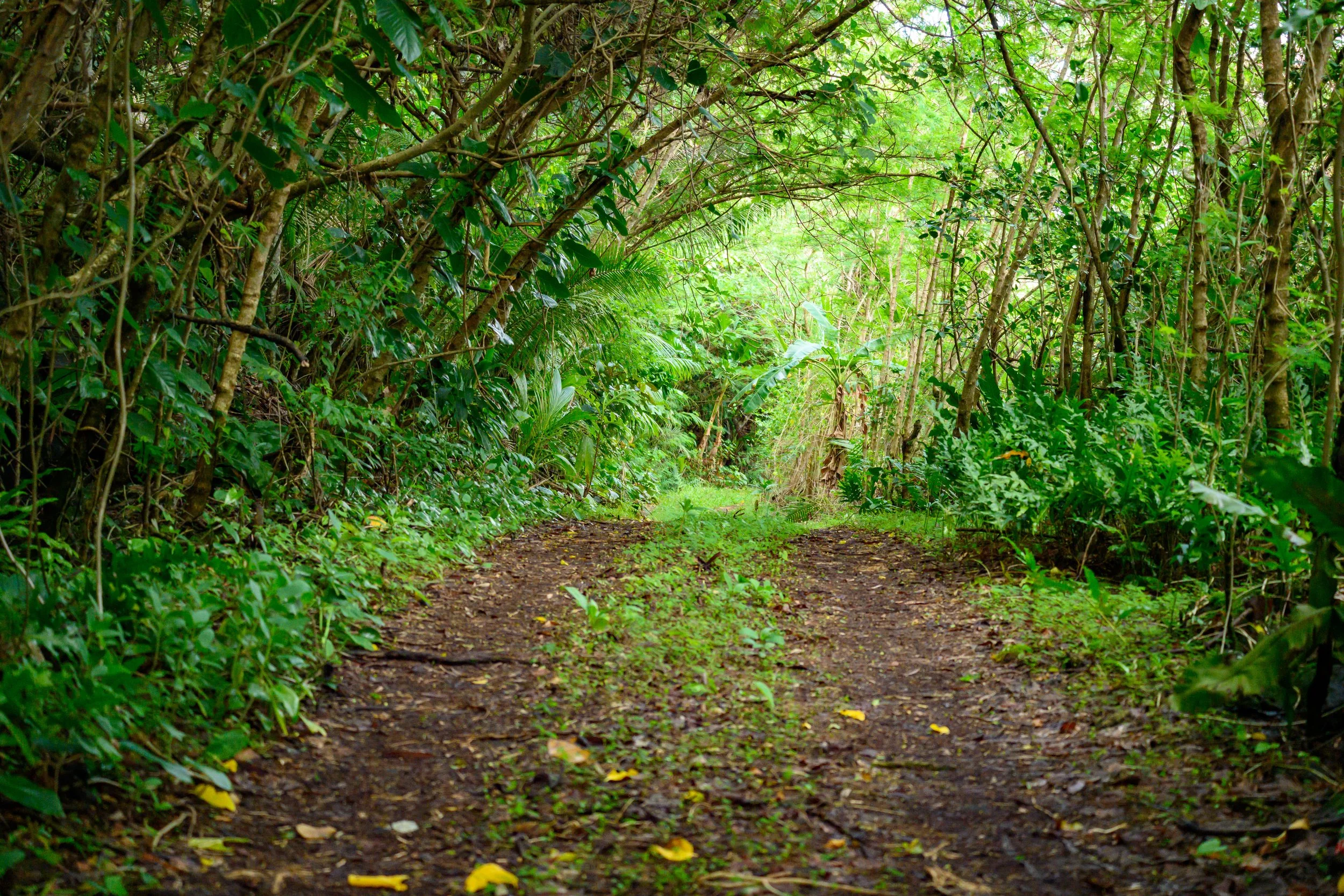
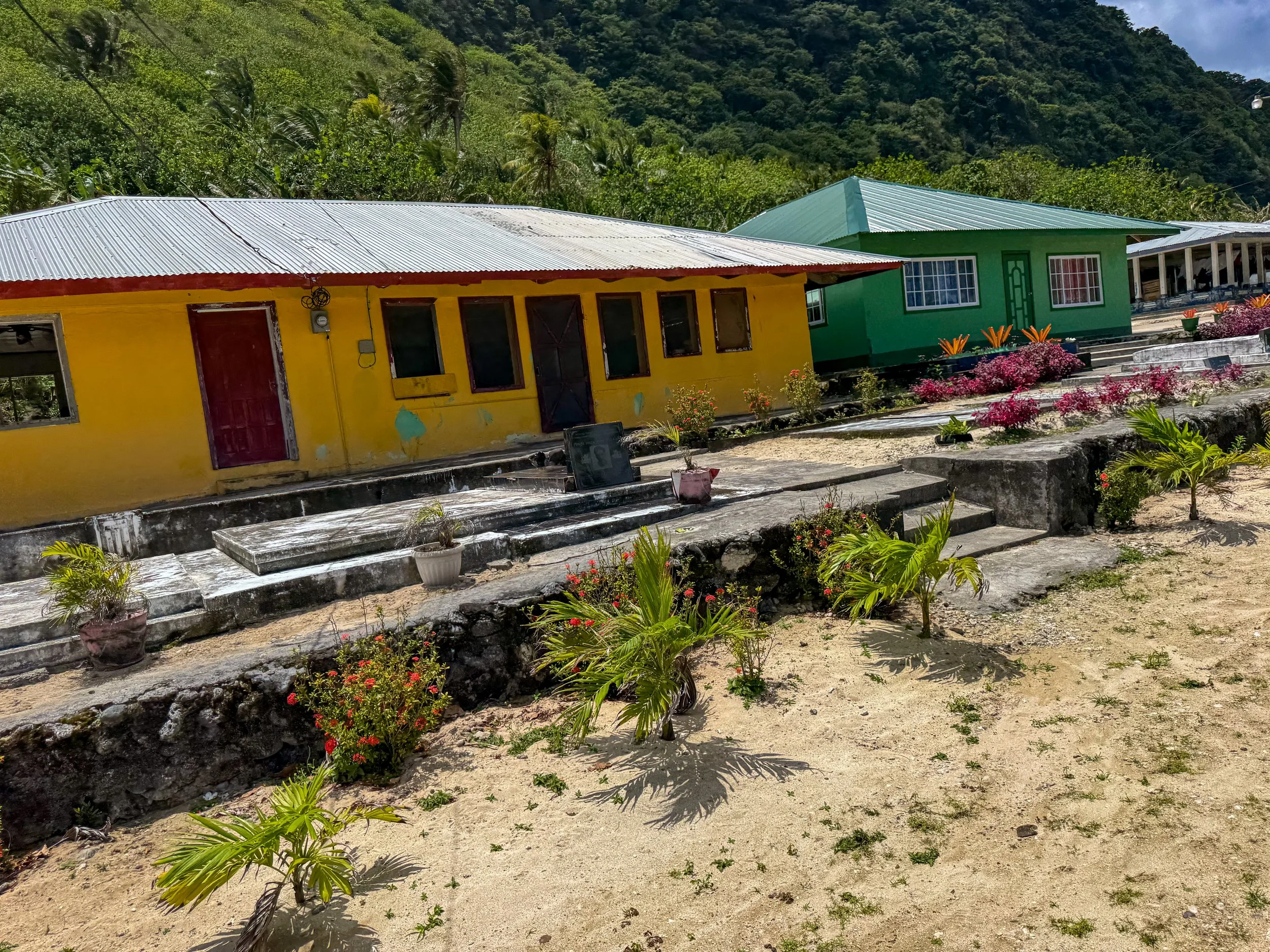
One place we toured was a village area that had been hit many years ago by massive waves and abandoned in 1981. The remaining population moved to another location and this area is treated somewhat as a Samoan memorial as well as an archaeological site of the past inhabitants.
In one village we stopped at a store for ice cream and a little break. And of course you got to see the occasional flying fox.
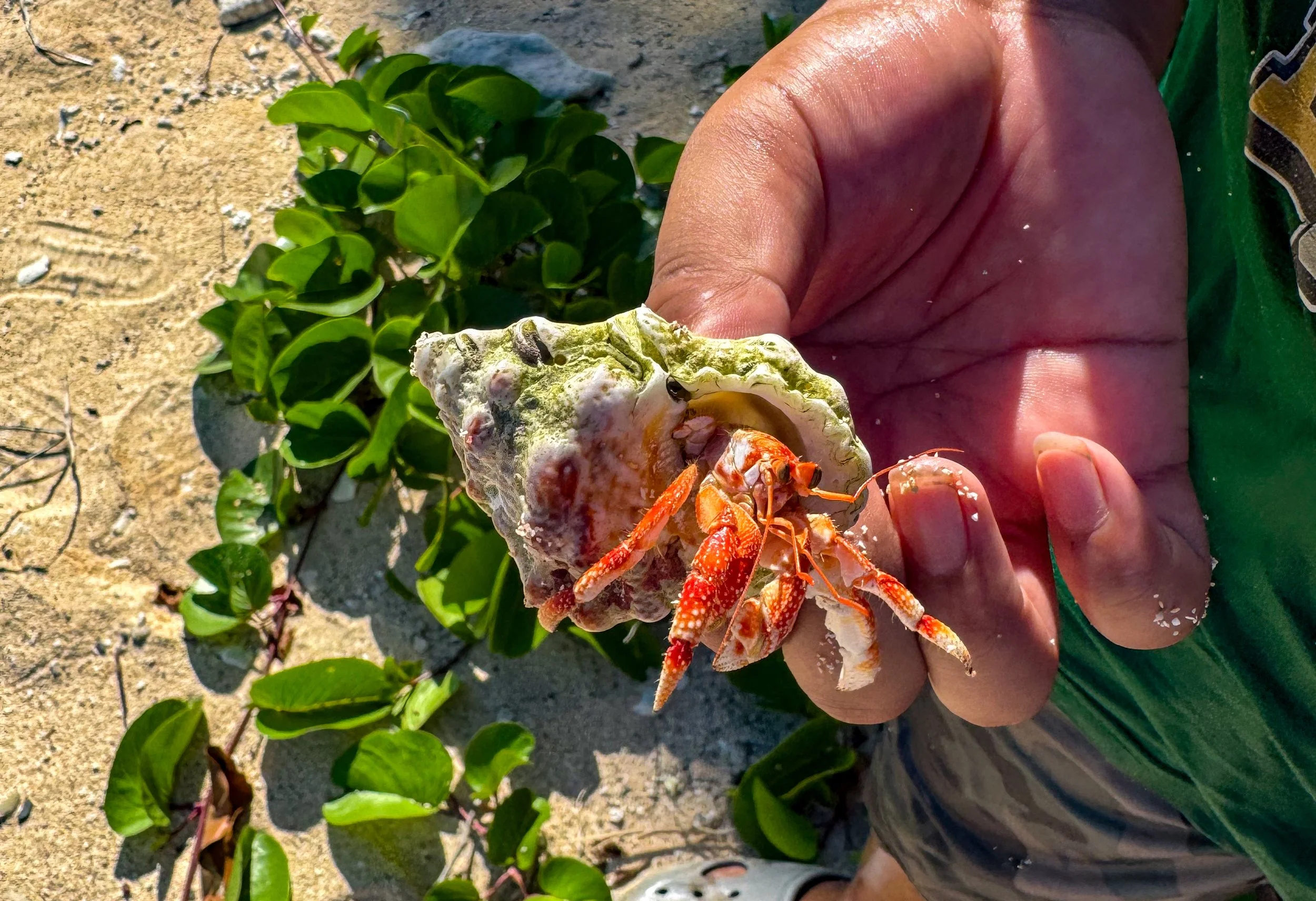
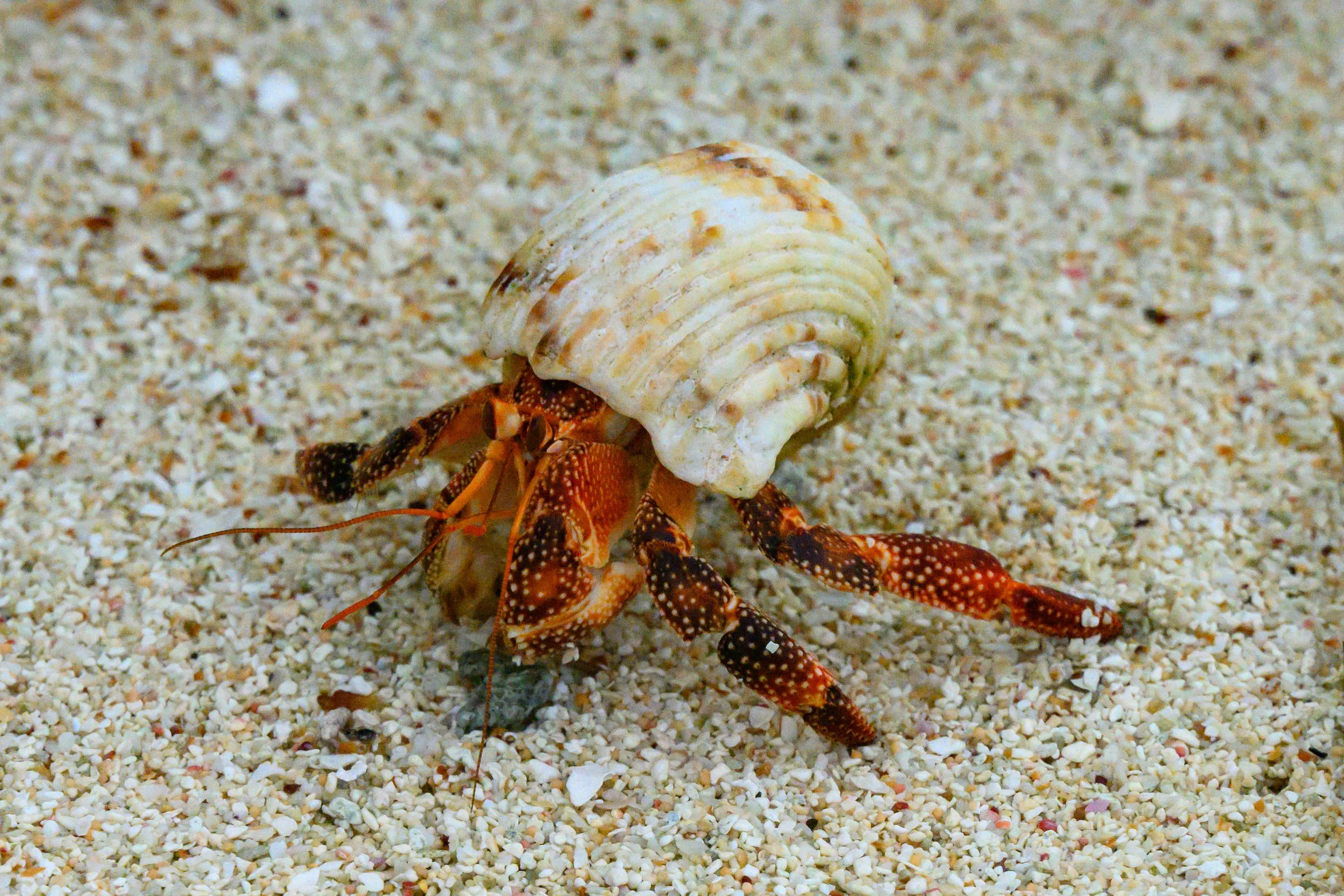
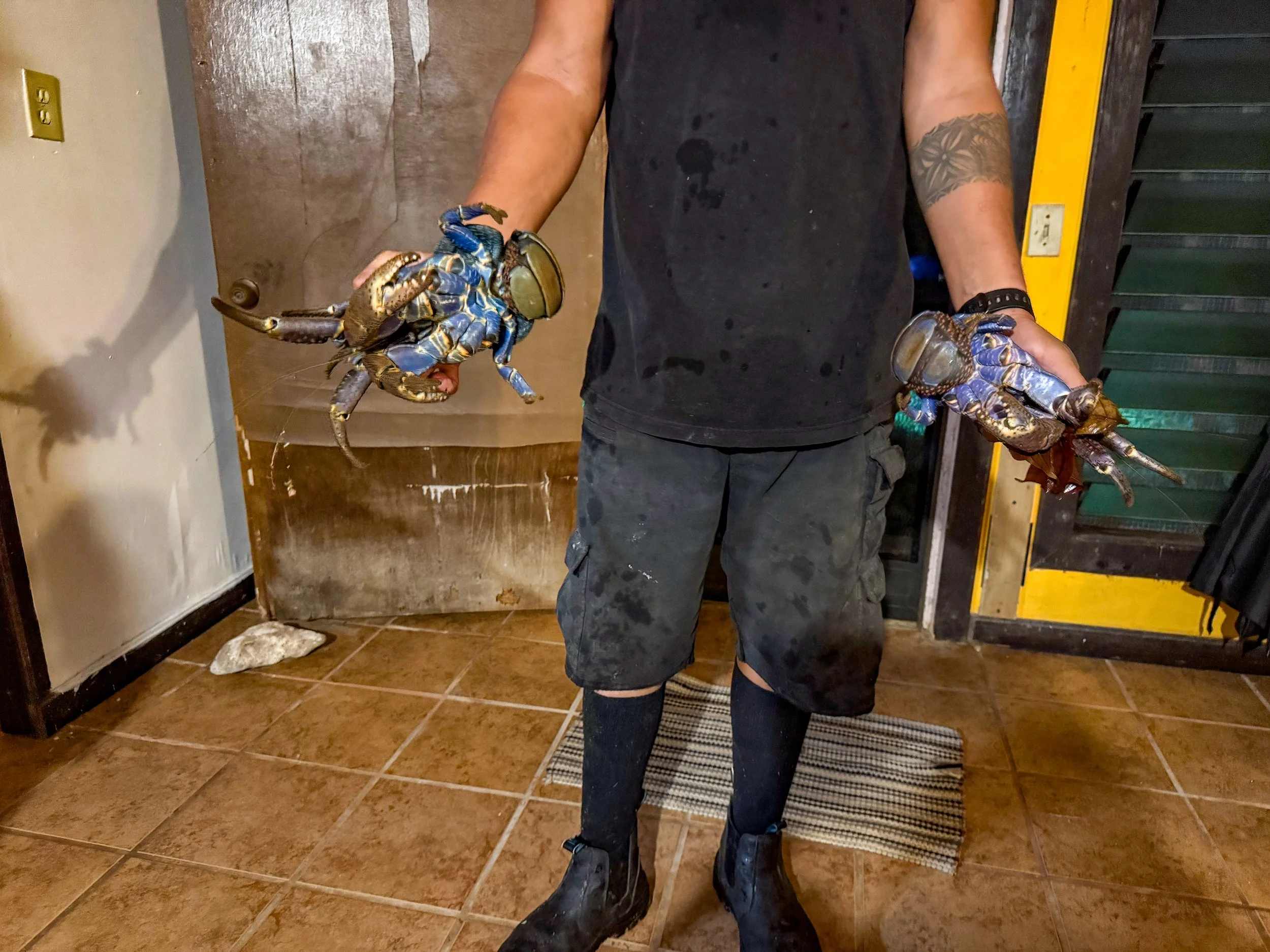
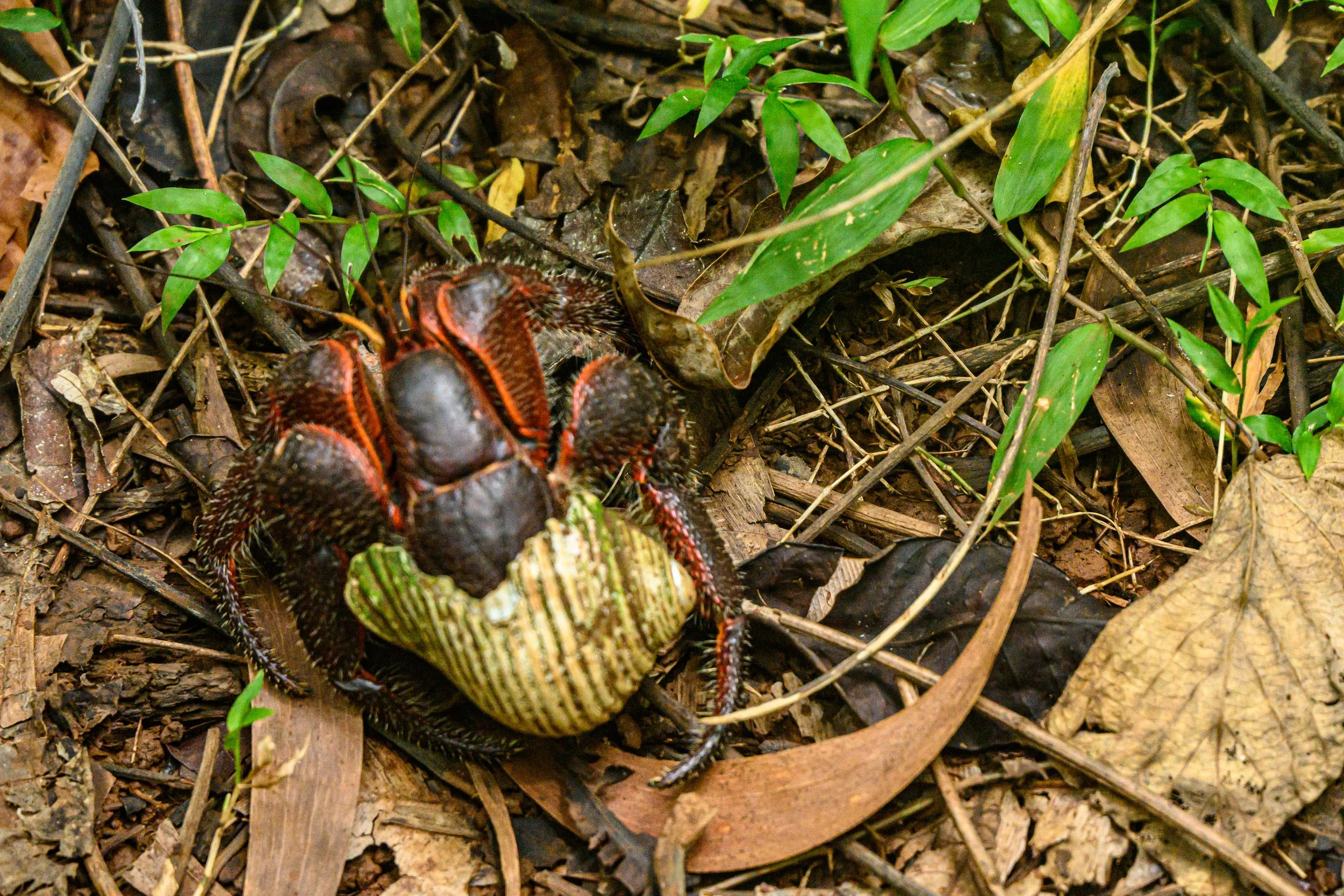
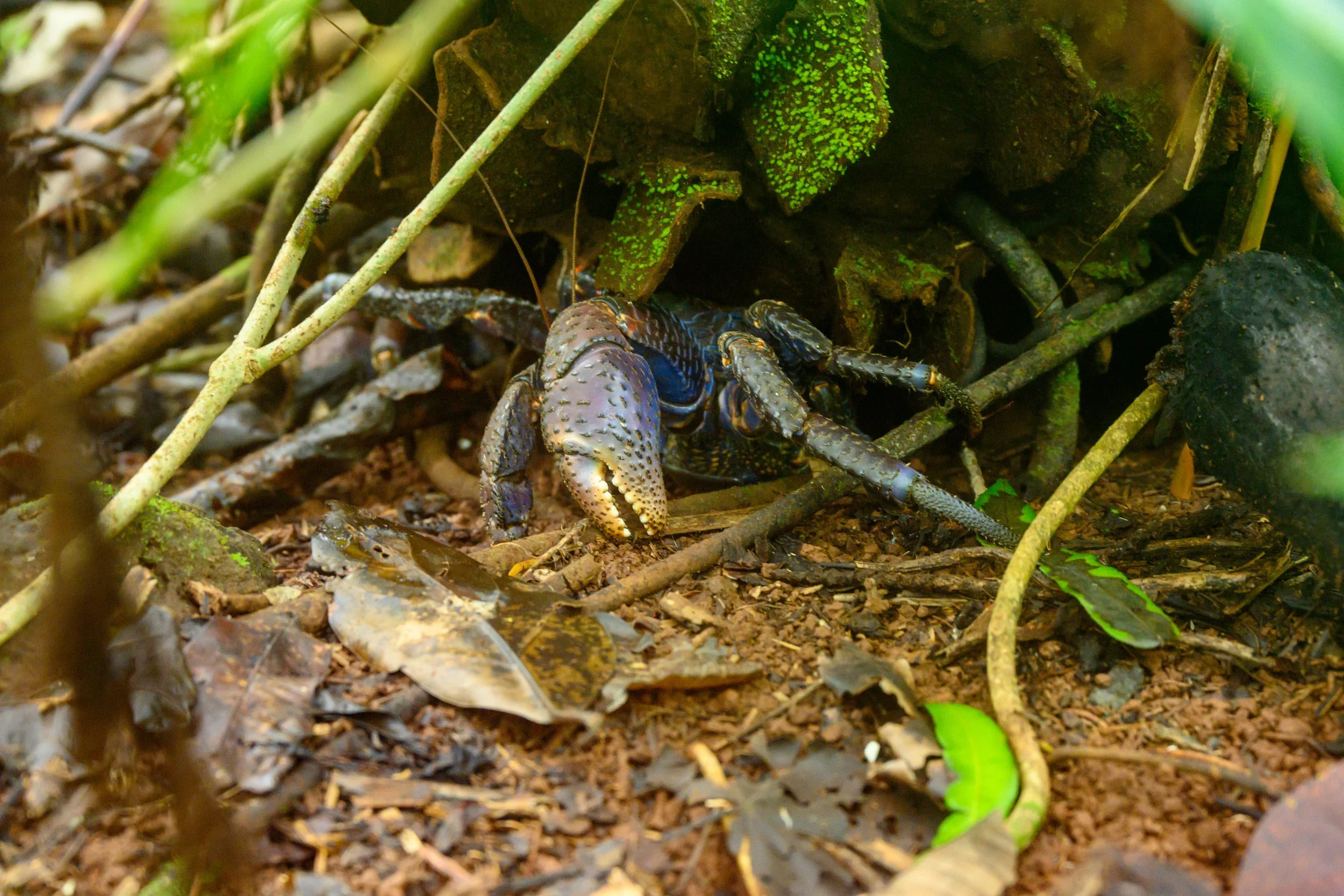
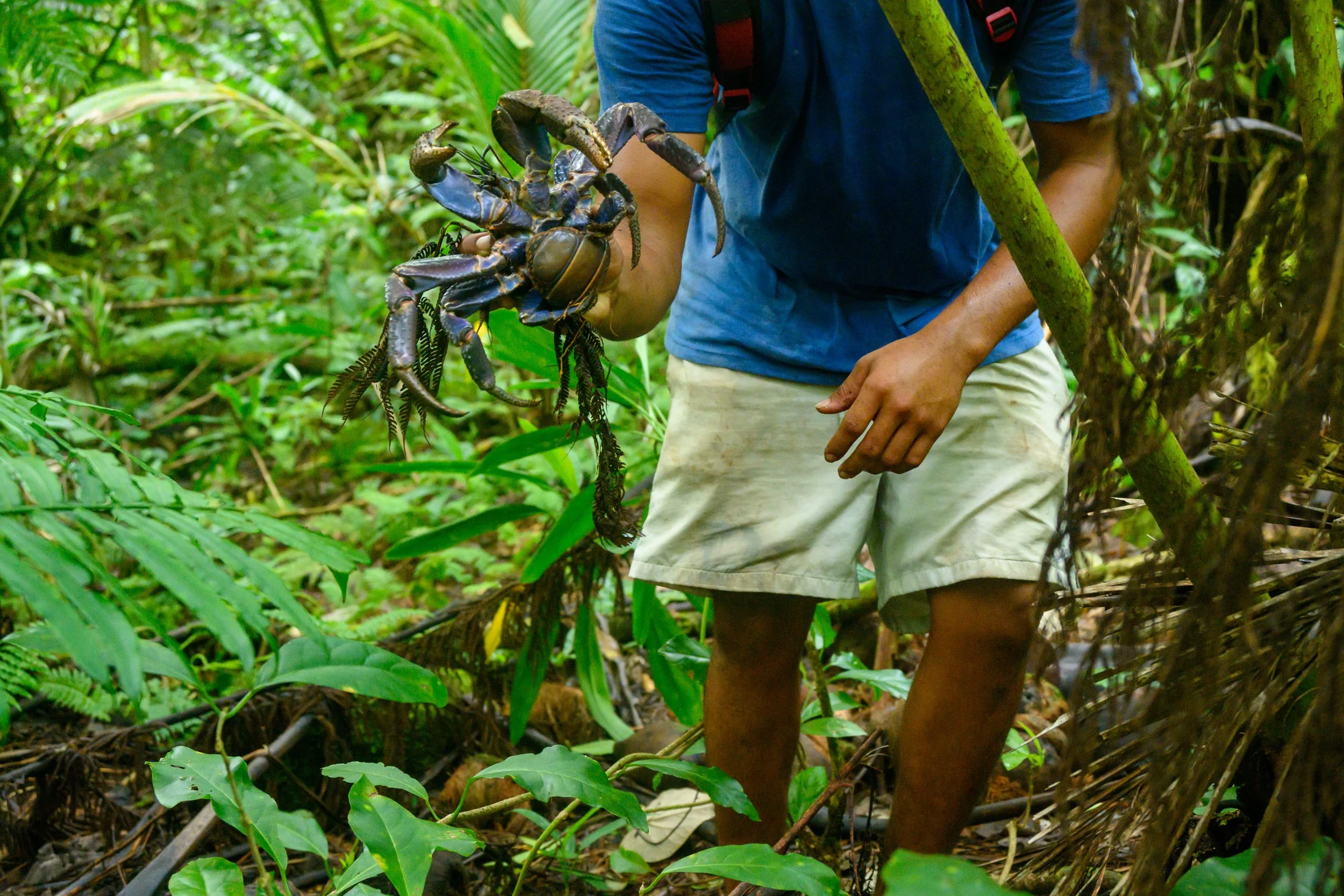
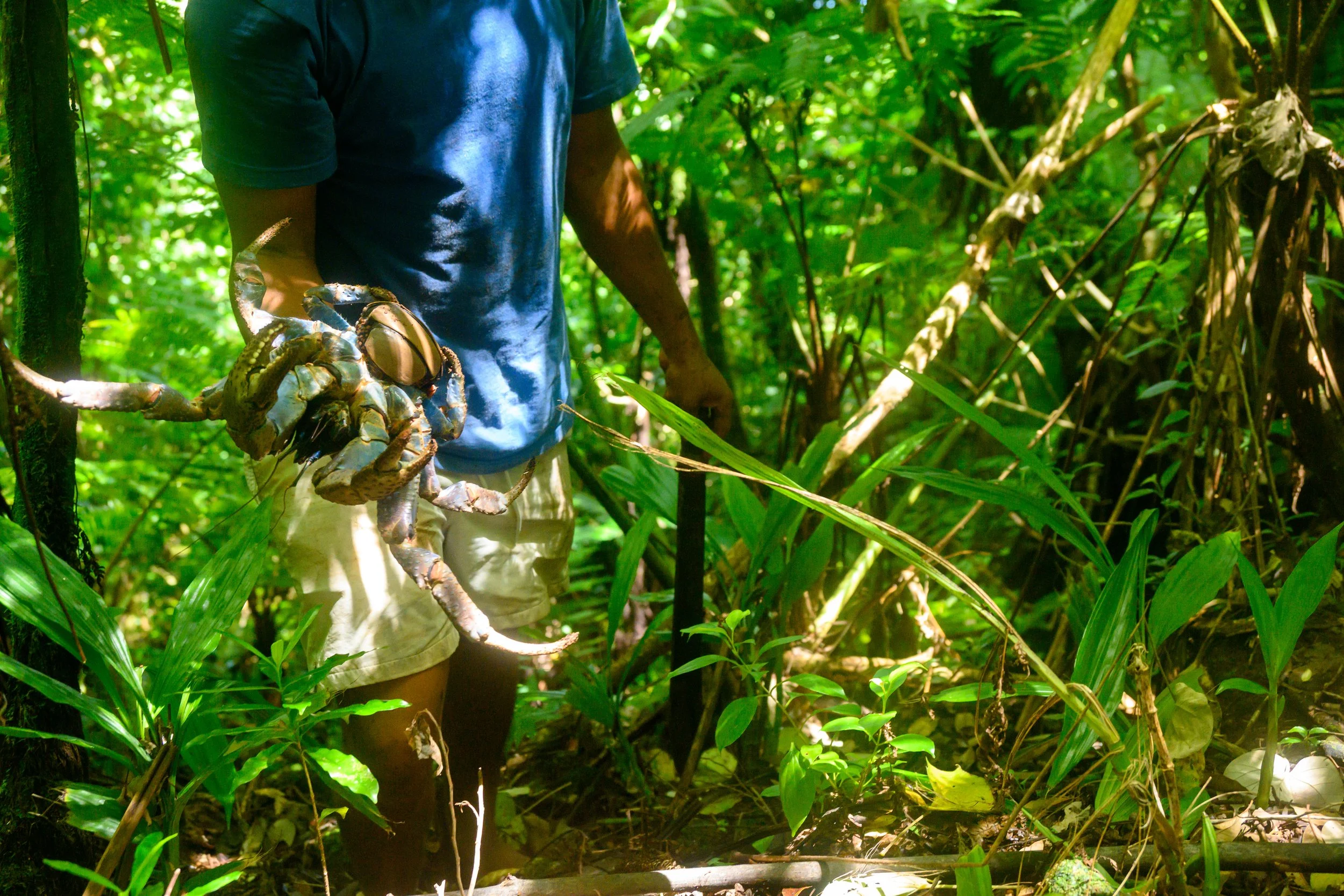
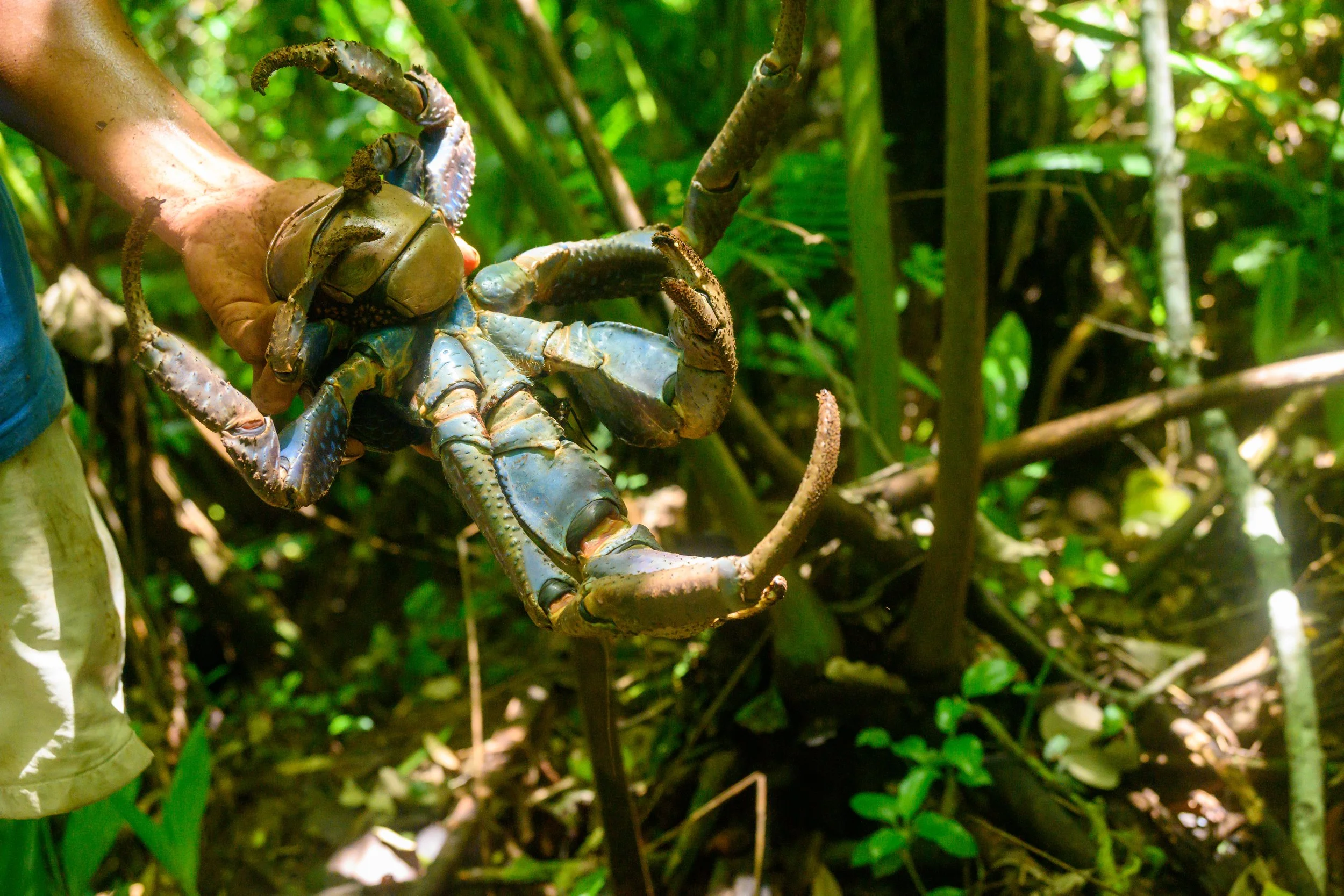
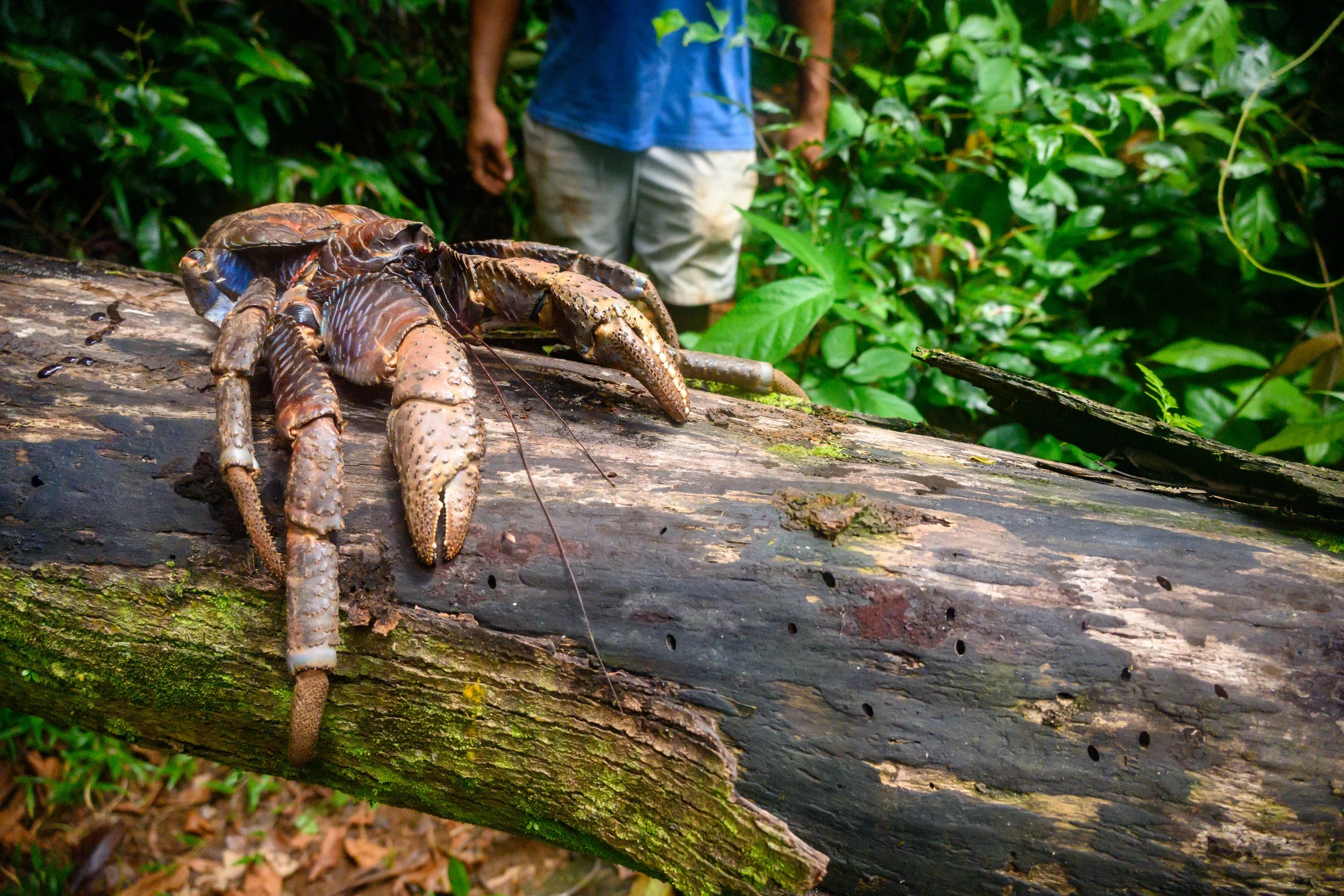
When we got back to our cabins, one of the staff came into the dinging room with what he caught while we were out, two blue coconut crabs. They grow to be very large, around 2 feet when spread out. They are edible but these never made it to our table although the locals who caught them enjoyed a feast of crab meat. When hiking inland in the forest our guide showed us where the male crabs live in holes under the coconut trees. The females live on the beach. He never explained how they managed to get together, but someone had to take a very long hike to meet up! Tiny baby crabs proved that there had been successful meet ups.
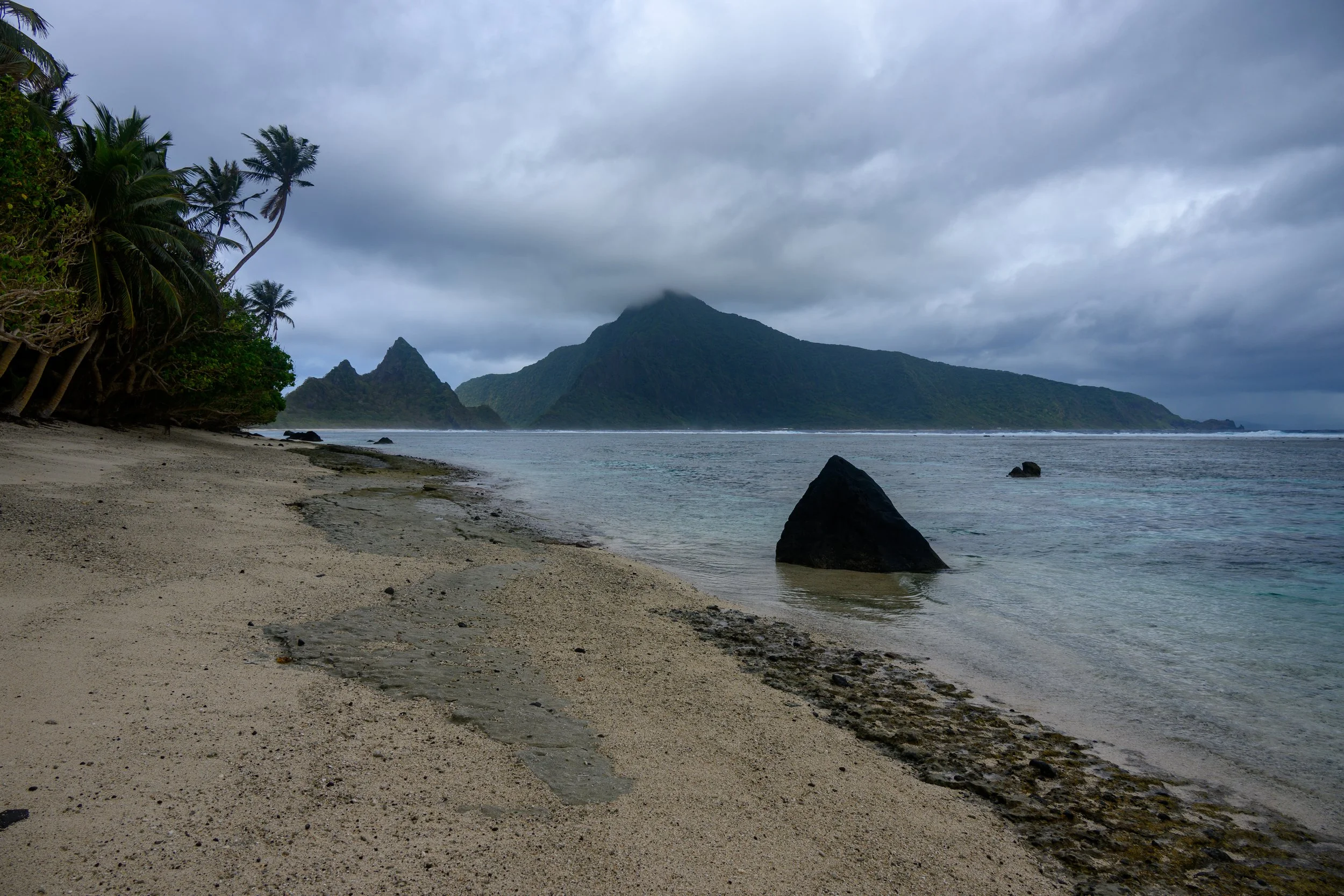
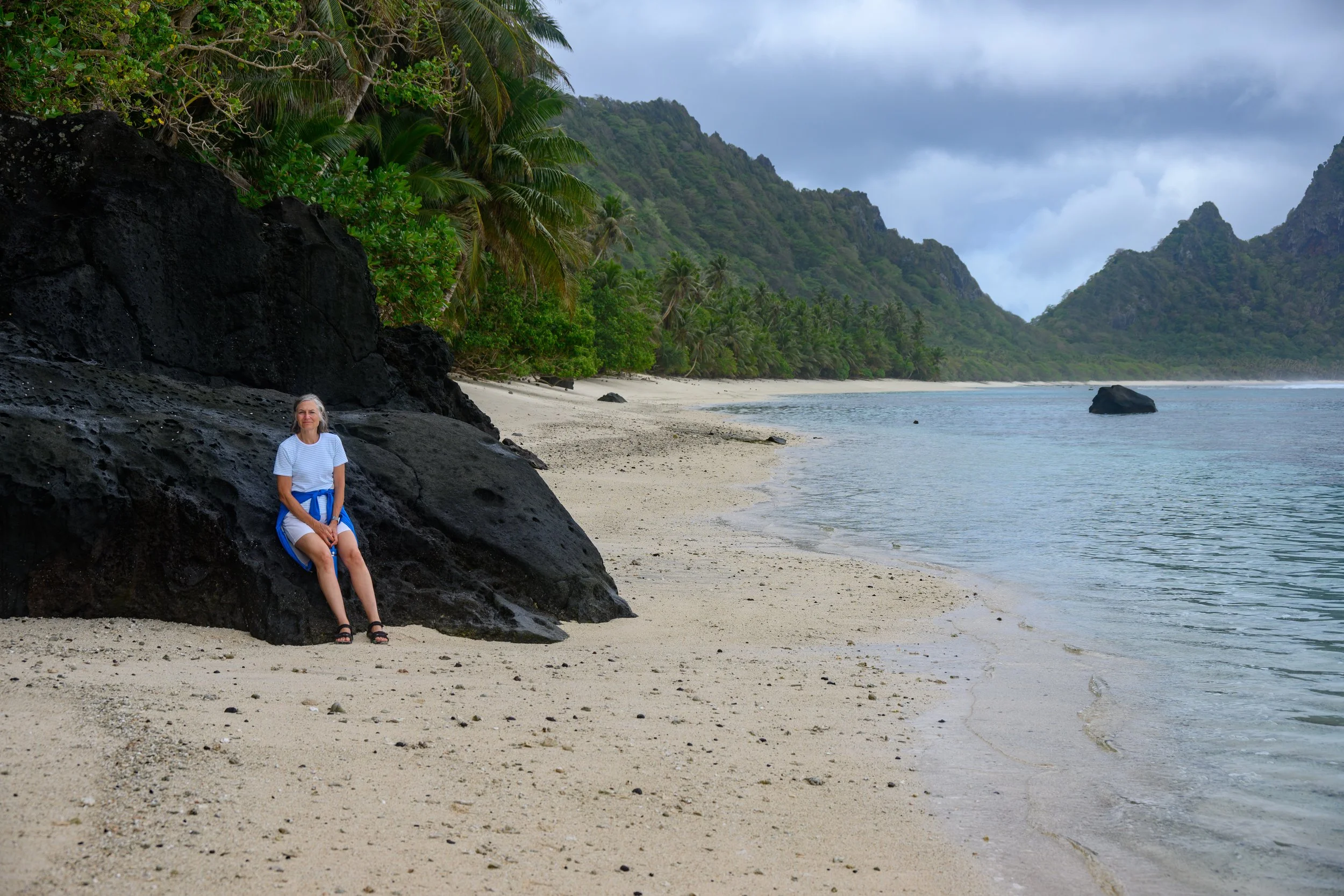
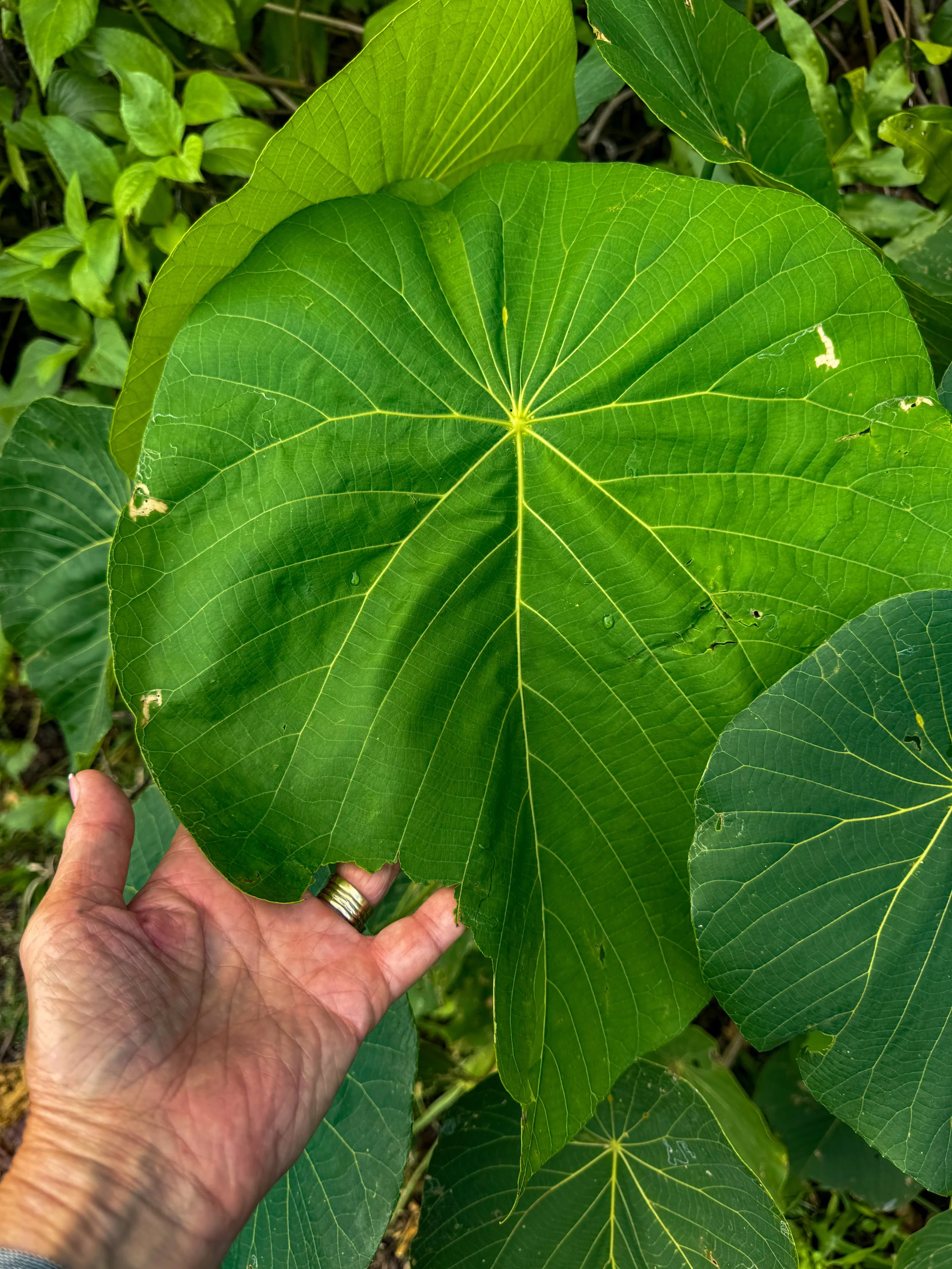
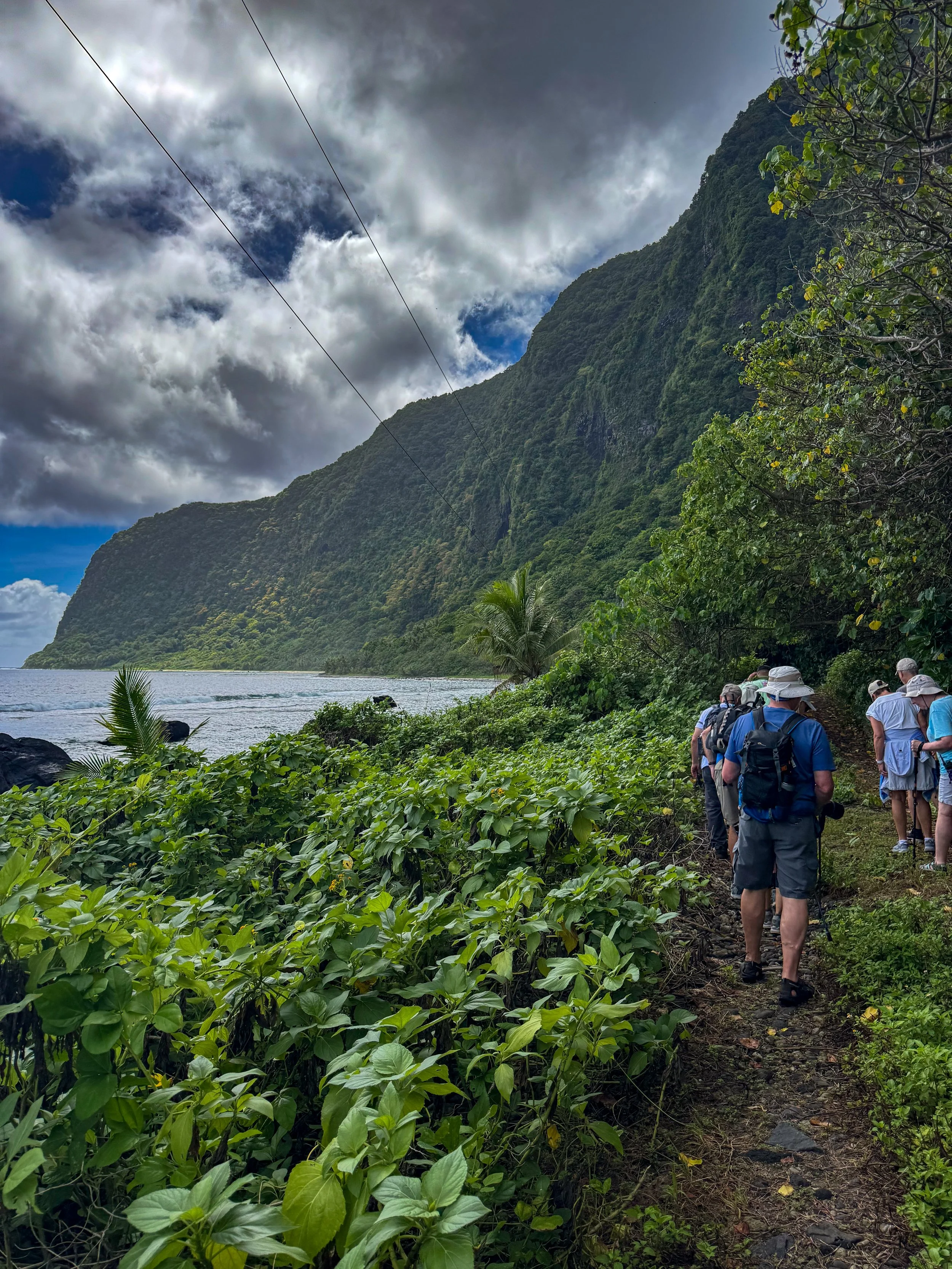
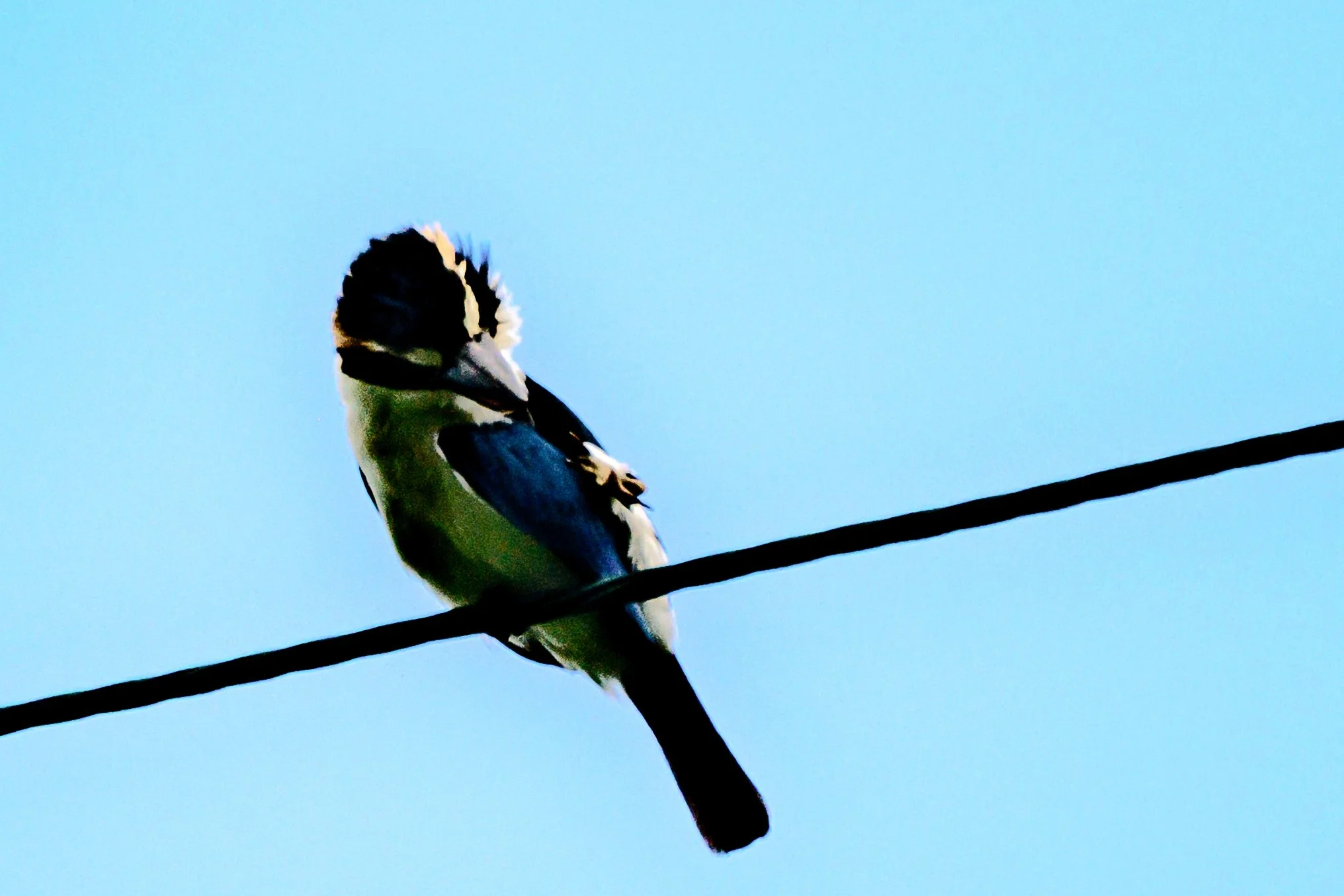
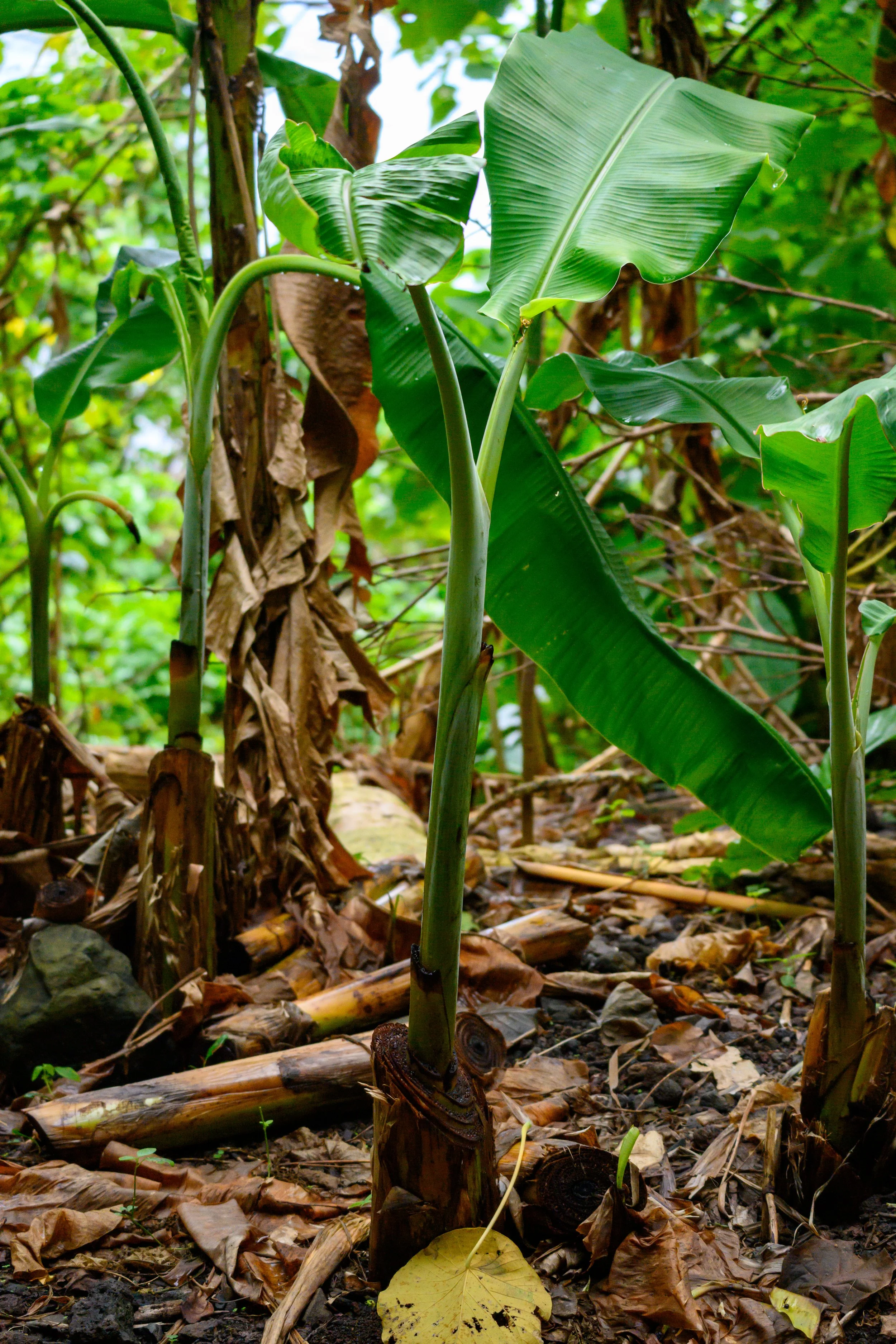
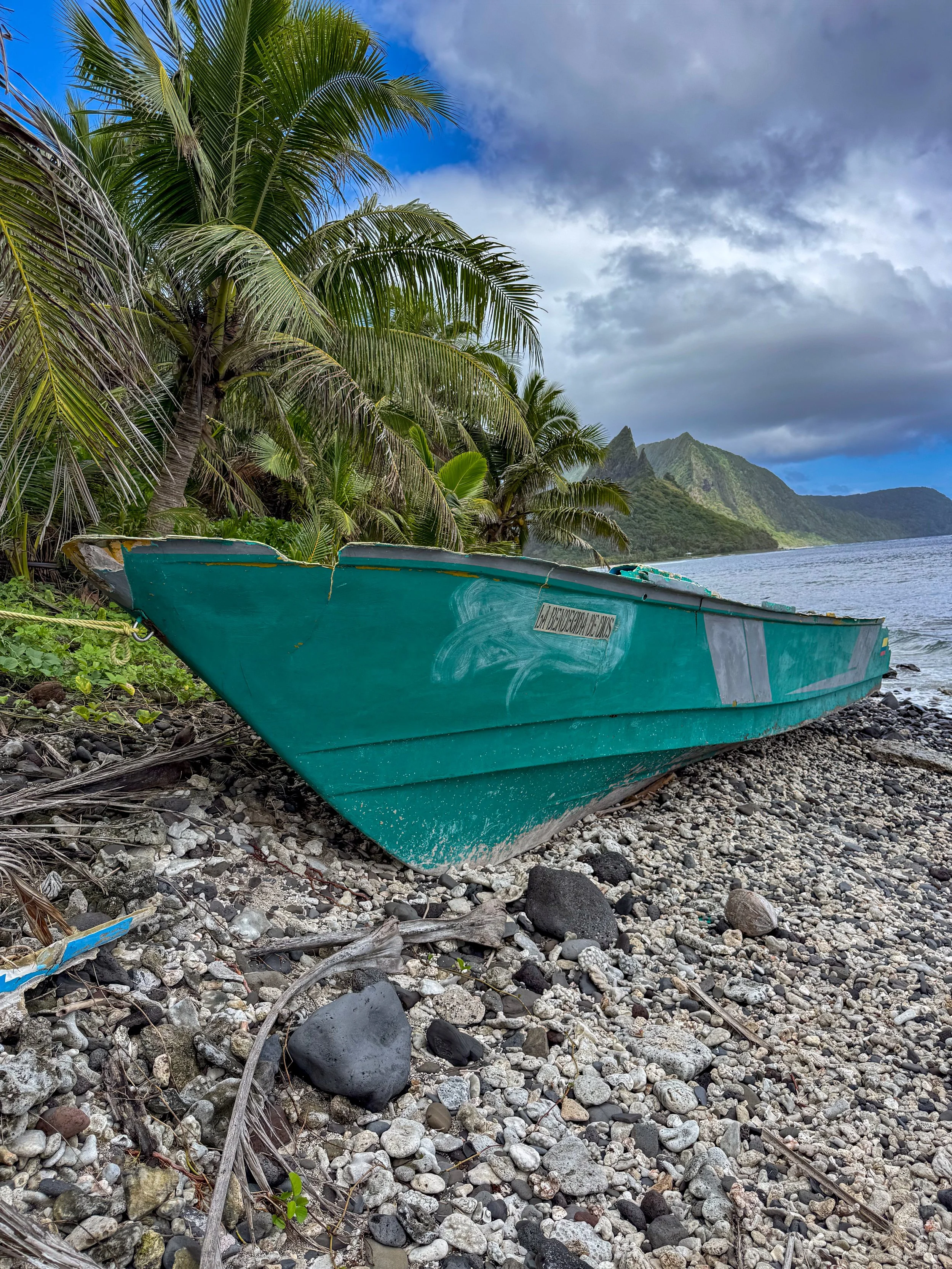
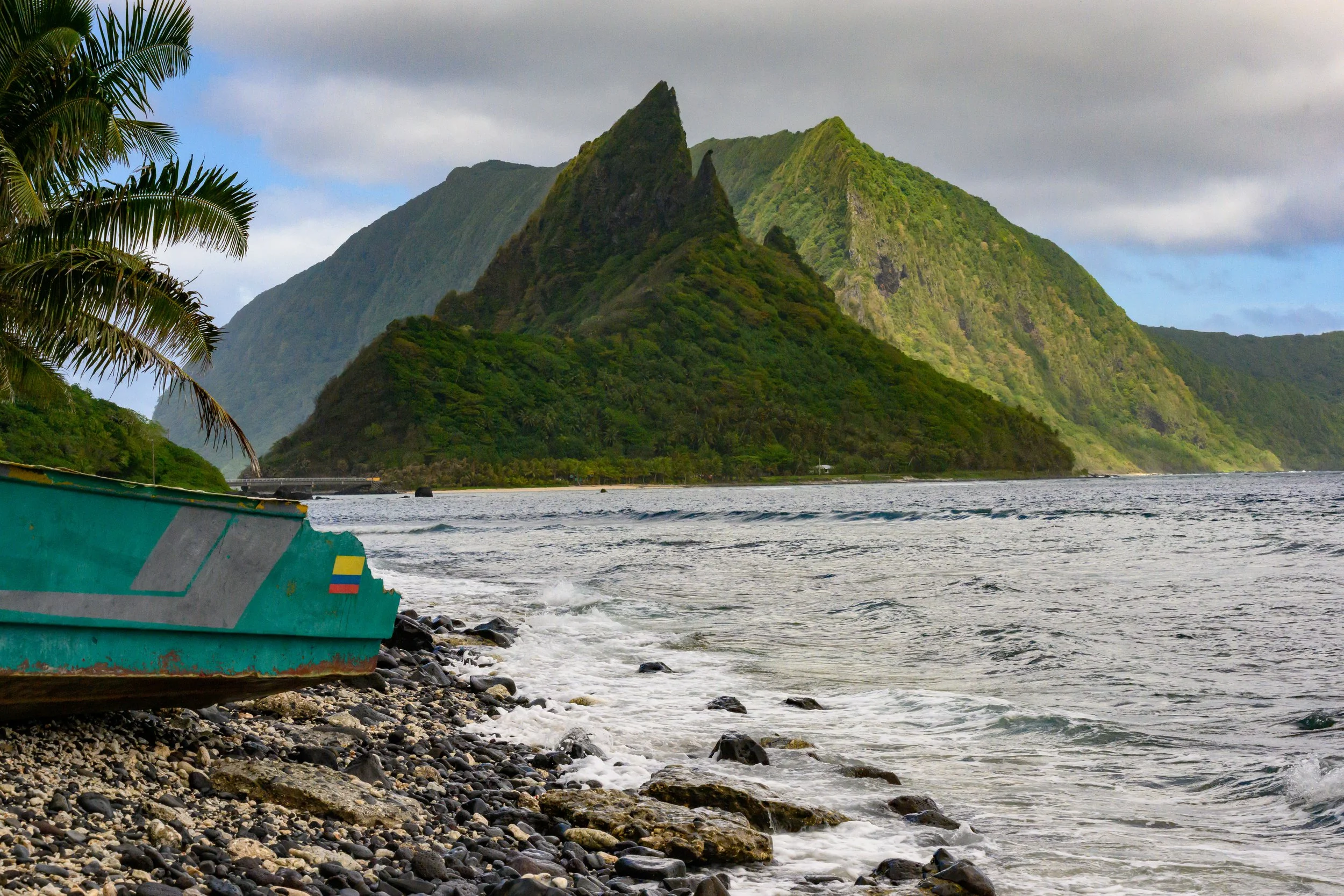
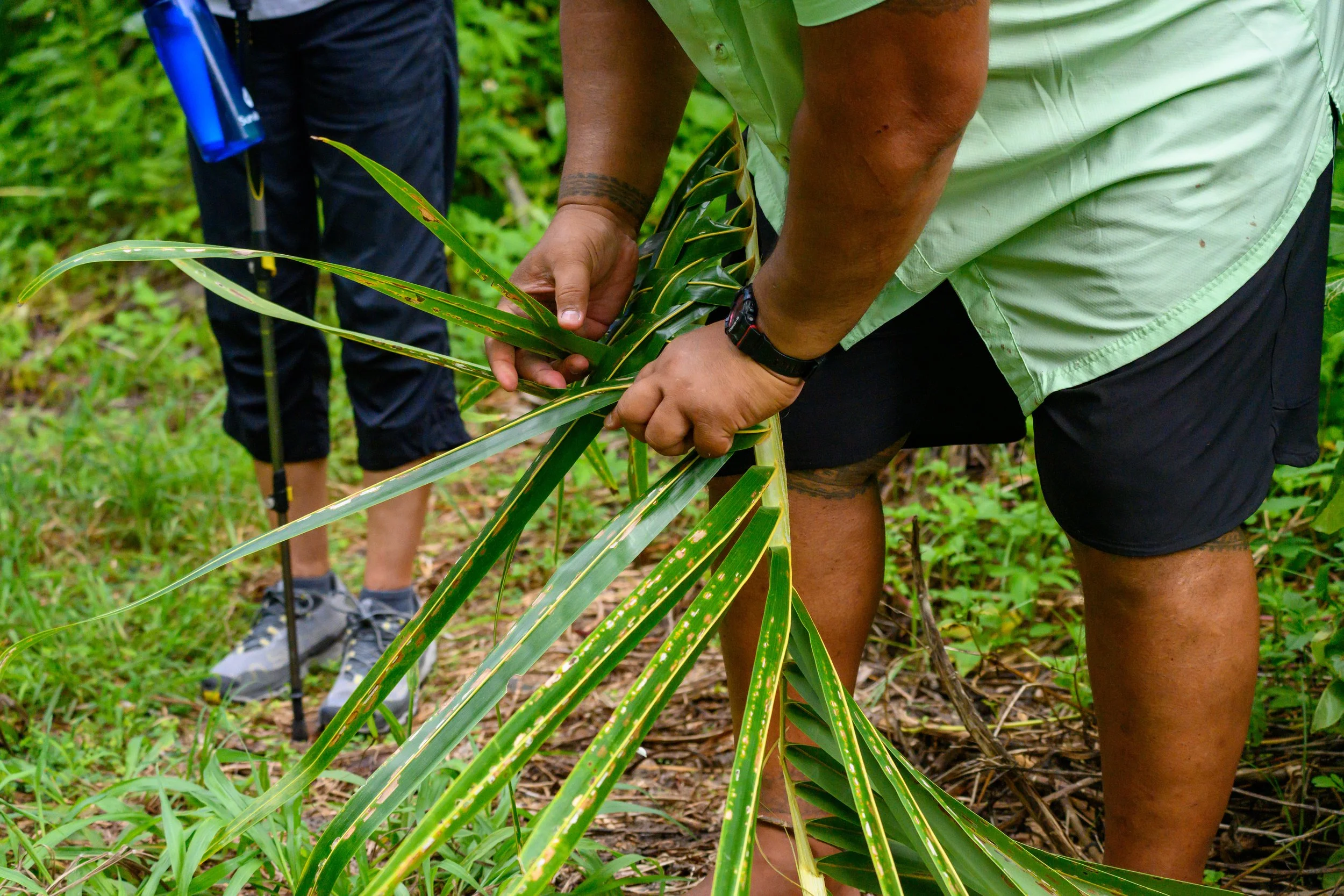
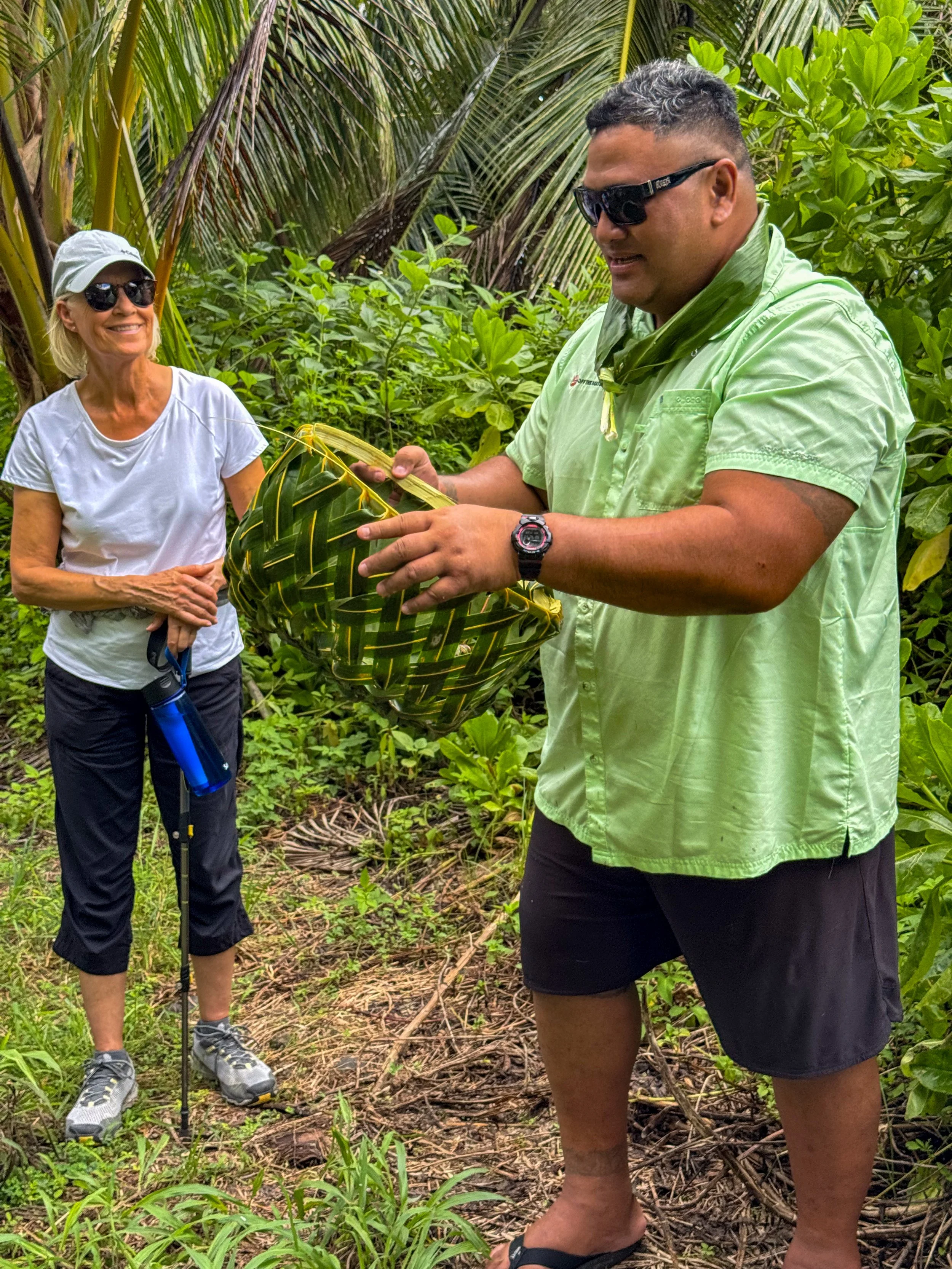
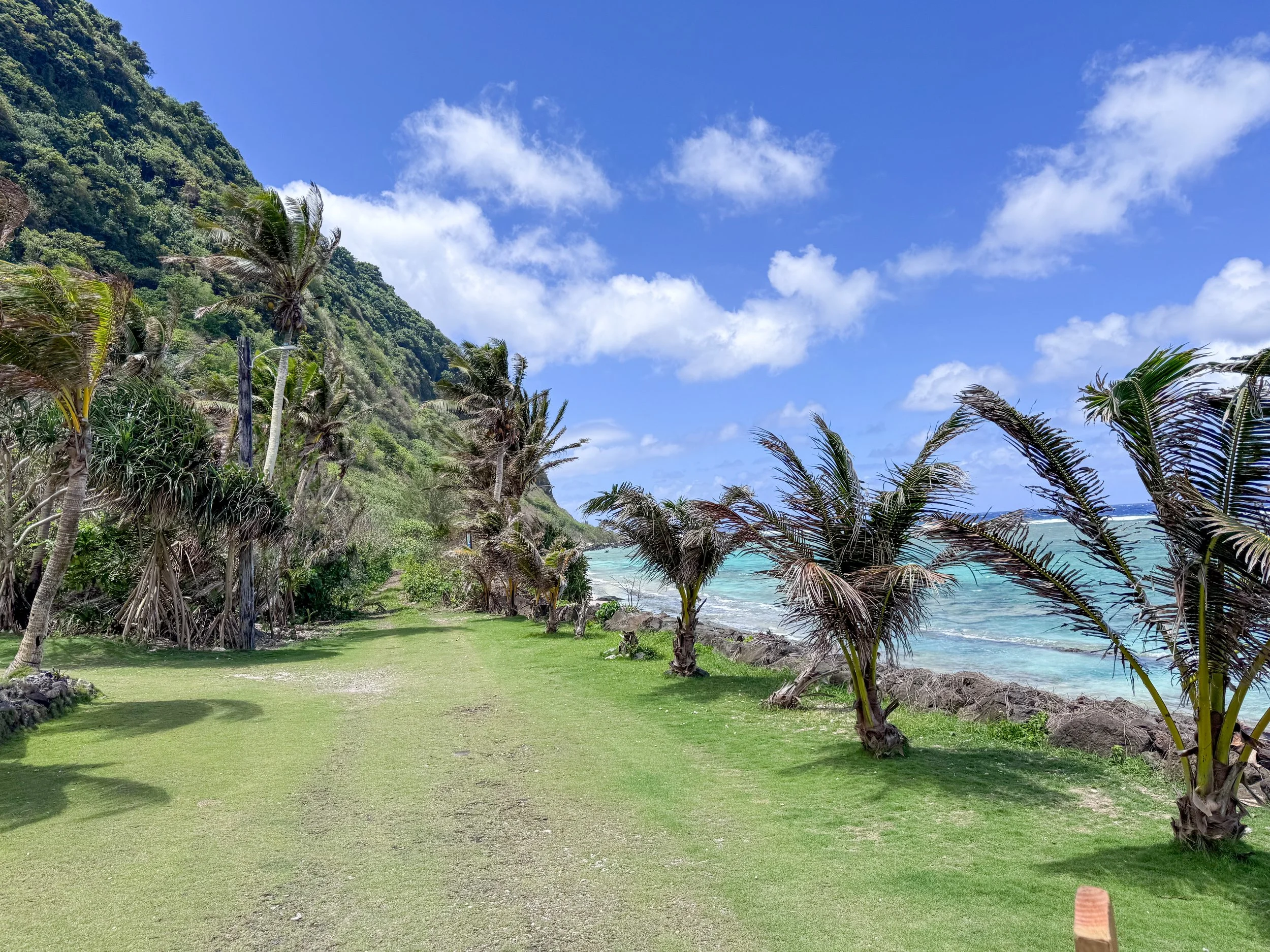
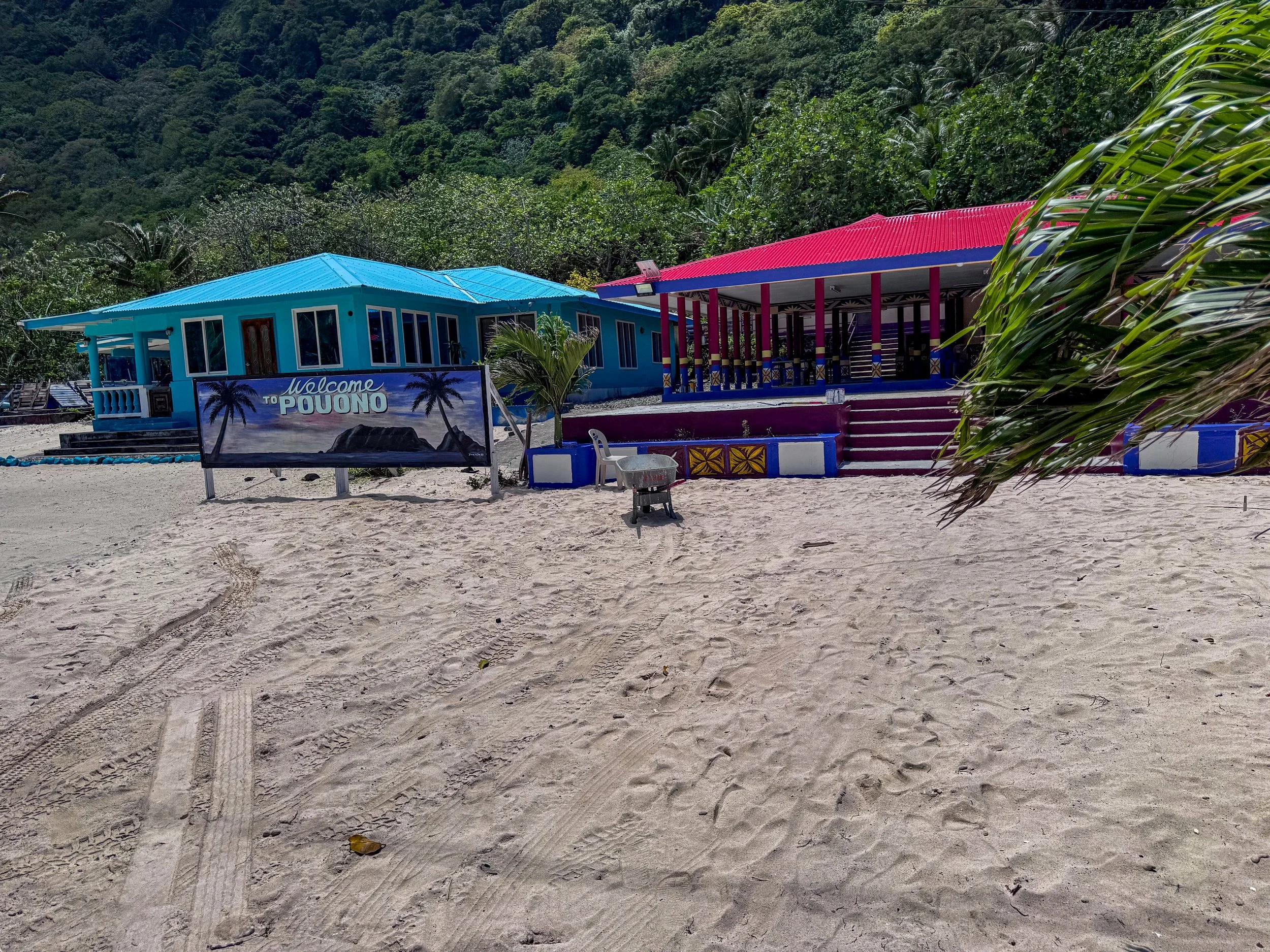
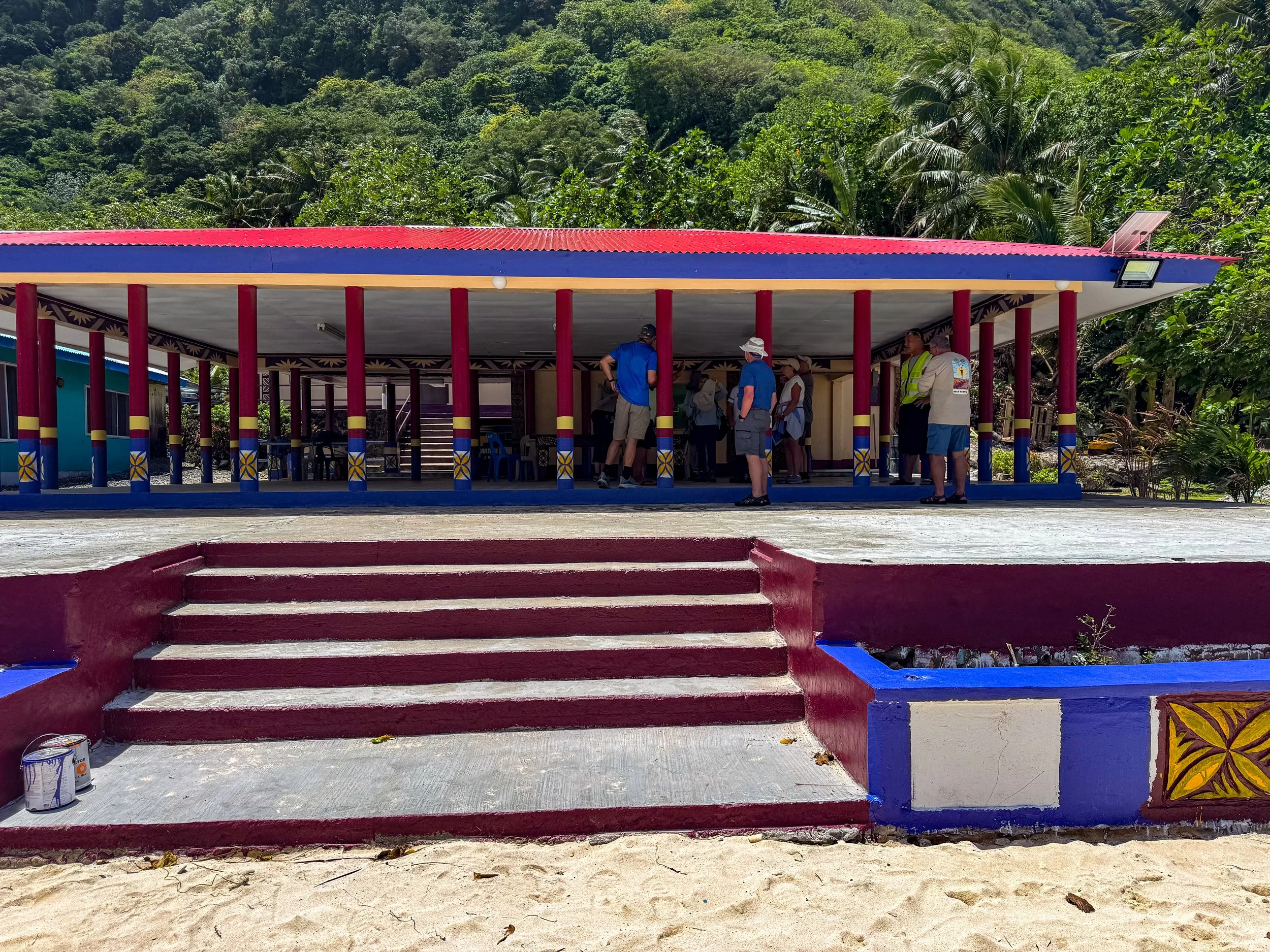
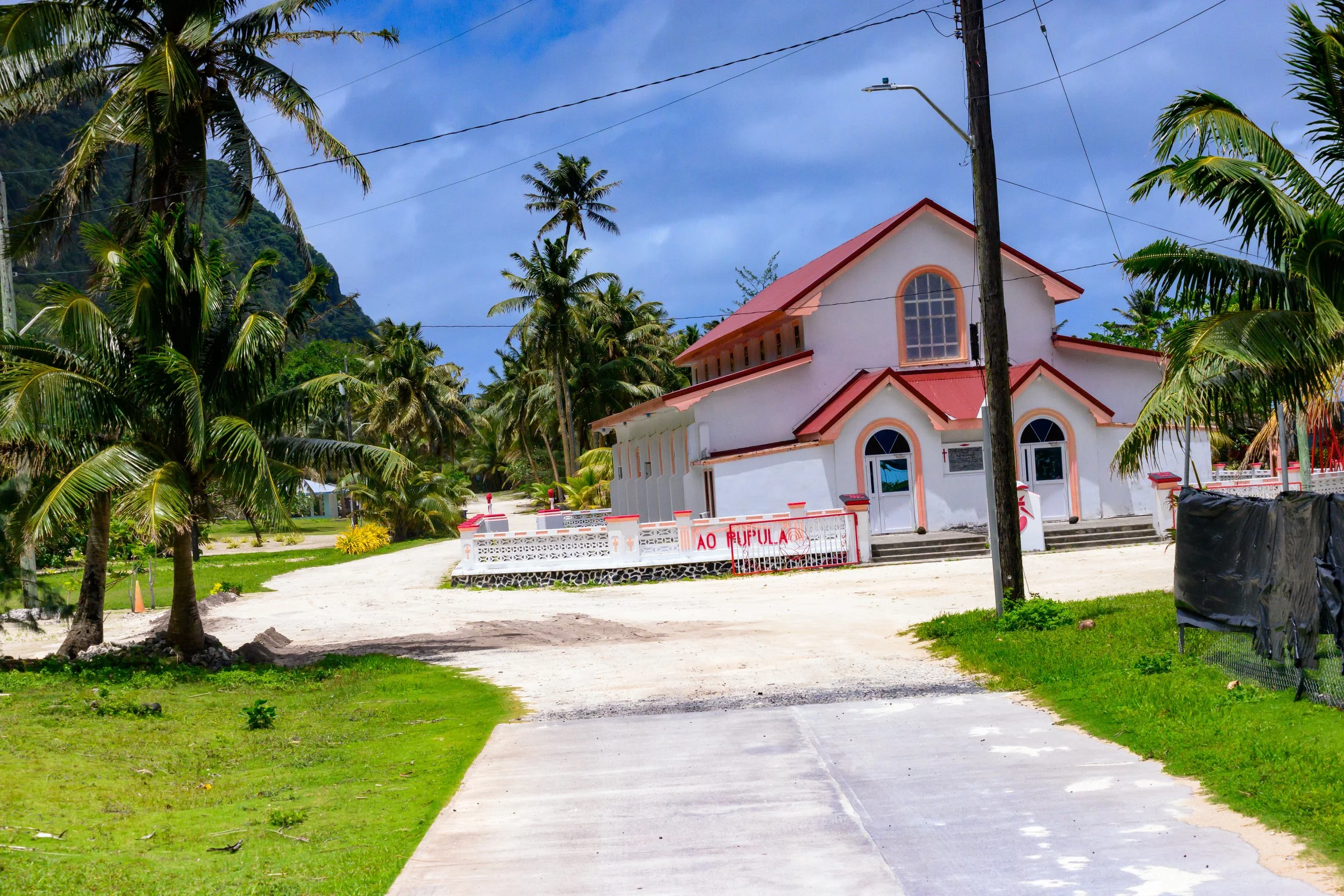
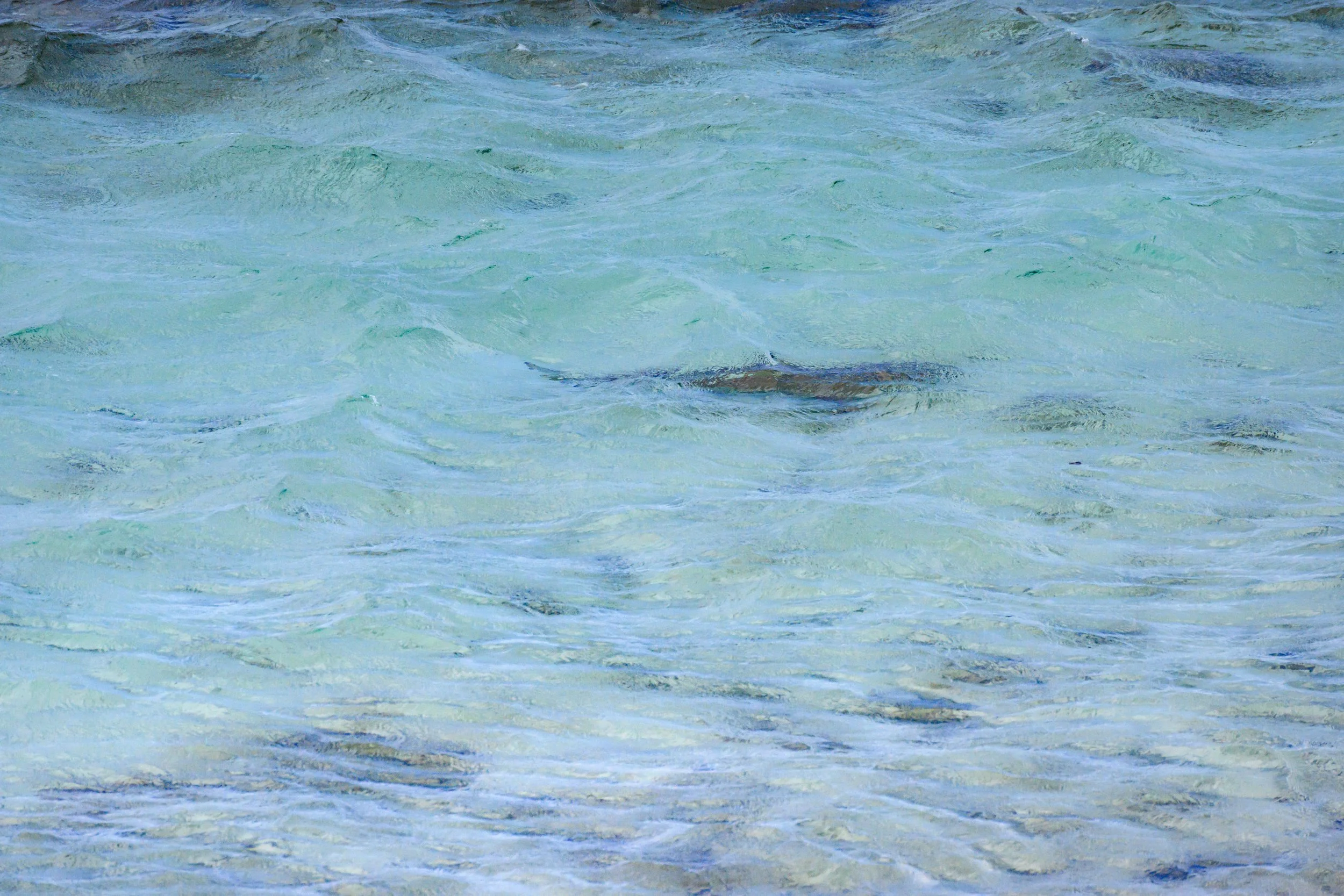
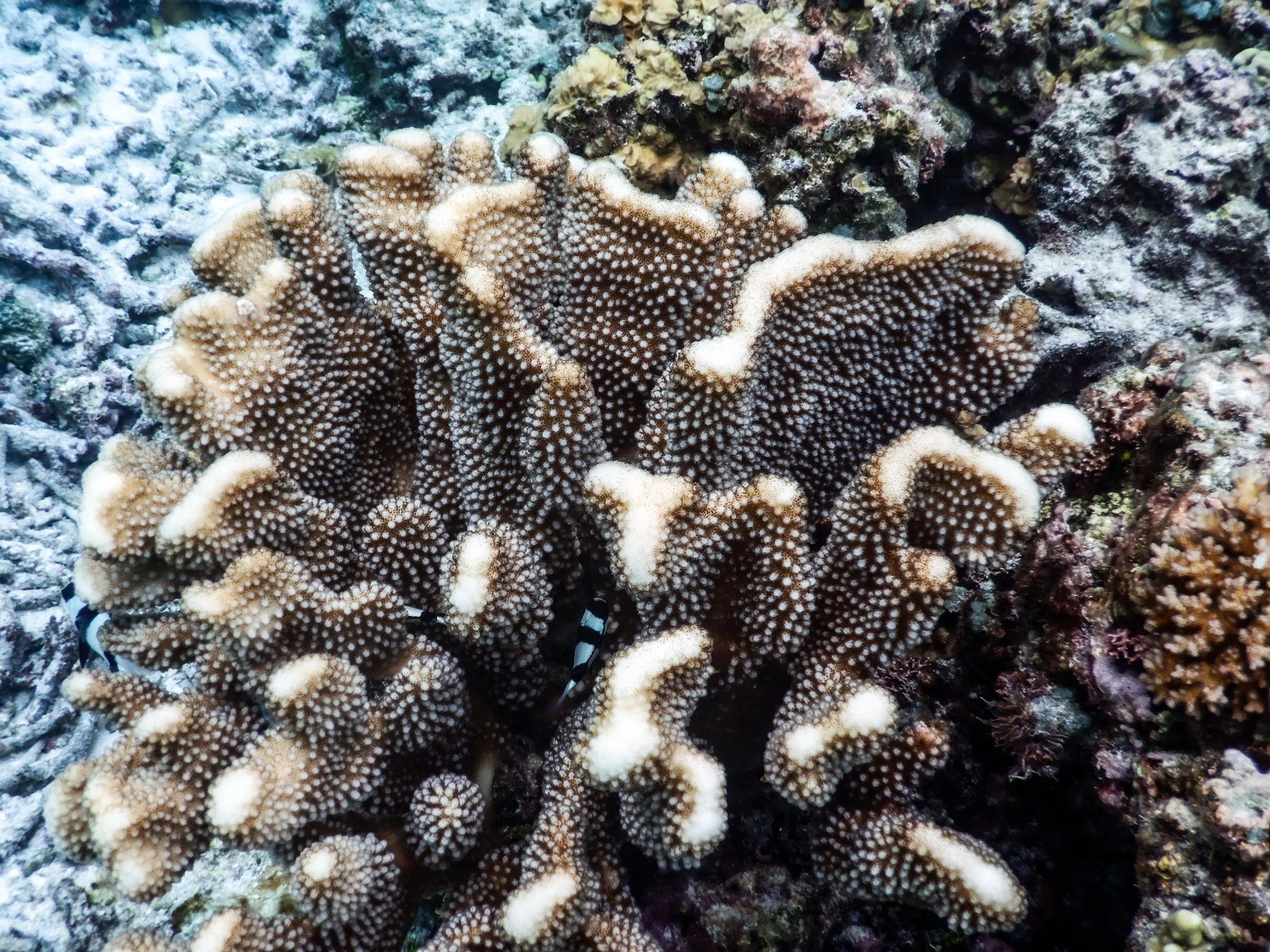
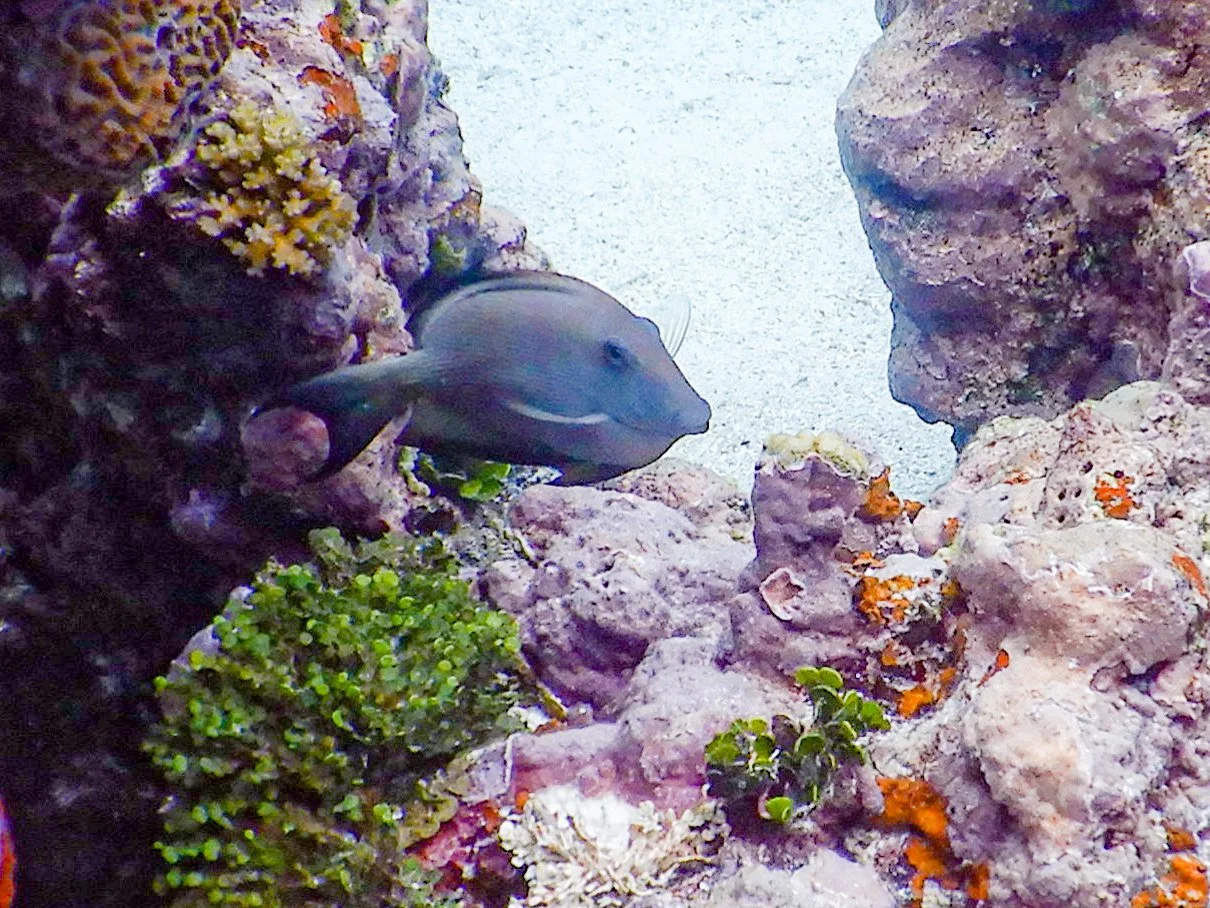
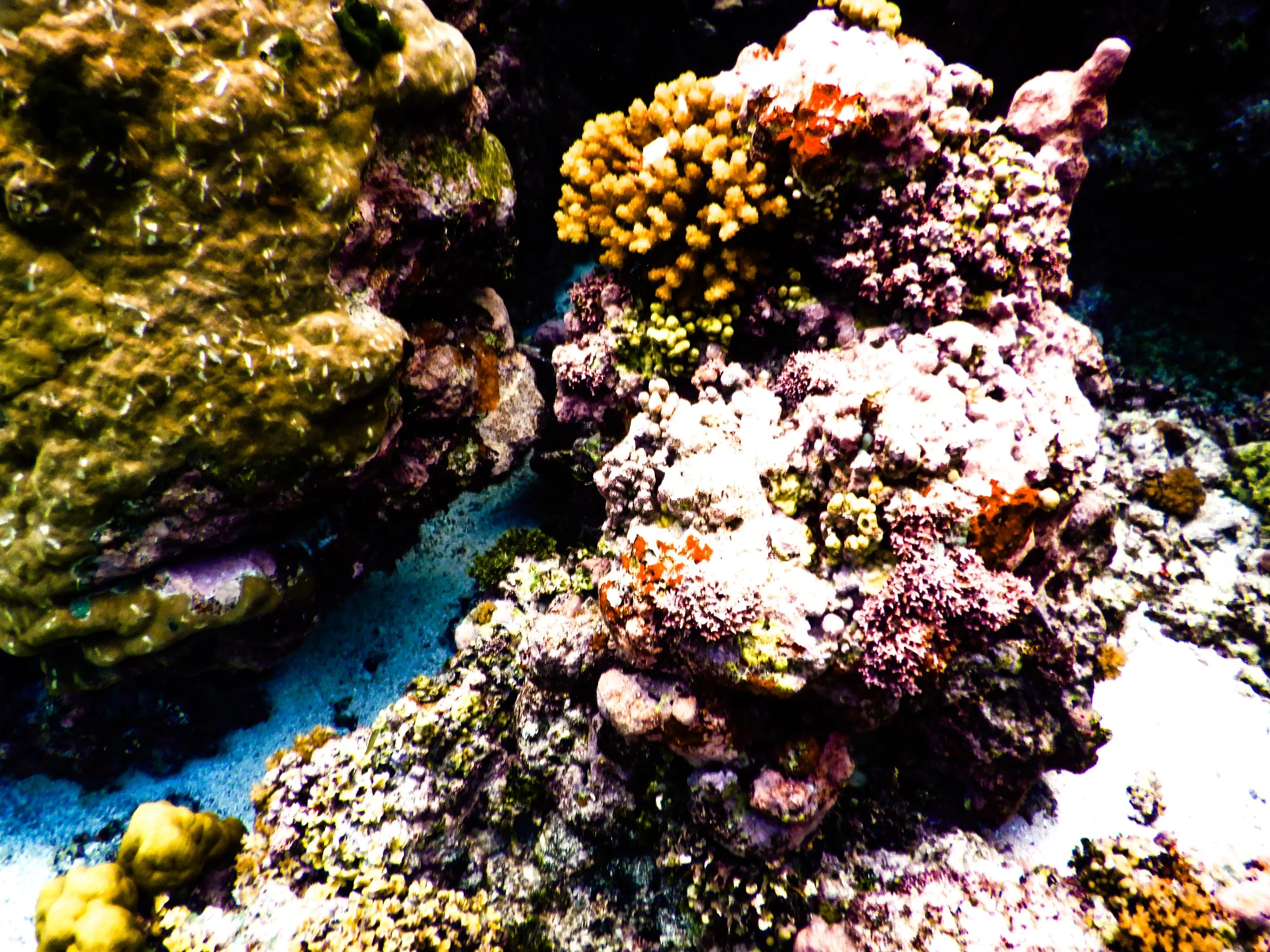
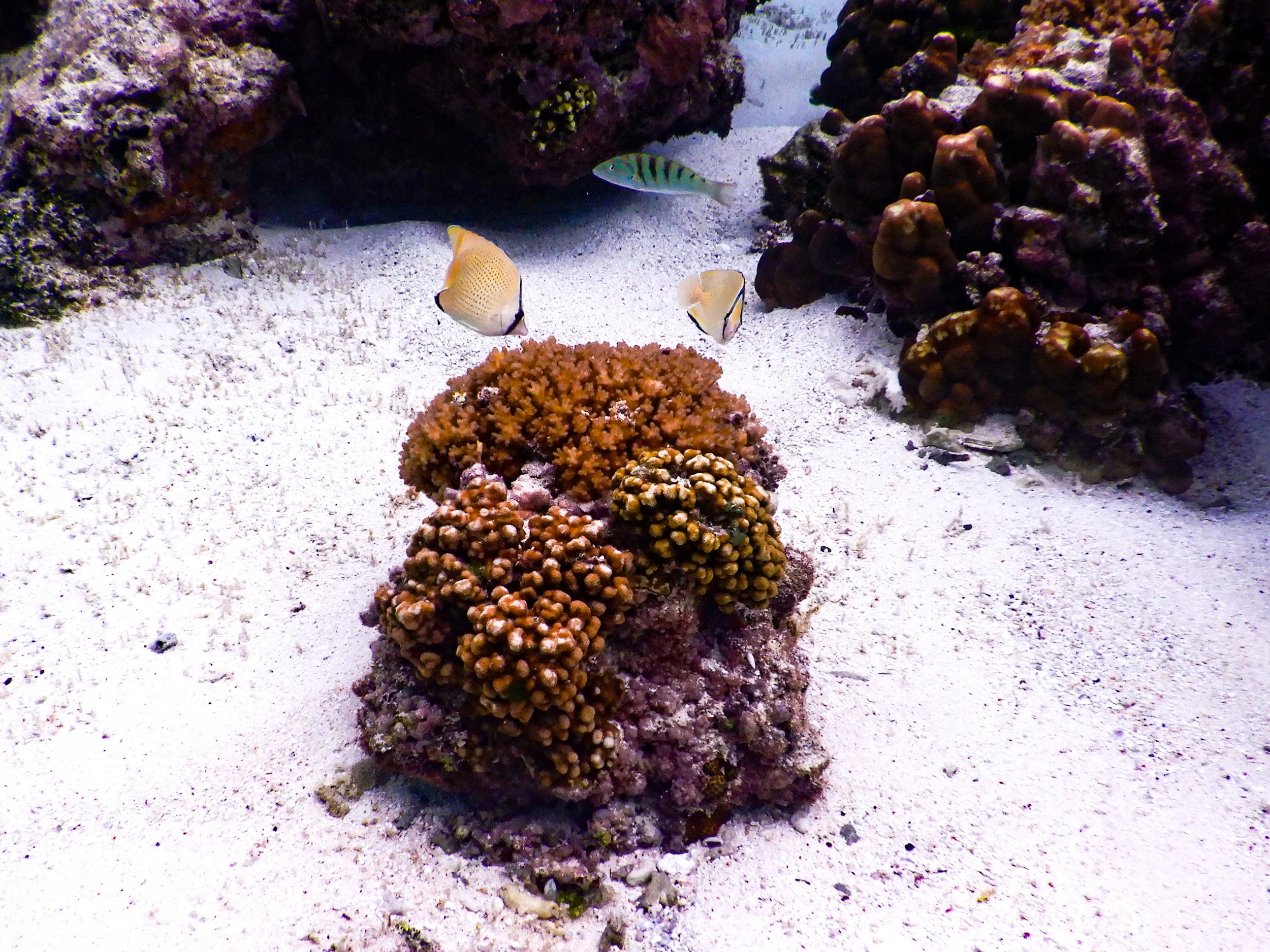
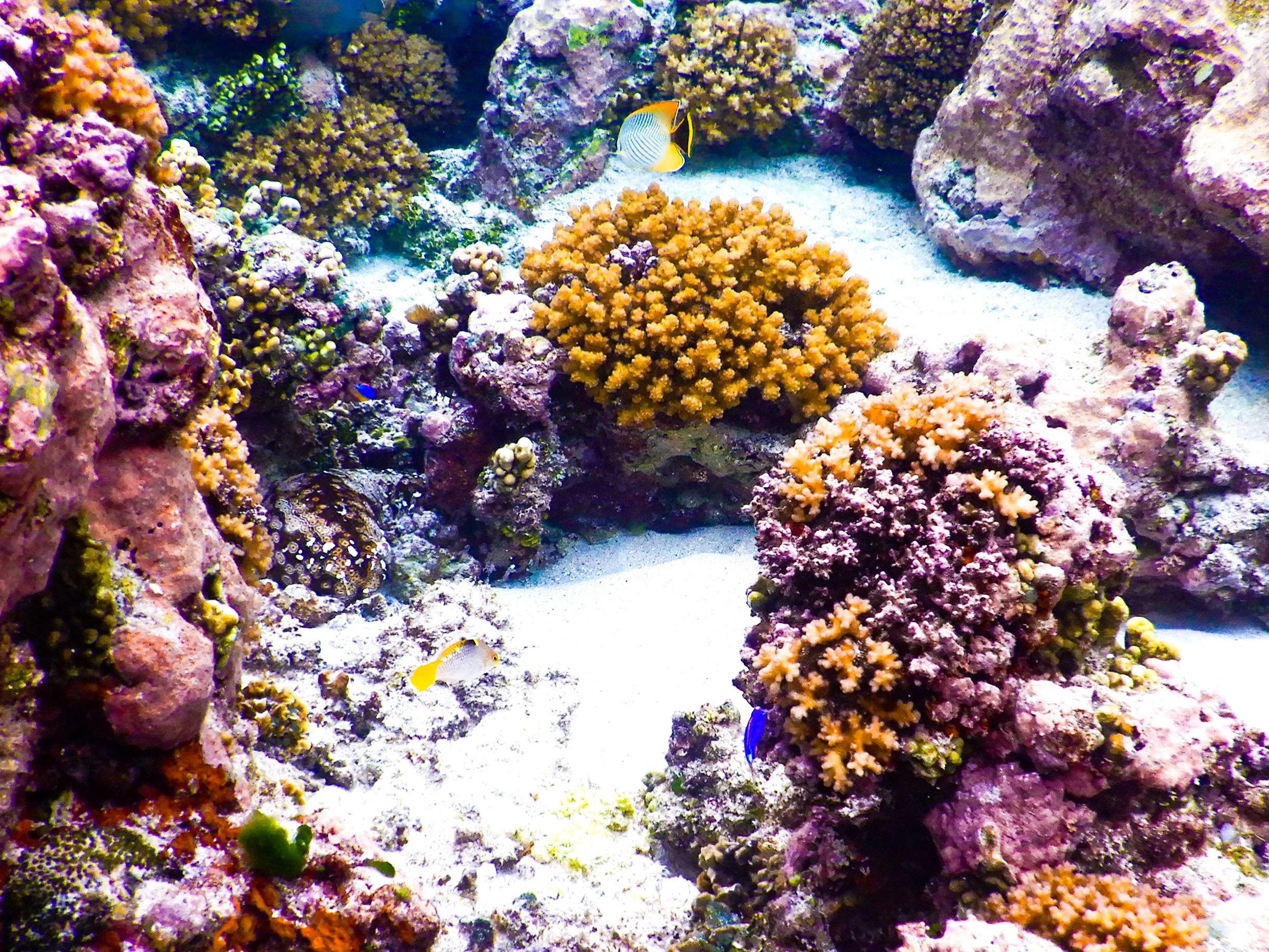
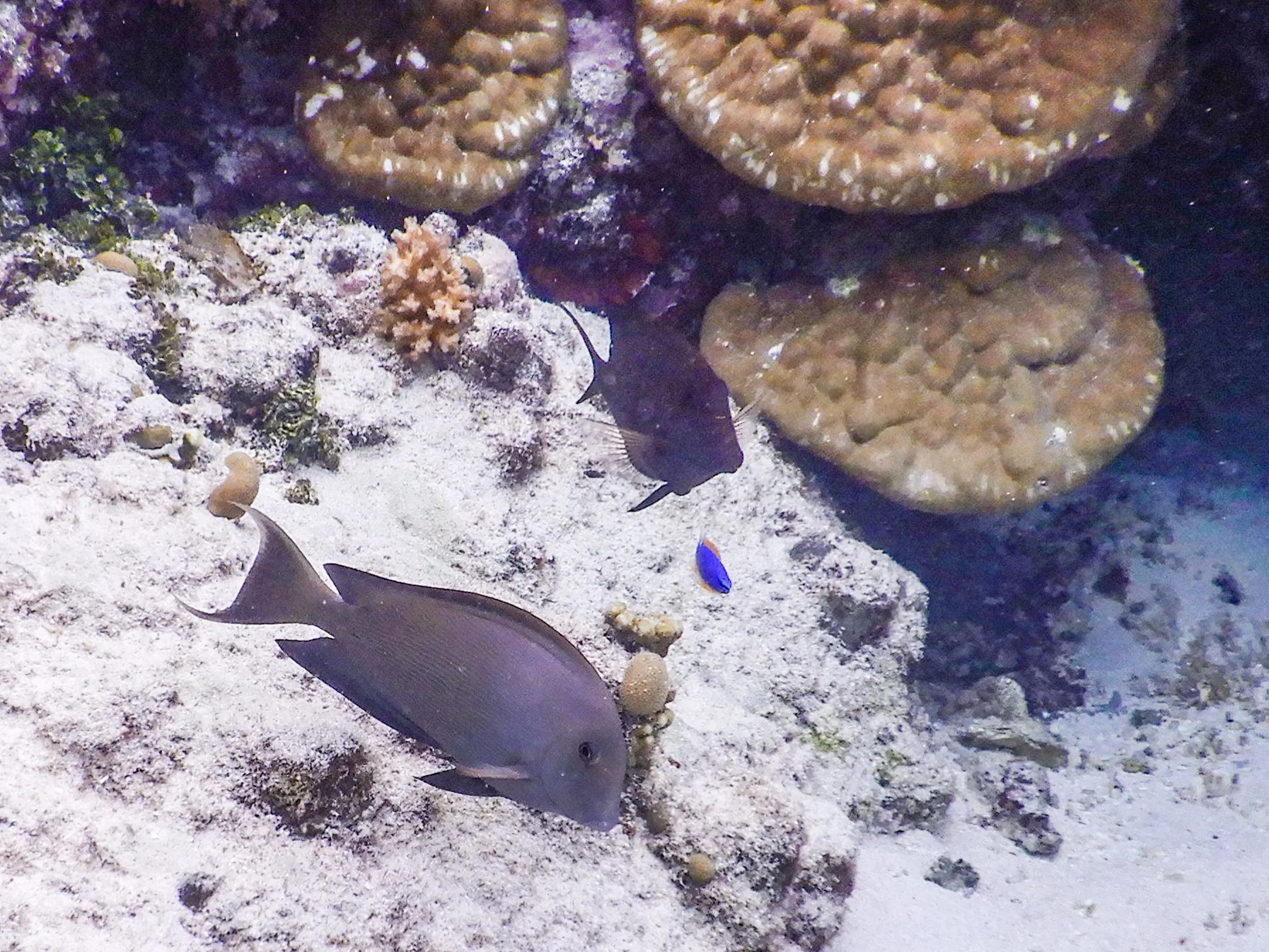
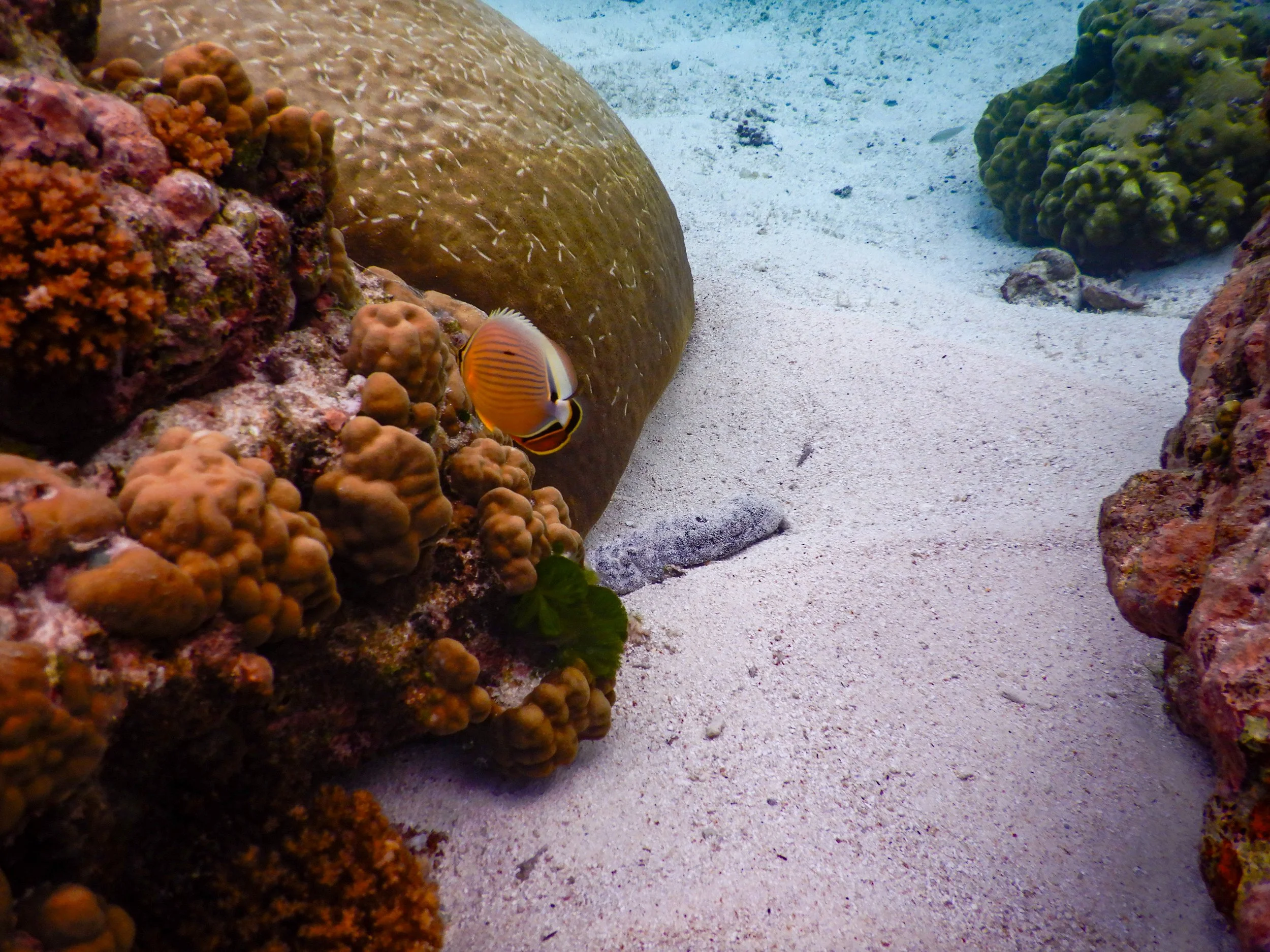
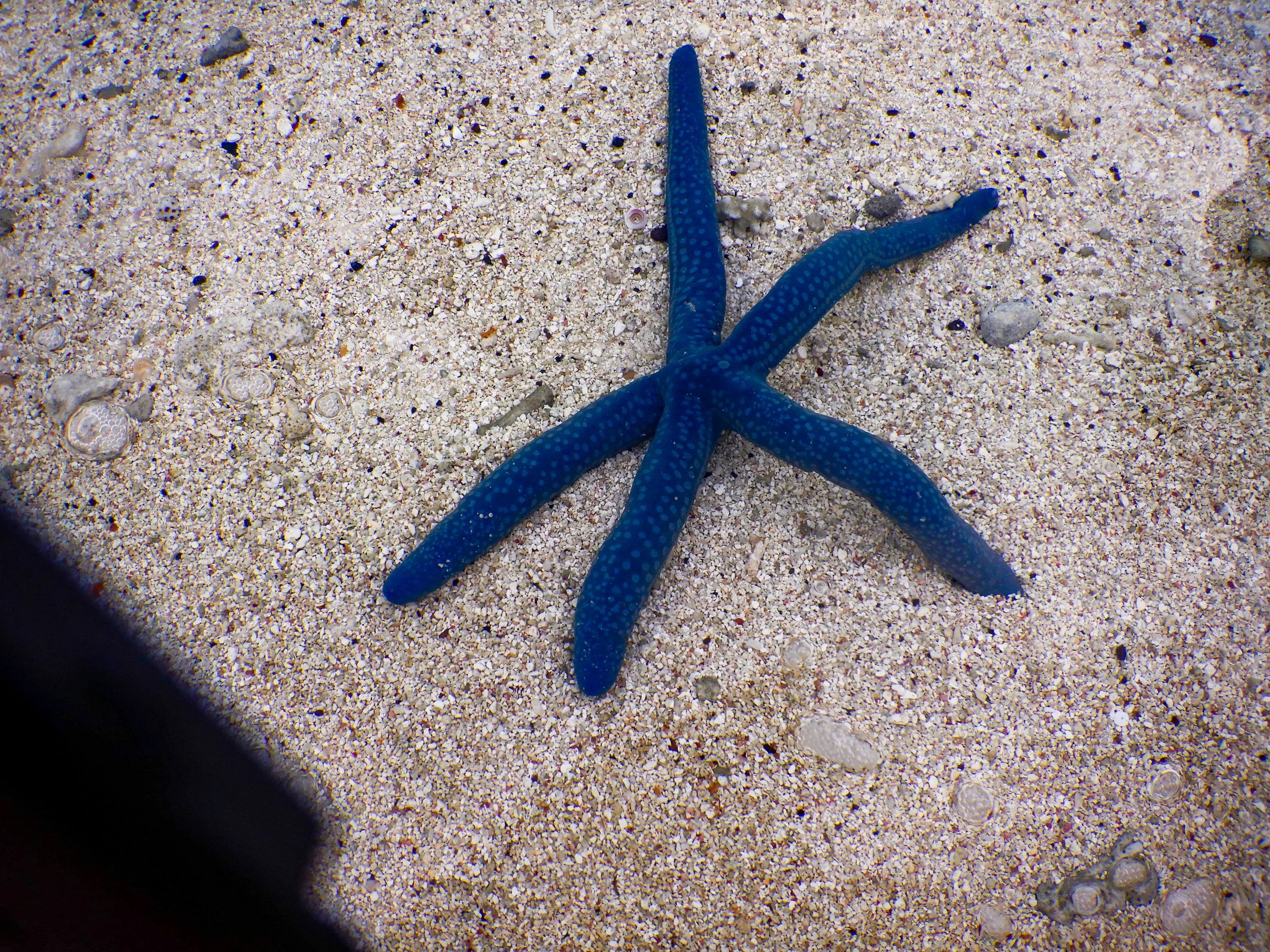
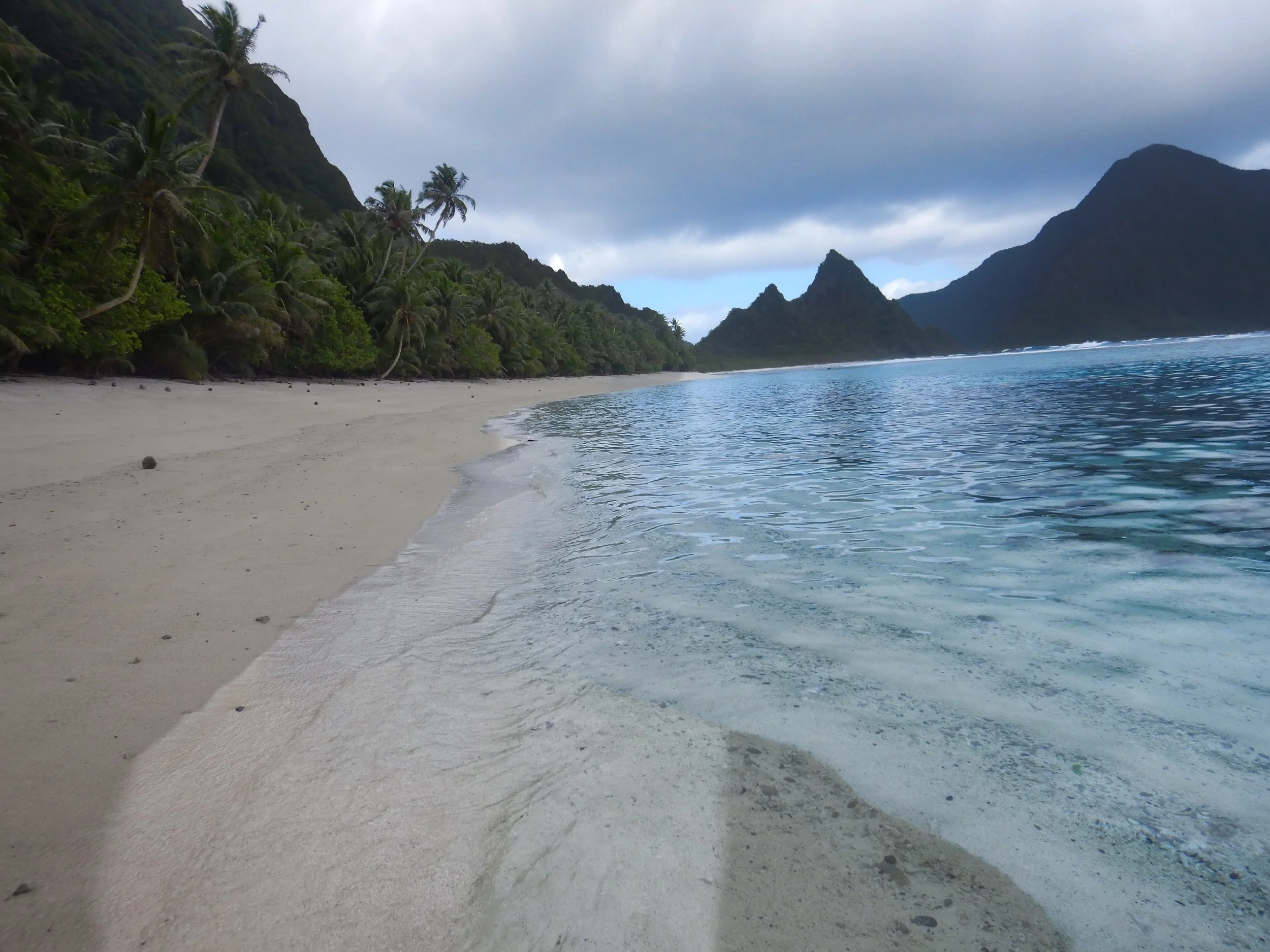
During our trip to American Samoa, we got to do some snorkeling. At one point along the tour, our guide did spot a “vegetarian shark” as he said. Never saw any while we were in the water though. The snorkeling is a little different in that starting from the shoreline sandy beach you would have to find your way out through and around the coral reef. Sort of like finding your way though canyons. Fun but always challenging to find your way back to the beach on a “path” that did not take you into a very shallow reef area with very sharp coral on the way back to the sandy beach. Fun activity and some good pictures.
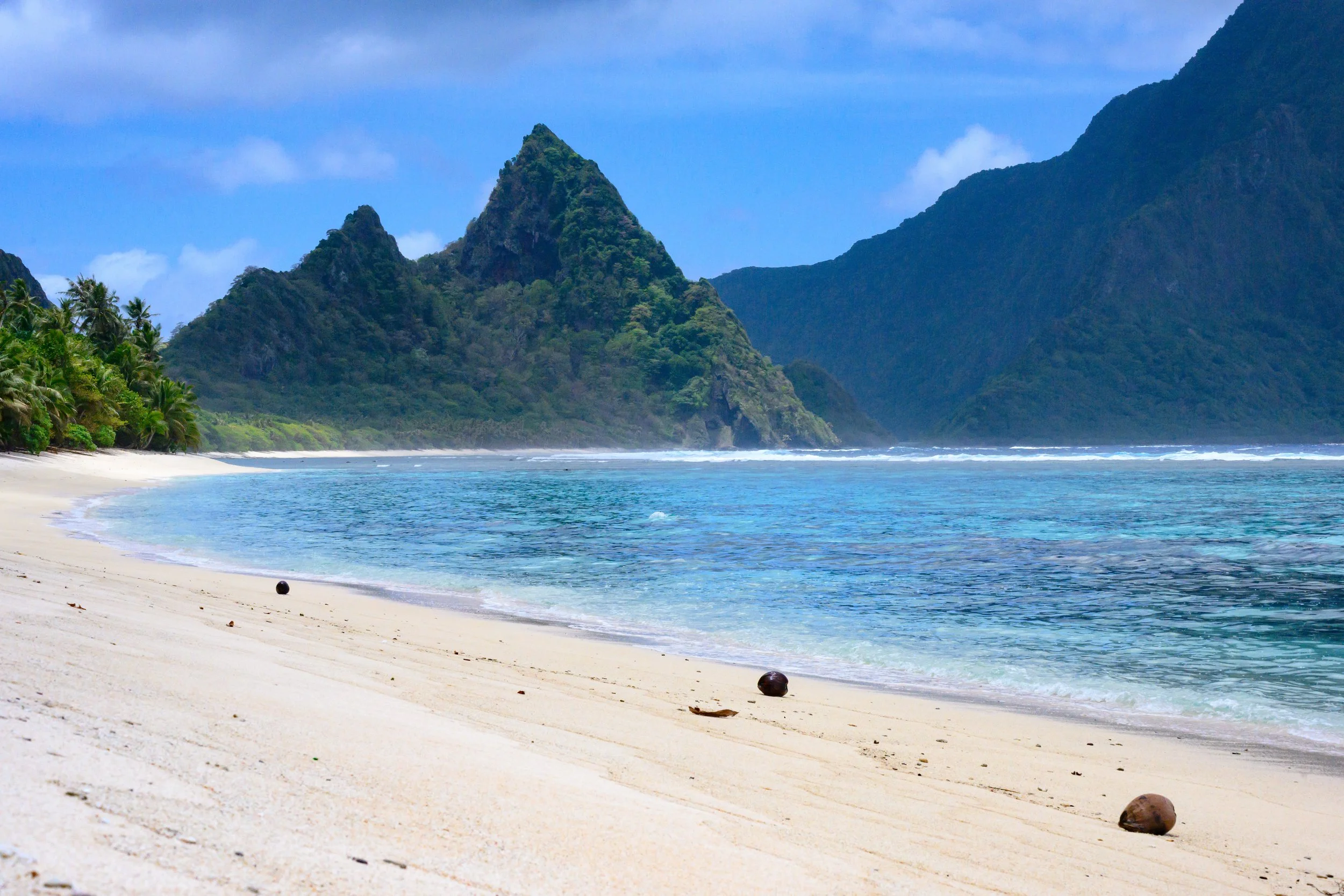
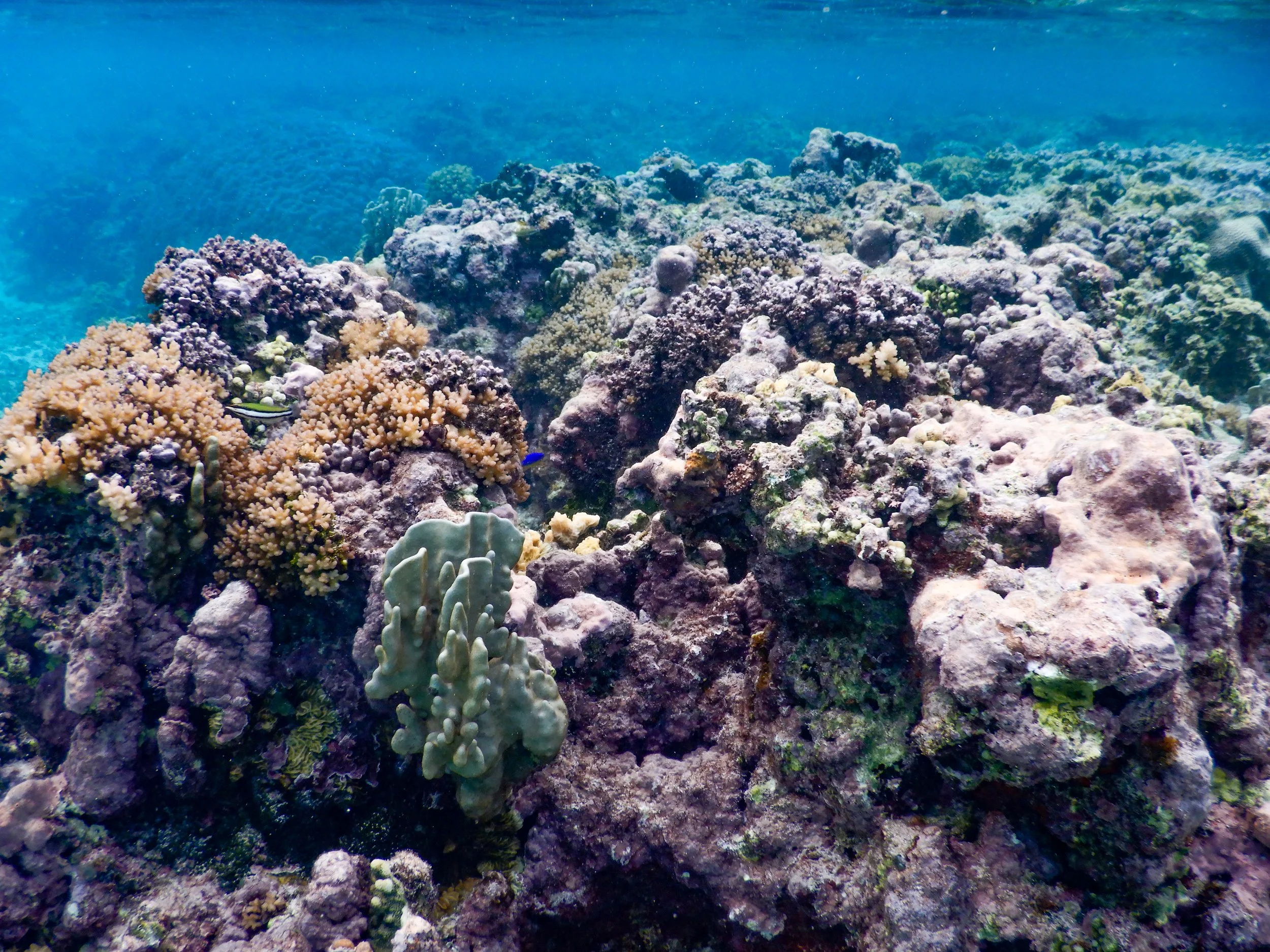
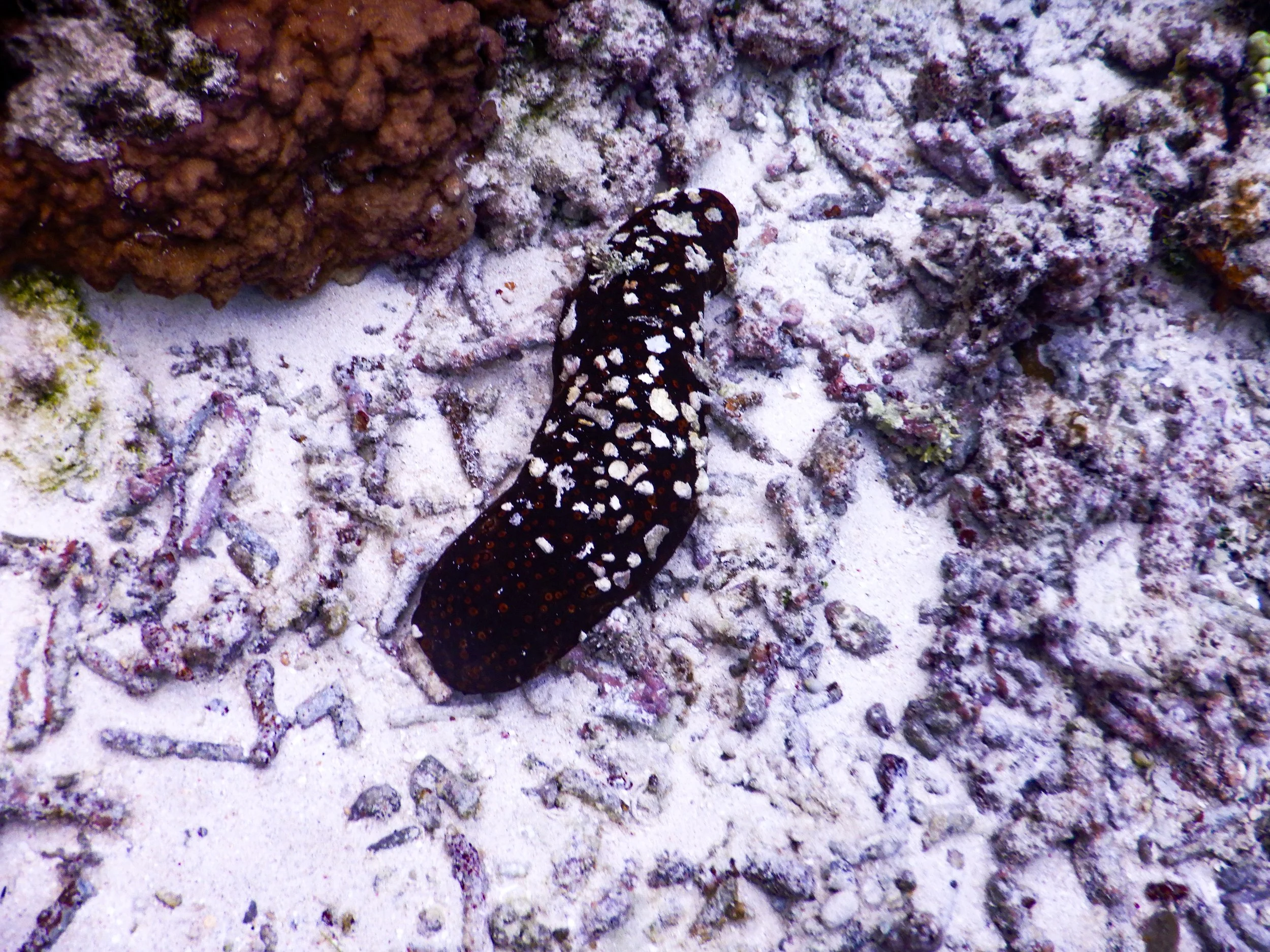
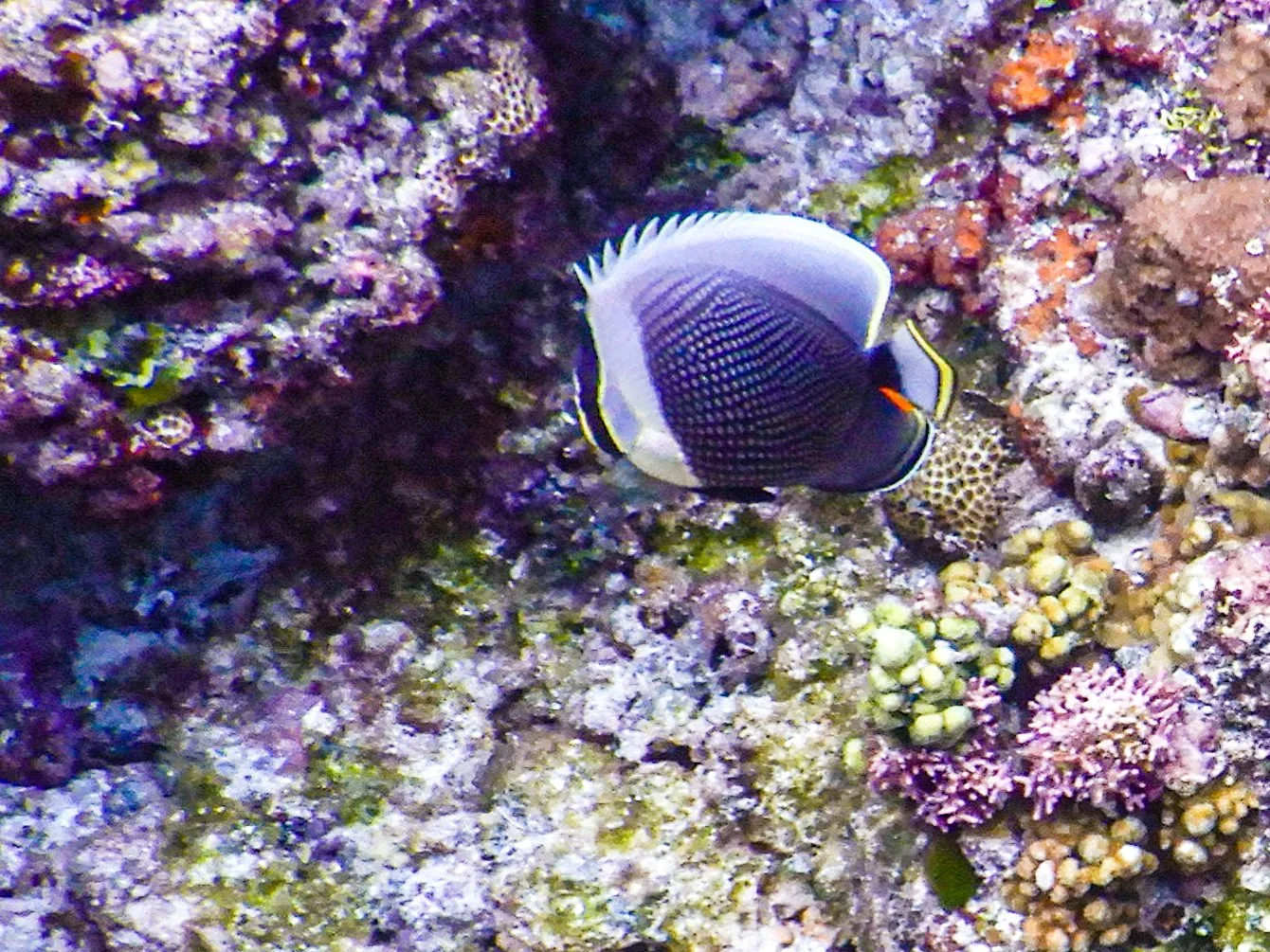
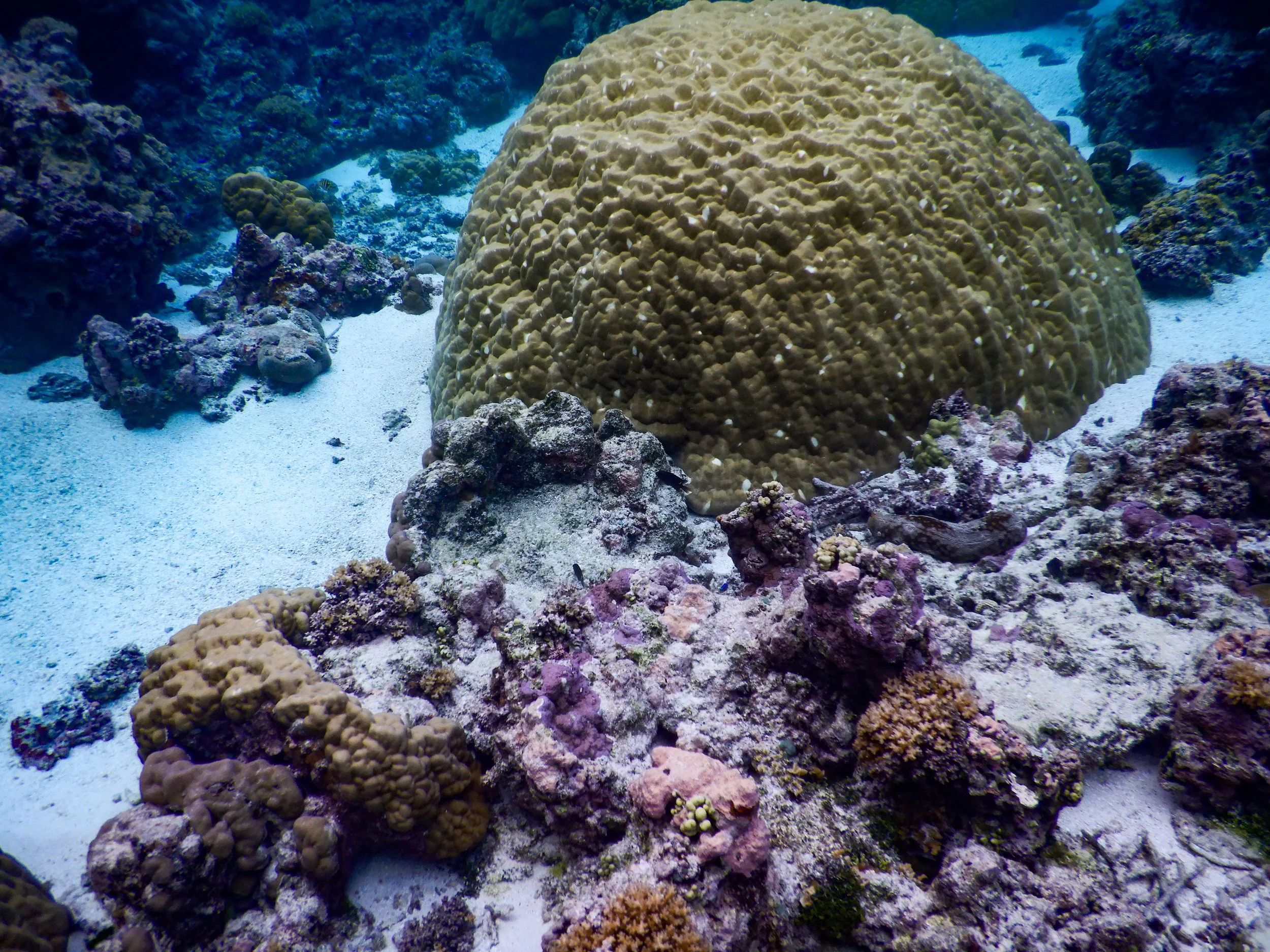
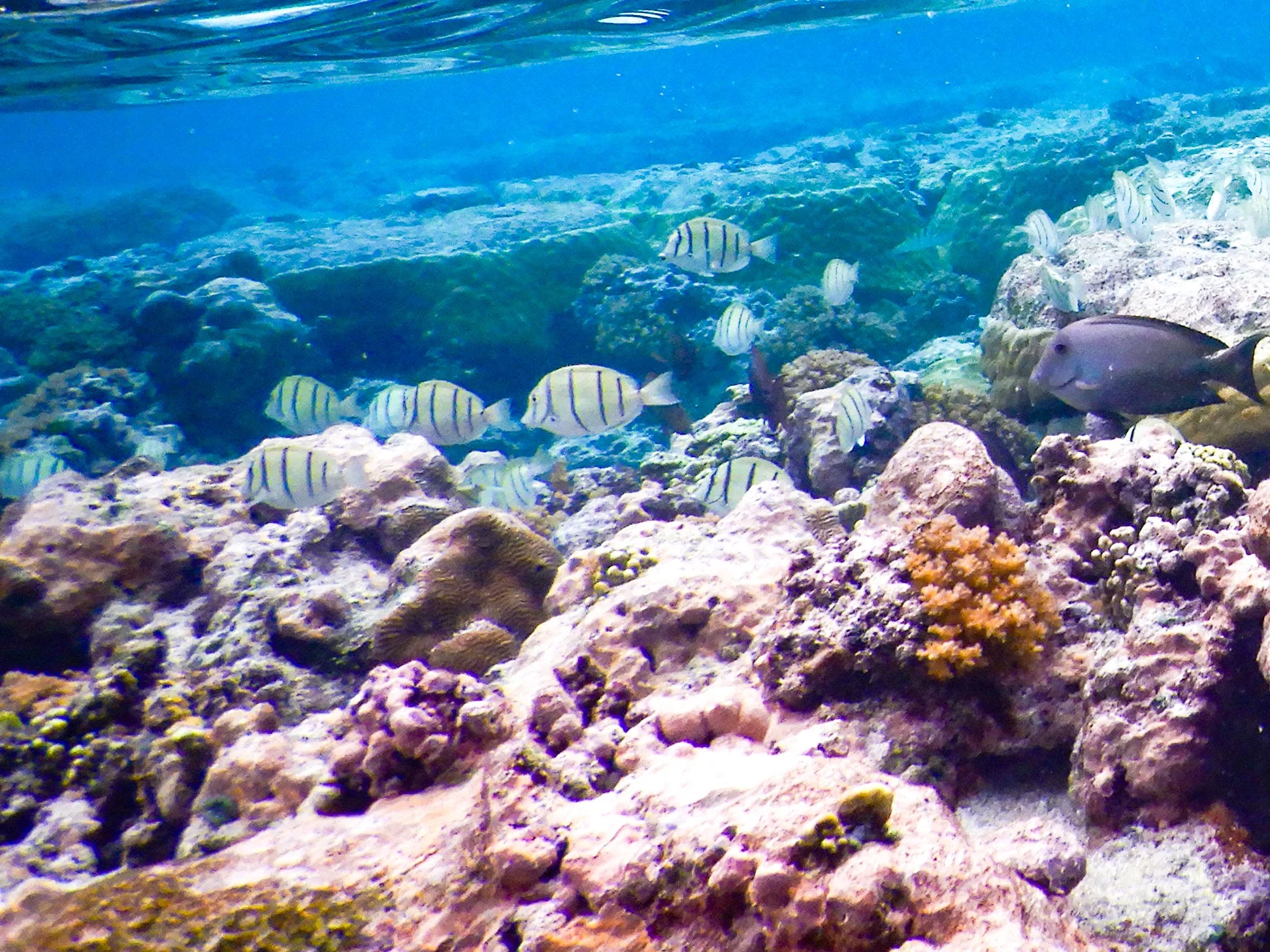
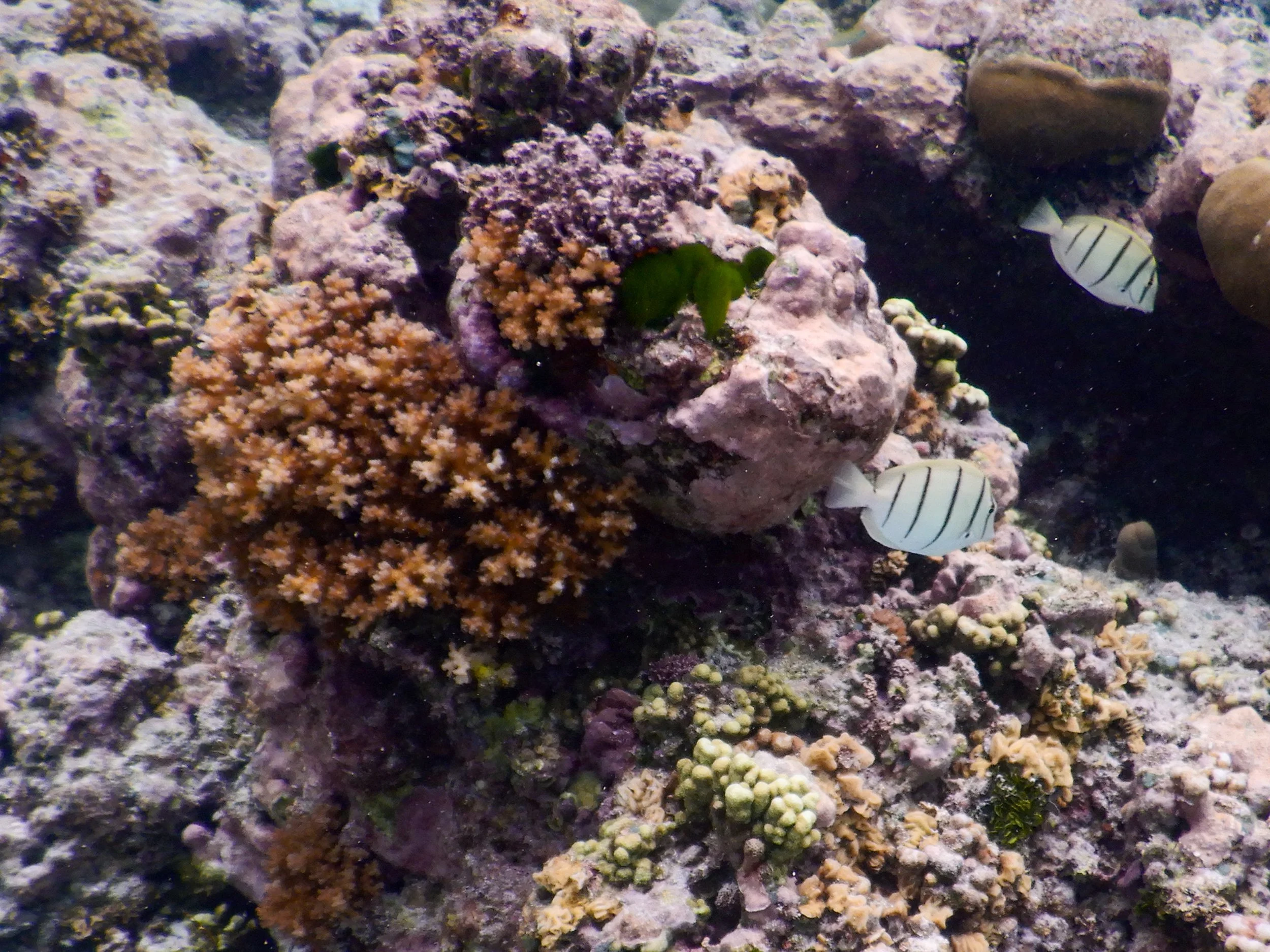
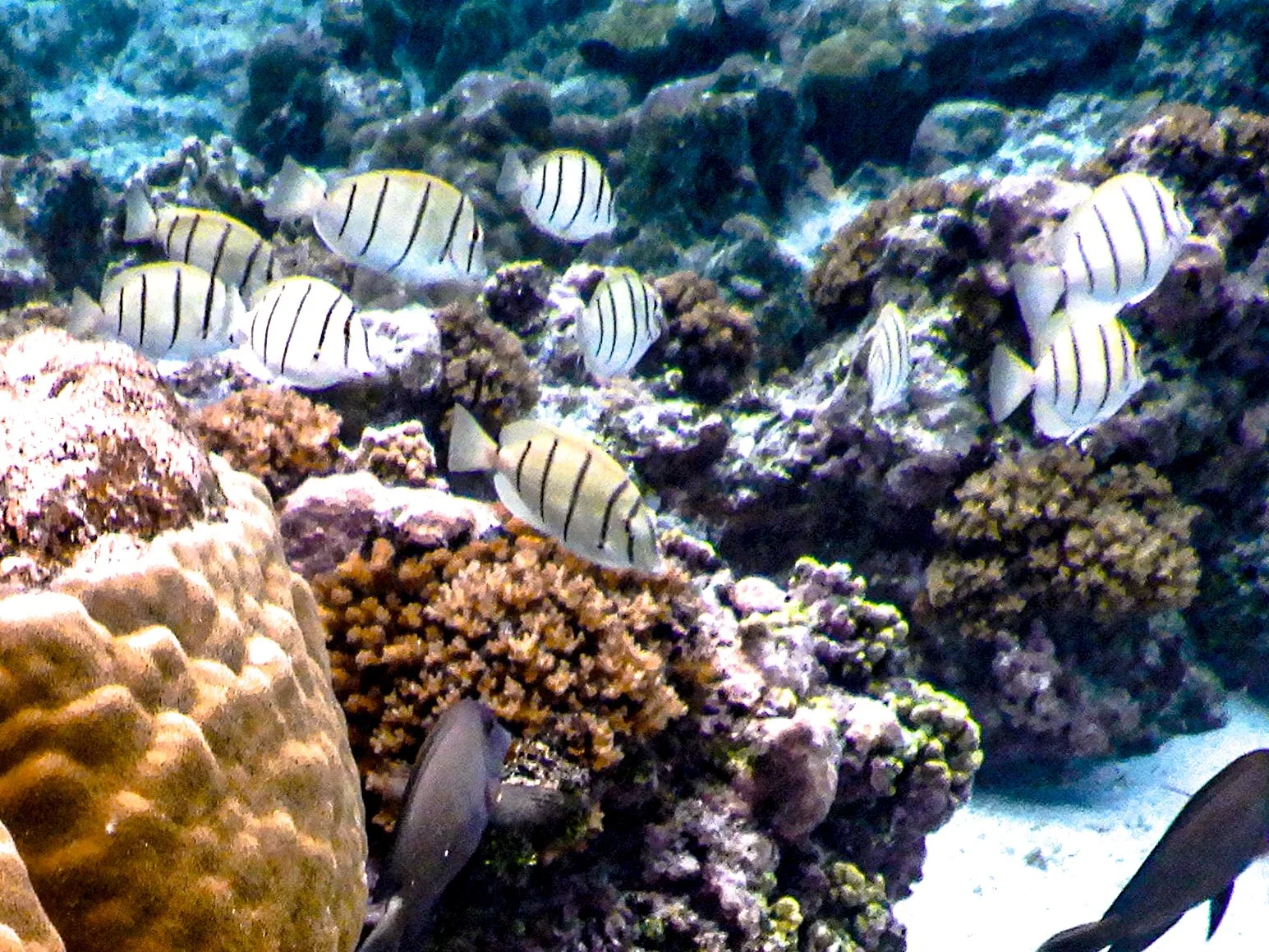
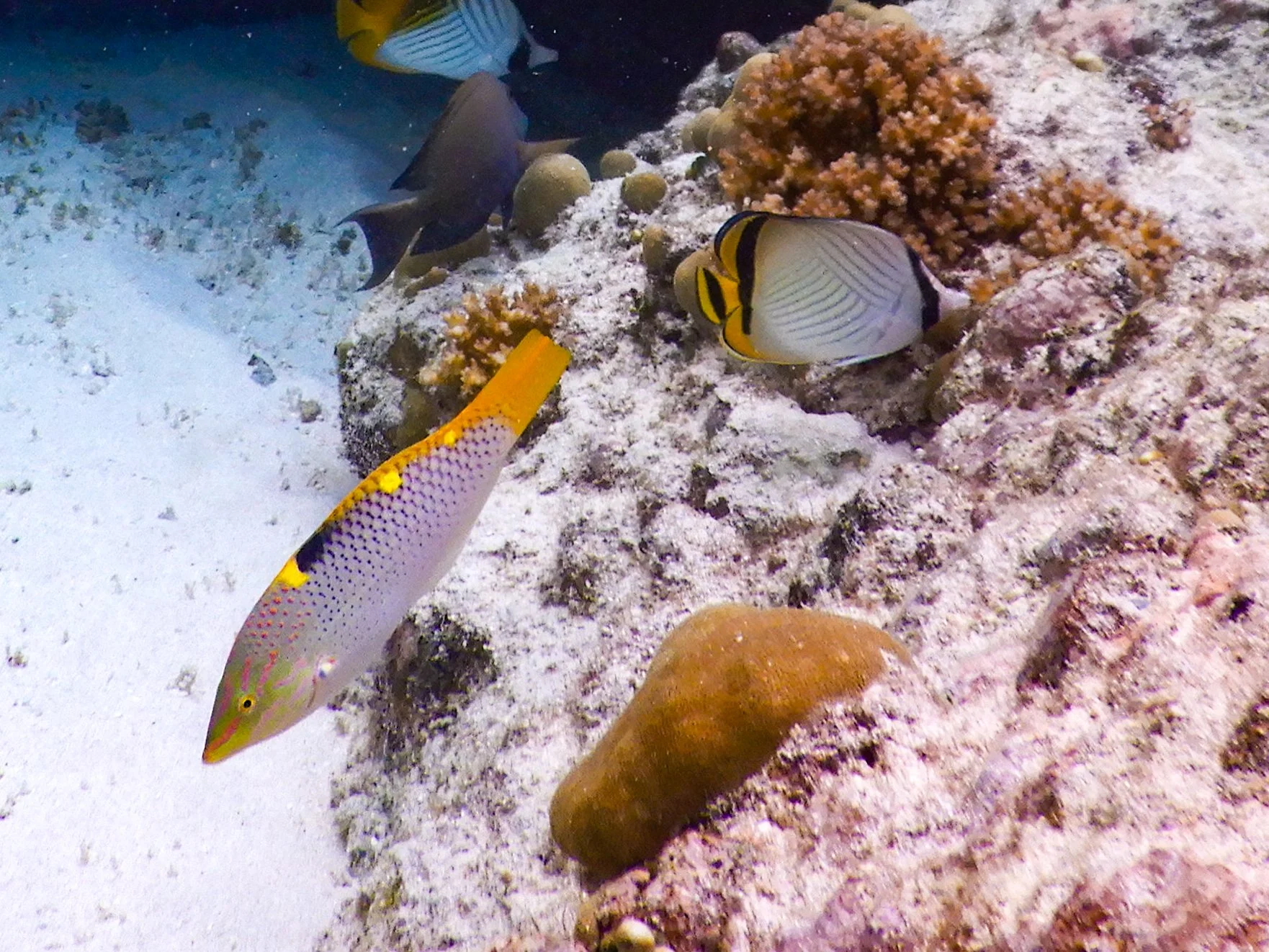
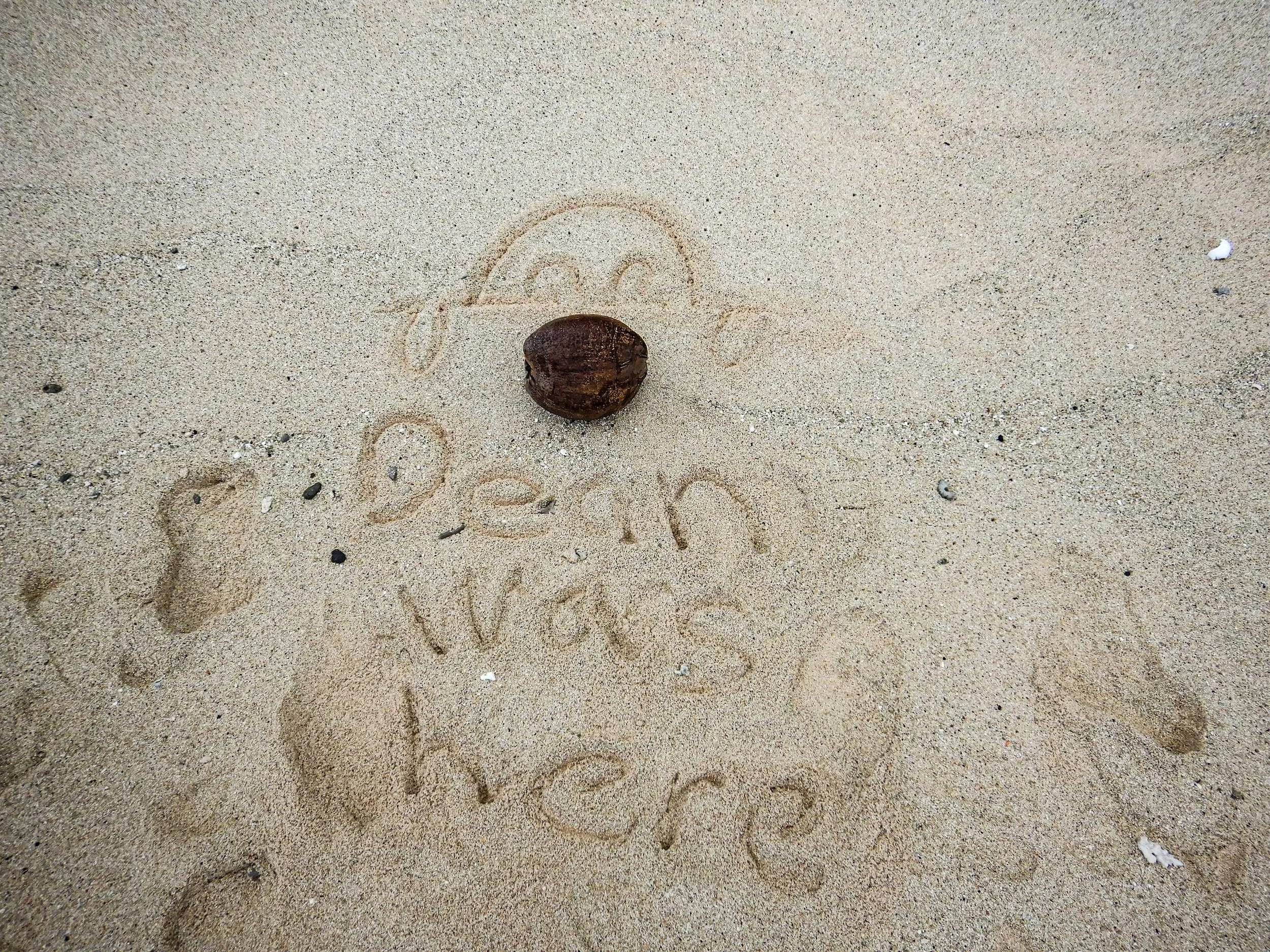
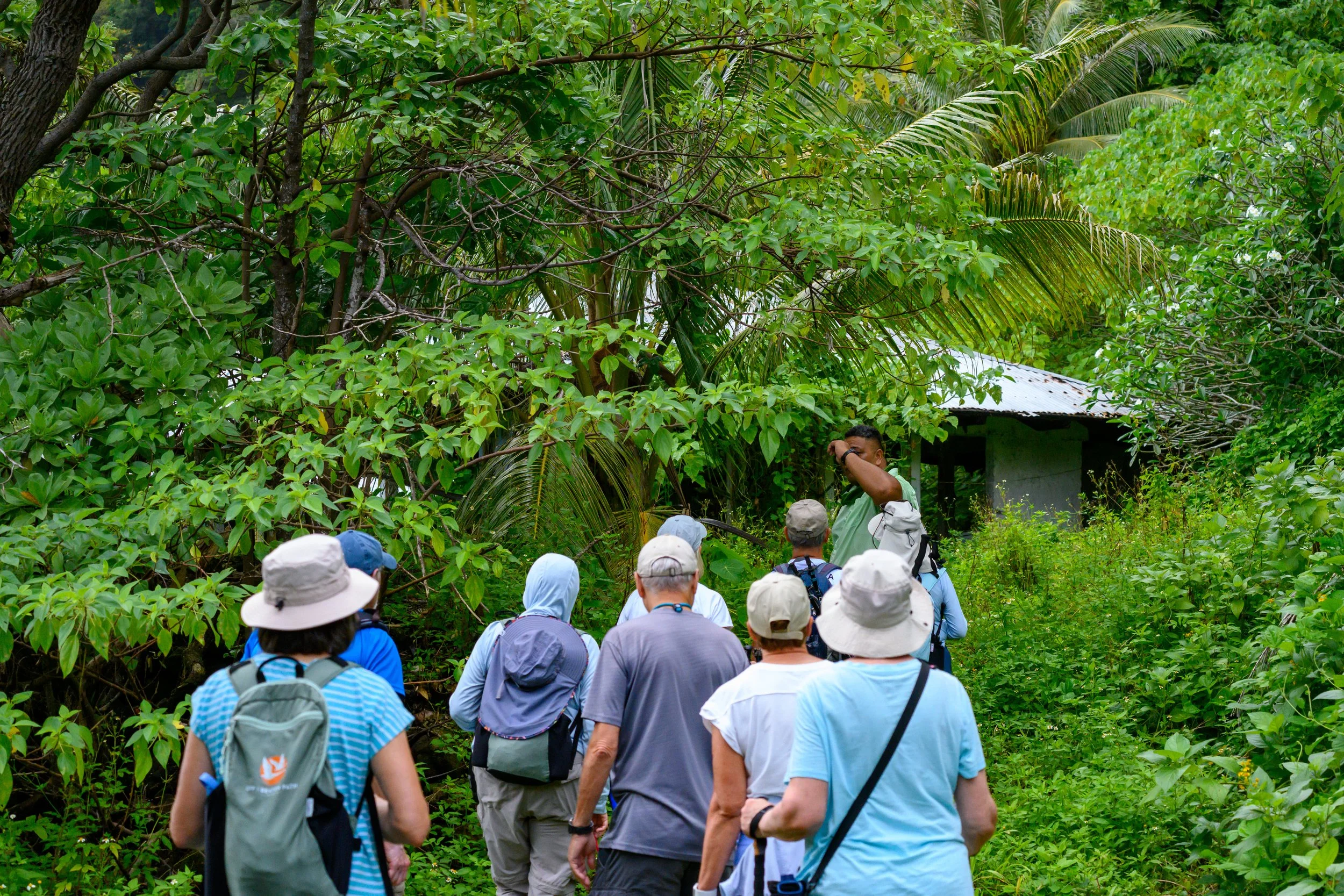
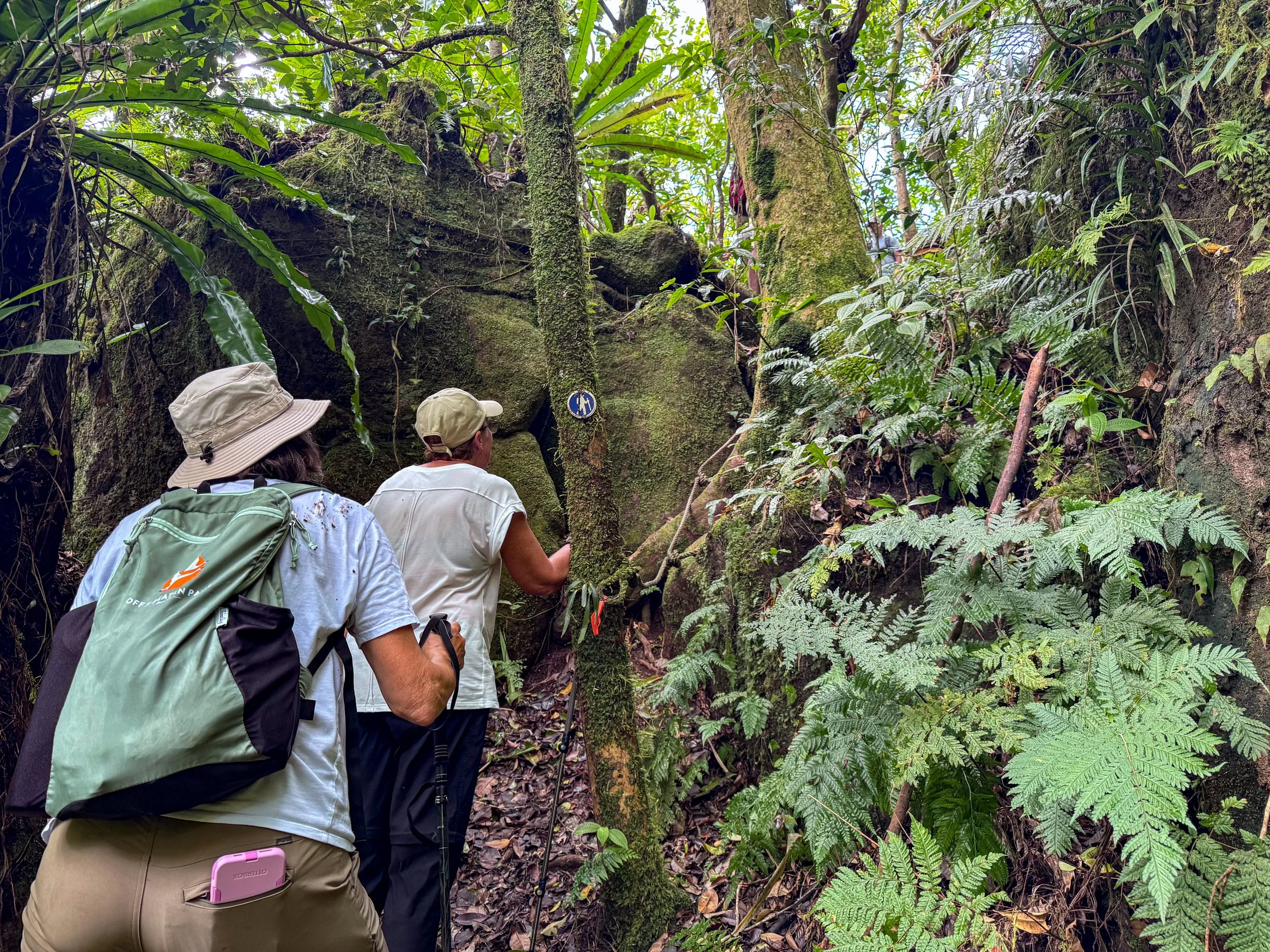
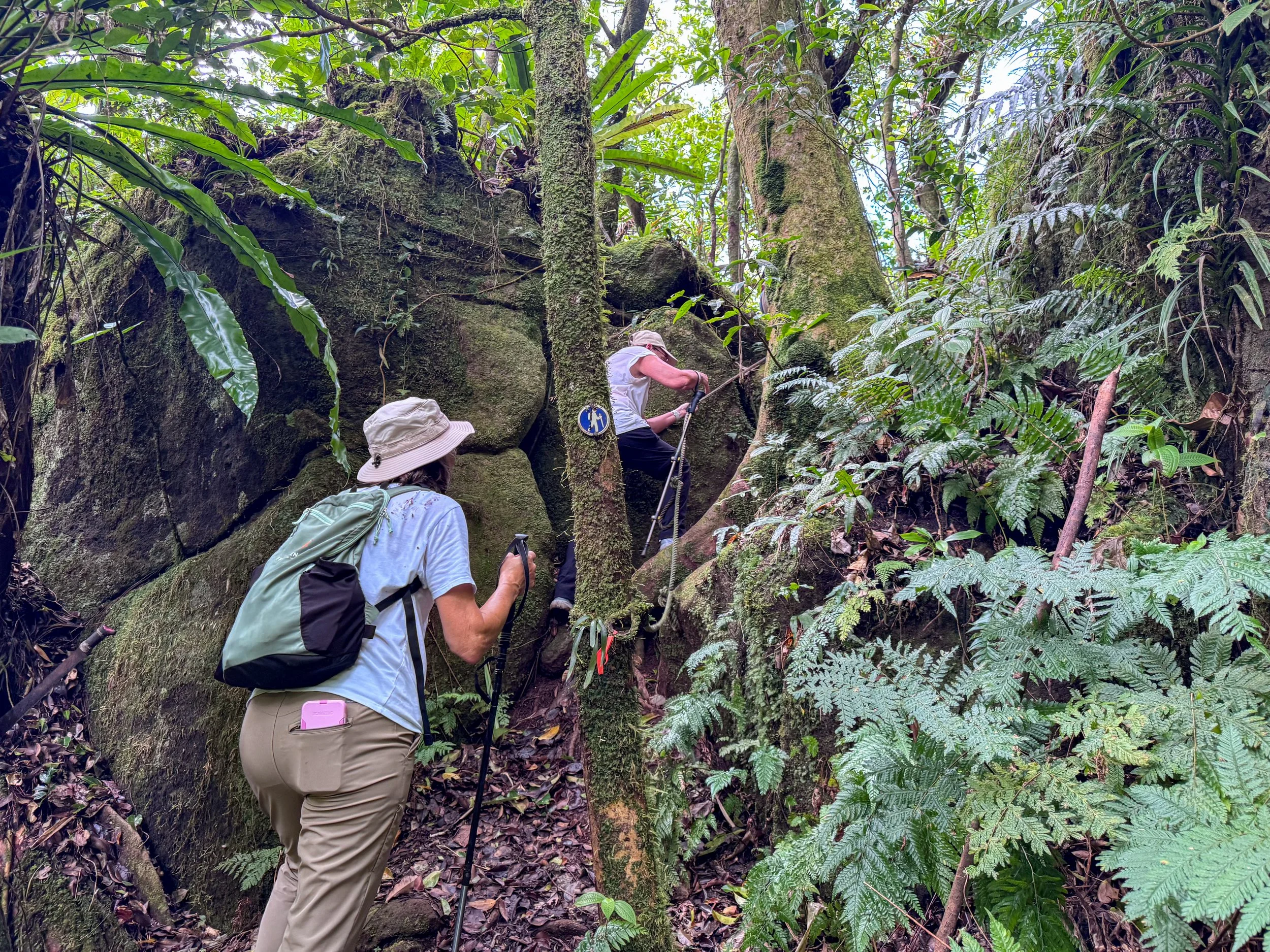
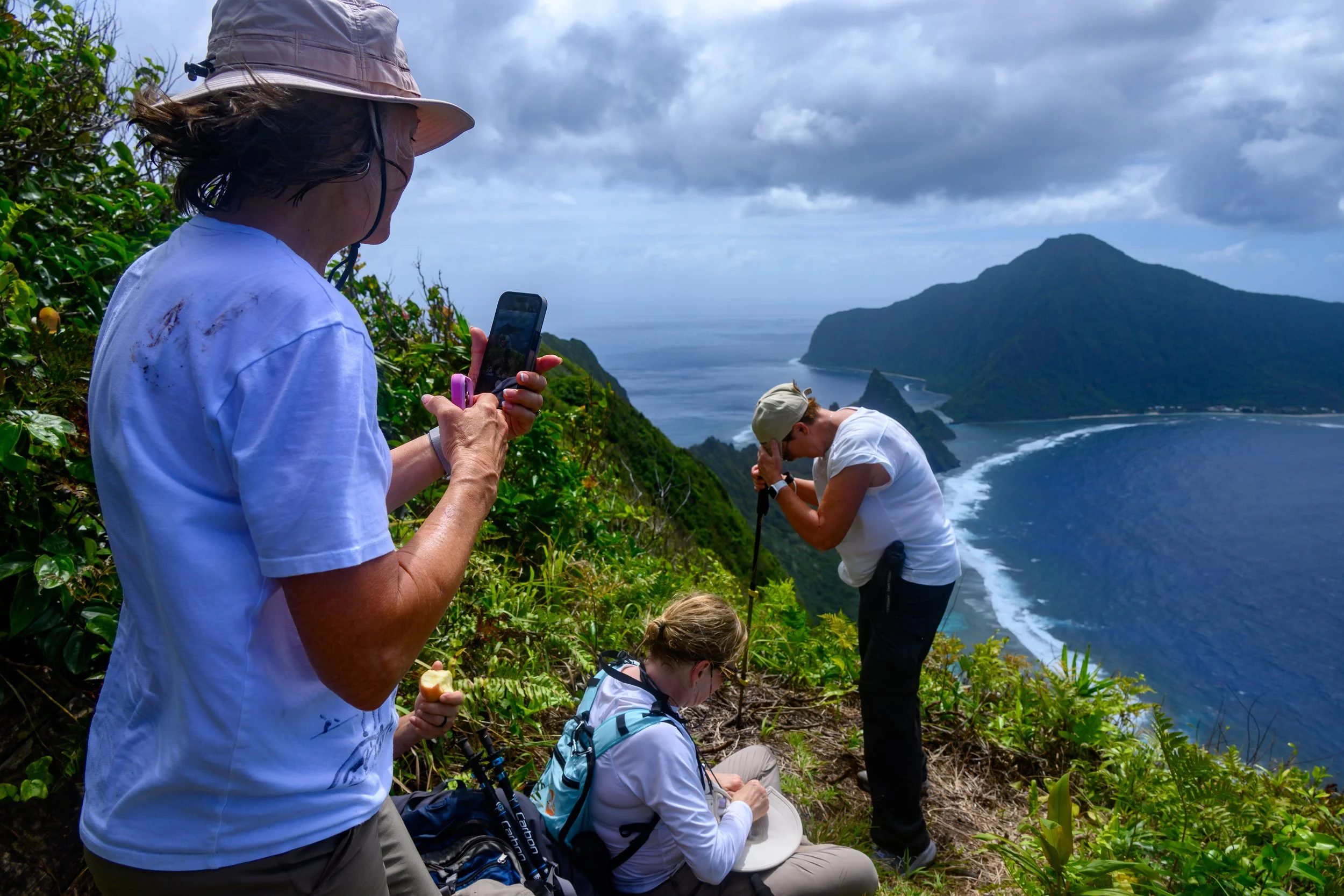
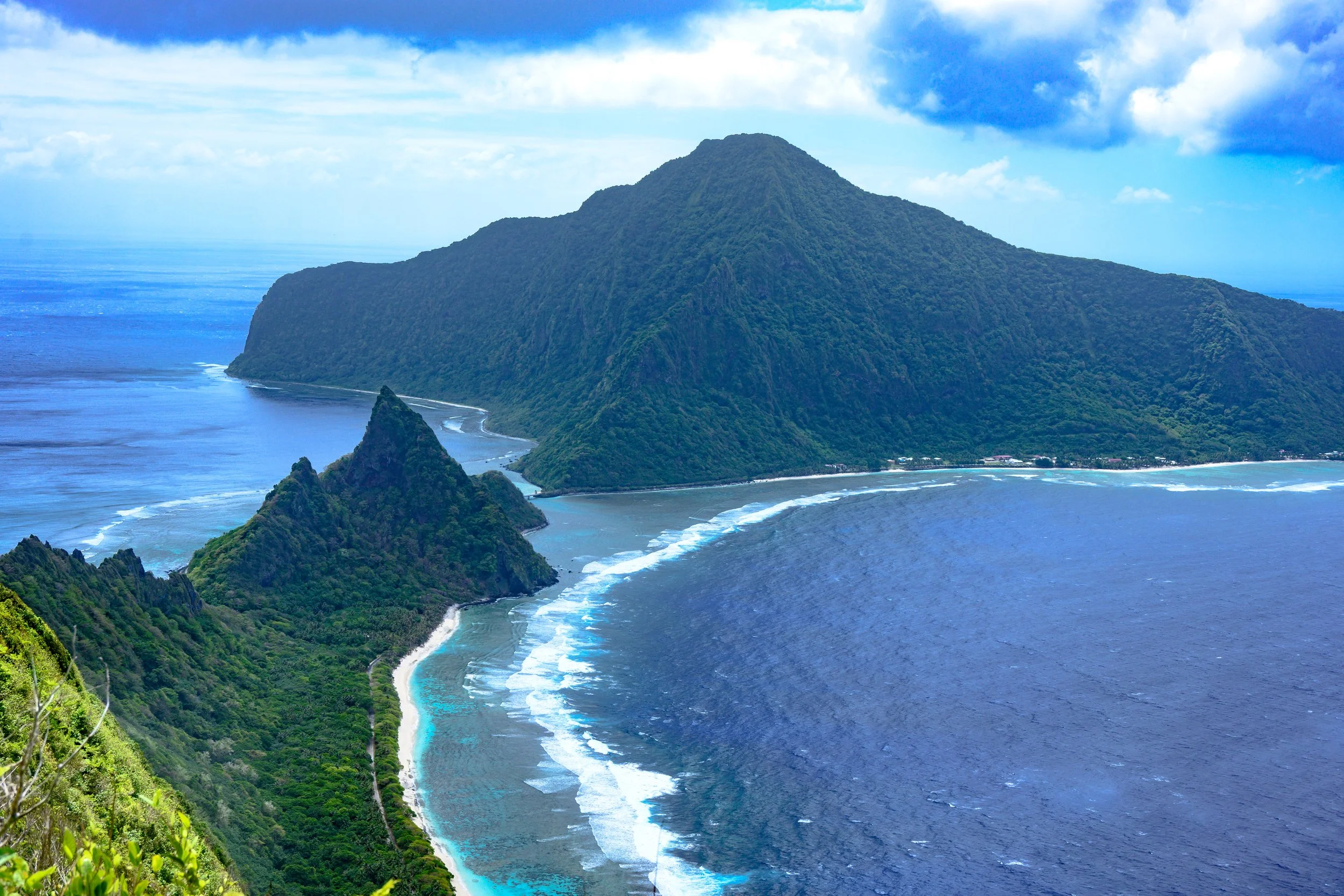
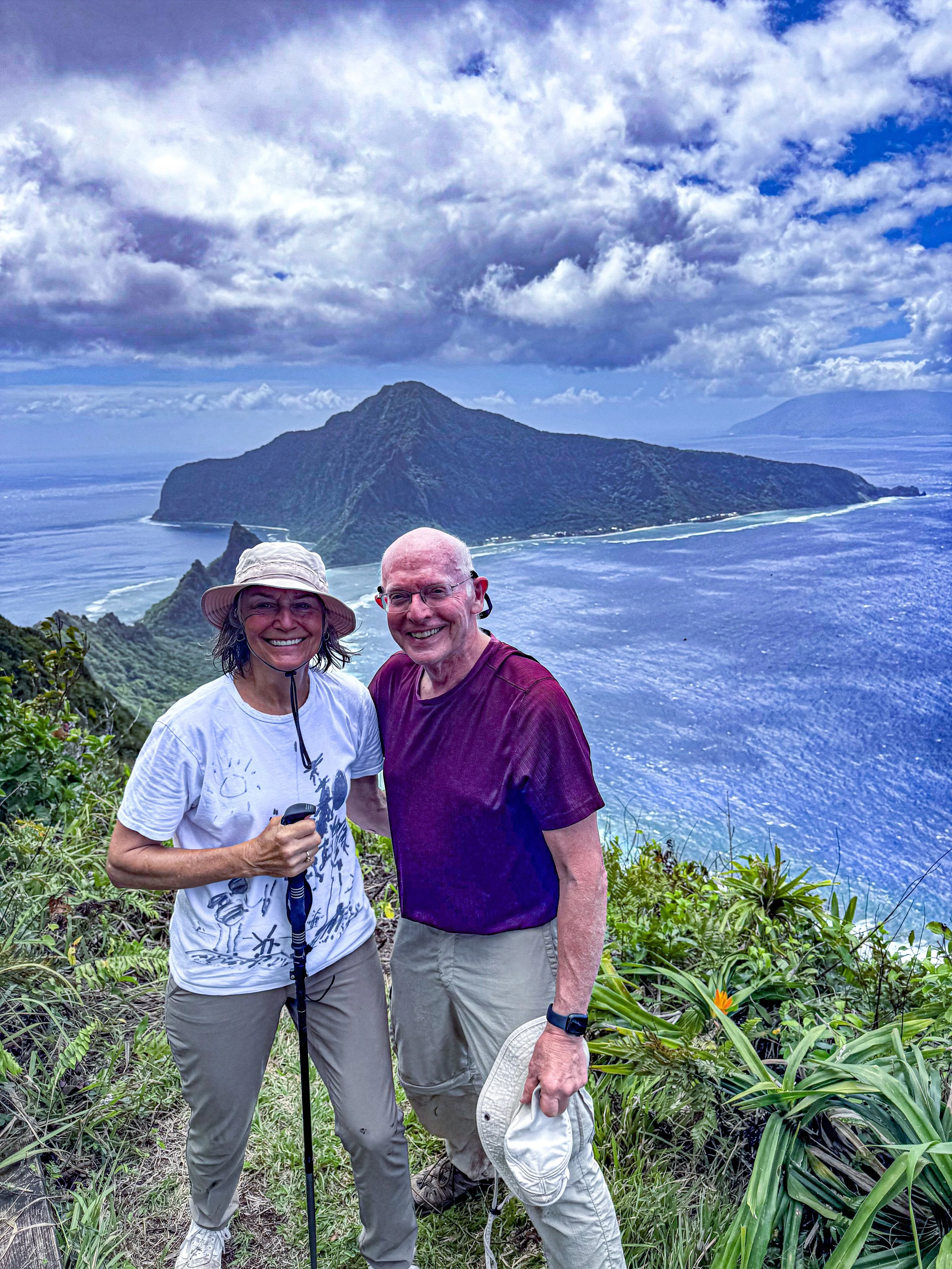
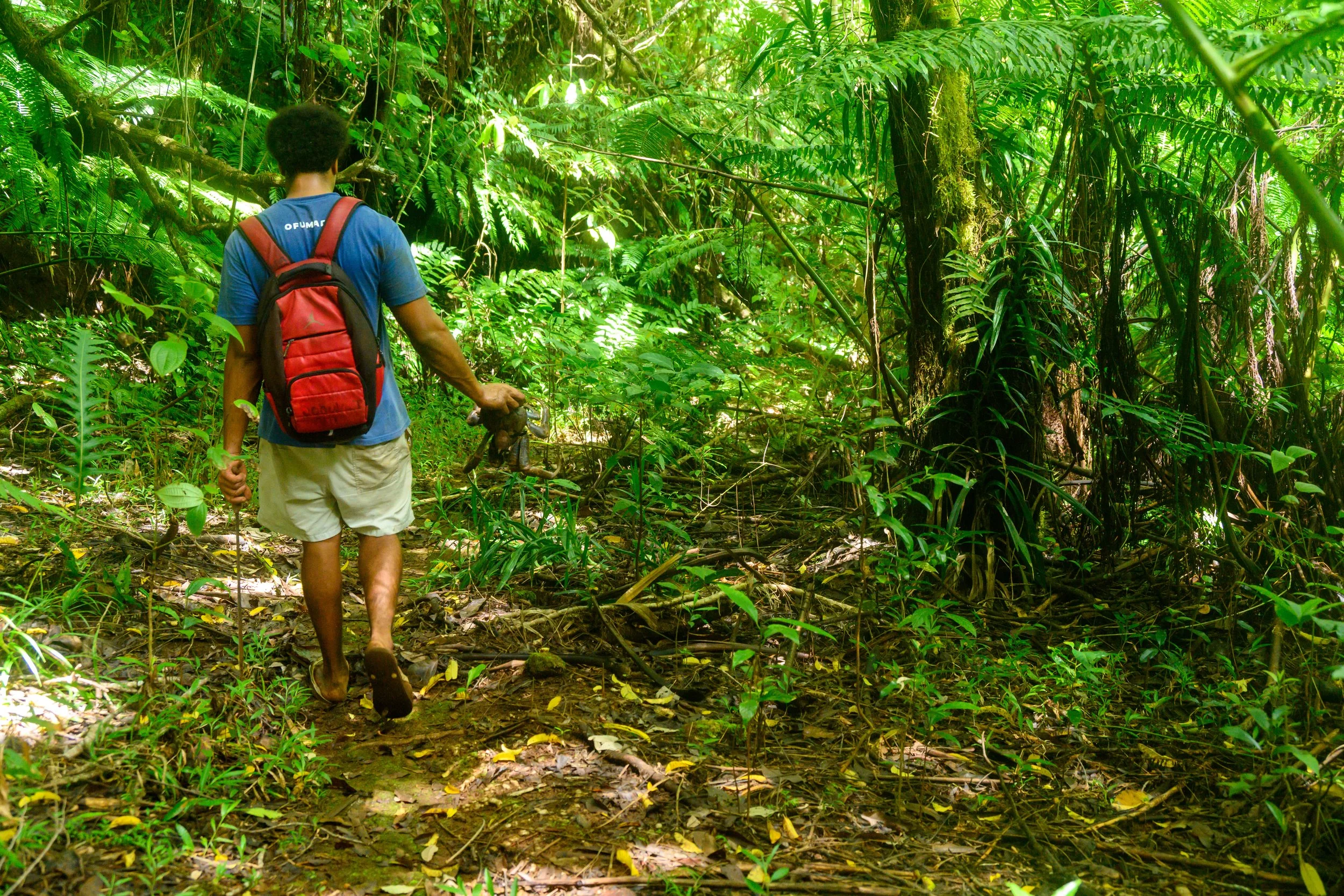
A final hike in American Samoa took us to another part of the National Park of American Samoa and to the high point on OFU island that overlooked the other island of Olosega. We had a local guild on this hike with his 2-ft machete which was handy considering the rain forest growth that we went through. Also, along the way he would point out where the coconut crabs were hiding. Small ones along the trail and large ones hiding in a hole under coconut trees. The final assent to the high point required a little rope work to get up but all of us made it up and back down. The view at the top was spectacular and included the island of Olosega and the bridge we had gone on recently when we visited that island.
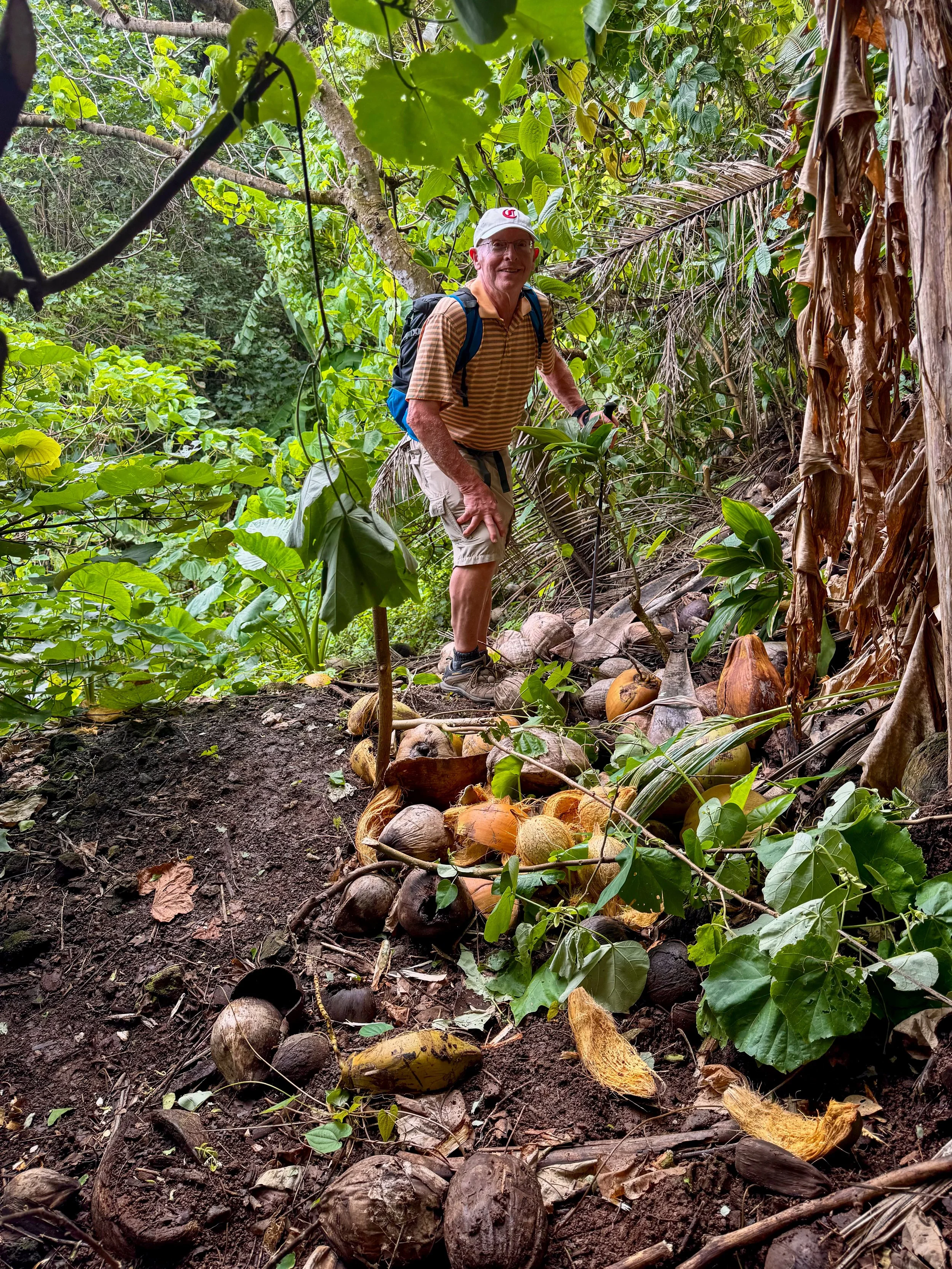
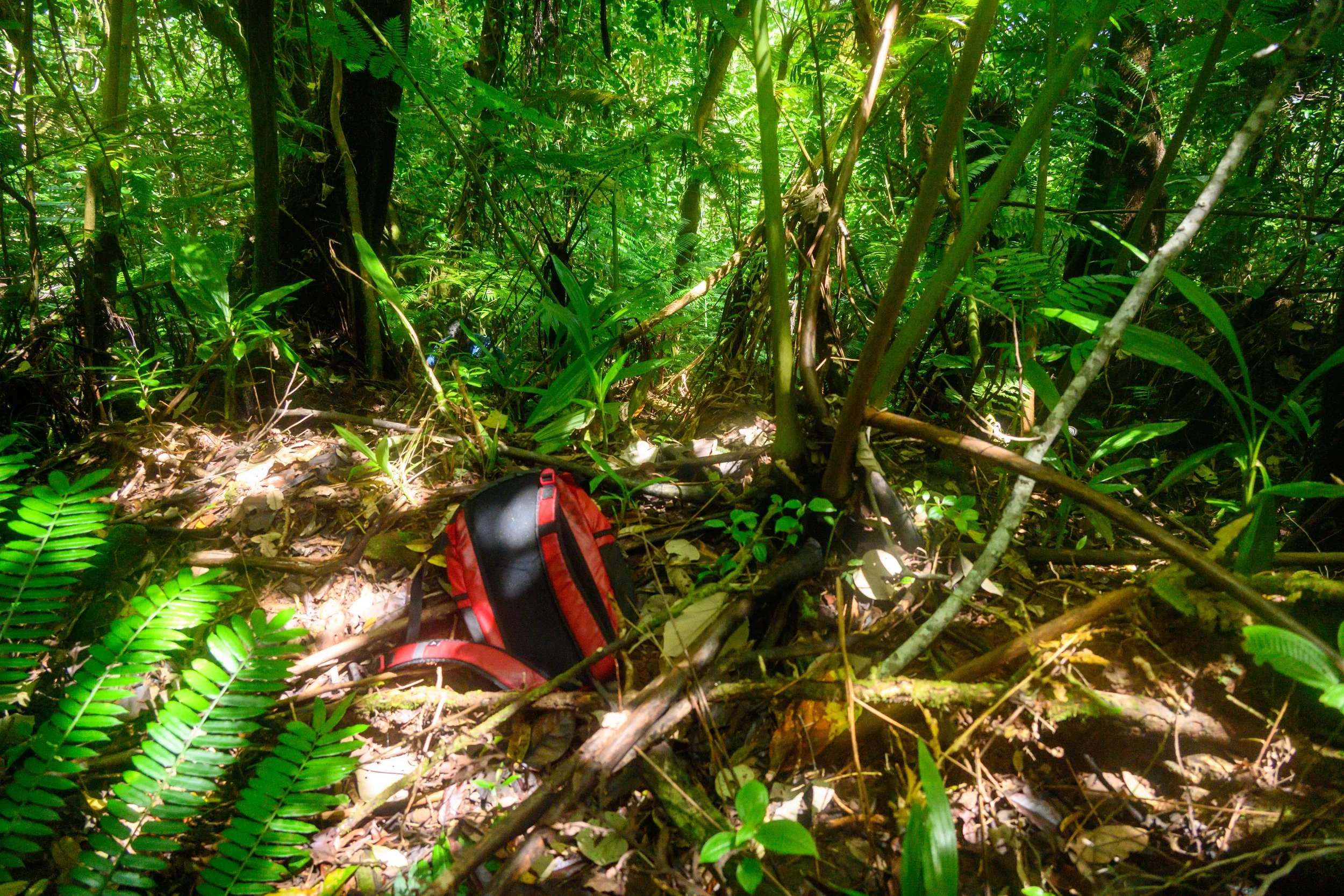
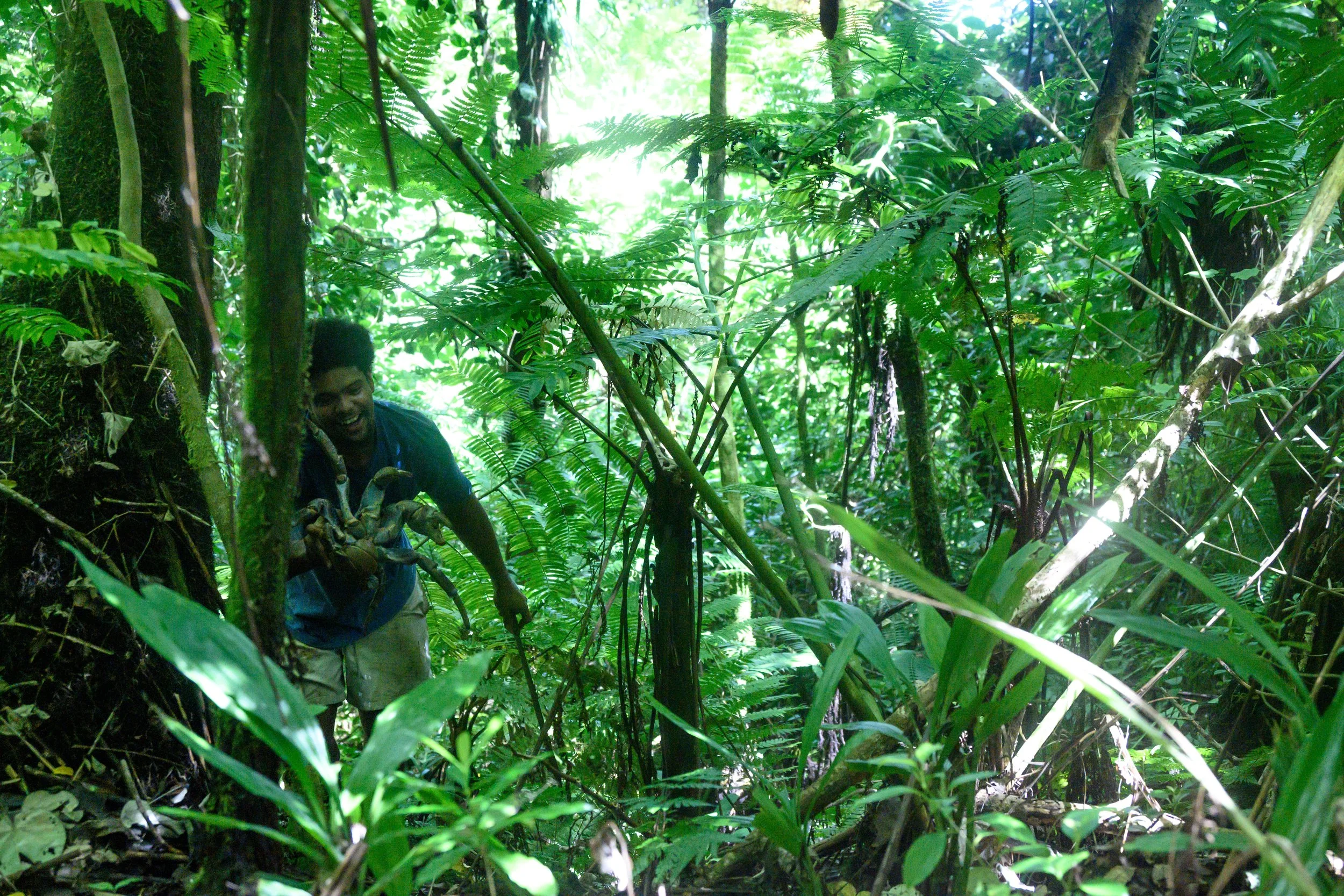
On the way back, our guild suddenly dropped his pack and proceeded down a steep hill while we waited to see what was happening. He later appeared with his machete in hand as well as a very … very large coconut crab. He said he knew there was one down there when he saw all the coconut shells laying around. He ended up carrying it all the way back, it must have provided a delightful meal that night for his friends or family.
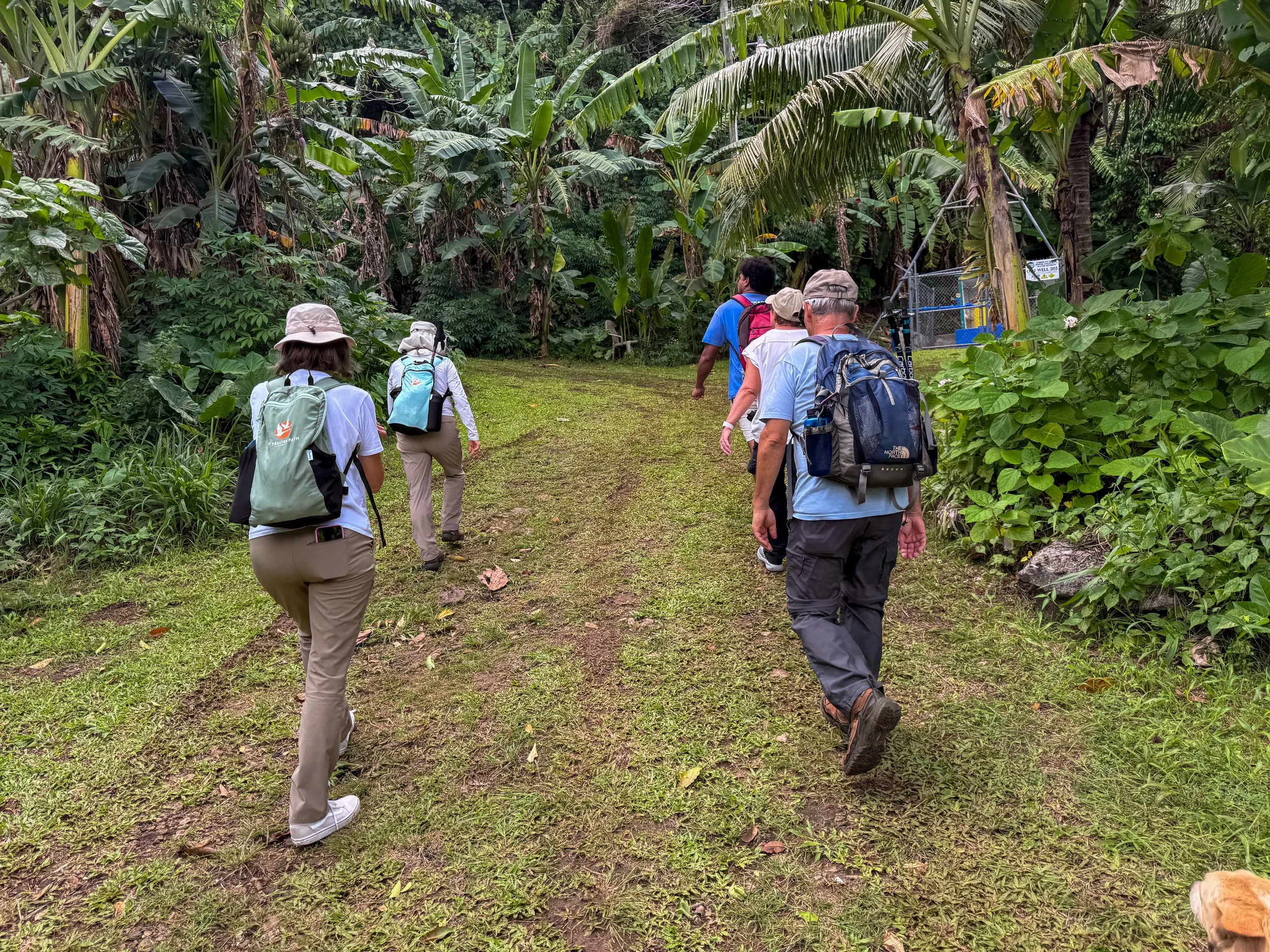
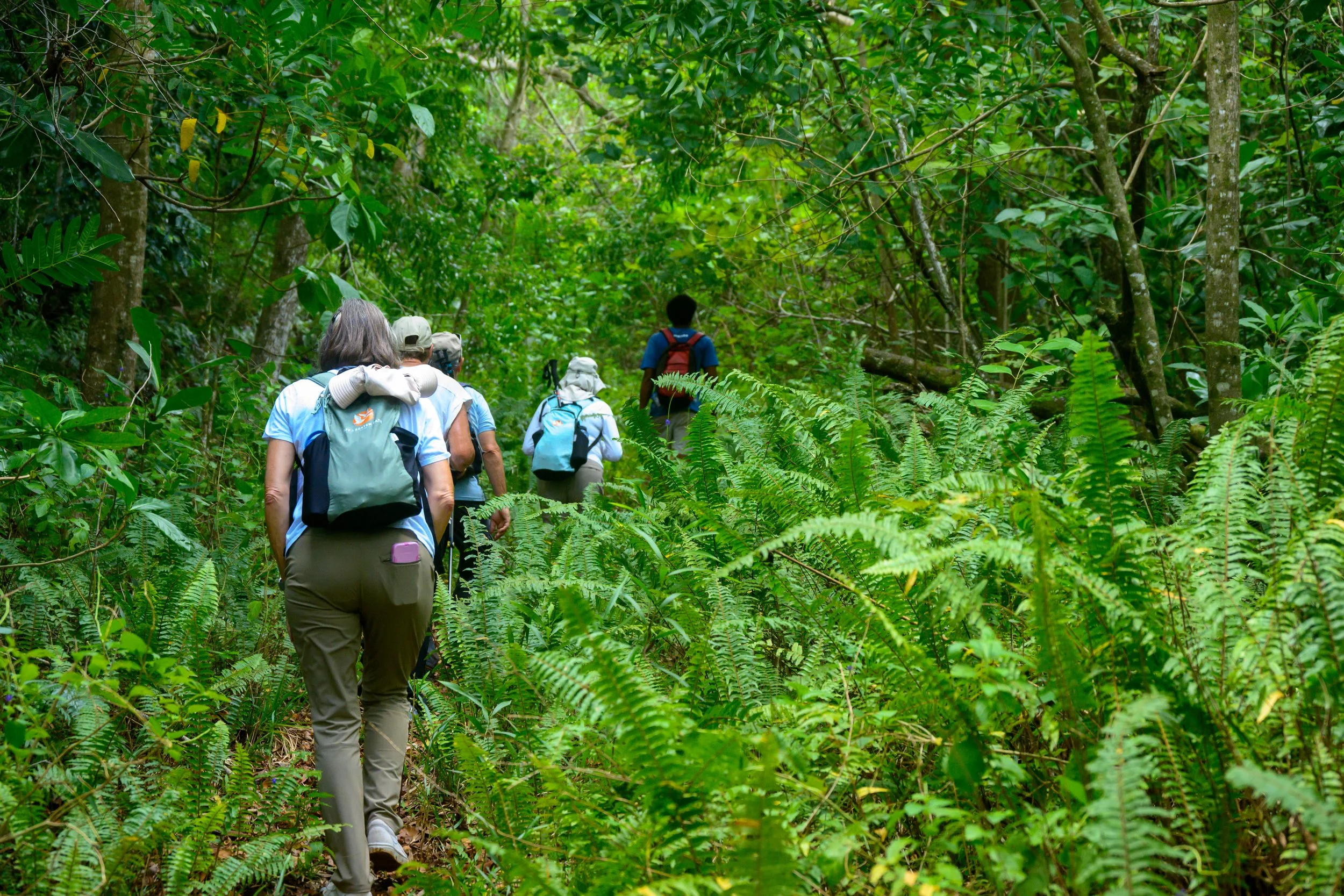
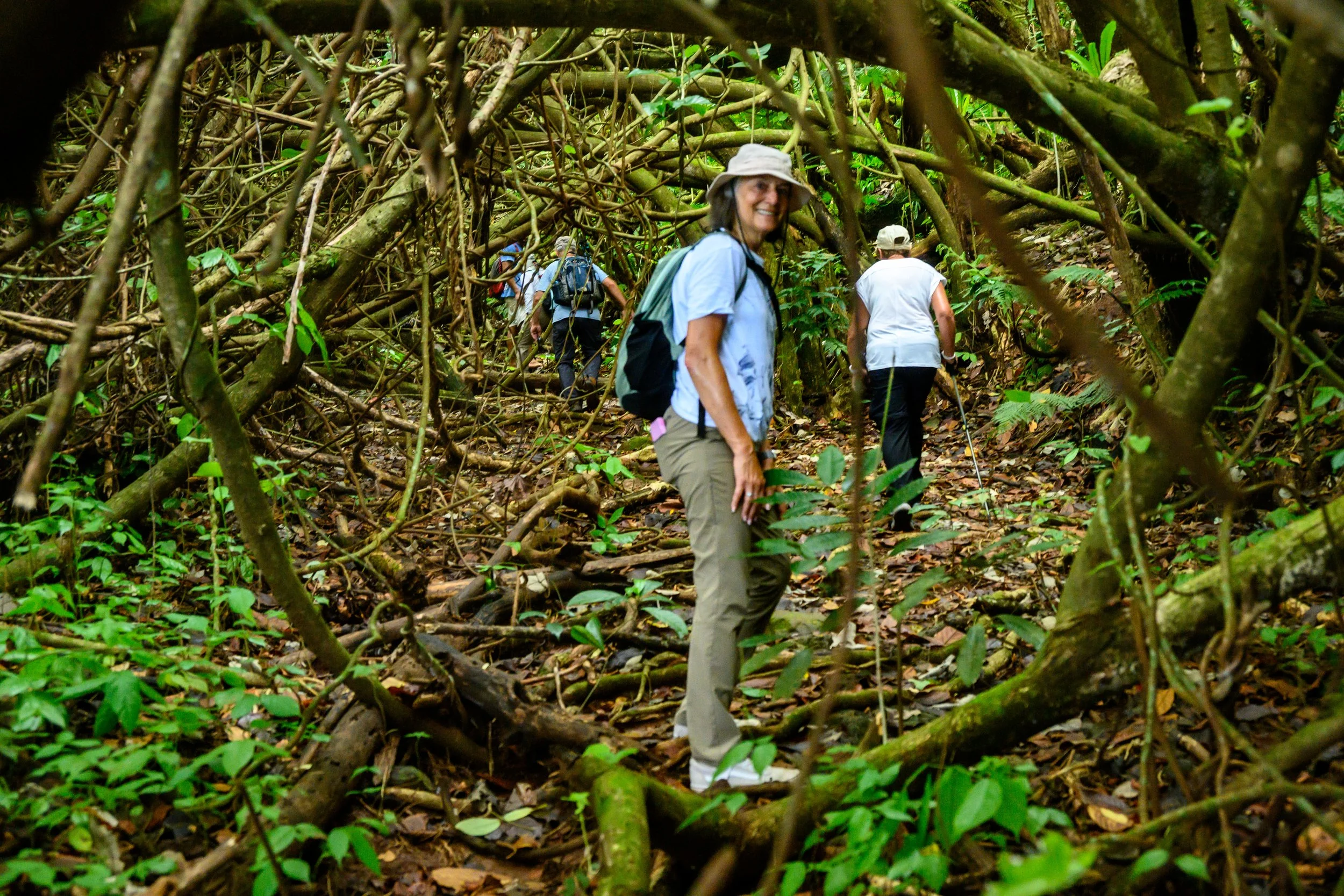
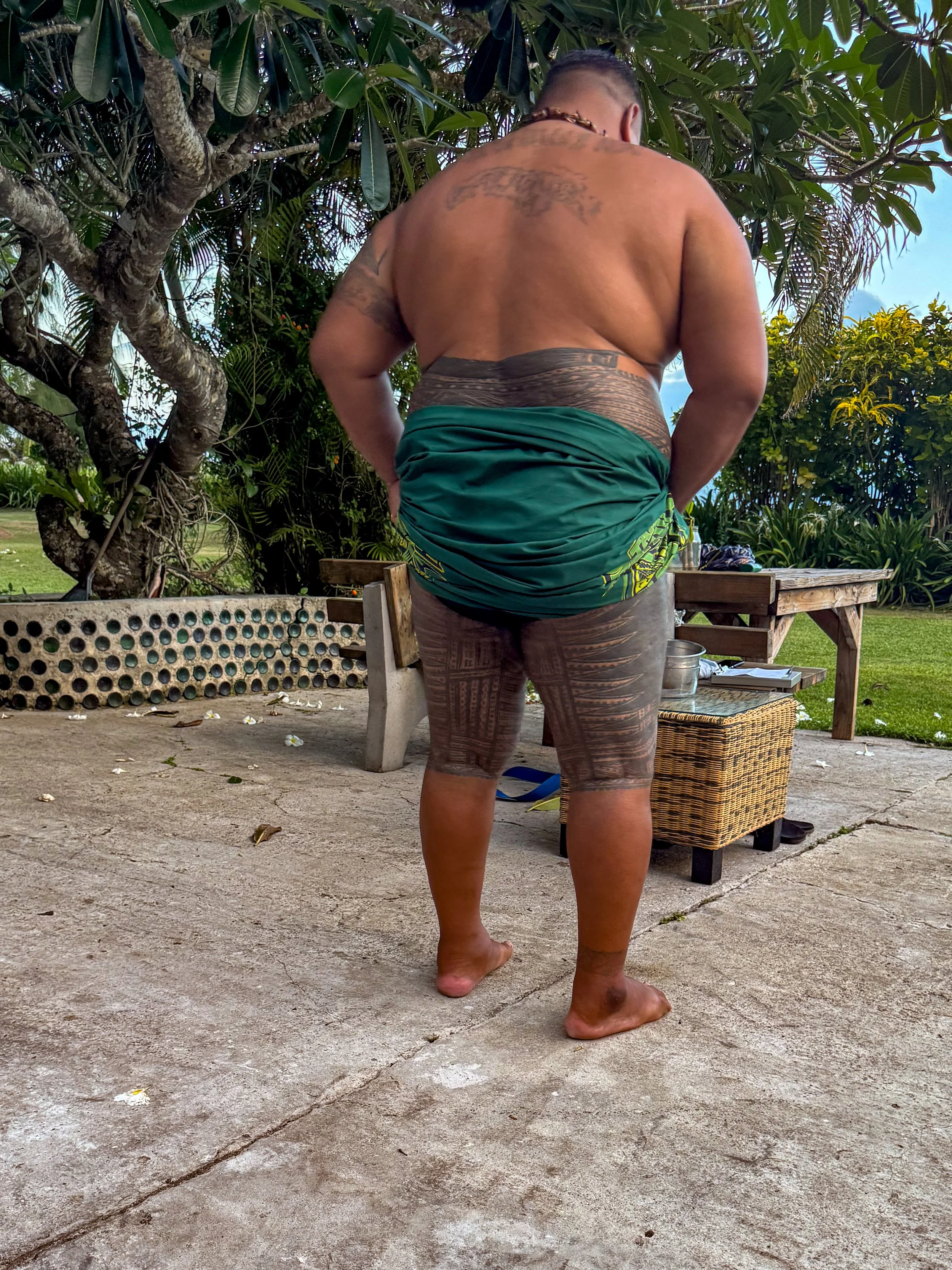
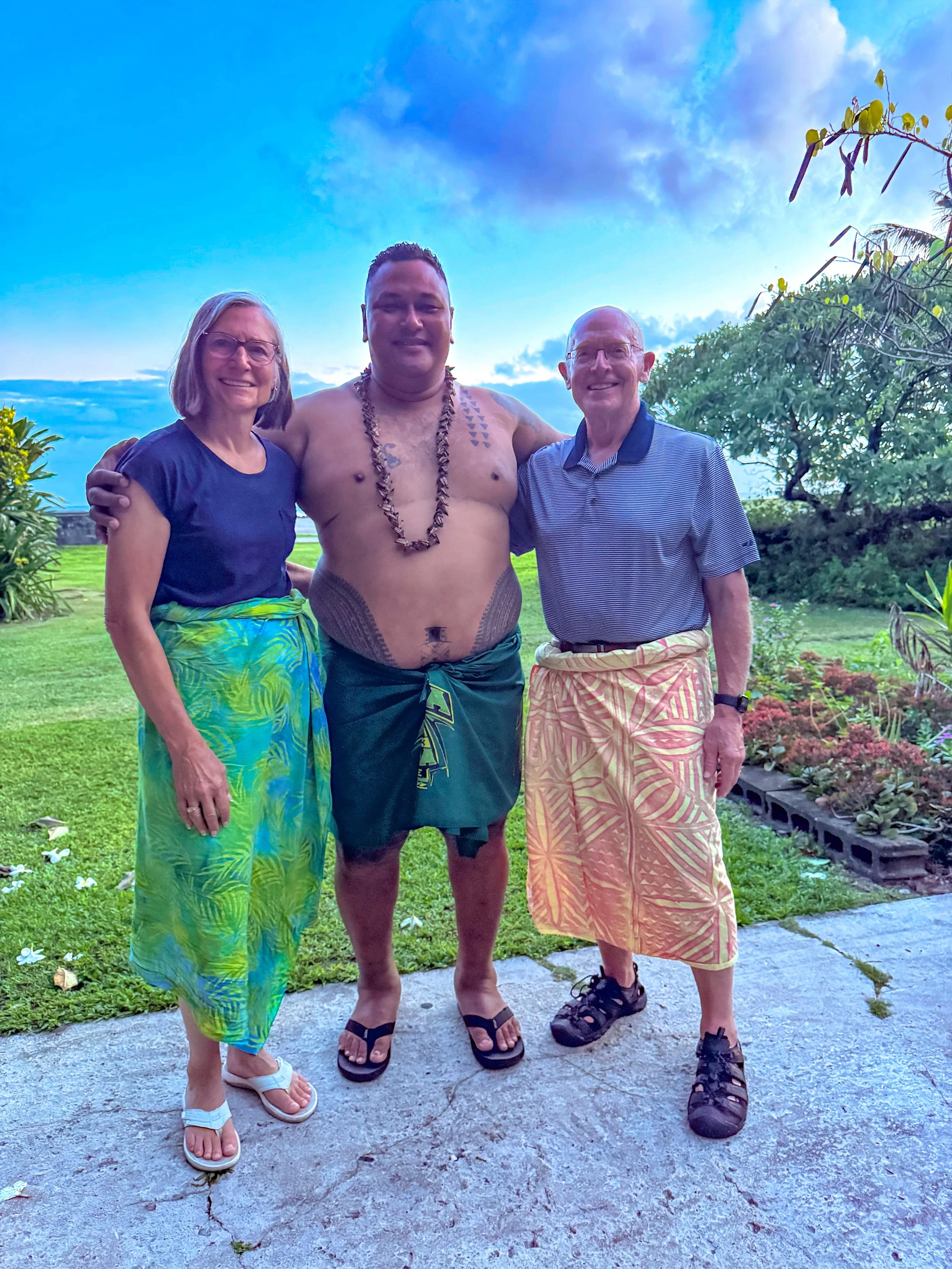
On our final evening in American Samoa, Pika had us participate in a beautiful ceremony that makes all of us connected as members of his family. He is a chief in his family and will soon be the head chief. The ceremony included drinking some “local beverage” that sort of numbed your tongue and did not taste very good. In addition, Pika showed us his tattoos (all of his tatoos) and explained the meaning of each tattoo, and the tattoos are a very important part of the Samoan tradition.
The next morning, we were off with a flight from OFU to Pago Pago, Tutuila with a short stay a “Sadie’s by the Sea” to get cleaned up and luggage reorganized and then following a last dinner by the sea we took an overnight flight back to Honolulu, Oahu.
A Closer Look: How American Samoa Works
If you're curious about the legal and cultural framework behind what we experienced on the islands, here is a deeper look at what makes American Samoa unlike anywhere else under the U.S. flag.
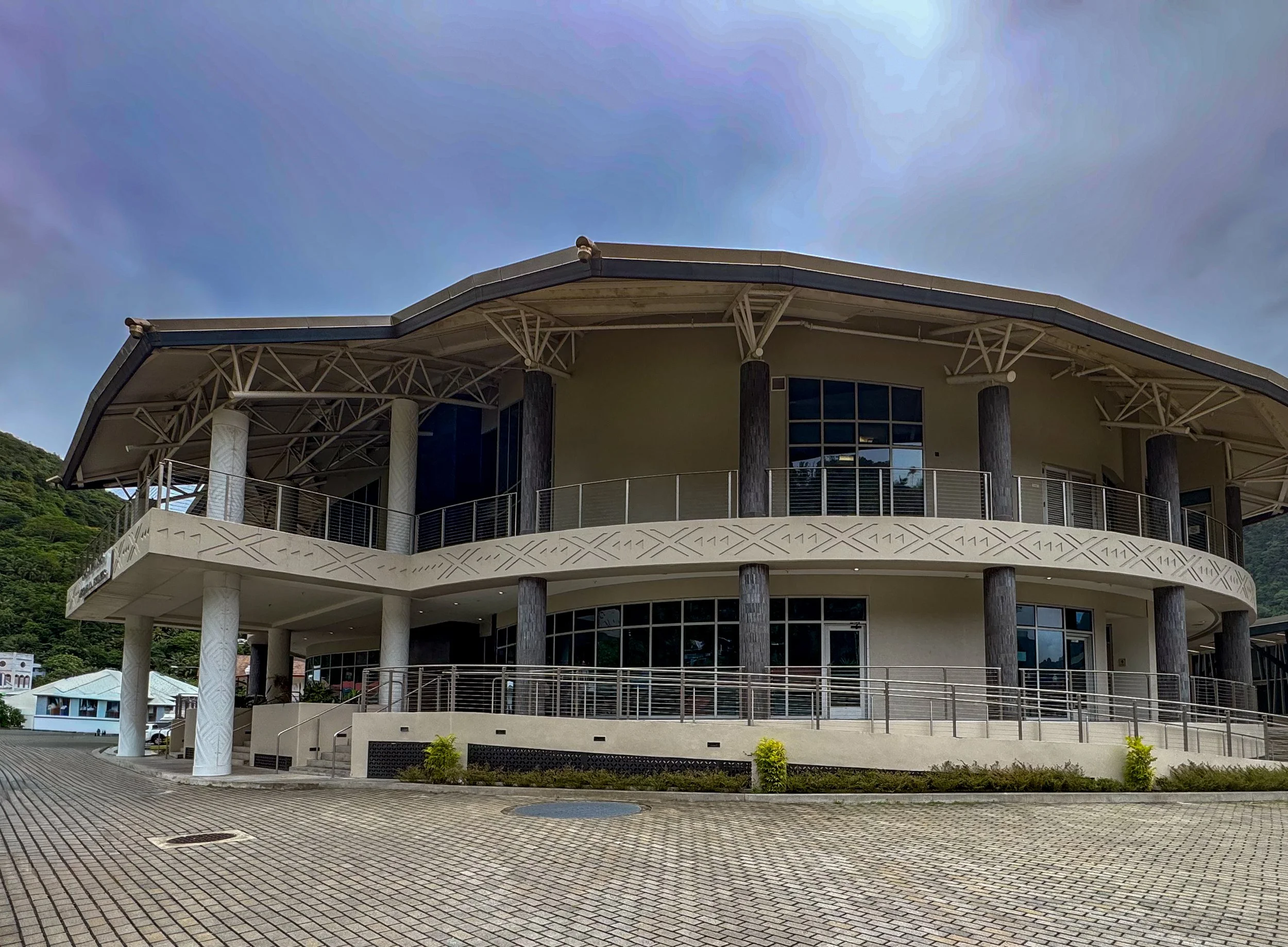
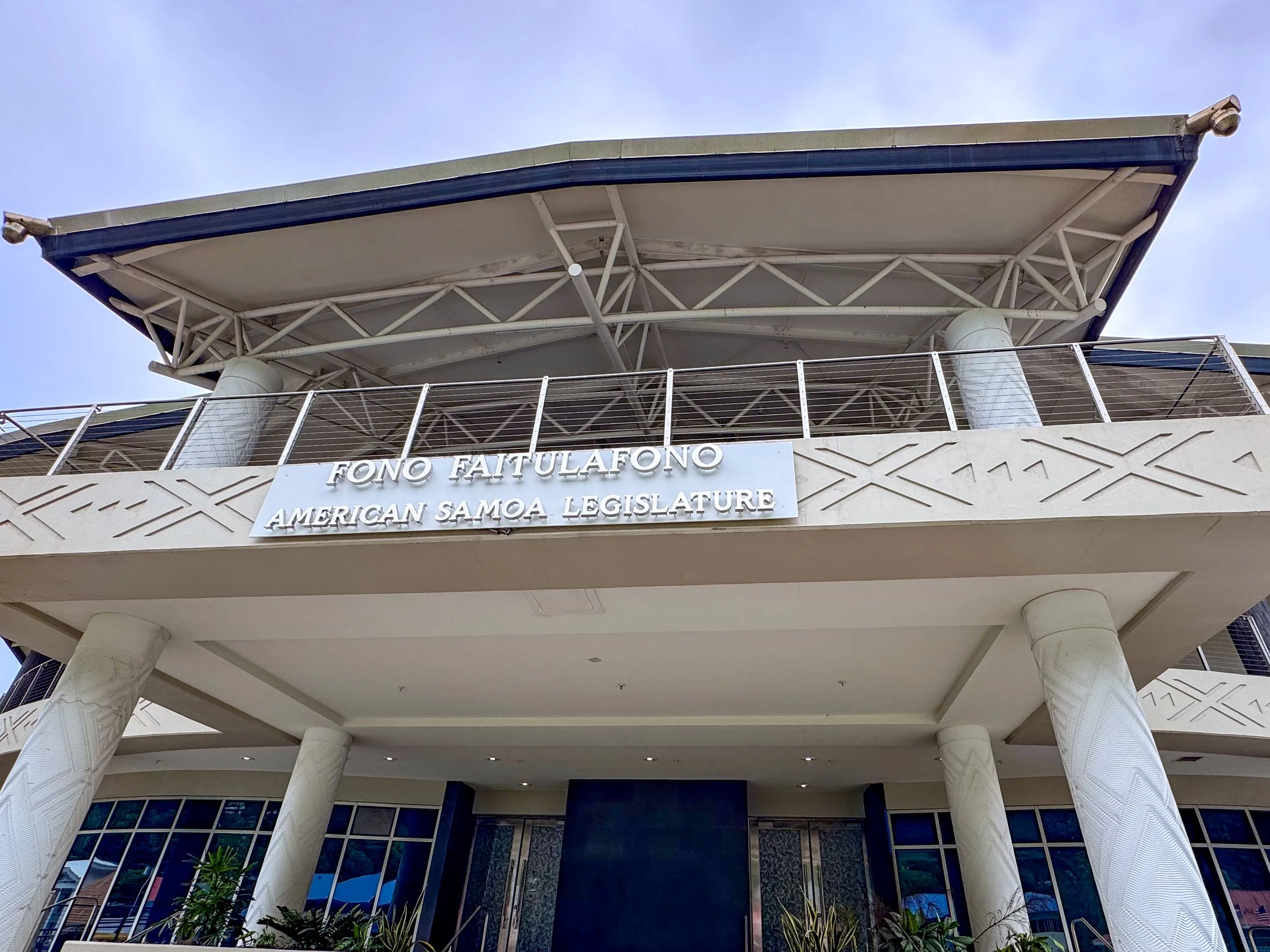
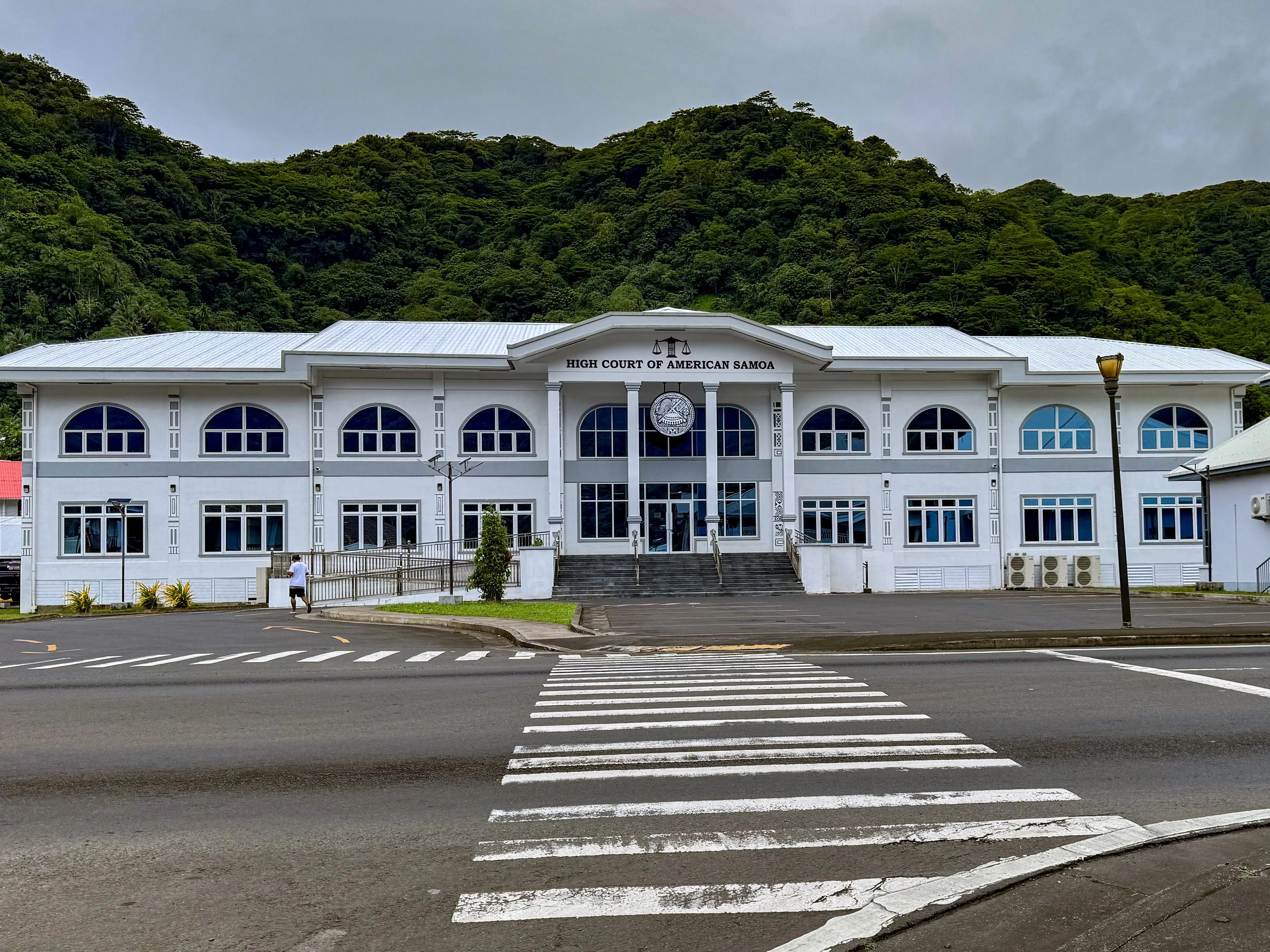
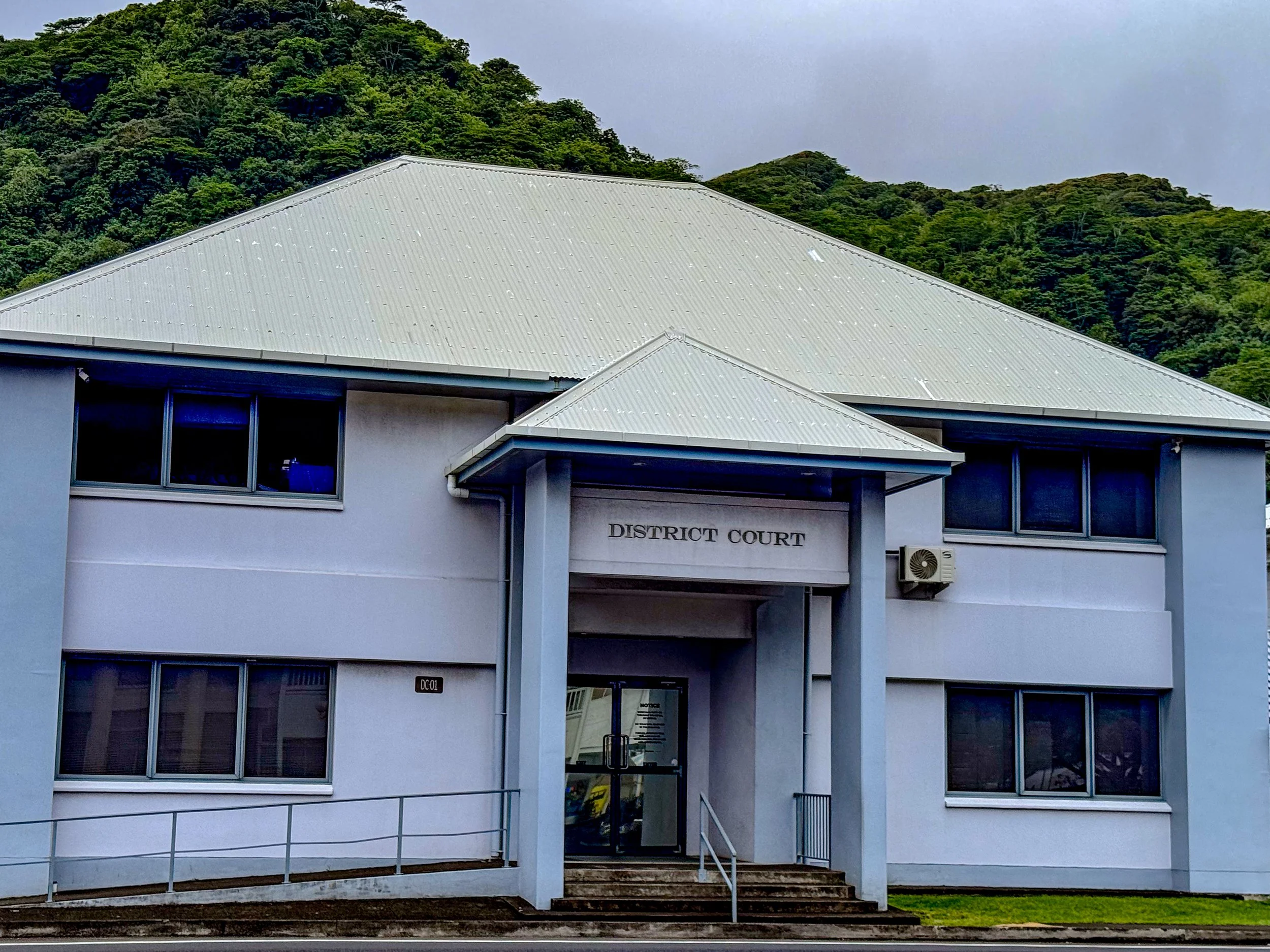
Government & Legal Status Legally, American Samoa is an unincorporated and unorganized U.S. territory administered by the Department of the Interior. Because of this, residents are U.S. nationals rather than automatic U.S. citizens by birth. While they can freely live and work anywhere in the United States, they cannot vote in presidential elections and do not pay federal income taxes unless they work for the federal government. Locally, they elect a non-voting delegate to the U.S. House of Representatives, alongside a popularly elected Governor and Lieutenant Governor, an 18-member Senate, and a 21-member House of Representatives. The territory also maintains its own judicial system—including a High Court, District Court, and village courts—where the High Court justices are appointed by the U.S. Secretary of the Interior, while local District and associate judges are appointed by the Governor.